
Affiliate Disclosure: This article contains affiliate links. As an Amazon Associate and affiliate partner, I earn from qualifying purchases at no extra cost to you.
 Mena
Hey, I’m Mena (@menachite), a hybrid engineer working across mechanical and electrical fields. This time it’s a TPMS (tire pressure monitor) comparison, for anyone who wants an aftermarket fix before a slow leak turns into a blowout.
Picking a TPMS usually comes down to confusion between internal vs. external sensors, and how much solar charging or Bluetooth actually matters day to day. Short answer: go external-sensor if you want an easy DIY install, go internal if you want top accuracy and don’t mind paying a shop for it. More on why below.
This roundup covers 8 products, mostly external-sensor systems plus one valve-integrated snap-in model, spanning regular cars, 6-wheel trucks/trailers, and motorcycles.
A slow tire pressure leak isn’t just a fuel-economy problem — left unchecked it’s a real blowout risk at highway speed. A TPMS catches the gradual pressure drop you’d never notice with a visual check at the gas station.
Quick picks by use case
Want the short version? For a well-established TPMS brand, go with the precision external-sensor pick below. Want to keep the cabin clutter-free, go Bluetooth/app-based. Got a truck or trailer, the 6-sensor pick is the one to look at.
| Product | Type / highlight | Best for |
|---|---|---|
| Precision external TPMS | External sensor / 0.01 bar precision display | Buyers who want an established, trusted brand |
| Jansite detachable TPMS | External sensor / detachable, angle-adjustable mount | Flexible dashboard placement |
| FOBO Bike 2 | Bluetooth / phone-app based | Keeping the cabin clutter-free |
| Solar external TPMS | External sensor / solar charging | Fully wireless, no charging hassle |
| Budget external TPMS | External sensor / basic alerts | Trying TPMS on a budget |
| 6-sensor TPMS | External sensor / trucks, trailers, RVs | 5+ wheel vehicles |
| Motorcycle Bluetooth TPMS | External sensor / 2-sensor, phone app | Motorcycle riders |
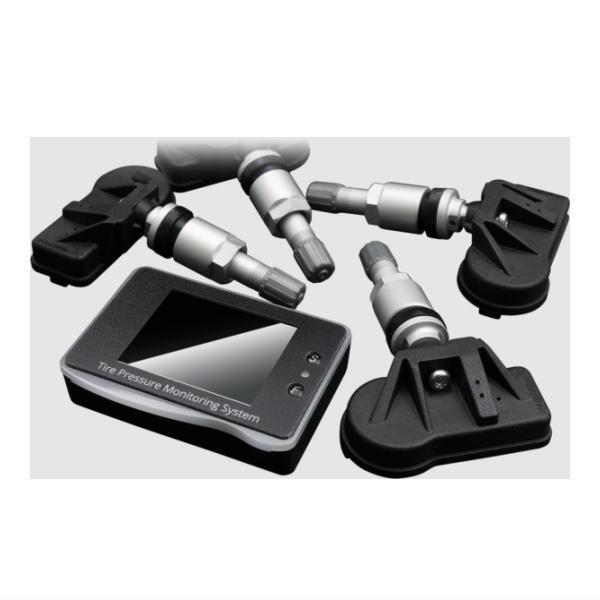
| Snap-in valve TPMS | Valve-integrated / no sensor to lose | Buyers who want a permanent, shop-installed setup |
8 TPMS picks
External-Sensor TPMS with High-Precision 0.01 Bar Display
MenaBuying from a TPMS brand with a real track record gives real peace of mind, especially on a heavier vehicle or larger wheels.
This external-sensor TPMS is built around a high-precision 0.01 bar display, aimed at drivers who want accurate readings on heavier vehicles or larger-diameter wheels rather than the cheapest option available.
Honestly, it sits toward the pricier end of this lineup — it’s less of a casual DIY buy and more of a considered pick if you specifically want display precision.
Good fit if you want a trustworthy brand behind a TPMS that’s going on a larger or heavier vehicle.
Jansite External TPMS with Detachable, Angle-Adjustable Bracket


 Mena
Being able to detach the display from its mount and angle it however you like turned out more useful than I expected.
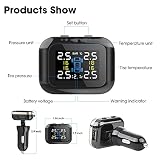
This Jansite unit separates the display from its mounting stand, so you can angle it anywhere on the dashboard. It’s IP68 waterproof/dustproof, has vibration detection, and adjustable brightness.
Being feature-rich means a few more setup steps than the simplest units here, so budget a little extra time for first-time setup.
Good fit if you want flexibility in where the display sits on the dash.
FOBO Bike 2 Bluetooth 5.0 Wireless TPMS (phone-app based)
MenaChecking pressure straight from your phone means you can just open the app after parking — no separate display to glance at.
This FOBO unit pairs over Bluetooth 5.0 with a phone app, waterproof and radio-compliant, so you can run the whole system without any dashboard display at all.
Without a dedicated in-car display, checking pressure the instant you want it while actually driving is a bit slower over Bluetooth — this fits a glance-after-parking habit better than a constant-monitoring one.
Good fit if you want a clutter-free cabin and are fine managing everything from your phone.
Jansite Solar-Powered External TPMS, 4 Sensors
 Mena
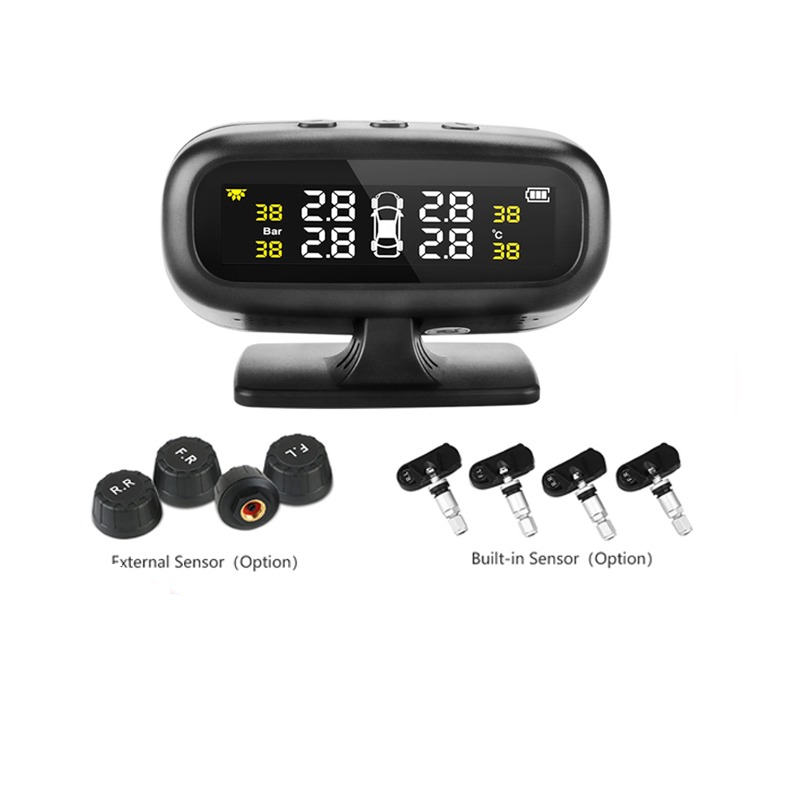
Solar charging on the display unit means fully wireless operation — no cable to manage, which is genuinely nice day to day.
This solar-powered external TPMS charges its display via a built-in solar panel, so it runs cable-free. Sensor installation is quick, typically a couple of minutes per wheel.
It sits in the mid-to-upper price range for this category — expect to pay a bit more than the cheapest wired options for the solar convenience.
Good fit if fully wireless operation matters more to you than shaving a few dollars off the price.
Budget External TPMS — Basic Pressure & Temperature Alerts
MenaIf you just want the basics — pressure and a warning light — a simpler option like this is an easy way to try TPMS without overspending.
This is a stripped-down external TPMS covering the core pressure and temperature alert functions, without extras like solar charging.
You give up some of the convenience features on the pricier picks here, but it’s a reasonable way to get basic TPMS coverage without a big spend.
Good fit if you want to keep costs down while still getting real-time alerts.
6-Sensor External TPMS for Trucks, Trailers & RVs
MenaBeing able to keep an eye on all the wheels on a trailer or RV setup from one unit is a real load off your mind.
This 6-sensor TPMS is built for vehicle setups that don’t stop at 4 wheels — trucks, trailers, and RVs — with a signal repeater to keep reception solid even towing a trailer, plus solar/USB dual charging.
It’s overkill if you’re only running 4 wheels on a regular car — a simpler 4-sensor unit will save you money there.
Good fit if you’re running a trailer, RV, or truck with 5 or more wheels to track.
B-Qtech Motorcycle Bluetooth TPMS, 2 External Sensors
MenaOn a motorcycle, a small pressure drop matters a lot more than in a car, so a purpose-built two-wheel TPMS is genuinely reassuring to have.
This motorcycle-specific Bluetooth TPMS uses two external sensors and pairs with a phone app to warn you of air leaks or overheating.
Sensor shape and mounting are motorcycle-specific — it isn’t interchangeable with a car TPMS, so treat it as a separate purchase from any 4-wheel setup you also run.
Good fit if you ride and want to cut the fall risk that comes with a slow leak.
Snap-In Valve-Integrated TPMS (no external sensor to lose)
MenaNot having an external sensor that can work loose or fall off is a real advantage of the snap-in, valve-integrated style.
This snap-in TPMS integrates the sensor into the tire valve itself, fitting steel and alloy wheels alike, covering a wide pressure and temperature range with a long-life battery.
Because the sensor is built into the valve, swapping tires means pulling the valve each time — installation and removal is generally a shop job rather than a DIY swap.
Good fit if you want a permanent setup with zero risk of a sensor working loose, and don’t mind shop installation.
TPMS basics and how to choose
A TPMS (Tire Pressure Monitoring System) tracks tire pressure and temperature in real time and alarms on anomalies. A slow pressure drop is nearly impossible to catch by eye, which is exactly the gap an aftermarket TPMS fills.
External sensor (DIY-friendly) vs. internal/direct sensor
An external-sensor system just swaps your valve caps for sensors — an easy DIY install. 7 of the 8 picks here are this type; the snap-in model is valve-integrated (shop install recommended). An internal/direct system mounts the sensor inside the tire for higher accuracy, but needs professional installation and, if you run winter tires, a second set.
Solar vs. USB vs. battery charging
Solar-charging models stay topped up just sitting on the dash, with no dead-battery worries. USB-only models need periodic charging but tend to cost less.
Dedicated display vs. Bluetooth phone-app
A dedicated display lets you check pressure at a glance while driving. A Bluetooth/app system skips the extra hardware and keeps the cabin cleaner, at some cost to how instantly you can check pressure mid-drive.
Getting the most out of it
When installing an external-sensor TPMS, set each tire to the vehicle’s specified pressure first, then register that as the baseline in the sensor. A wrong baseline means false alarms even at normal pressure.
I made exactly that mistake on my first install — rushed the baseline setup and dealt with false alarms for a while afterward. Since then I always check pressure precisely at a gas station right after installing, then set the baseline. Sensors also face vibration and theft risk, so check they’re still snug from time to time.
Buying notes
Most of these use battery-powered external sensors, so factor in battery replacement cost and hassle down the line. Solar-charging models help keep that long-term cost down.
Pricing on this kind of gear moves around a lot. Availability was verified via search at the time of writing — always double-check current price and stock on the product page before buying.
Accessories: a backup gauge
Even with a TPMS installed, it’s worth keeping a manual digital tire gauge on hand for setting the initial baseline and as backup if a sensor battery dies.
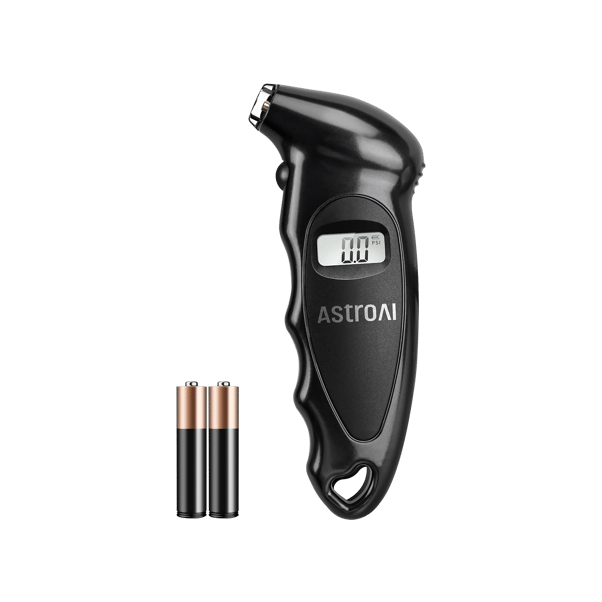
AstroAI Digital Tire Pressure Gauge, 0-150 PSI


 Mena
Even with a TPMS, a manual digital gauge earns its keep for that first baseline reading and as a regular double-check.
This digital gauge reads 0-150 PSI in 0.1 PSI increments with a backlit LCD, covering cars, trucks, and bikes alike.
A TPMS will make this gauge’s job smaller day to day, but it’s still the tool you reach for the first time you set a sensor’s baseline, or as a backup when a sensor’s battery runs out.
Worth keeping alongside a TPMS as your periodic-check tool.
FAQ
Q. Does a TPMS affect vehicle inspection?
A. An external-sensor TPMS is treated as an aftermarket accessory and generally doesn’t affect inspection when properly installed. Since it replaces the valve cap, you may need to remove the sensor during a pressure check.
Q. Do I need to reconfigure after a tire rotation?
A. If you swap sensor positions, some systems need the wheel-position mapping re-entered on the display. Check your manual for the exact steps before rotating tires.
Q. What should a first-time buyer pick?
A. For a first unit, a solar-charging model removes the battery-anxiety factor. If keeping the cabin clean matters more, a Bluetooth/app system is worth a look too.
MenaExternal vs. internal sensor, charging method, and how it connects — get those three right and you won’t go far wrong picking a TPMS. Work backward from how you actually drive.
Summary
We compared 8 TPMS products across sensor type, charging method, and connection style. For a trusted brand and larger wheels, go with the precision pick; for trucks and trailers, the 6-sensor unit; for a permanent, drop-proof setup, the snap-in valve model.
All of them help prevent the same thing: a slow leak turning into a blowout. Pick the one that matches your wheel count and how you use the vehicle.
Related reading
- DIY Torque Wrench Guide: 90% of Your Force Never Tightens the Bolt
- What Do You Cut That Metal With? Choosing a Cutting Method by Thickness, Shape, and Precision
- Oil Stone vs. Water Stone: 4 Sharpening Stones Compared (Or Just Use an Electric Grinder?)
- Whetstone Not Cutting Like It Used To? How to Tell Loading, Glazing, and Grain Loss Apart
- HiKOKI System Case: All 5 Models Reviewed — Systainer-Compatible Storage That Connects with Makita MAKPAC