
Affiliate Disclosure: This article contains affiliate links. As an Amazon Associate and affiliate partner, I earn from qualifying purchases at no extra cost to you.
Plenty of people treat cordless tool batteries as a consumable, but the right storage and charging habits can make the same battery last two to three times longer. I’m Mena (@menachite), and here’s the lithium-ion battery care know-how I’ve built up in the field, from the basics to picking the right gear.
This covers the questions tradespeople and DIYers ask most: what charge level should you store a battery at, is leaving one in a hot car really that bad, and do compatible batteries wear out faster than genuine ones? Answers below, backed by both field experience and the actual specs.
 Mena
Hey, I’m Mena — a hybrid engineer who works across mechanical and electrical fields. After running 18V batteries for over 5 years, here’s what I’ve learned: how you store them changes the lifespan completely. Just keeping the charge at 40-60% and watching the temperature can stretch your replacement cycle by 1-2 years.
Lithium-ion battery basics
What is Ah, and how does it relate to runtime?
Ah (amp-hours) is the amount of charge a battery can store. A 3.0Ah battery can supply 3A of current for one hour. If a tool draws the same current, a 6.0Ah battery gives roughly twice the runtime of a 3.0Ah one — though jobs that draw more current won’t scale perfectly.
What is charge-cycle life?
A charge cycle is roughly one full 0%-to-100% charge/discharge. Genuine Makita and HiKOKI batteries are typically rated for 1,000-1,500 cycles. At 200-300 uses a year for a tradesperson working five days a week, that’s about 3-5 years — but neglect the storage habits below and you can see serious capacity loss well under 500 cycles.
Storage temperature and capacity loss
Lithium-ion cells are sensitive to heat. Data shows roughly a 10-15% difference in one-year capacity retention between storage at 25°C versus 40°C. A car interior in direct sun can hit 60-80°C in summer, which can cause irreversible cell damage within days — never leave a battery sitting in a vehicle.
5 field-tested rules for longer battery life
Rule 1: Store at 40-60% charge
Long-term storage at full (100%) or fully drained (0%) degrades the cells. The sweet spot is 40-60%. Rather than topping off to 100% right after use and leaving it there, charge again just before your next job.
Rule 2: Store at 15-25°C
A cool, dark spot means an indoor shelf or cabinet out of direct sun — a tool shed or car trunk gets hotter than you’d expect in summer. Keep batteries indoors whenever possible.
Rule 3: Let it cool before putting it away
A battery straight off the charger can be 50-70°C. Sealing it in a case at that temperature traps the heat and damages the cells. Let it sit for 10-15 minutes to reach room temperature first.
Rule 4: Top up monthly if unused
Leave a battery unused for 1-2+ months and self-discharge can drop the charge too low — some chargers will refuse to charge a battery they read as “abnormal.” A monthly top-up to around 50% keeps that from happening.
Rule 5: Inspect after a drop or impact
A hard drop onto concrete can damage cells internally even with no visible external damage, occasionally creating an internal short path. Always check for swelling, deformation, or an odd smell before charging a battery that’s taken a hit.
10 picks: batteries, chargers, and storage cases
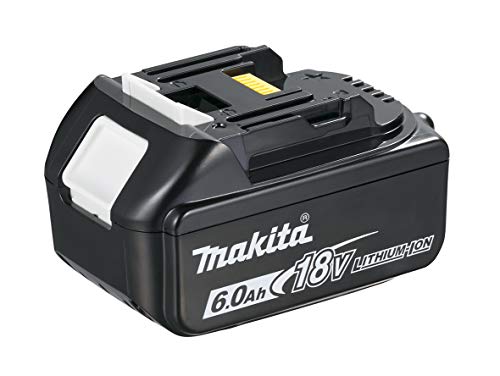
Makita BL1860B 18V LXT Lithium-Ion 6.0Ah Battery
The BL1860B is Makita’s flagship 18V battery at 6.0Ah. Paired with the right tool, its longer runtime per charge suits continuous-duty jobs like electrical work, demolition, and carpentry. The 4-stage LED indicator lets you plan charging before you run dry.
On a DC18RC rapid charger it reaches full charge in about 55 minutes. Built-in self-diagnostics detect over-discharge, overheating, and overcurrent, engaging the protection circuit automatically. For storage, keep it at 30-50% and away from heat and humidity to minimize degradation.
The main edge over compatible batteries is cell quality and how precisely it communicates with a genuine charger, which reads each battery’s cell data to pick an optimal charge curve — one reason cycle life tends to run longer than compatible packs.
Makita BL1830B 18V LXT Lithium-Ion 3.0Ah Battery
The BL1830B is the standard-capacity 18V pack, at roughly 290g. It shares the same slide-style terminal as the BL1860B, so charger and tool compatibility carries over completely — the lighter weight pays off on wrist-heavy tools like drivers and wrenches.
Runtime is about half of the BL1860B given the lower capacity, and it charges proportionally faster (about 22 minutes on a DC18RC). Buying a pair and swapping them back and forth keeps downtime close to zero.
Storage guidance matches the BL1860B: keep it at 40-60% for long-term storage. Leaving it fully drained for extended periods risks capacity that’s hard to recover, so top it up roughly once a month.
HiKOKI BSL36A18 MultiVolt Battery (36V 2.5Ah / 18V 5.0Ah)
HiKOKI’s BSL36A18 uses MultiVolt technology: mounted on a 36V tool it runs at 36V/2.5Ah, and on an 18V tool it automatically switches to 18V/5.0Ah. One battery covers everything from a 36V circular saw down to an 18V driver, with no swapping packs.
A 4-stage LED shows remaining charge, and on a UC18YFSL-class charger it reaches full charge in about 25 minutes in 36V mode — a real difference on the job. Warranty is 2 years or 1,500 charge cycles, whichever comes first.
Store it in a dedicated case away from direct sun and heat above 40°C. With more cells packed into a MultiVolt pack, temperature management matters even more than with a standard 18V battery.
Makita DC18RC 18V LXT Rapid Optimum Charger
The DC18RC is Makita’s fan-cooled Rapid Optimum charger, built to keep charging a battery that’s still hot from use. It brings a BL1860B to full charge in around 55 minutes, and runs on a standard 100-120V single-phase household outlet.
It communicates with each battery’s internal chip throughout the charge, actively managing current, voltage, and temperature to protect cell health. An end-of-charge tone lets you know it’s done without checking the indicator.
Store the charger itself away from heat and humidity too — a closed car in summer can exceed 60°C, which accelerates wear on the internal electronics.
HiKOKI-compatible UC18YFSL 14.4V-18V slide battery charger
This HiKOKI-compatible slide-style charger covers 14.4V-18V batteries. Drop a battery in and charging starts automatically — a simple design that leaves no room for operator error, and at roughly 350g it’s easy to toss in a tool bag.
Charge time for an 18V 6.0Ah pack is around 60 minutes. An LED indicator shows charging, complete, and error states. It’s slower than a top-tier rapid charger but priced to make a solid backup unit.
It has no recovery function for a badly over-discharged battery, so pair it with a rapid charger for that scenario. Great as a second unit kept on-site so a spare battery is always ready to go.
COOMYXIN 18V 6.0Ah Replacement Battery for Makita (CE/UL/RoHS/PSE certified, 2-pack)
MenaIf you’re going compatible, certification is the minimum bar. I’ve tried uncertified compatible batteries on the job and seen chargers that won’t even recognize them, or packs that run hot in ways they shouldn’t. A properly certified one gets you close to genuine-battery peace of mind.
This is a certified compatible 6.0Ah pack built to fit Makita’s 18V platform, with meaningfully higher safety standards than uncertified alternatives — real protection against overheating, short circuits, and overcharging while charging.
The 4-stage LED indicator matches the readability of a genuine BL1860B, and built-in diagnostics halt charge/discharge automatically if a cell fault is detected. Charger communication can be slightly less precise than genuine, so avoid leaving it on the charger after it’s done.
The biggest factor in a compatible battery’s lifespan is storage temperature — heat wears down the cells faster than in a genuine pack. Store at 30-50% charge, 15-25°C, and top up if it sits unused for 3+ months.
Accessories: storage cases and a fireproof safety bag
Adjustable-divider hard case for power tool batteries and charger
MenaA case with fully adjustable dividers is worth it just for keeping a battery and charger together in one grab-and-go unit. Managing several batteries in one place cuts way down on the “did I bring it” moments on the way out the door.
A storage case with movable dividers lets you lay out compartments to fit however many batteries and whatever charger size you’re carrying. Impact-absorbing padded exteriors protect batteries from drops and stacking.
The real value of a case for long-term storage is protection from dust, moisture, and stray metal shavings — storing a battery bare risks corroded terminals or a short from conductive debris touching the contacts.
Khanka Hard Battery Storage Box for Makita 12V/18V/40V Battery & Charger
This hard case is sized for a compact 18V driver or impact driver plus two batteries and a charger. The molded holders trace the shape of the gear inside, cutting down on rattling and terminal contact while it’s on the move.
One caveat for storage: heat dissipation inside a sealed hard case is a little limited. A battery straight off the charger can still be at 60-70°C — always let it cool to room temperature before closing it in. Sealing it hot raises the storage temperature and eats into cycle life.
For storage of a month or more, keep the closed case indoors away from direct sun. Tossing in a bag of desiccant along with it inside a poly bag covers the humidity side too.
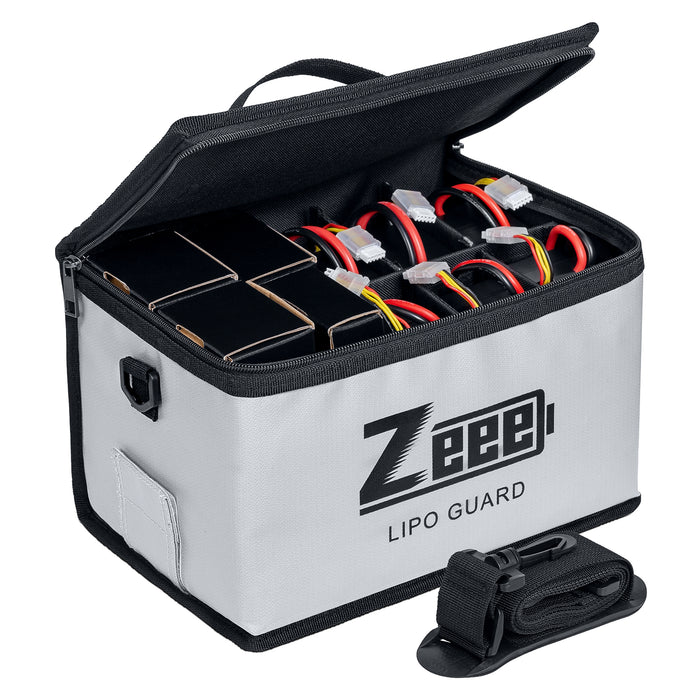
Zeee LiPo Safe Bag — Fireproof Charging & Storage Pouch
 Mena
Once you’ve seen a LiPo battery go into thermal runaway, the case for a fireproof bag makes itself. Thinking through the risk of storing batteries in a car is what got me into the habit of always using a safety bag — worth having at least one for risk management on-site or in the vehicle.
This safety bag uses a fireproof, silicone-coated fiberglass construction designed to contain flame and toxic gas if a lithium-ion cell overheats or ignites. It works for cordless tool batteries as well as drone and e-bike LiPo packs.
At roughly 27cm x 17cm x 17cm it holds 2-3 slide-style 18V batteries. You can leave it zipped closed while charging inside, which is genuinely useful for overnight charging or storing a battery in a vehicle.
A fireproof bag works on two fronts — prevention and damage containment. Combined with the storage temperature and charge-level habits above, it minimizes worst-case damage to property and equipment.
Extra-Large Hard Tool Battery Carrying Case (fits Makita/DeWalt/Milwaukee)
This extra-large case is built to fit batteries and chargers across Makita, DeWalt, and Milwaukee platforms. Adjustable internal dividers let you lay out a Makita 18V pack and a HiKOKI MultiVolt pack side by side in the same case.
The shell is a PVC/EVA composite with splash and dust resistance, plus a carry handle and non-slip base that stays put on a truck bed or workbench.
For anyone running tools across multiple brands, centralizing battery storage in one case makes it far easier to see at a glance which packs are charged — the real key to never running out of battery mid-job.
Summary: managing batteries for the long haul
Extending lithium-ion battery life isn’t complicated: store at 40-60% charge, 15-25°C, let it cool before storing, and top it up monthly if it’s sitting unused. Those four habits alone get the most out of a genuine battery’s rated cycle life.
A storage case is an easy thing to overlook. A bare battery accumulates dust, metal shavings, and moisture damage at the terminals over time — a dedicated case is a zero-cost way to protect that investment.
MenaThe basics of a long battery life come down to two things: 40-60% storage charge and watching the temperature. That alone can add 1-2 years to your replacement cycle. If I had to pick one habit to start with, it’s making that monthly top-up automatic.
FAQ
Is it really that bad to leave a battery in a hot car?
Yes — a car interior in direct summer sun can hit 60-80°C, and that kind of heat can cause irreversible cell damage within days. Never leave a battery sitting in a vehicle.
Do compatible batteries really wear out faster than genuine ones?
A properly certified compatible battery (CE/UL/RoHS/PSE-class certification) can get close to genuine-battery reliability, but uncertified cheap packs are a real risk — chargers that won’t recognize them, or packs that run hotter than they should. Storage temperature has the biggest effect on how fast any compatible battery’s cells degrade.
What charge level should I actually store a battery at?
40-60% is the sweet spot for long-term storage, at 15-25°C. Avoid storing at 100% or fully drained, and let a battery cool to room temperature after charging before putting it away.
Related reading
- DIY Torque Wrench Guide: 90% of Your Force Never Tightens the Bolt
- What Do You Cut That Metal With? Choosing a Cutting Method by Thickness, Shape, and Precision
- Oil Stone vs. Water Stone: 4 Sharpening Stones Compared (Or Just Use an Electric Grinder?)
- Whetstone Not Cutting Like It Used To? How to Tell Loading, Glazing, and Grain Loss Apart
- HiKOKI System Case: All 5 Models Reviewed — Systainer-Compatible Storage That Connects with Makita MAKPAC