
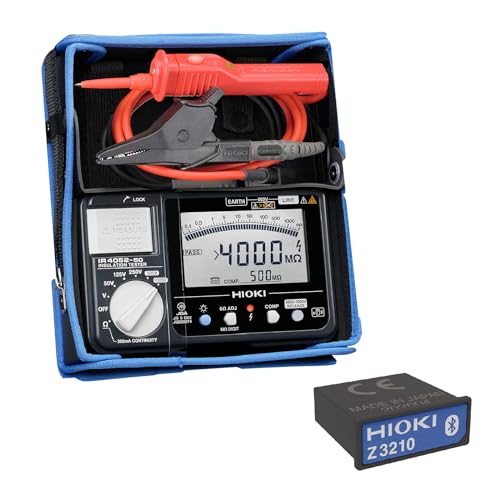
Affiliate Disclosure: This article contains affiliate links. If you make a purchase through these links, we may earn a commission at no additional cost to you.
As a building management engineer (building maintenance technician) with over 10 years of hands-on experience, I’ve compiled the measurement instruments and inspection tools I’ve actually put to the test in electrical system inspections and maintenance management. I’ve selected them by use case: what’s required for statutory inspections, what shines in energy efficiency diagnostics, and what I rely on during daily rounds.
Electrical inspections in building management aren’t something “anyone with a license can do” — accurate measurement and correct judgment directly affect accident prevention, energy savings, and cost control. The choice of measurement instrument changes both inspection efficiency and the credibility of your reports. Here I introduce only the tools where I’ve genuinely thought “I couldn’t do this job without it,” along with the reasons why.
 Mena
MenaIn building management electrical inspections, “quality of measurement = credibility of your report.” If you take data with cheap instruments, you’ll struggle to explain the numbers when someone asks later.
How to Choose Measurement Instruments as a Building Management Engineer
Choose Based on Statutory Inspection vs. Self-Managed Inspection
For inspections required by law — such as periodic electrical equipment inspections (chief electrical engineer duties) or building equipment inspections — JIS-certified or officially verified instruments may be required. For daily rounds and self-managed inspections, standard models are sufficient. Before purchasing, clarify “what purpose will I use this for” — that’s the first step.
Instruments Needed for Building Management’s 4 Core Measurements
The four fundamentals of electrical equipment inspection are: insulation resistance measurement (megger), earth resistance measurement, live-wire confirmation (voltage detector), and load current measurement (clamp meter). These are supplemented by illuminance, temperature/humidity, and noise measurement for building environment management. Energy management additionally requires a power logger.
Criteria for Choosing a Manufacturer
Among domestic manufacturers, HIOKI (Hioki E.E. Corporation) is the top brand for electrical measuring instruments. KYORITSU (Kyoritsu Electrical Instruments Works) and SANWA (Sanwa Electric Instrument) are also field staples. FLUKE is the industry standard for infrared thermometers, and RION leads in sound level meters. All are strong on JIS compliance and domestic repair support.
Top 10 Measurement Instruments for Building Management Engineers
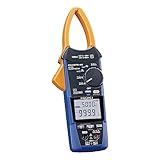
HIOKI AC/DC Clamp Meter CM4375-50






 Mena
MenaThis is the clamp meter I’ve used most heavily on the job. AC/DC dual compatibility handling everything from low to high current in a single device is genuinely invaluable during building management inspection rounds.
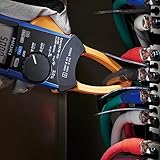
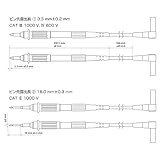
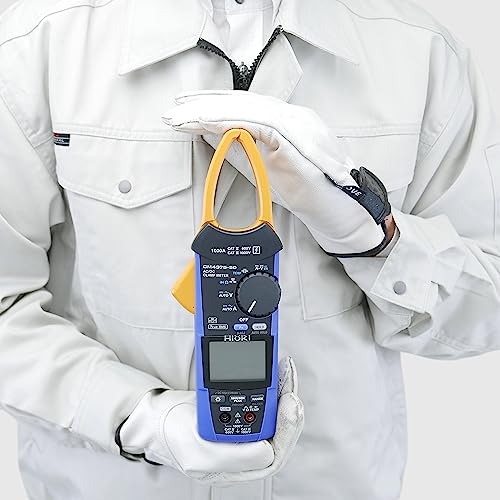
The clamp meter is the most frequently used instrument in building management electrical inspections. The HIOKI CM4375 is a True RMS measuring instrument supporting AC/DC up to 1000A, accurately handling the distorted waveforms common in facilities with many inverter-driven devices. With IP54 dust and water protection, it’s safe to use in machine rooms and on rooftops.
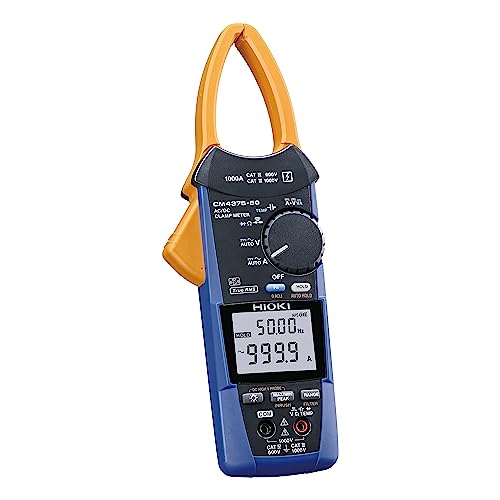
Paired with the Bluetooth-compatible wireless adapter Z3210, it transmits real-time data to a smartphone from elevated positions or enclosed spaces. For live-wire work safety, this function carries meaning beyond mere convenience. Being able to record breaker-by-breaker load currents inside a distribution panel by yourself dramatically improves job efficiency.
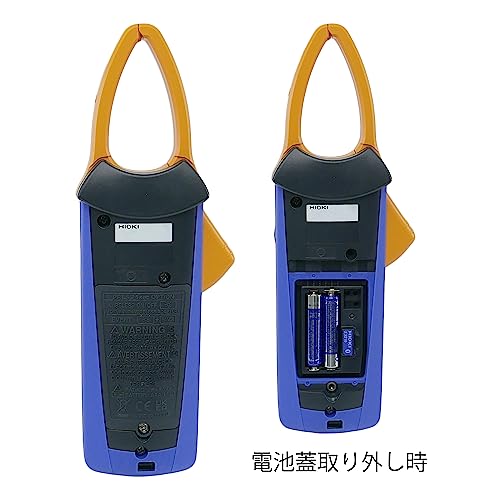
“Expensive, but I’ve never regretted buying it” — a common sentiment on the job. The ±1.0% (AC current) measurement accuracy is especially important when using data as the basis for energy efficiency improvement proposals. It changes the quality of the data you put in your inspection reports.
HIOKI Insulation Resistance Meter IR4051-10


 Mena
MenaHIOKI is the field standard for meggers. With JIS certification, there’s a completely different level of reassurance when you show it to clients. An essential unit for periodic inspections of specified electrical installations.
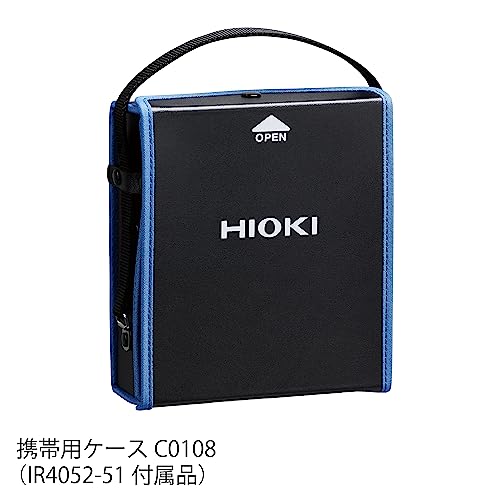
The insulation resistance meter (megger) is a measurement instrument legally required for building management engineers during periodic electrical equipment inspections. The HIOKI IR4051-10 covers 5 ranges (50V/125V/250V/500V/1000V), handling everything from low-voltage circuits to high-voltage equipment in a single unit. It’s JIS C1302 certified, so its measurement data can be used in officially recorded periodic reports.
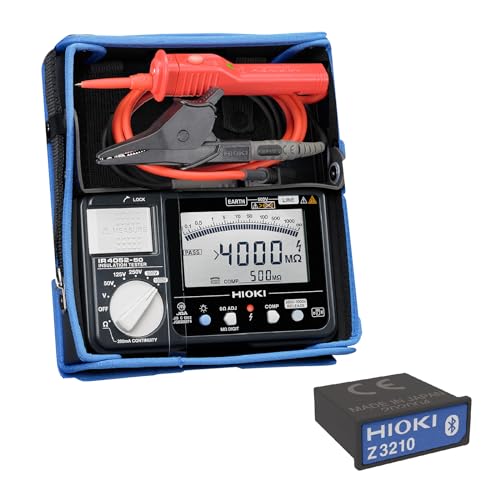
The “AUTO measurement” function that automatically determines test voltage is particularly practical. It eliminates errors from setting the wrong voltage and removes the hassle of switching manually for each measurement target. The large backlit LCD display is easy to read even in dimly lit switchgear rooms — small details that matter greatly in the field.
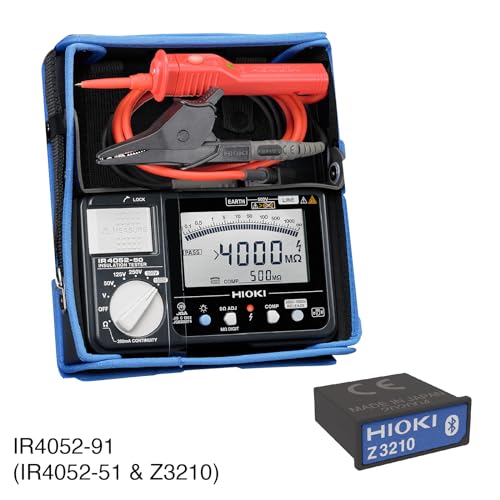
The downside is that with 5 ranges, some learning time is needed to master the settings. There’s a steeper learning curve compared to the entry-level IR4011-10 (single range), but if you’re a full-time building management professional, go with the 5-range model. Seasonal variation in measurement values is an important part of judging insulation resistance, and more ranges allow finer-grained diagnostics.
KYORITSU Earth Resistance Tester KEW4105DL
MenaKYORITSU is the easy choice for earth resistance testers. The ability to switch to clamp-type measurement in situations where it’s hard to place auxiliary ground stakes is quietly very useful.
Periodic earth resistance measurement is required at least once a year in building electrical equipment management. The KEW4105DL supports not only the conventional 3-terminal method but also a “simplified measurement” function that measures without disconnecting the grounding wire. This greatly simplifies measurement in places like underground parking lots and machine rooms where auxiliary ground stakes can’t be driven.
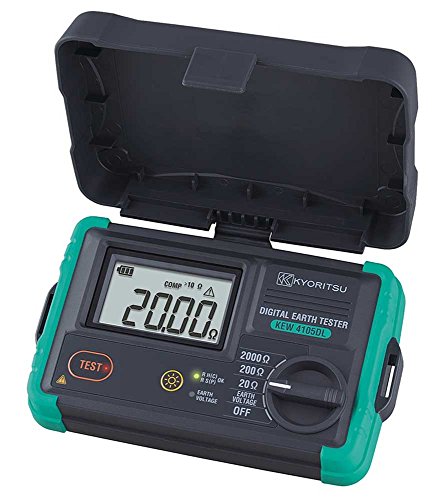
The measurement range spans 0.00Ω to 1200Ω across 5 ranges, covering the accuracy needed to judge Class C and D earth work requirements (10Ω or less and 100Ω or less respectively). Direct key operation makes switching measurement modes smooth, and the operability is excellent for inspection rounds measuring multiple locations in sequence.
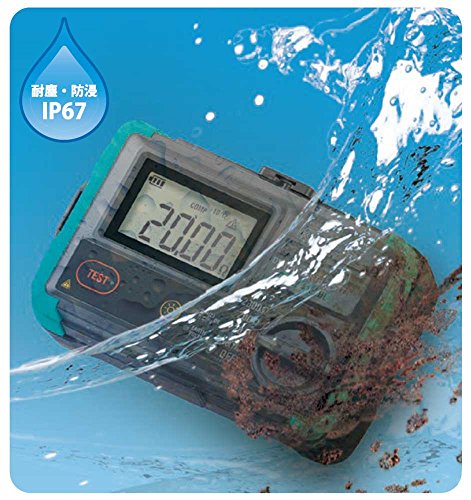
Note that with formal 3-terminal measurement requiring auxiliary stakes, measurement accuracy is influenced by how well the stakes are driven in. In urban buildings with many paved surfaces and cobblestones, there are situations where earth auxiliary stakes can’t be driven at all — in those cases, the simplified measurement mode is used instead. The legal validity of measurement results under specific site conditions requires judgment based on the circumstances.
HIOKI Voltage Detector 3480



 Mena
MenaDon’t cut corners on a voltage detector. Skipping live-wire confirmation puts lives at risk. The HIOKI detector notifies you with both sound and lamp, which is why I trust it.
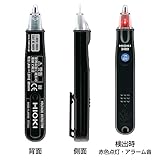
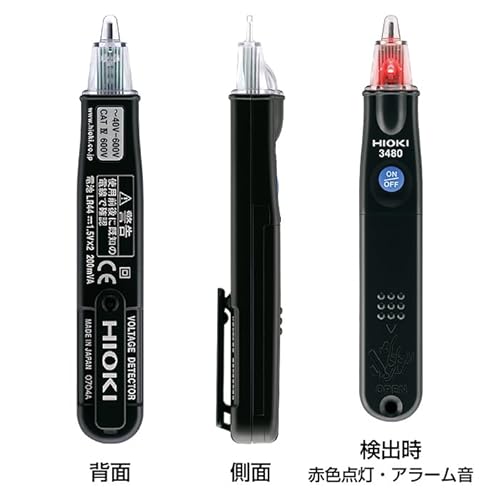
A voltage detector is used for the first step of the fundamental electric shock prevention sequence: “detect → confirm → work.” The HIOKI 3480 handles low voltage (AC 50V–600V), ideal for confirming live status in building distribution boards, outlets, and lighting equipment. Its dual confirmation via sound and flashing lamp ensures you can reliably determine energization status even in noisy machine rooms.
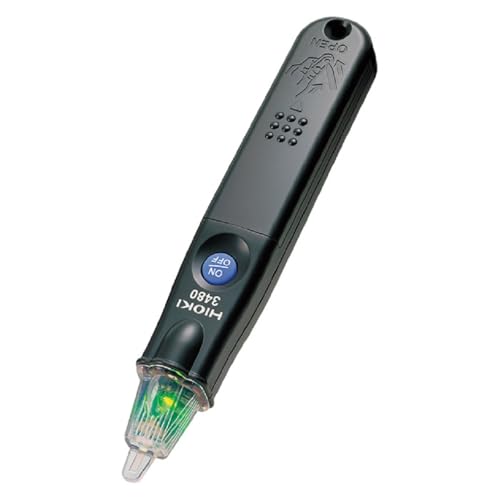
The pen-type design fits in a breast pocket — compactness matters in the field. Building management inspection rounds involve checking many pieces of equipment, so how easily you can retrieve a tool and complete a check directly affects work efficiency. The simple cap-off-and-use operation makes what you’ll do dozens of times a day completely stress-free.
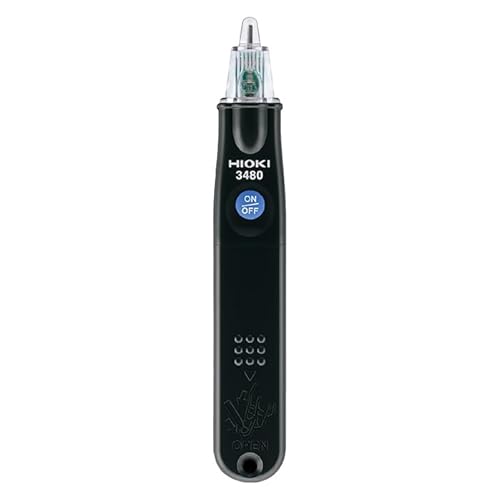
The latest model is the 3481 (with LED light), but the lamp-flash type 3480 drains batteries more slowly and is better suited to long inspection rounds. An LED is convenient in dark environments, but in bright outdoor conditions where instrument lamps are harder to see, there’s little practical difference between the two. Choose based on your specific use case.
SANWA Digital Multimeter PM3


 Mena
MenaI’ve been using SANWA’s PM3 since my early days in the field. One unit covers all the basic measurements: voltage, current, resistance. The cost-performance is outstanding.
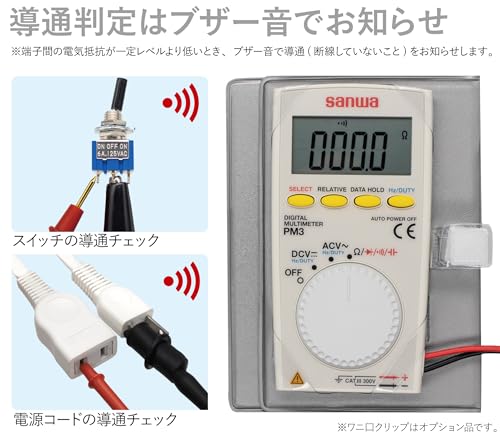
The digital multimeter (DMM) is the basic measuring instrument that building management engineers keep in their pocket at all times. SANWA’s PM3 is a pocket-type unit consolidating AC/DC voltage, current, resistance, and diode check into one — covering all the functions needed for everyday electrical troubleshooting. The affordable market price makes it easy to keep a spare, which is part of why it’s so widespread in the workplace.
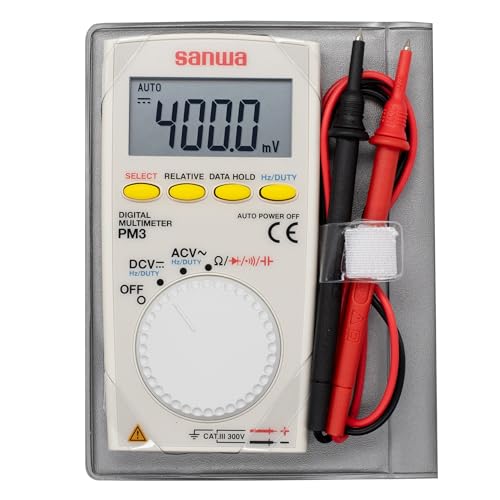
The auto-range function that prevents incorrect measurements removes the hassle of adjusting the range every time the target changes. The large LCD display with good contrast is easy to read even in dimly lit switchboard environments. While there’s no backlight, the visibility this pocket-size unit delivers is highly practical.
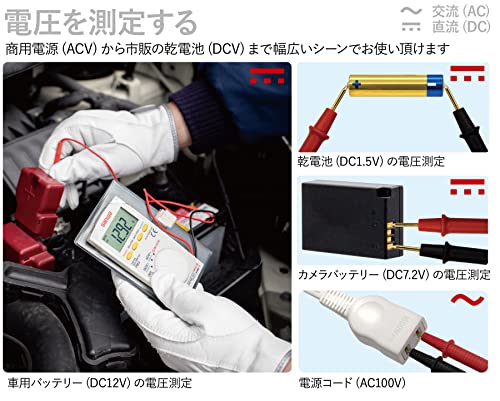
From a professional standpoint, the lack of True RMS support is a downside. In facilities with many inverter devices and VVVF controllers, current readings from the PM3 can come in lower than actual values. For precise motor current management and energy measurement, it’s best used in combination with a HIOKI True RMS clamp meter for different purposes.
HIOKI Illuminance Meter FT3424


 Mena
MenaAn illuminance meter isn’t in the standard building management four-tool kit, but it’s essential in practice because the Building Standards Law includes illuminance standards in its maintenance obligations. The FT3424 accurately handles LED lighting too.
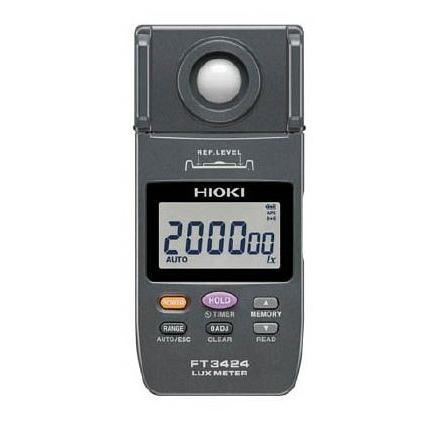
Building illuminance management is a maintenance obligation under the Building Standards Law and the Industrial Safety and Health Act, requiring periodic confirmation that defined illuminance standards are met for offices, corridors, stairways, and machine rooms. The HIOKI FT3424 comes with a correction filter compatible with LED and OA equipment light sources, reducing the LED measurement errors that occurred with conventional illuminance meters.
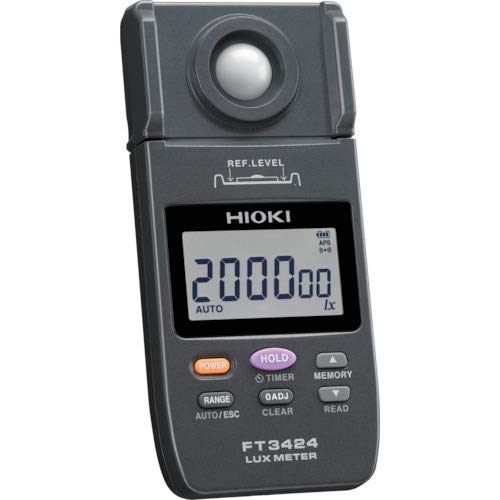
The measurement range of 0.1–200,000 lx covers everything from sun-lit corridors to dim underground parking lots in a single unit. The detachable sensor design, where the light receiver separates from the body, makes measurements easier in high-ceilinged atriums and locations with elevated lighting fixtures.
Note that for official reports requiring a verification certificate, you’ll need the certified model (FT3424 with documentation, e.g., the “3-document attached” version). For general self-management purposes, the standard model is sufficient — but it’s recommended to check the document submission requirements in advance for government-facility properties.
RION Precision Sound Level Meter NL-52
 Mena
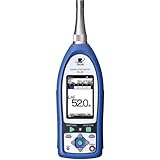
MenaHow many times has this saved me during equipment noise complaint responses. The RION NL-52 is a precision sound level meter (Class 1) with high measurement reliability — it holds up as evidence data in complaint response reports.
Building equipment noise management is important not just for responding to complaints from neighbors, but also from an occupational safety and health perspective. Continuously operating equipment such as air conditioning units, cooling towers, and pump rooms may be classified as specified facilities under the Noise Regulation Law, requiring periodic noise measurement and documentation. The RION NL-52 is a precision sound level meter (JIS S 1509 Class 1) meeting the measurement accuracy required for regulatory compliance.
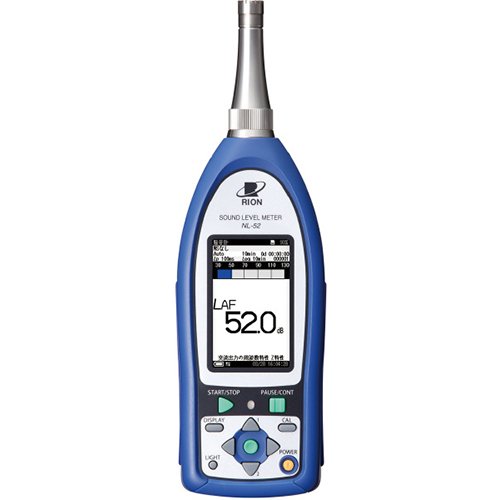
The rugged IP54 waterproof design makes it safe to use outdoors at cooling towers and during rainy-day inspection rounds. The rechargeable battery enables 24-hour continuous measurement, supporting nighttime noise level verification and time-of-day variation recording. The large 3-inch color LCD screen makes on-site data review and immediate judgment easy.
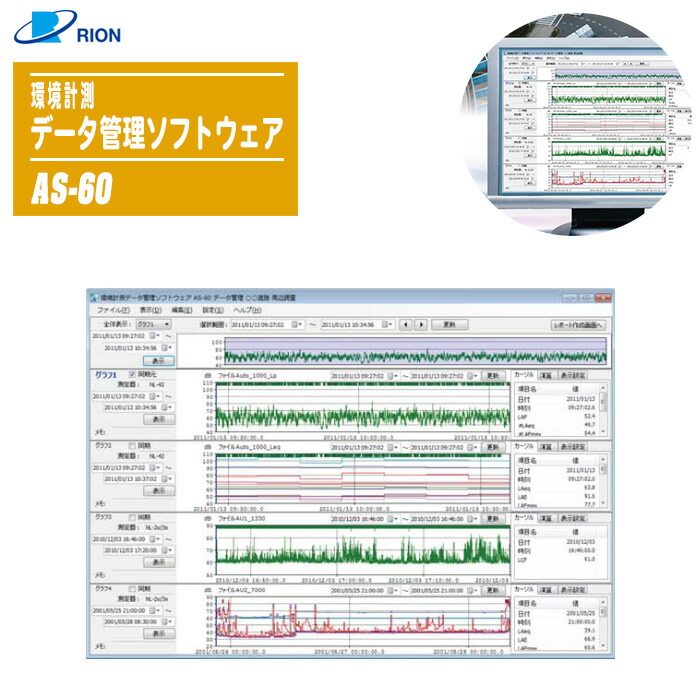
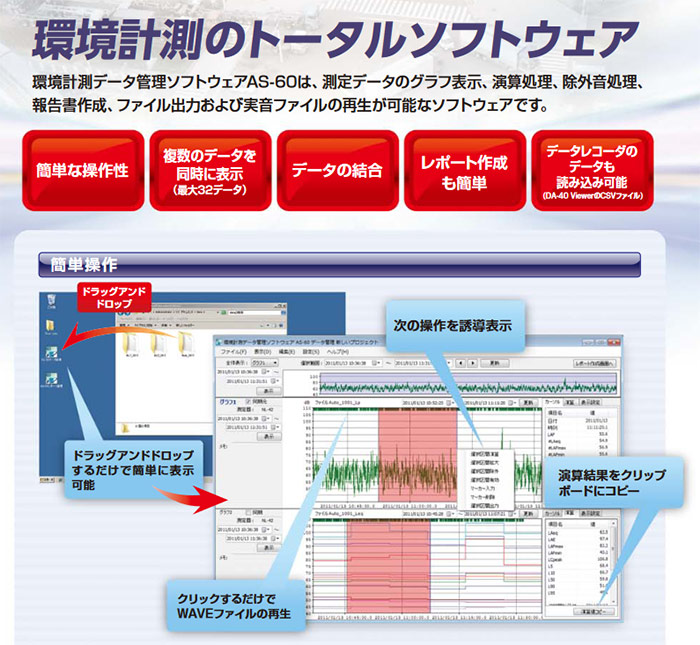
The price is on the higher side, but compared to Class 2 (general sound level meter) options like the NL-42, the frequency correction precision is higher and measurement variation is lower — making it better suited for formal records like complaint responses. For everyday noise confirmation, Class 2 is sufficient, but for records that need legal grounding, choose Class 1.
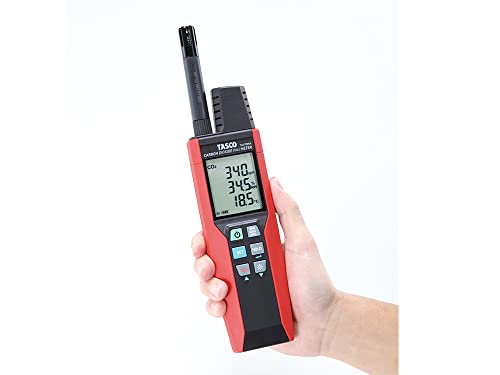
TASCO CO2 / Temperature-Humidity Meter TA470WA


 Mena
MenaA temperature-humidity meter is indispensable for air conditioning management. In summer especially, server rooms and machine rooms sometimes don’t cool down to the set temperature. TASCO’s TA411VC has great value and I always carry one in my pocket.
Temperature and humidity management inside buildings is a fundamental inspection item for balancing tenant comfort and protection of equipment. Even when air conditioning is running normally, temperature differences can develop between near the supply vent and the far end of an office. The TASCO TA411VC is a temperature-humidity meter with swappable probes, allowing rapid measurement of multiple points: supply vents, return vents, and interior spaces.
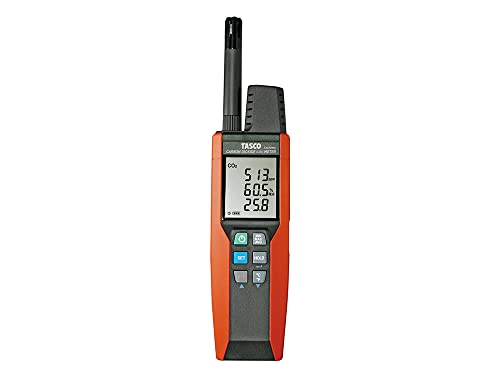
The data logging function records temperature and humidity changes over time. It can be used for seasonal management records such as summer heat stroke risk assessment and winter mold risk verification. TASCO (Ichinen TASCO) is a specialized manufacturer of measuring instruments for air conditioning and refrigeration equipment, with strong industry trust and good availability of replacement parts and consumables.
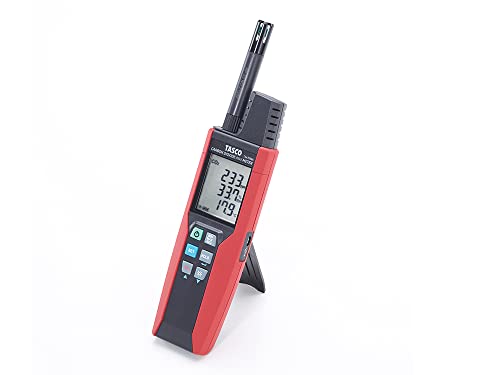
Regarding measurement accuracy, periodic calibration is recommended for locations requiring strict temperature and humidity management such as server rooms. The TA411VC excels as a general-purpose field management tool, but for precision environmental management, use a separately calibrated instrument with a calibration certificate.
FLUKE Infrared Thermometer 62MAX


 Mena
MenaInstantly checking for abnormal heat inside distribution boards without contact. You can use it safely even where contact-type instruments carry electric shock risk. The FLUKE 62MAX is IP54 waterproof and withstands the harsh environments of the job site.
An infrared thermometer that non-contactly checks for heat anomalies in electrical equipment provides sufficient information for daily inspections without the high cost of a thermal camera. The FLUKE 62MAX covers a wide measurement range of -30 to 500°C, safely confirming overheating points in distribution board breakers, connection terminals, and transformers while equipment is live.
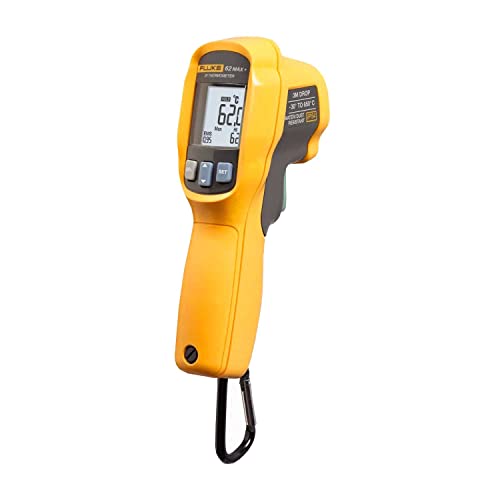
It passes IP54 water and dust resistance and a 3-meter drop test, designed for use in harsh industrial environments. The laser pointer makes aiming easy, allowing accurate targeting of elevated equipment and recessed locations. Accuracy of ±1.5°C (or ±1.5% of reading) is more than adequate for field inspection purposes.
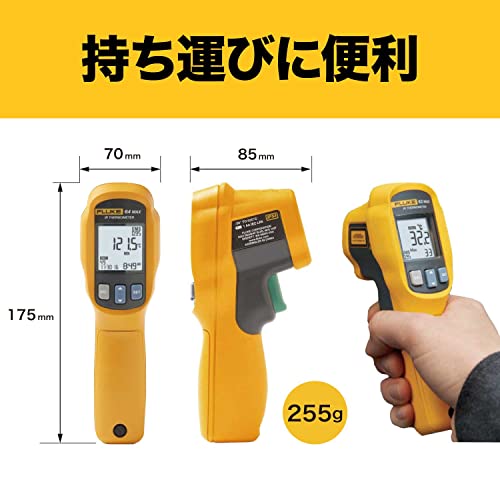
For accurate measurement, the emissivity setting for the target object is important. Metal surfaces have low emissivity and can display temperatures lower than actual. Combine readings with high-emissivity parts such as wiring lugs and insulation for judgment, or consider upgrading to a FLUKE thermal imaging camera. As a temperature anomaly detection tool for daily inspections, this is among the most reliable options in this price range.
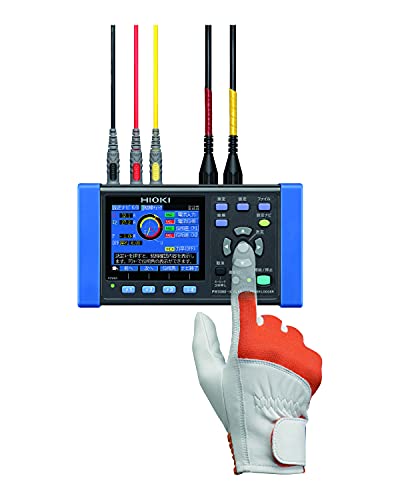
HIOKI Power Meter PW3360-10


 Mena
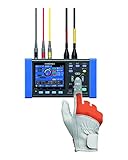
MenaThe PW3360 is essential for energy efficiency diagnostics. One unit handles everything from single-phase 2-wire to 3-phase 4-wire, and you can monitor demand values in real time. I’m now able to produce data-backed proposals for reducing electricity usage.
For building energy management, a clamp-on power logger that measures power consumption per piece of equipment is invaluable. The HIOKI PW3360-10 is a clamp-on power logger with memory card recording capability, supporting single-phase 2-wire through 3-phase 4-wire configurations. It’s used for everything from demand monitoring and maximum demand power tracking to creating energy efficiency diagnostic reports.
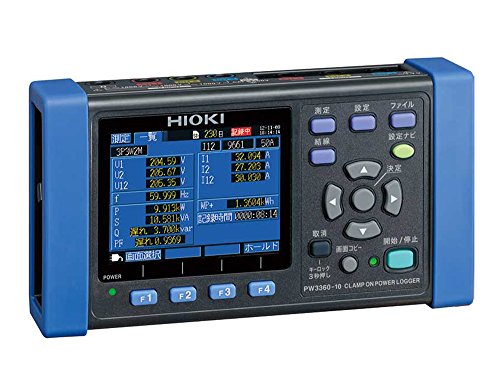
Simply clamping it onto existing cables enables setup with no power outage required — a major practical advantage. Attach it to distribution board trunk lines or major equipment power lines for 24-hour to 1-week continuous recording, visualizing peak hours, unnecessary standby power, and nighttime leakage current trends.
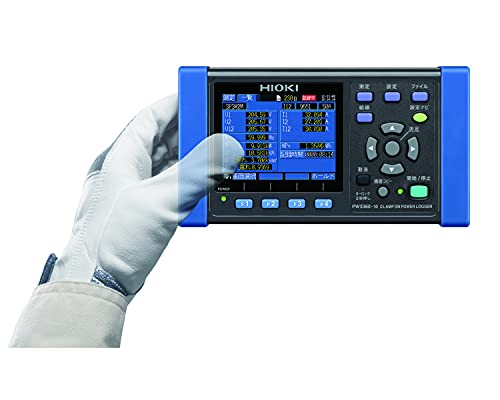
The downside is that proper clamp-to-wire attachment is needed to ensure measurement accuracy, and in dense cable trays with multiple cables in close proximity, accurate attachment can be difficult. The unit is also expensive, and a single unit cannot simultaneously measure multiple trunk lines — so systematic measurement in planned equipment order is necessary.
Summary: How to Build Your Building Management Instrument Set
Start with the 4 types required for statutory inspections: insulation resistance meter (HIOKI IR4051-10), earth resistance tester (KEW4105DL), voltage detector (HIOKI 3480), and clamp meter (HIOKI CM4375). With these four, you can handle all periodic electrical equipment inspections.
Add illuminance meter (HIOKI FT3424), temperature/humidity meter (TASCO TA411VC), and sound level meter (RION NL-52) for environment management, and you’ll be fully equipped for statutory maintenance obligations. The power logger (HIOKI PW3360-10) becomes a powerful tool for energy efficiency diagnostics and demand management, and the infrared thermometer (FLUKE 62MAX) excels at non-contact abnormal heat detection.
MenaInvesting in measurement instruments is an investment in the “technical credibility” of a building management engineer. People who can produce accurate data are valued on the job site.
Related Articles
- Complete Guide to Tools Used by Welders on the Job Site [Top 11 Pro Picks]
- Complete Guide to Painter’s Job Site Tools | 12 Essential Tools Chosen by Professional Tradespeople
- Top 10 Maintenance Instruments Used by HVAC Maintenance Professionals
- 12 Sheet Metal Worker Job Site Tools [2026 Edition]
- The Go-To Tools for Mechanics! Top 10 Ratchets, Wrenches, and Pliers