
Affiliate Disclosure: This article contains affiliate links. If you make a purchase through these links, we may earn a commission at no additional cost to you.
Working the same tool belt setup every day means you eventually hit the same wall: “why can’t I just swap this out?” You unclip the whole pouch at the end of a job, then rebuild it from scratch on the next site. Every time, the belt loop stretches a little more and your tools end up sitting crooked. Tajima’s Sef system solves exactly that — a quick-release standard for tool belt accessories.
This guide compares all 12 accessories in Tajima’s Sef lineup — pouches, holders, and dedicated holsters — from a working tradesman’s perspective.
If you’re an electrician running a full rig all day, SFKBN-DK2L (large 2-tier electrician pouch) is the pick. If you’re working at height often, go straight for SFKBN-DK2L2H (twin-hook version). If you just want to make an existing belt Sef-compatible, SF-CHLD (lightweight resin holder) is the cheapest entry point.
 メナ
メナHey, I’m Mena — a hybrid mechanical/electrical engineer. I’ve cycled through more tool belt systems than I can count, and once you get used to swapping accessories without taking the belt off, there’s no going back to anything else.
The Sef system works by clipping a dedicated Sef holder onto your belt, then attaching pouches or tool holders to that holder with a single motion — no need to remove the belt to swap gear. That’s what’s made it popular across trades: electrical, plumbing, carpentry. Below, all 12 pieces are broken down into three categories: pouches, holders, and dedicated accessories.
How the Sef System Works, and Compatibility
Sef holders come in two types: clip-on and pouch-integrated. The clip-on type (SF-CHLD, SF-MHLD, etc.) attaches to an existing belt in seconds, instantly making that belt Sef-compatible. Any Sef-standard pouch or tool holder then just slides into the holder and locks — release is a simple lever-and-slide motion.
メナI learned the compatibility rule the hard way — mixed a cheap third-party holder into my Sef setup once and spent a whole morning fighting a wobble I couldn’t diagnose. Stick with genuine Tajima parts across the system.
Compatibility is the key thing to understand. Genuine Tajima Sef parts — holders, pouches, tool holders — are generally interchangeable with each other. Cross-brand compatibility isn’t guaranteed, so it’s safest to stick with Tajima across the whole system. Material choice (nylon / croco-pattern PVC / genuine leather) is the other core decision, and that’s covered piece by piece below.
All 12 Sef Accessories (Pouches, Holders & Accessories)
Tajima Sef Quick-Release Single Tool Holder — SFKH1
The entry point into the Sef lineup, and a popular one. High-density nylon gives it solid water and abrasion resistance, and it holds a single slim driver or pliers. It’s a good call when you want the bare minimum clipped to your belt, or an extra slot alongside an existing pouch. Since it’s a clip-on holder, it works with whatever belt you’re already wearing. The downside is obvious — one tool only, so multi-tool jobs mean buying more than one. Electricians also use it as a dedicated slot for a voltage tester or a utility knife.
Tajima Sef Quick-Release Pouch, 2-Tier Small — SFKBN-2S
A compact 2-tier pouch built for tight spaces and jobs where you’re moving around a lot. The 5-layer construction — high-density nylon plus EVA foam — gives it strong waterproofing and puncture resistance, so the inside stays dry even on wet jobs. The front pocket is shallow, the rear pocket deeper — the standard setup is frequently-used tools up front, stock parts and consumables in back. It mounts on a single Sef hook. Loaded up heavy, it can swing a bit, so it’s best suited to lighter tool loads.
Tajima Sef Quick-Release Pouch, 2-Tier Medium — SFKBN-2M
Sits between the small and large 2-tier pouches. It has the capacity for 7-8 electrician staples — pliers, nippers, a folding rule — which makes it popular with electricians who like to consolidate everything into one pouch. It’s nylon, so it’s light and doesn’t wear on your hip much even over a long shift. The wide opening makes tools easy to grab even in dim conditions, which is a big part of why it scores well in field reviews. The single hook can rotate a bit, which is the main complaint — for high-movement jobs like working at height, the twin-hook model is the better call.
Tajima Sef Quick-Release Electrician Pouch, 2-Tier Large — SFKBN-DK2L
Built specifically for electricians. The front tier fits pliers, nippers, and a Phillips driver; the rear tier takes a cable stripper and a full-thread screwdriver; and the large side pocket swallows cable rack joint hardware. It’s high-density nylon with PVC coating, so it holds up well on sites with a lot of metal shavings and swarf. Add a holder with a pry bar or voltage tester and you’ve got a complete one-pouch setup. Fully loaded it does add weight to your hips, so pairing it with a support belt is worth considering.
Tajima Sef Quick-Release Electrician Pouch, 2-Tier Large, Twin Hook — SFKBN-DK2L2H
The twin-hook version of the DK2L. Two attachment points cut down sideways sway significantly when you’re working at height or on scaffolding. A pouch that swings while you’re up a pole or on scaffold breaks your concentration fast — field reviews consistently report the twin-hook cutting that sway roughly in half. It’s not just for electricians — anyone moving up and down a lot, scaffolders and rebar crews included, benefits from this. The price bump over the single-hook version is modest. If working at height is part of your routine, just start with this one — it’s the one I’d pick without hesitation.
Tajima Sef Quick-Release Small Electrician Pouch — SFDE2S
A smaller pouch purpose-built for corralling small tools — an electrician’s knife, a marker, a voltage tester. The standard setup is running this alongside an SFKBN-series pouch, one on each hip. Splitting tools left and right is common practice among electricians — pliers-type tools on the left hip, small items on the right, for example. Since everything’s quick-release, you can also just swap the small-items pouch alone when you change jobs mid-shift. Capacity is limited, so it’s not the right pick for jobs needing a large tool count.
Tajima Sef Clip-On Holder, Lightweight Resin — SF-CHLD

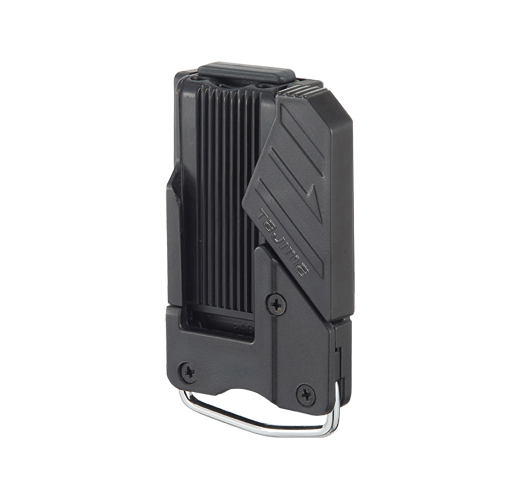
A closer look at the Tajima Sef Clip-On Holder Lightweight Resin SF-CHLD.
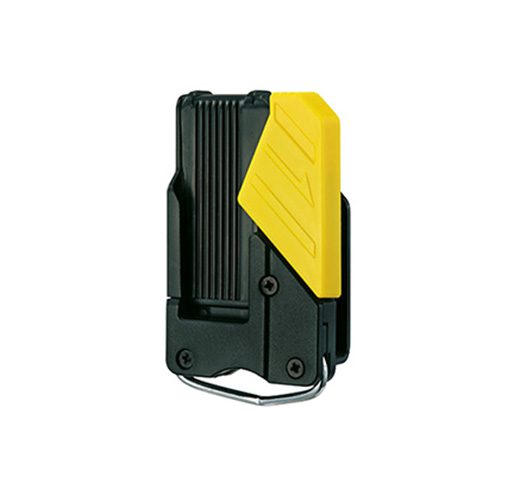
The natural starting point for adding the Sef system to a belt you already own. Lightweight resin construction, fits belts up to 60mm wide. The headline feature is that it clips on without removing your belt, so your existing work belt becomes Sef-compatible immediately. Attach a Sef pouch or tool holder and you’re up and running. Being resin, it’s lighter than the metal version, which matters if you’re clipping and unclipping gear all day. For heavier pouches, the metal SF-MHLD is the better match.
Tajima Sef Clip-On Holder, Metal — SF-MHLD
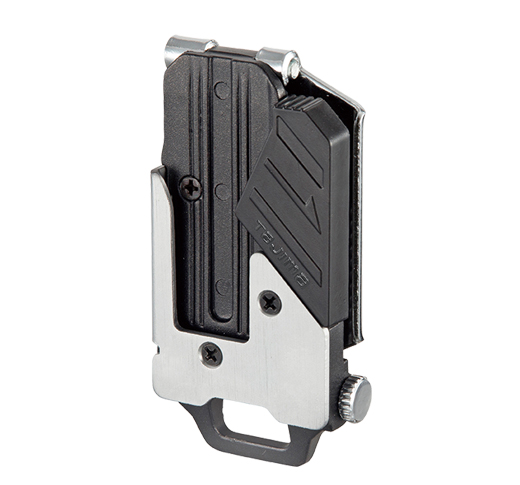

A closer look at the Tajima Sef Clip-On Holder Metal SF-MHLD.
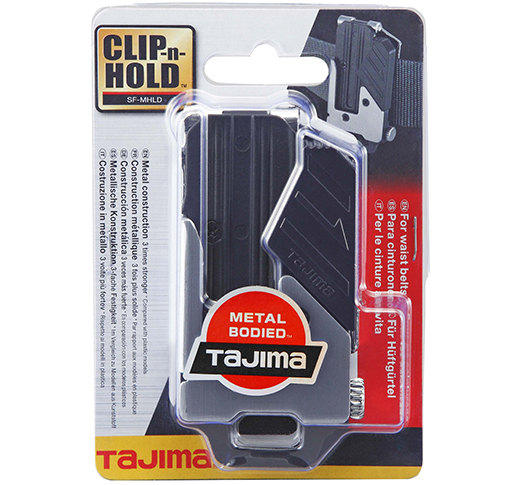
The metal clip-on holder, rated at roughly 3x the strength of the resin version. If you’re hanging a heavy pouch (500g+) or heavy tools — a large carpenter’s hatchet or a hammer — this is the one to trust. The metal clip mechanism holds firm: no slipping, no popping loose. Field users report it staying rock-solid even with a fully-loaded 2-tier electrician pouch attached. The tradeoffs are weight (1.5-2x the resin version) and price — for lighter loads, the resin holder is the more cost-effective choice, so it’s worth matching the holder to the load rather than defaulting to metal.
メナTether requirements at height aren’t optional on a lot of the sites I’ve worked. Having the drop-prevention wire built into the holder itself, instead of rigging something separately, is the kind of detail that saves you a headache during a safety walk.
Tajima Sef Clip-On Holder, Metal, with Catch-10 Wire — SF-MHLDC10W
The metal holder paired with a Catch-10 tool-tether wire. The wire is a drop-prevention lanyard — if a tool ever pops loose from the holder, the 10cm wire keeps it from falling. Dropped-tool incidents at height are a serious hazard, and plenty of job sites now require tethering by policy on scaffolding, steel structures, and utility poles. This combines the strength of the metal holder with fall-prevention hardware in one piece — a genuine safety spec, not just a nice-to-have. It costs more up front, but it’s worth treating as safety-equipment spend rather than an optional extra.
Tajima Sef Quick-Release Tool Holder, Fiberglass Carabiner — SFKHR-C
A carabiner-style holder made from fiberglass-reinforced resin. The carabiner shape clips fast onto rope, harness D-rings, or similar. Being resin, it’s light and won’t rust, so it holds up fine in wet or humid conditions. Its strength is portability — a single driver clips on and off fast — which is why electricians who carry just one compact through-driver often reach for this one. The downside is it’s not as strong as a metal carabiner, so it’s not the right choice for tools over 500g.
Tajima Sef Holder, Slim — SFC-SHLD
A slim-profile Sef holder built to clip onto the edge of a work-jacket pocket or a narrow tool-belt strap. It’s about 40% narrower than a standard clip-on holder, so lining up several holders side by side doesn’t crowd your hips. For anyone running 4-5 holders around their waist, this is the option for shrinking each individual footprint. It has a locking mechanism to guard against accidental release mid-job. It’s a clip-on design, so it retrofits onto an existing belt. Being slim, it’s less rigid than the standard-width version — best suited to lighter-duty holder use.
Tajima Sef Holster for Driver Cutter L, Black — DC-LSFB
A dedicated Sef holster for Tajima’s L-size driver cutter (a heavy-duty cutting tool). It’s Sef-standard, so it clips straight into any Sef holder on your belt. Large cutters are a daily-carry item on electrical jobs, and plenty of electricians prefer a dedicated holster over digging one out of a pouch — it’s faster and it’s used constantly, so shaving that step off matters. Being purpose-built for Tajima’s L driver cutter, the fit is tight and there’s less risk of it slipping out. Because it’s tool-specific, it doesn’t fit other brands’ large cutters.
メナIf you take one thing away from this guide: buy the twin-hook version if there’s any chance you’ll work at height. I under-bought on my first pouch and swapped to twin-hook within a month anyway — might as well skip that step.
Buying Guide: 3 Criteria for Building Out a Sef Setup
There are three things to weigh when picking Sef pieces: ① material (nylon / croco-pattern PVC / genuine leather), ② holder type (resin / metal), and ③ hook count (single / twin). Nylon is waterproof and light but softer and more prone to deforming than leather. Croco-pattern PVC strikes a middle ground on durability and water resistance. Genuine leather breaks in and gets tougher over time, but it’s heavier and doesn’t love getting wet. If you’re working at height regularly, twin-hook is the only real choice. Pick your holder based on pouch weight — past 500g, go metal.
メナOnce you’ve run a Sef setup for a few months, going back to a belt where swapping gear means unbuckling the whole thing feels like a genuine downgrade. It’s a small mechanical idea that ends up changing your daily routine more than you’d expect.
The real payoff of the Sef system is that you can reconfigure your tool belt on-site, without taking it off. Full electrician pouch in the morning, a slim inspection pouch in the afternoon — the swap happens without ever unbuckling the belt. That flexibility changes how you think about managing your gear day to day.