
 メナ
メナHey, I’m Mena. I’m not an ironworker myself, but rebar tying tools come up in almost every conversation I have with the crews I work around — so I put together what they actually recommend.
As an Amazon Associate, I earn from qualifying purchases.
A rebar setter’s day is a loop: tie a piece, tie the next one, tie the one after that. On a busy job that loop can repeat over 1,000 times before lunch. Back when everything was hand-tied with a manual hook, even an experienced worker topped out around 500 ties a day.
Automatic rebar tying tools changed that math completely. Makita and MAX are the two names that keep coming up, and both keep pushing harder on speed, weight, and how much rebar diameter one tool can handle. This list covers six cordless tying tools plus four supporting tools — a manual hook, tie wire, and two cutters — the ten pieces of gear a rebar crew’s kit actually revolves around.
How to Choose a Rebar Tying Tool
There are five things worth checking before you buy one of these.
1. Rebar diameter range. Check what sizes you’re actually tying on your jobs. Slab and wall work on typical buildings stays mostly in the #3-#5 range; heavy civil work (bridges, large foundations) can run up to #9 or larger, which needs a flagship-class tool like the RB611T below, not an entry-level tier.
2. Voltage and battery platform. Makita runs 18V LXT, MAX runs its own 14.4V/proprietary lineup. Batteries don’t cross brands, so if you already run one platform for other tools, staying on it for your tier saves you from managing a second battery family.
3. Tying speed. Most tiers land around half a second per tie. That sounds trivial until you multiply it across a thousand-tie day — a tenth of a second per tie adds up to real time saved by quitting time.
4. Weight. These run 5-6 lbs for standard tying tools, more for cutters. Lighter is easier on your arm over a full shift; heavier machines usually trade that comfort for bigger diameter capacity or bigger batteries. Decide which trade-off actually matches your workday.
5. Wire cost. Tie wire is a consumable you’ll keep buying long after the tool itself is paid off. Genuine wire runs more per roll than off-brand alternatives, but jam-prone cheap wire costs you more in downtime than it ever saves — factor that into the real cost before switching to save a few cents a roll.
10 Rebar Tying Tools, Wire, and Cutters Worth Adding to Your Rig
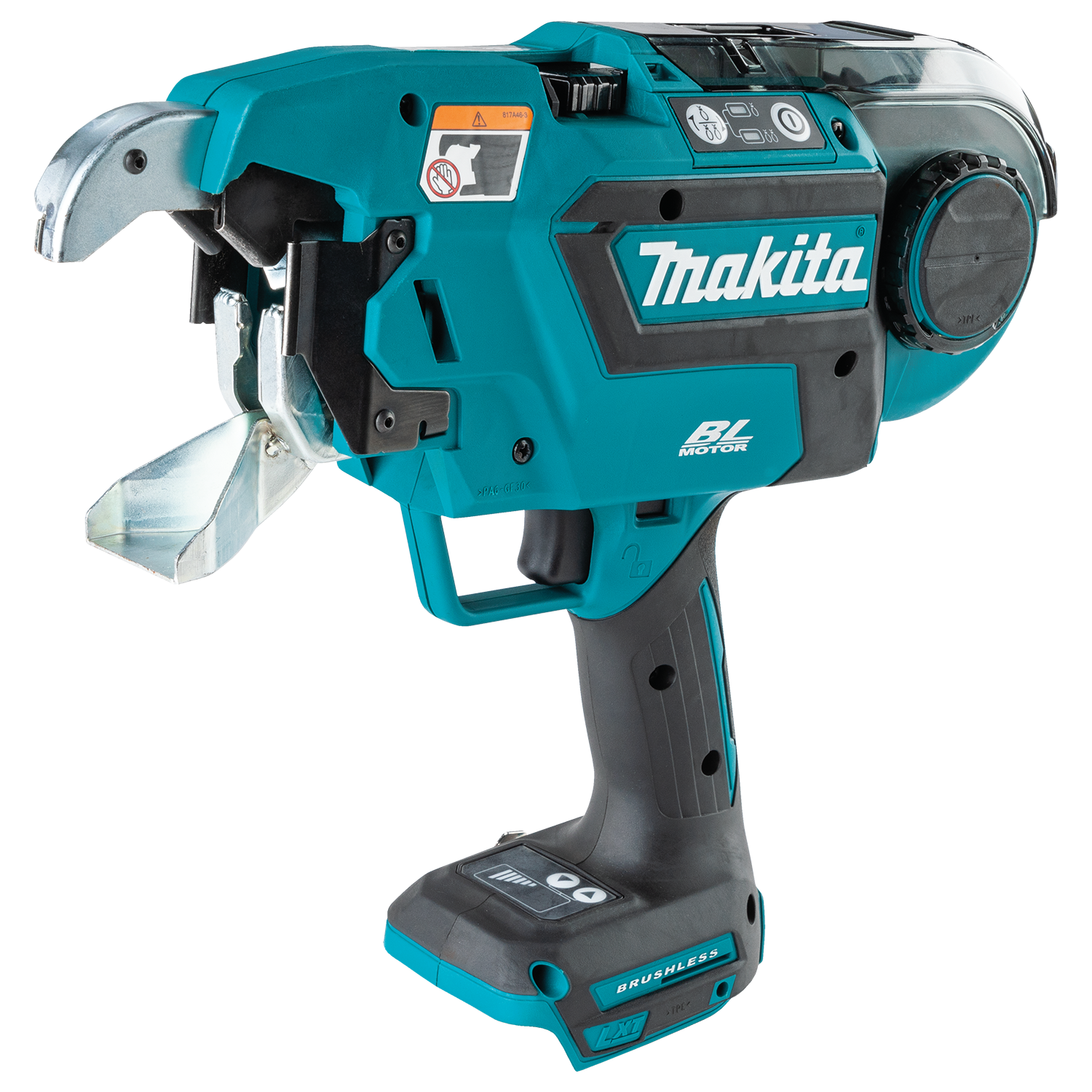
Makita 18V LXT Cordless Rebar Tying Tool XRT02ZK (Tool Only)

 メナ
メナIf you’re already running a fleet of Makita 18V tools, this is the obvious starting point — drop in a battery you already own and you’re tying rebar in under a minute.
| Voltage | 18V LXT Lithium-Ion |
|---|---|
| Weight | approx. 5.7 lbs with 18V 5.0Ah battery installed |
| Tying capacity | #4x#4 to #8x#7 rebar |
| Ties per charge | approx. 5,000 (#4x#4 rebar, 5.0Ah battery) |
| Kit contents | tool + case (battery and charger sold separately) |
Makita’s rebar tying tool lineup runs on the same 18V LXT battery platform as their drills, grinders, and saws, and the XRT02ZK is the tool-only version — no battery, no charger, just the tier itself. For anyone who’s already built up a stack of Makita 18V batteries, that’s real money saved versus buying a full kit you don’t need.
It handles a genuinely wide range, from #4 rebar up to #8x#7 combinations, with two operating modes (single-tie and continuous) and six adjustable tying-strength settings so you’re not overtightening thin rebar or undertightening heavy stock. It’s a grip-style tool rather than a holster-and-forget design, so expect some arm fatigue on long days — most crews run it off a shoulder strap or belt hook.
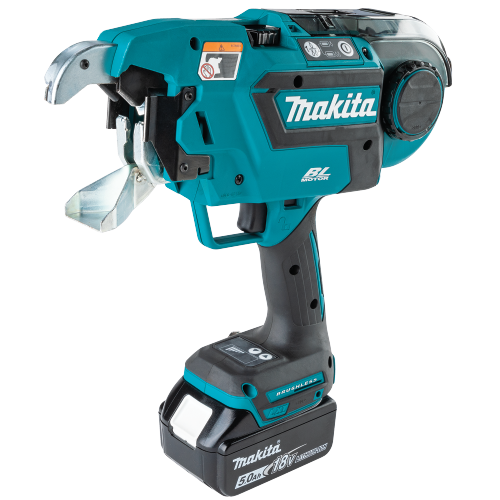
Makita 18V LXT Cordless Rebar Tying Tool XRT02TK (2-Battery Kit)
 メナ
メナTwo batteries in the box means you’re never standing around waiting on a charger mid-shift — swap and keep tying. For a first rebar tier, this is the lowest-risk way to get started.
| Voltage | 18V LXT Lithium-Ion |
|---|---|
| Weight | approx. 5.7 lbs with battery installed |
| Tying capacity | #4x#4 to #8x#7 rebar |
| Kit contents | tool + (2) 18V 5.0Ah batteries + rapid charger + case |
| Ties per charge | approx. 5,000 (#4x#4 rebar, 5.0Ah battery) |
The XRT02TK is the same tool as the XRT02ZK above, but sold as a complete kit: two 18V 5.0Ah batteries and a rapid charger included, so it’s ready to run the same day it arrives. If you don’t already have Makita 18V batteries sitting in a case, this is the version to buy — one purchase covers the whole system.
Running two batteries in rotation is a bigger deal than it sounds. On a high-volume slab pour where you’re tying hundreds of intersections a day, swapping a spent battery for a charged one takes ten seconds — no standing around at a charging station losing daylight. It’s not a cheap kit, but for a crew’s first automatic tier, it’s the version with the fewest gaps.
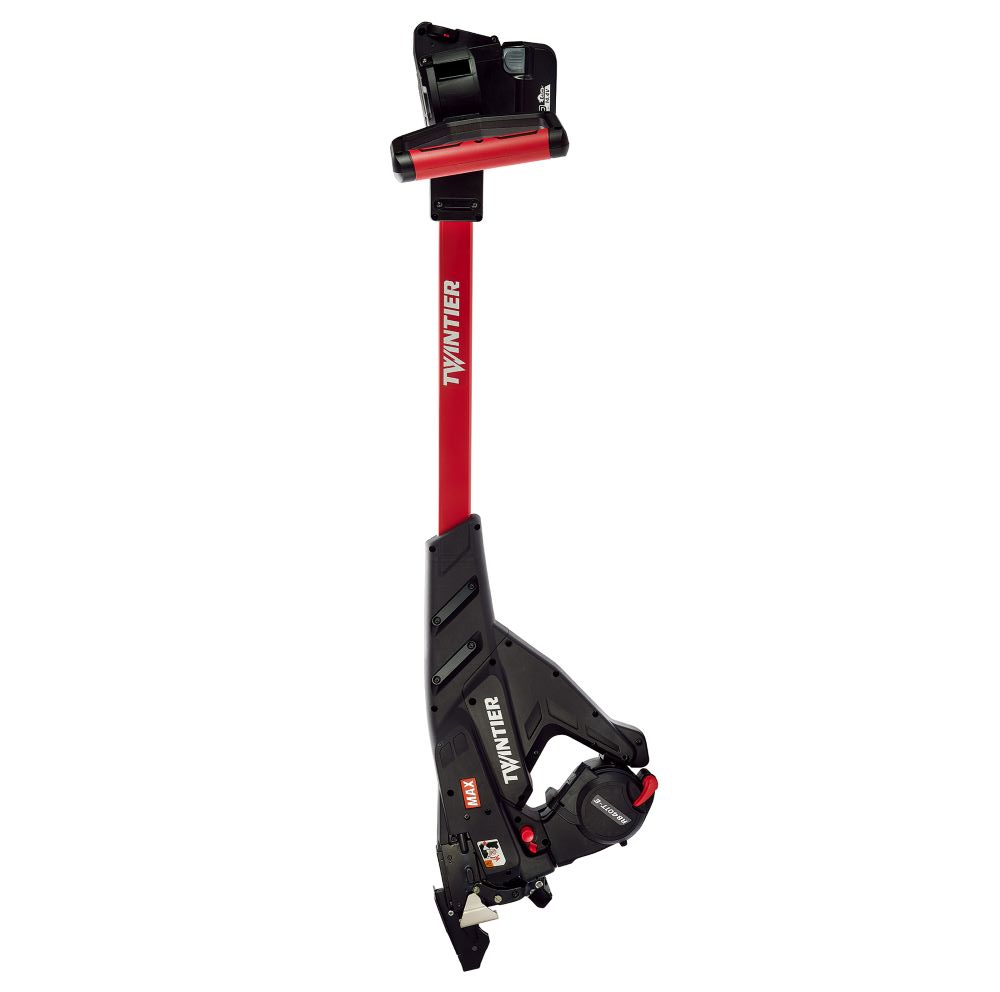
MAX TwinTier RB401T-E Stand-Up Rebar Tying Tool
 メナ
メナMAX’s earlier RB441T is now marked “Discontinued” directly on MAX USA’s own site, redirecting shoppers to the RB443T. Rather than leave a dead-end pick in this list, the replacement here is a genuinely different tool: a stand-up tier that saves your back along with your wrist.
| Weight | approx. 10.2 lbs |
|---|---|
| Tying speed | approx. 1/2 second per tie |
| Ties per charge | approx. 4,600 |
| Rebar capacity | #3x#3 to #6x#6, 19-gauge wire |
| Wire compatibility | MAX TW1061T family (TW1061T / TW1061T-PC / TW1061T-EG / TW1061T-S / TW1061T-USA) |
MAX USA Corp is the American arm of MAX Co., Ltd, and the RB401T-E is their Stand-Up TwinTier — the world’s first battery-powered rebar tier built to be used standing upright instead of bent over or kneeling. It runs the same dual-wire TwinTier mechanism as the RB443T above, mounted on an extended frame with two adjustable handle positions.
It ties from #3 rebar up through #6x#6 combinations, which covers the bulk of slab-on-grade work — the exact job where standing to tie hundreds of intersections in a row takes the biggest toll on your back. It’s a specialist tool rather than an everyday all-rounder, so it earns its spot alongside a standard grip-style tier rather than replacing one.
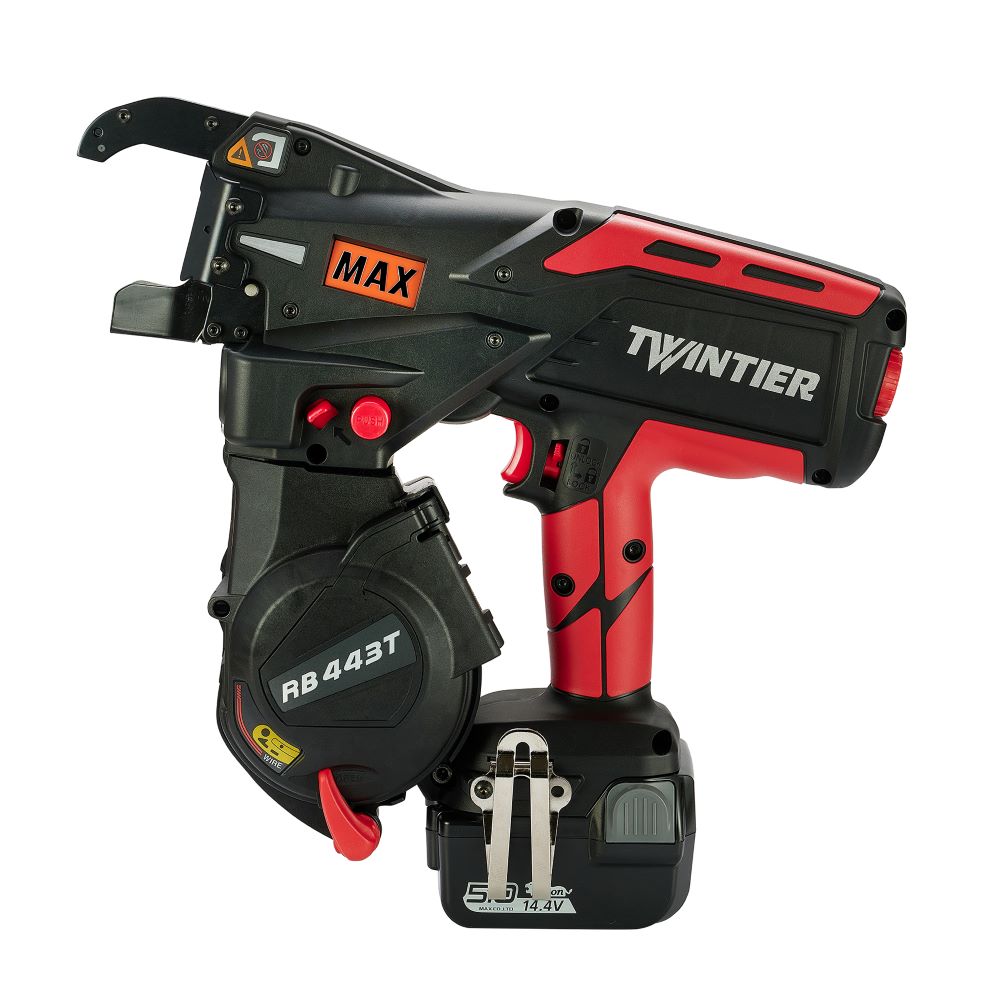
MAX TwinTier RB443T Rebar Tying Tool (Full Kit)
 メナ
メナRB443T is what you get when MAX takes the RB441T and tightens every bolt on it. If you’re buying new today rather than replacing a broken tool, this is the current-generation pick.
| Weight | approx. 5.6 lbs |
|---|---|
| Tying speed | less than 1/2 second per tie |
| Ties per charge | approx. 5,000 |
| Rebar capacity | up to #7x#7, wire mesh x wire mesh, 19-gauge wire |
| Kit contents | tool + battery + charger, ready to run |
The RB443T is MAX’s newest TwinTier and the direct successor to the RB441T — same dual-wire platform, faster sub-half-second tie cycle, and an updated “Load Assist” feature that helps compensate for the tool’s weight during repetitive overhead or reaching work.
It also handles wire-mesh-to-wire-mesh tying, which the RB441T isn’t rated for, so if your work mixes rebar grids with mesh reinforcement (slab-on-grade, precast panels) this is the more versatile of the two. It ships as a complete kit — battery and charger included — so there’s no guessing about compatible accessories before it shows up.
MAX RebarTier RB611T Heavy-Duty Rebar Tying Tool
 メナ
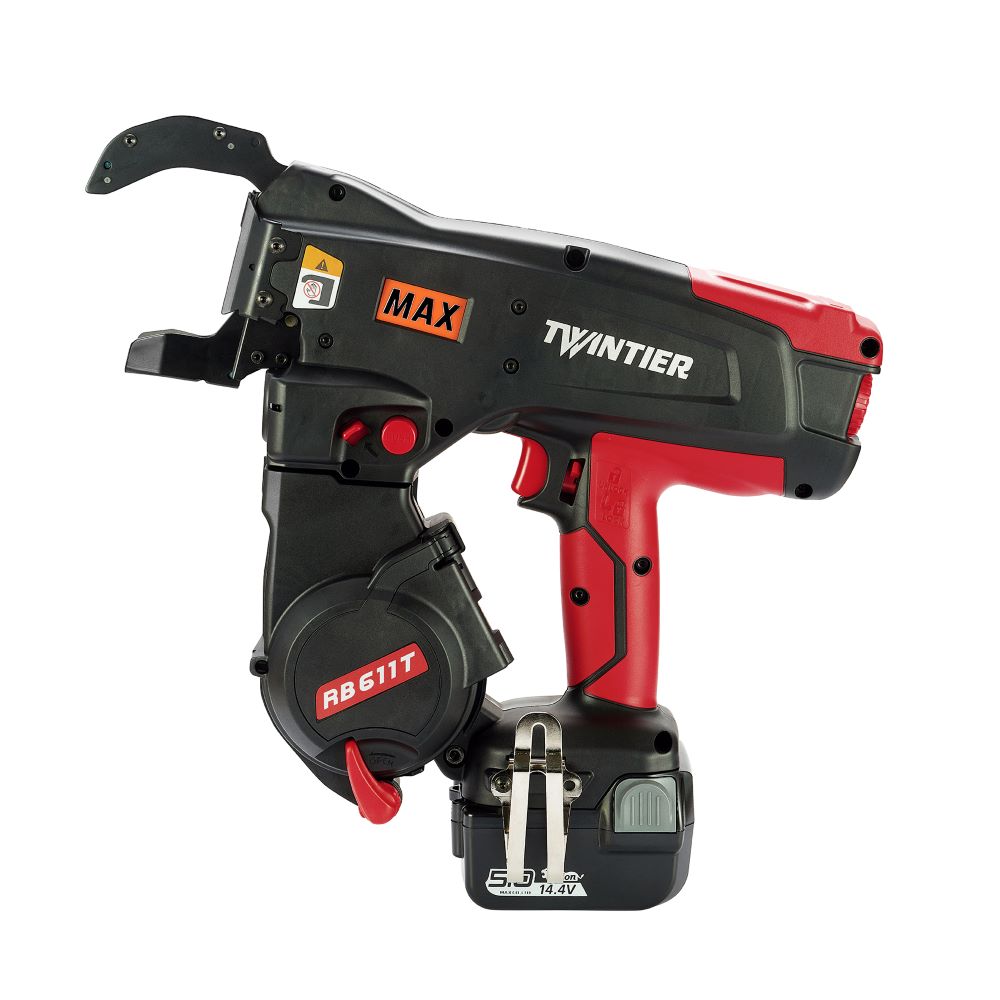
メナThis is the one you reach for on bridge decks and heavy foundation work — anything getting into #9 rebar is past what most standard tiers are rated for.
| Weight | approx. 5.7 lbs |
|---|---|
| Tying speed | approx. 1/2 second per tie |
| Ties per charge | approx. 5,000 |
| Rebar capacity | #5x#5 to #9x#10 (heavy/large-diameter rebar) |
| Ergonomics | MAX cites reduced musculoskeletal strain vs. hand-tying |
The RB611T sits at the top of MAX’s RebarTier line, built specifically for large-diameter structural work — bridges, dams, heavy foundations, anywhere the rebar itself gets thick enough that a standard slab-and-wall tier starts to struggle. Rated up to #9x#10 combinations, it covers bar sizes most cordless tiers simply can’t reach.
MAX’s own literature points to reduced risk of repetitive-strain and musculoskeletal injury compared to hand-tying, which tracks with what crews on heavy civil jobs actually report — wrist and shoulder fatigue from all-day manual tying on big rebar is a real occupational hazard, and it’s the exact problem this class of tool was built to solve. It’s a premium, job-site-fleet tool more than a solo-purchase item, but on large-diameter work there’s not really a substitute.
MAX RebarTier RB398S Compact Rebar Tying Tool
 メナ
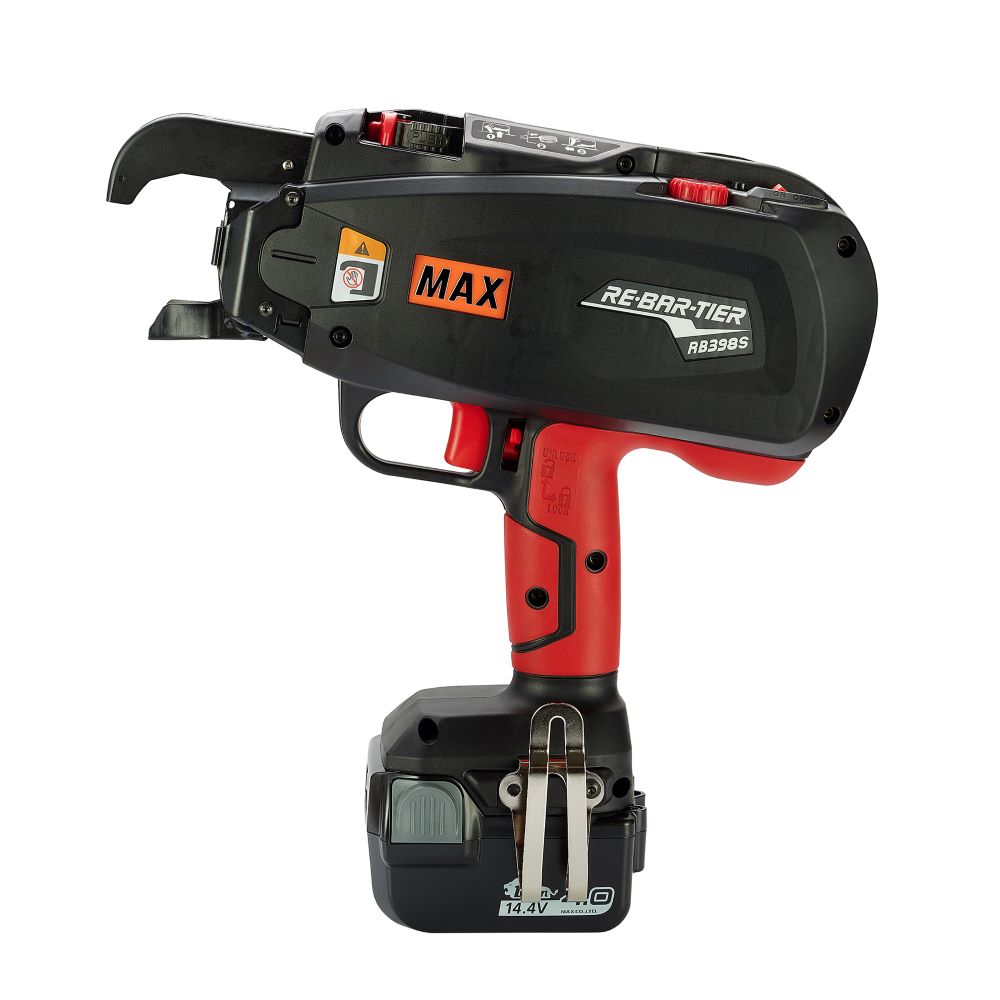
メナAbout a third of a pound lighter than MAX’s big RB611T doesn’t sound like much on paper, but by hour six of a shift, your wrist absolutely notices.
| Weight | approx. 5.0 lbs |
|---|---|
| Tying speed | less than 1 second per tie |
| Ties per charge | approx. 4,000 |
| Rebar capacity | #3x#3 to #5x#6, 21-gauge wire |
| Build | compact, lightweight, one-hand operation |
The RB398S is MAX’s compact end of the RebarTier lineup — smaller battery, lighter body, and a narrower nose that gets into tight corners and wall intersections a bulkier tool can’t reach cleanly. It’s rated for #3 through #5x#6 rebar, which covers the bulk of slab and wall reinforcement on typical building work.
At 5.0 lbs it’s the lightest tying tool in this roundup, and that weight difference is exactly what shows up as arm fatigue over a full shift of one-handed tying. It won’t touch the big structural rebar the RB611T handles, but for day-to-day building work — and for anyone who’s found the standard tiers too front-heavy for all-day carrying — it’s the more forgiving tool to live with.
FVIEXE Automatic Rebar Tie Wire Twister (Hand Hook Tool)
メナEvery rebar crew keeps a couple of these in a pouch even after buying a power tier. No battery to die, no wire jam to clear — sometimes that matters more than speed.
| Power source | none — fully manual, no battery required |
|---|---|
| Length | approx. 12 in |
| Hook style | curved and straight hooks included |
| Material | steel hook, rubber grip handle |
| Best for | tight corners, touch-up ties, backup when a power tier is down |
Before automatic tying tools, this kind of hand hook twister was the entire toolkit, and it’s never really gone away — it’s still the backup every crew keeps close. Pull the trigger-style handle to grab the wire, give the hook a turn, and the tie’s set. No charging, no wire spool to jam, nothing to break in a way that stops your whole day.
It’s genuinely slower than a powered tier — figure a few seconds per tie with practice versus half a second on the machine — so nobody’s running a thousand-tie slab with one of these alone. Where it earns its spot in the pouch is corners and edges a bulky tier’s nose can’t reach, and as the tool that still finishes your day of tying if the battery dies or the wire jams on the powered unit.
No manufacturer-official site exists for this Amazon-only commodity brand; retail/marketplace images aren’t allowed under sourcing policy, so no image is included for this item.
MAX Tie Wire TW1061T-USA, 30-Roll Case (Buy America Compliant)
 メナ
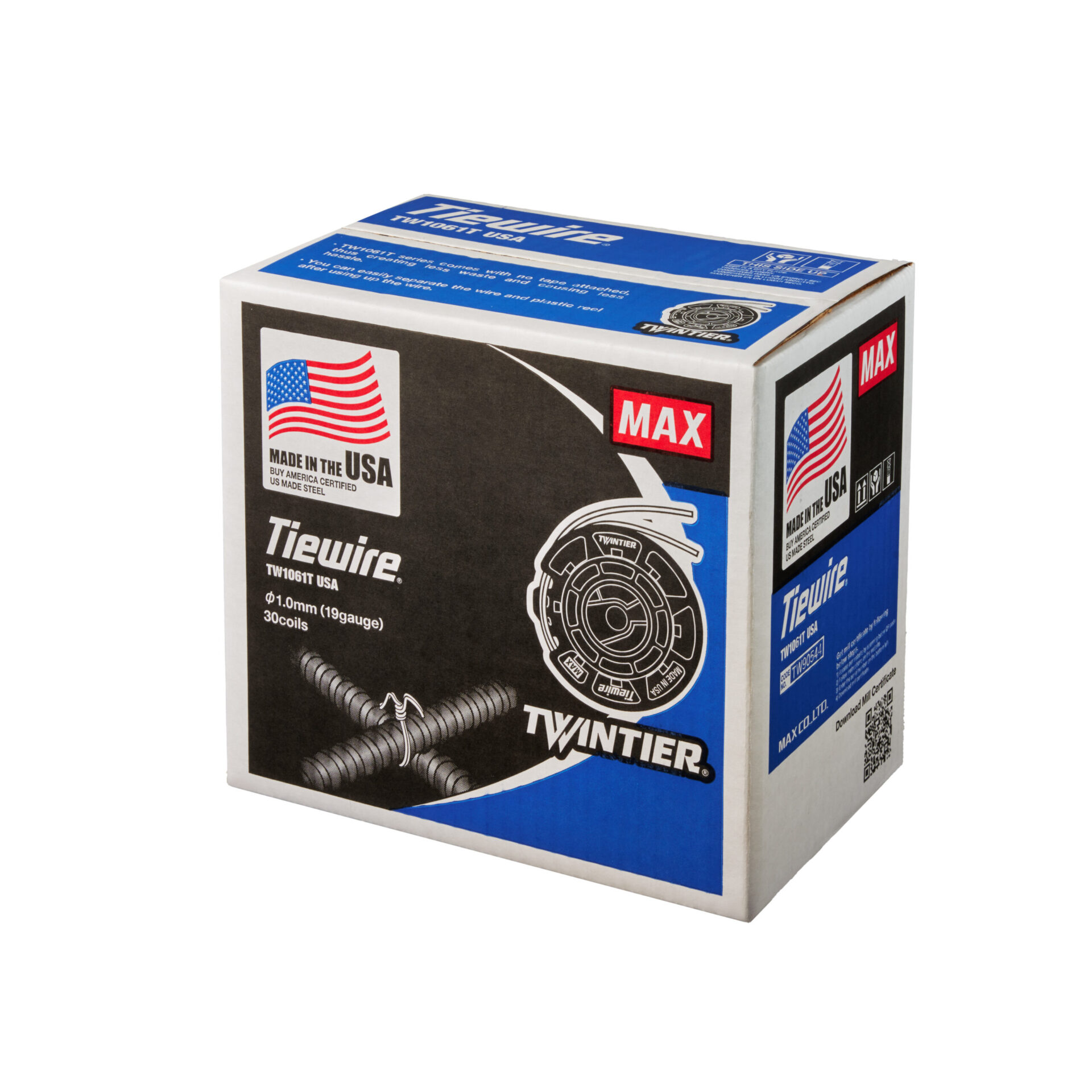
メナWire is the one part of this whole setup you’ll run out of on a random Tuesday if you’re not tracking it. Buying the 30-roll case instead of one at a time is the easiest cost saving on this entire list.
| Wire gauge | 19-gauge steel |
|---|---|
| Coil length | approx. 215 ft per roll |
| Ties per coil | approx. 145 to 265, depending on rebar size |
| Pack size | 30 rolls per case |
| Compatibility | MAX RB401T-E / RB443T / RB611T family TwinTiers |
Every automatic tying tool needs a steady supply of tie wire, and this is where a lot of the day-to-day running cost actually lives. The TW1061T-USA is MAX’s Buy America compliant tie wire — domestically sourced steel, which matters directly if you’re working a government-funded or infrastructure project with Buy America sourcing requirements attached.
Sold in a 30-roll case, it’s built for crews going through real volume rather than the occasional weekend project. Off-brand compatible wire exists and runs cheaper per roll, but wire quality feeds directly into jam frequency — a cheap spool that jams mid-tie costs you more in downtime than it ever saved on the wire itself. Genuine MAX wire is the safer default for anything running on a TwinTier fleet.
Makita 18V LXT Cordless Rebar Cutter XCS01Z
 メナ
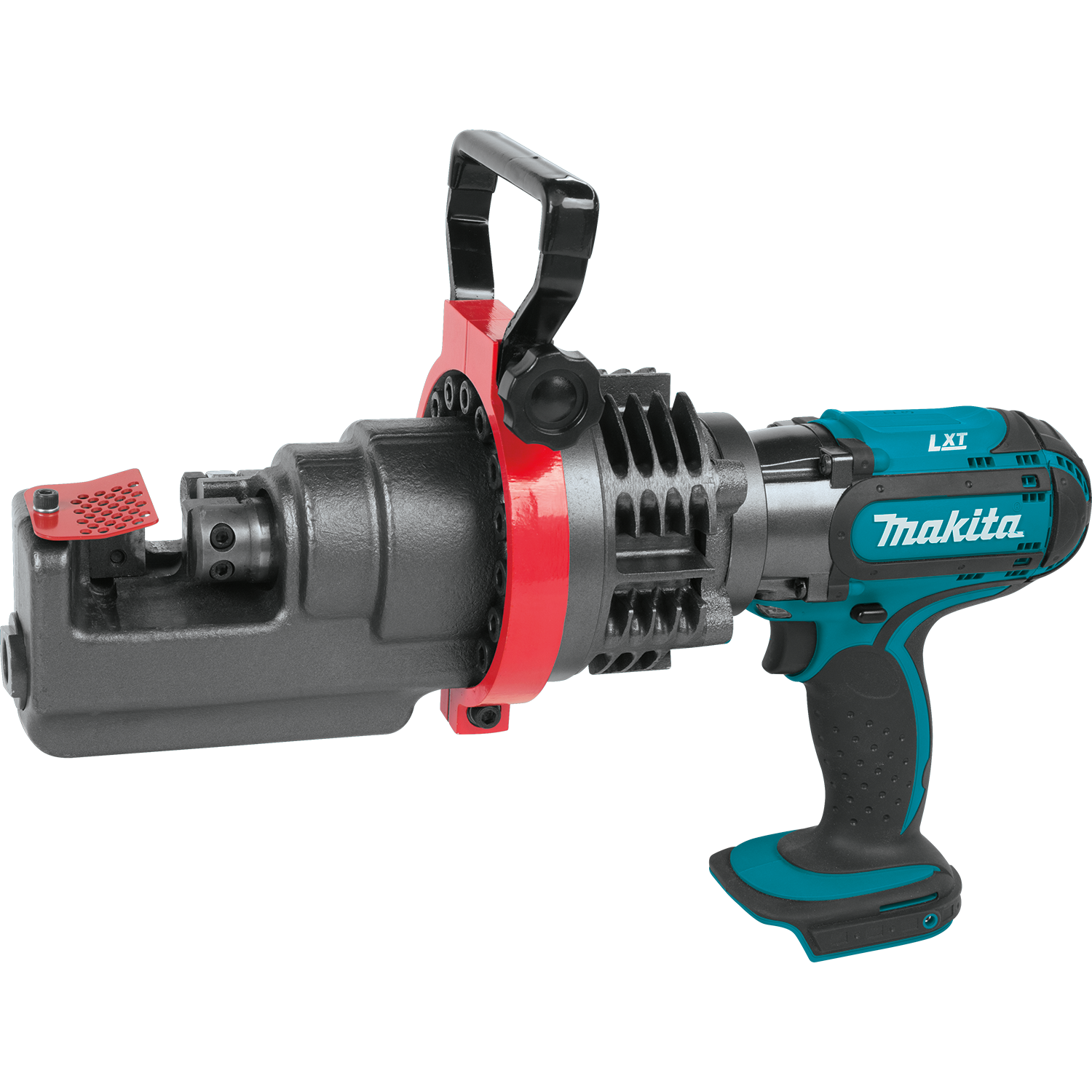
メナSame 18V battery as the tying tools above, which means one battery system covers your tying and your cutting — one charger, one set of spares, no second battery family to babysit.
| Cutting capacity | up to #6 (3/4 in.) Grade 60 rebar |
|---|---|
| Cutting time | approx. 6-1/2 seconds |
| Weight | approx. 24.3 lbs with battery |
| Cuts per charge | approx. 105 cuts of #5 (5/8 in.) rebar on a 3.0Ah battery |
| Blade life | approx. 4,000 cuts before replacement |
Rounding out this list needs a cutter, and rather than force a Japan-only cordless rebar cutter brand with no confirmed US retail into the lineup, the honest pick here is the Makita XCS01Z — a genuine 18V LXT cordless rebar cutter sold direct through makitatools.com and Amazon.com, and a natural fit if you’re already on the Makita 18V platform from the tying tools above.
It cleanly shears rebar up to #6 (3/4 in.) Grade 60 in about six and a half seconds, with roughly 105 cuts of #5 rebar on a single 3.0Ah charge. At 24.3 lbs it’s a two-hand tool, not something you’re swinging one-armed all day, but for cutting rebar to length on-site without dragging out a corded cutoff saw, it earns its spot in the truck.
BN Products DCC-1636BHL Cordless Hydraulic Rebar Cutter
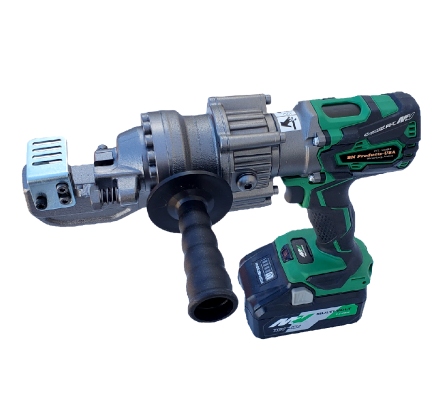 メナ
メナBN Products has built nothing but rebar tools since 1972 — this isn’t a general power-tool brand that added a rebar cutter to the catalog, it’s a specialist’s specialist tool.
| Cutting capacity | up to #5 (5/8 in.) Grade 60 rebar |
|---|---|
| Cutting speed | as fast as 2.4 seconds per cut |
| Weight | approx. 18.6 lbs |
| Battery | 36V MultiVolt (18-36V) Li-Ion, 60-minute fast charger |
| Head rotation | 345°, for vertical, horizontal, or awkward cuts |
The second cutter on this list is another honest substitution: with no confirmed direct US retail channel for the Japanese cordless cutter brand this section originally covered, BN Products-USA fills the same “dedicated cutting speed” role with a genuinely American specialist manufacturer that’s been building rebar cutters and benders exclusively since 1972.
The DCC-1636BHL shears a #5 bar in as little as 2.4 seconds — quick enough for repetitive cutting on rebar-heavy work — and the head rotates a full 345° so you’re not fighting the tool’s geometry on awkward vertical or horizontal cuts. At 18.6 lbs it’s noticeably lighter than the Makita XCS01Z above, trading some maximum cutting capacity (#5 vs #6) for a lighter, faster-cycling tool that’s easier to carry between cuts all day.
On-the-Job Tips for Tying and Cutting Rebar
メナA tying tool is only as good as the wire in it and the maintenance habits around it. Skip either one and the machine gets blamed for problems it didn’t cause.
Tying order. Tie the perimeter first, then work inward — locking the outer grid down first keeps the whole layout from shifting as you go, and it makes every tie after that more accurate. On wall reinforcement, tie the vertical bars before the horizontals for the same reason.
Wire jams. Most jams trace back to a dented wire spool or debris caught in the feed path — dropping a spool or letting it sit in mud is usually the culprit. A quick roll-check of the spool before your shift starts catches most of this before it costs you downtime.
Cutter blade care. A cordless rebar cutter stays smooth as long as the blade holds its edge — once it chips, cutting force drops and the motor takes the extra strain. Check the blade regularly and swap it at the first sign of chipping. Always cut power and pull the battery before you touch the blade.
Wire storage. Keep tie wire out of heat, humidity, and direct sun — moisture and UV exposure lead to corrosion and coating breakdown, both of which turn into feed jams down the line. Original packaging in a shaded, dry spot is the simplest fix.
Bottom Line
One cordless rebar tying tool changes the math on an entire day’s work — that’s a rare thing for a single piece of gear to do. Makita and MAX are both genuinely well-built, and picking between them mostly comes down to which battery platform you’re already invested in.
Buying your first tier and don’t want to overthink it? The Makita XRT02TK kit or the MAX RB443T are the lowest-risk starting points — both ship ready to run. Working large-diameter structural rebar, go straight to the RB611T. Want the lightest tool for all-day one-hand carrying, the RB398S. And whichever tier you land on, keep a manual hook twister in your pouch anyway — it’s the tool that still finishes your day when a battery dies or a spool jams.
The gear is only half the equation. Give it a week of real use and the motions stop feeling foreign — tying order, wire habits, blade checks all become second nature fast. Hopefully this rundown gives you a solid starting point for building out your own rig.