
Affiliate Disclosure: This article contains affiliate links. If you make a purchase through these links, we may earn a commission at no additional cost to you.
 Mena
MenaHey, it’s Mena, sharing info about tools and gear used on the job site. Today I’m comparing digital multimeters across brands rather than sticking to just one.
I’ve previously written a roundup of HIOKI testers and voltage detectors, but this time I’m deliberately not sticking to one brand — comparing four major multimeter brands side by side: FLUKE, HIOKI, Kyoritsu (KEW), and Klein Tools. Along the way I’ll cover the “CAT safety rating” difference that’s easy to overlook when choosing a multimeter, then sort out which one actually makes sense for you.
The “CAT Rating” You Shouldn’t Overlook When Choosing a Multimeter
The international standard IEC 61010 defines measurement categories CAT I through CAT IV based on the electrical hazard level of the location being measured. A higher number means the meter is rated to withstand use in higher-risk locations (such as near a distribution panel). Using a meter that doesn’t meet the safety level for a high-voltage, high-current location can lead to electric shock or equipment damage, so it’s important to choose a product with a CAT rating that matches where you’ll actually be measuring.
Whether a meter supports “True RMS” is another key point. When measuring distorted AC waveforms — from inverter equipment, for example — a meter without True RMS support can show a reading well off from the actual value. Of the four products covered here, the FLUKE 117, HIOKI DT4256, and Klein Tools MM420 support True RMS (the Kyoritsu MODEL1009 does not — more on that below).
4-Brand Multimeter Comparison
CAT ratings and measurement ranges below are taken from the manufacturers’ official specs.
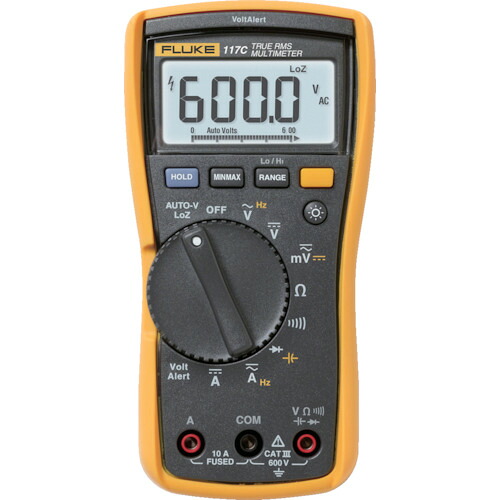
FLUKE 117 (True RMS Multimeter)

 Mena
MenaElectricians often say “just get this one,” and the non-contact voltage detection is quietly handy enough that I actually reach for it a lot.
A True RMS multimeter rated to the CAT III 600V safety standard (per IEC 61010-1). DC/AC voltage covers three ranges — 6.000V/60.00V/600.0V — with current measurable up to 6A/10A, and resistance from 600Ω to 40MΩ.
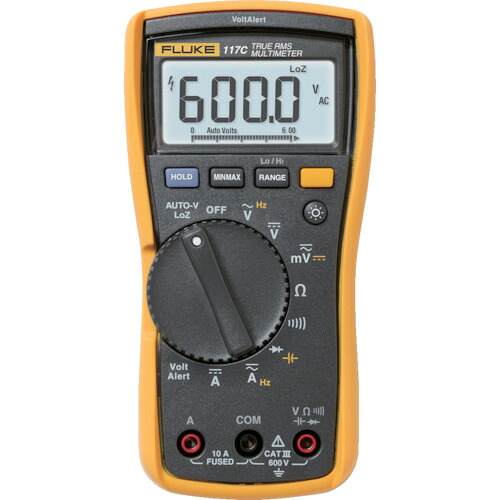
It has a non-contact voltage detection feature (VoltAlert) and a LoZ mode that prevents false readings from “ghost voltage,” which is why it’s often the go-to “just get one of these” model on electrical job sites.
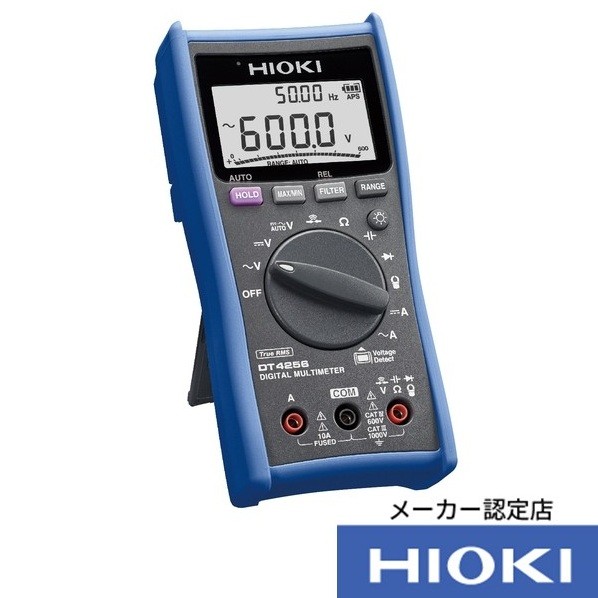
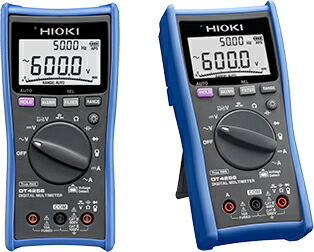
HIOKI DT4256 (Feature-Packed General-Purpose Digital Multimeter)
 Mena
MenaHonestly, you won’t use CAT IV all that often, but it’s real peace of mind if there’s any chance you’ll be measuring near a service entrance.
A True RMS multimeter rated to CAT IV 600V/CAT III 1000V (per IEC 61010-1) — the highest safety rating of the four models here. DC voltage covers 600.0mV to 1000V across 5 ranges, AC voltage 6.000V to 1000V across 4 ranges, and current from 60.00mA to 10.00A via direct input, or 10.00A to 1000A with a clamp probe attachment.
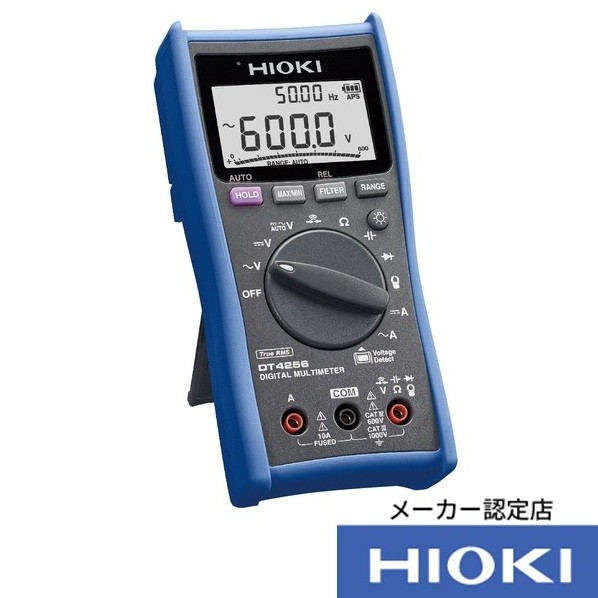
Resistance measurement covers 600.0Ω to 60.00MΩ. HIOKI’s build quality and manufacturer support are well regarded among electricians who use this line regularly.
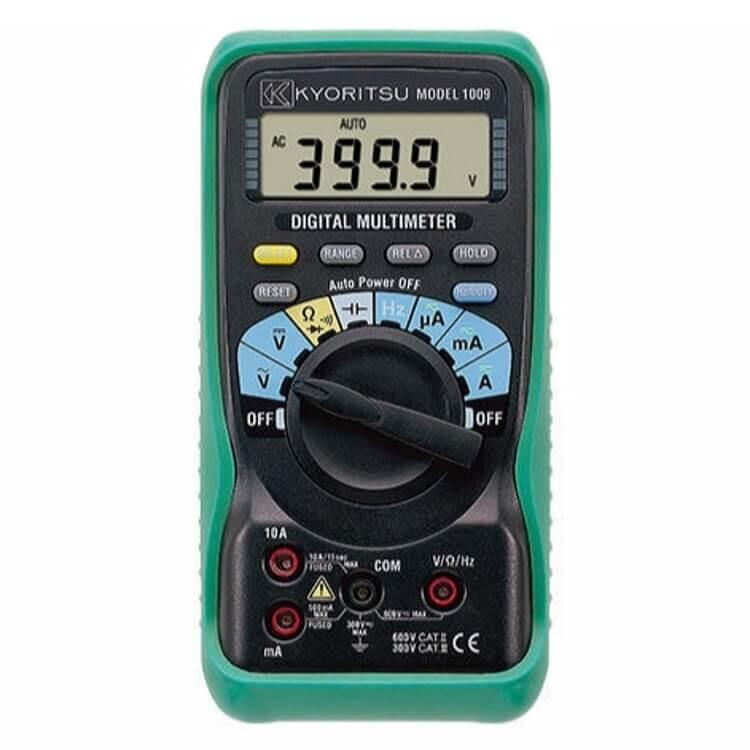
Kyoritsu (KEW) MODEL 1009 (Standard-Type Digital Multimeter)
 Mena
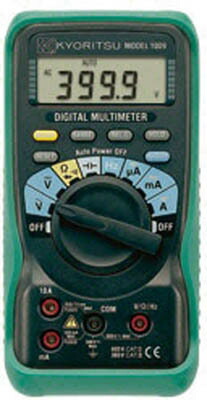
MenaIt’s compact and light (about 280g/10oz), which is why a lot of people keep one tucked in a corner of the tool bag “just in case.”
An average-responding (not True RMS) multimeter rated to CAT III 300V (per IEC 61010-1). When measuring distorted waveforms — from inverter equipment, for example — the displayed value may drift from the actual reading. DC/AC voltage covers 400.0mV to 600V across 5 ranges, current 400.0µA to 10.00A, and resistance 400.0Ω to 40.00MΩ. A standard spec set: 4000-count display with auto-ranging.
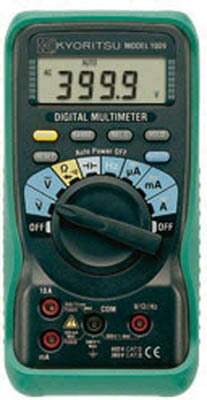
The CAT III 300V rating makes it a poor fit for higher-voltage locations like large-facility distribution panels, but it’s plenty for typical residential and small-facility electrical work. It’s also reasonably priced, making it a solid choice for a backup unit.
Klein Tools MM420 (True RMS Auto-Ranging Multimeter)
MenaNote: the JA original’s PC-connectable data-logging model isn’t sold in the US, so this pick is a True RMS auto-ranging meter aimed at the same general/professional use case. PC data-transfer isn’t a feature here — accuracy and build quality are what carry it over.
A True RMS auto-ranging digital multimeter rated to CAT III 600V (per manufacturer spec). It measures AC/DC voltage, AC/DC current, resistance, capacitance, and frequency.
It’s a well-built, mid-range option from a well-known US test-tool brand, useful for anyone who wants a dependable second meter without needing PC logging specifically.
Which One Should You Choose? Recommendations by Use Case
Want a solid all-rounder with non-contact voltage detection: the FLUKE 117 is a well-balanced, easy-to-use pick. Might measure near large equipment or a service entrance: the CAT IV-rated HIOKI DT4256 gives you the biggest safety margin. Want a backup unit that’s cost-effective: the Kyoritsu MODEL 1009 is light and reasonably priced. Want a dependable second True RMS meter: the Klein Tools MM420 fits that role well.
MenaA higher CAT number doesn’t automatically make a meter “better” — what matters is whether it matches where you’re actually measuring. Buying more rating than you need just for peace of mind isn’t as cost-effective as picking one that fits your actual use case.
Accessory: Test Leads Worth Pairing With Your Meter
Measurement accuracy and safety depend not just on the meter itself, but on the condition of your probes (test leads).
FLUKE TL75 (Hard-Point Test Lead Set, Rated CAT IV 600V/CAT III 1000V)
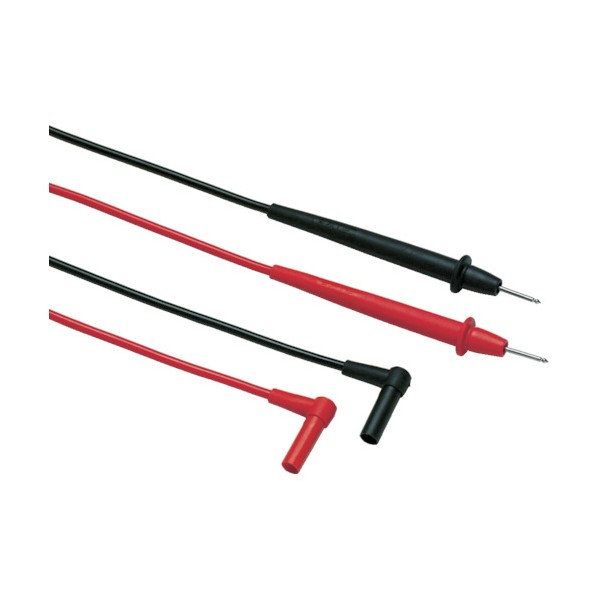
A set of hard-point test probes with 1.22m (4-foot) leads. With the protective caps in place, they’re rated CAT IV 600V/CAT III 1000V, and they use the standard 4mm banana-plug connector found on most multimeters, so they’re an easy accessory to reuse across brands.
A meter itself can last for years, but test leads are more of a consumable — the tips wear down or the wire can fray and need replacing. It’s worth having a spare set on hand.
Want to Stick With One Brand? Check Out Our HIOKI Roundup
This article compared multiple brands side by side, but if you’d rather standardize on one manufacturer, or want a fuller rundown of HIOKI’s lineup, our companion article on HIOKI testers and voltage detectors is a better fit.
Summary
Choosing a multimeter isn’t just about brand preference — it’s important to check whether the CAT rating matches what you’re actually measuring, and whether it supports True RMS. FLUKE, HIOKI, and the Klein Tools model here all support True RMS (the Kyoritsu MODEL 1009 does not), but the CAT rating and feature set differ across all of them, so pick the one that matches your own use case.