
Affiliate Disclosure: This article contains affiliate links. If you make a purchase through these links, we may earn a commission at no additional cost to you.
I’m Mena, a construction professional with over 20 years of field experience, and in this 2026 edition I’ll walk you through the 10 HiKOKI MultiVolt models I recommend without hesitation — picked from across the full lineup based on real-world job site use.
HiKOKI (formerly Hitachi Koki) is Japan’s second-largest power tool brand. What sets the MultiVolt series apart from competitors is its 36V/18V auto-switching battery (BSL36A18 series). The same battery automatically switches voltage based on the tool it’s inserted into, so users who already own Makita 18V tools can upgrade to high-output 36V tools without abandoning their existing battery investment.
 Mena
MenaOne MultiVolt battery (BSL36A18) powers both 18V and 36V tools. The biggest appeal: no more “I bought a new battery and it doesn’t work with my other tools” frustration.
What Is Multi-Volt? How 36V/18V Auto-Switching Works and Why It Scales
MultiVolt batteries (BSL36A18, etc.) arrange 18V cells internally in two rows — series or parallel — and automatically detect the rated voltage of the attached tool to switch between 36V (series) or 18V (parallel). This means users who currently own 18V tools from Makita or other brands can gradually migrate to MultiVolt tools, and once the transition is complete, one battery type manages all tools, minimizing running costs.
Battery Compatibility (BSL36A18 and BSL18 Series)
HiKOKI MultiVolt-compatible tools accept the following batteries:
· BSL36A18 (36V/18V auto-switching, MultiVolt dedicated) — maximum power at 36V
· BSL18XA / BSL18X (18V series) — MultiVolt tools auto-switch to 18V operation
The cost-efficient migration strategy: try a MultiVolt tool first with your existing 18V battery, then upgrade to MultiVolt batteries as your budget allows.
Selection Criteria (Philosophy: Compatibility → Durability → Functionality)
Priority order when choosing HiKOKI tools:
1. Battery compatibility: Can I leverage my existing battery assets (18V)?
2. Durability: Can it withstand harsh professional job site conditions? (IP rating, brushless motor)
3. Functionality balance: Does it have the right features without excess?
Cost is judged not by “cheapness” but by “longevity = total running cost.”
Top 10 Recommended HiKOKI MultiVolt Tools
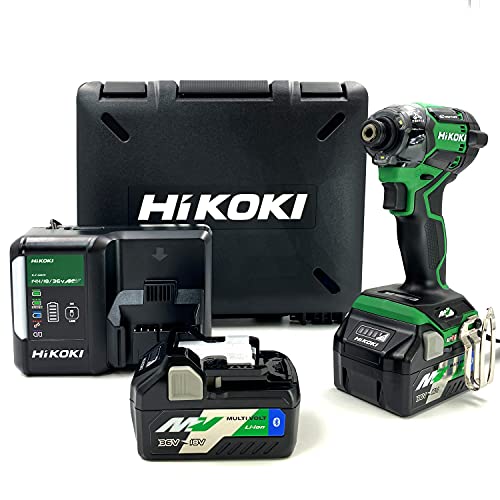
HiKOKI WH36DC Cordless Impact Driver 36V MultiVolt (3rd Generation)


 Mena
MenaThis is the only impact driver I’d ever recommend. It supports both 36V and 18V, so you can use whatever batteries you already own. Cutting down the number of chargers you need to haul to the job site is a surprisingly big deal.
The MultiVolt ace, the WH36DC is HiKOKI’s 3rd-generation 36V impact driver. Maximum tightening torque of 200N·m puts it at the top of the cordless impact class — there are no situations where you’ll feel underpowered, from driving long screws to drilling into structural steel. Six-stage impact mode switching handles everything from countersinking wood screws to full-torque fastening, seamlessly.
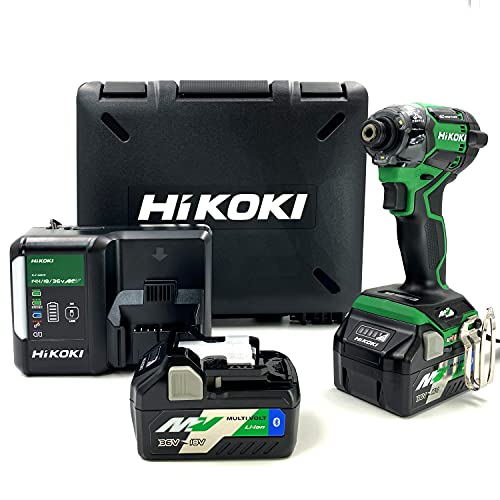
The standout feature is “36V→18V auto-switching.” With a MultiVolt battery (BSL36A18) installed, the tool normally runs at 18V and automatically switches to 36V output during heavy work. This lets you get the benefit of extra power while still using existing 18V batteries. It’s the definitive answer for electricians and remodeling contractors who want to “unify battery types on the job site.”
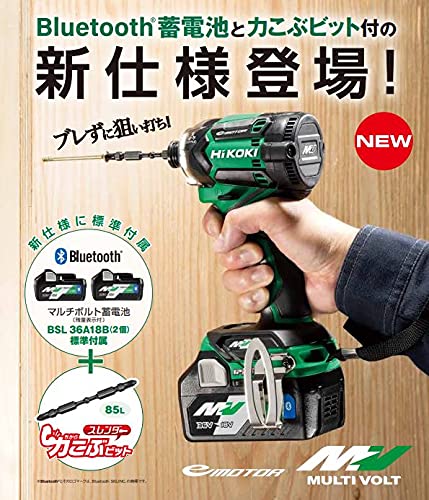
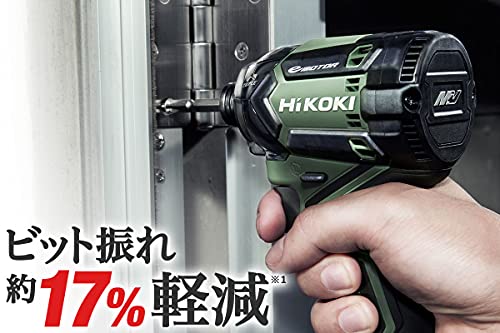
The compact 111mm head length is easy to maneuver even in tight spaces like attics and wall cavities, optimized for daily use by facility contractors and electricians. Bluetooth connectivity allows RPM customization from a smartphone, so it even handles delicate torque management in finish-work stages.
HiKOKI DH36DPA Cordless Rotary Hammer Drill 36V MultiVolt SDS-Plus




 Mena
MenaThis is the most user-friendly model for concrete drilling. The SDS-Plus shank means a wide variety of bit options.
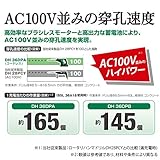
The DH36DPA is an SDS-Plus rotary hammer drill specialized for drilling into concrete and mortar. Its impact energy of 3.5J is high for its class, handling Φ28mm concrete holes with ease. Three-mode switching (rotation + hammering / hammering only / rotation only) means one tool handles chiseling, drilling, and screw driving.
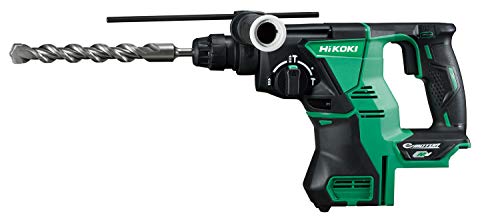
The 36V MultiVolt power matches corded models, letting you move freely around the site without an outlet. Body weight of 2.9kg is lighter than comparable corded models, reducing fatigue during extended overhead drilling — a key reason professionals prefer it.
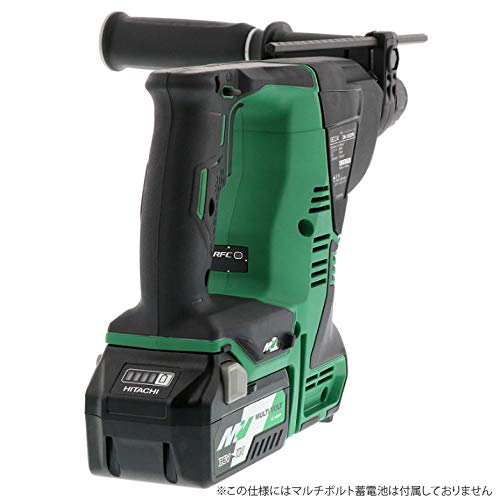
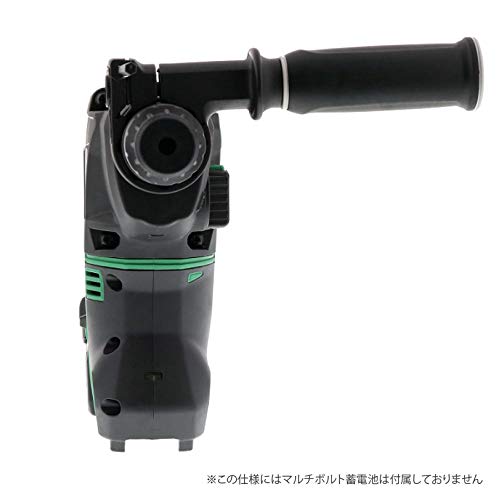
Note that for large-diameter (Φ32mm+) or deep holes, a larger SDS-Max shank model is more appropriate. The DH36DPA’s strength lies in the balance of mobility and power, making it the most frequently used drilling tool on electrical, equipment maintenance, and interior renovation sites.
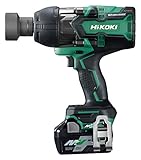
HiKOKI WR36DA Cordless Impact Wrench 36V MultiVolt


 Mena
MenaTaking this to structural steel bolting jobs has eliminated the need for a compressor. I never thought the day would come where a single tool could replace air tools.
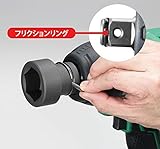
The WR36DA is a cordless impact wrench with maximum tightening torque of 700N·m. It shines in situations that demand high torque: structural steel erection, flange tightening on plant piping, and tire changes on heavy machinery. Versus air impact wrenches, eliminating the compressor and hose creates significant advantages for overhead work and tight piping locations.
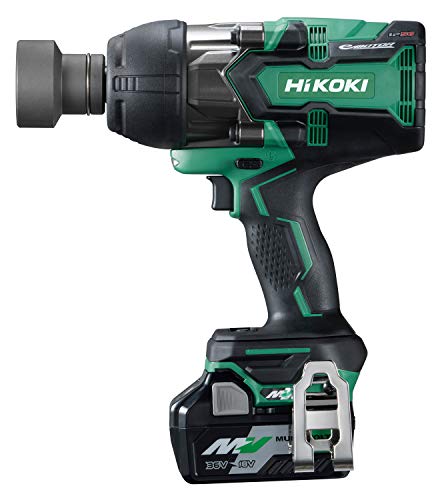
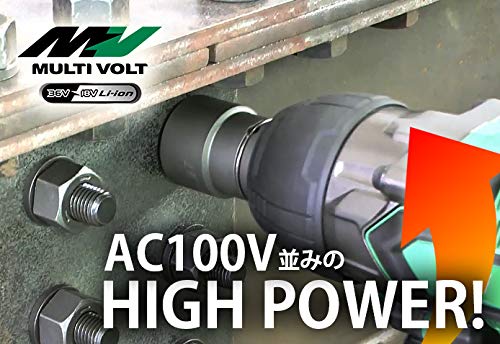
The stable 36V power handles both primary and secondary tightening of high-tension bolts (HTB) without issue. The fast socket tightening speed reduces physical fatigue during continuous multi-bolt operations — a point that earns it praise from professional tradespeople.
The downside is that at 1.7kg, the body is heavier than an impact driver, and extended overhead work tires out your arms. The right approach is to designate it for bolt tightening and disassembly only, and use an impact driver for drilling and small fasteners.
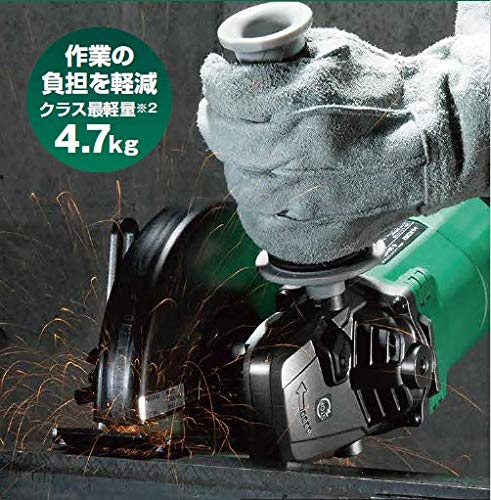
HiKOKI G3618DA Cordless Disc Grinder 36V MultiVolt 180mm


 Mena
MenaThe confidence of being able to use a cordless grinder for structural steel cutting and post-weld deburring is something else entirely. Accidents from tripping on cords on scaffolding have dropped.
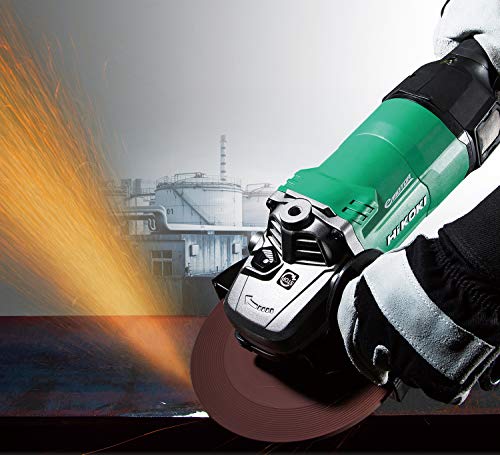
The G3618DA is a 36V cordless disc grinder compatible with Φ180mm wheels. At 8,500rpm no-load speed, it handles heavy job site tasks: cutting rebar and structural sections, scoring concrete joints, and removing welding slag. The wheel guard switches between cutting and grinding modes, making it versatile for multiple applications with one tool.
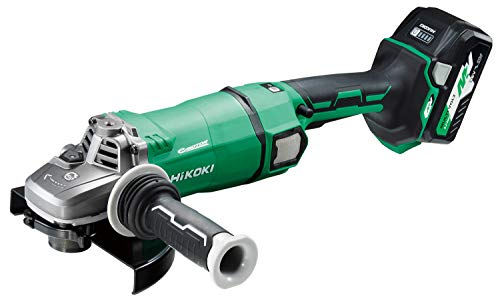
Going cordless means it can be used in locations where cord routing is difficult: building site scaffolding, near high-voltage equipment. The soft-start feature suppresses abrupt wheel spin-up, allowing safe operation without vibration on startup.
The large 180mm wheel diameter delivers deep cutting depth but increases body weight (body 2.3kg + battery). If weight is the priority, a 100mm grinder wins, but for professional sites demanding cutting precision and power, 180mm is the right choice.
HiKOKI CR36DA Cordless Reciprocating Saw 36V MultiVolt





 Mena
MenaOne of the rare cordless models that can actually replace a corded reciprocating saw on demolition sites. It doesn’t lose power and just keeps cutting.
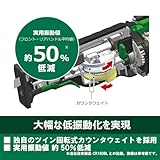
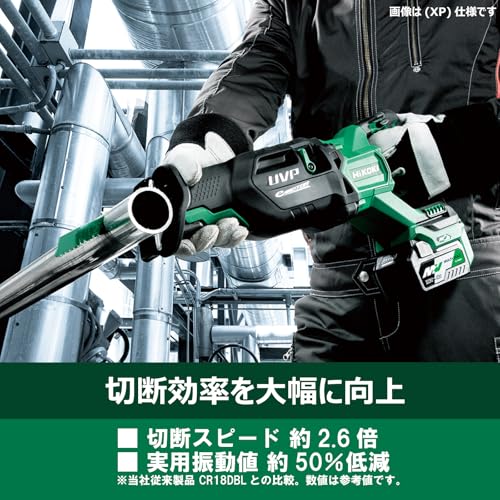
The CR36DA is a cordless reciprocating saw — the go-to tool for remodeling and demolition sites. The Twin-Swivel Counter Weight mechanism reduces vibration by approximately 50%. Even during extended cutting sessions, arm fatigue is minimal, and it processes wood, metal, and PVC pipe in straight or curved cuts at high speed.
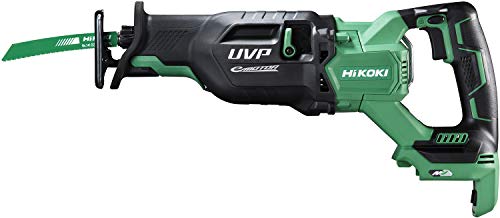
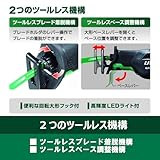
The Stroke Orbital mechanism (orbital action) moves the blade in an elliptical path rather than simple back-and-forth strokes, dramatically improving cutting efficiency. For rough cutting lumber or demolition materials, you’ll experience over 1.5x cutting speed compared to conventional models.
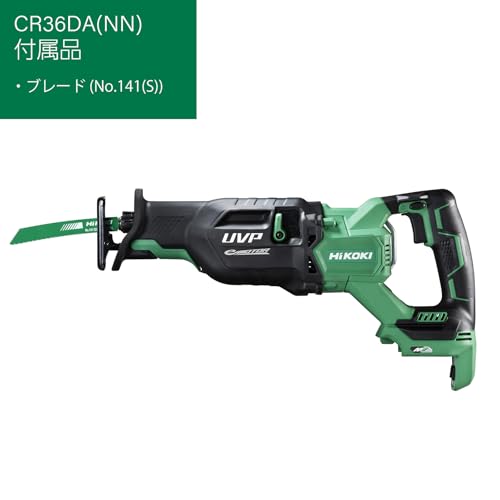
Swapping blades means you can cut wood, metal, concrete, and synthetic resin pipe — the versatility of a reciprocating saw. It’s one of the few cordless models capable of matching corded performance on demolition sites, earning high marks from site supervisors and remodeling tradespeople alike.
HiKOKI CS3630DA Cordless Chain Saw 36V MultiVolt Bar Length 300mm


 Mena
MenaI use this for farm maintenance and firewood splitting. Compared to a gas saw, engine noise and vibration drop dramatically. You can use it in a residential neighborhood yard without worrying about the neighbors.
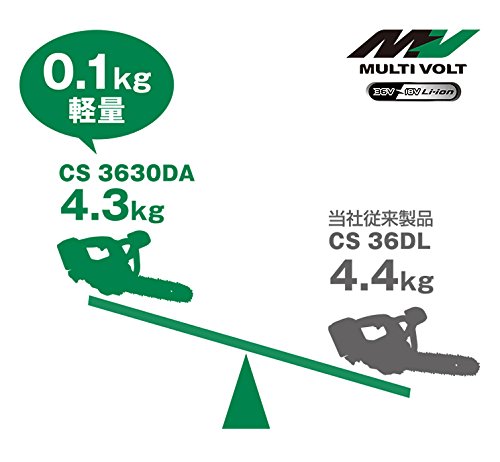
The CS3630DA is a MultiVolt cordless chainsaw with a 300mm bar. A 300mm guide bar is a practical size that cuts through trees 25–30cm in diameter in a single pass. It functions as a gasoline chainsaw substitute for outdoor work: trimming branches on farmland, splitting firewood, and processing fallen trees after typhoons.
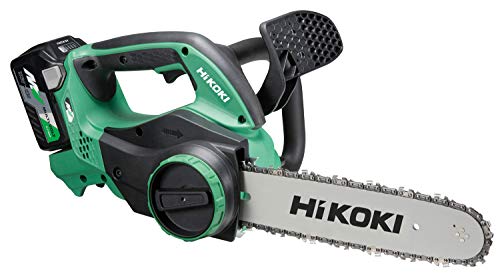
Maximum chain speed of 12m/s is high-level for cordless chainsaws, and you won’t feel increased cutting resistance on either softwood or hardwood. The MultiVolt battery has a charge-level indicator, so you can plan work intervals before running out.
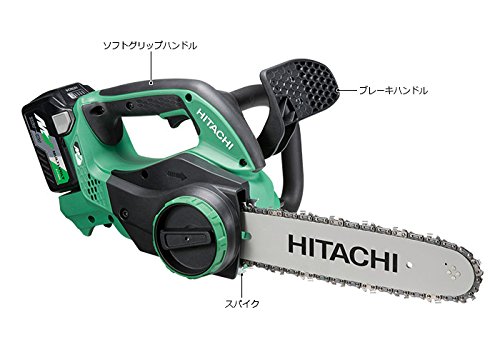
Note that professional forestry work (trees over 50cm diameter) is beyond its capability. Its main applications are residential yard trees, orchard trees, and DIY firewood splitting. Compared to gasoline saws, significantly easier maintenance (no spark plug changes or carburetor adjustments) is a major long-term advantage.
HiKOKI C3606DA Cordless Circular Saw 36V MultiVolt 165mm

 Mena
MenaGoing cordless with a 165mm circular saw changes how you move on the job site. The hassle of routing extension cords disappears entirely.
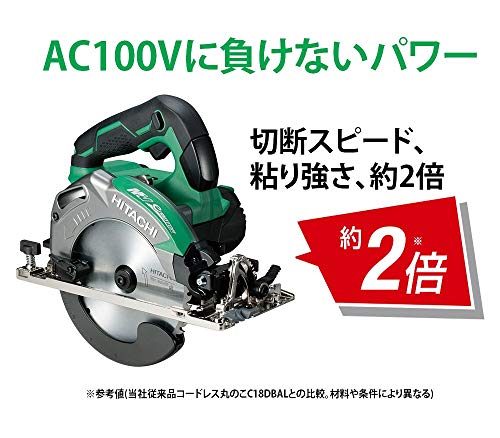
The C3606DA is a 36V cordless circular saw with a 165mm blade. Maximum depth of cut 67mm (at 90°) handles ripping, crosscutting, and miter cuts on 2×4 lumber and 45mm square timber. This size offers the widest versatility on wood-frame construction sites, processing roof rafters, studs, door frames, and many other members with a single tool.
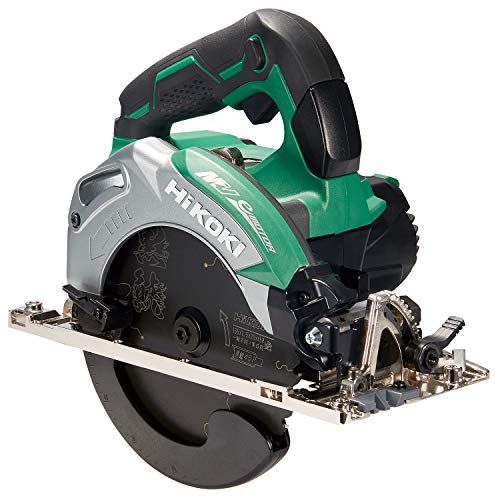
The biggest felt advantage versus corded circular saws is the “confidence of no cord routing.” The root causes of mistakes — stepping on the cord, cord interfering with the cut line — are completely eliminated, which improves cutting accuracy for workers from beginners to mid-level tradespeople. The 36V power maintains RPM even during continuous cuts on thick boards (38mm), keeping straight cuts smooth throughout.
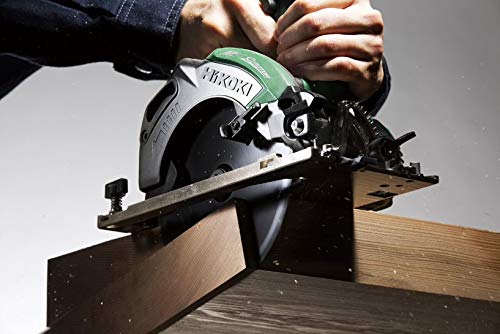
Downsides include heavier weight than corded saws (approximately 5kg with battery) and needing battery swaps during extended heavy use. For woodworking DIY or construction assistants this is no issue, but on high-volume cutting sites like framing, rotating 2–3 batteries is needed.
HiKOKI DS36DC Cordless Driver Drill 36V MultiVolt (3rd Generation)
MenaI use this for materials that would get damaged by an impact driver. The torque limiter means I can drill without worrying about damaging the workpiece.
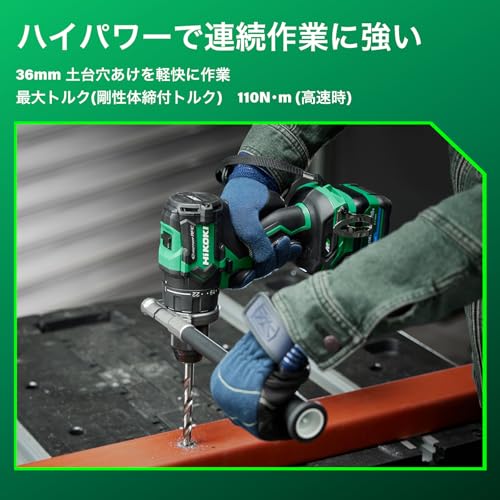
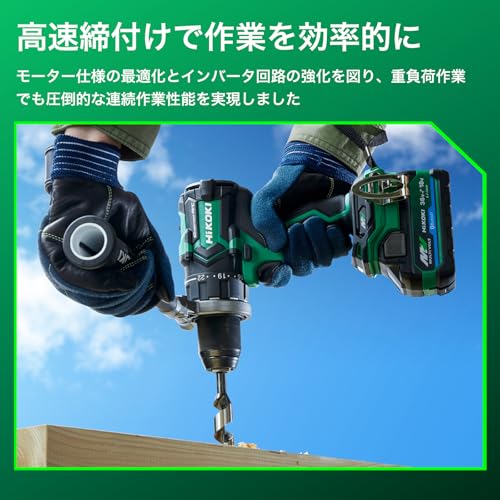
The DS36DC is a 36V driver drill with clutch function. With maximum torque of 155N·m approaching impact driver performance, plus 21-stage clutch control for fine-grained tightening force, it prevents material splitting and stripped screw heads from over-driving — ideal for precision work on thin boards, wood, and plastic.
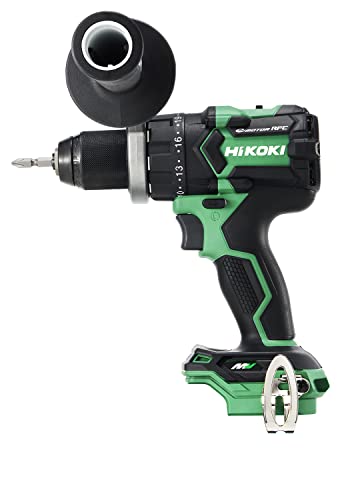
The keyless chuck accepts both round-shank and hex-shank drill bits for boring. Handles wood Φ118mm (with hole saw) and steel Φ13mm. It’s the best choice for applications that demand “more precision than an impact driver” — manufacturing equipment maintenance, wooden furniture making, interior renovation opening work.
The key to knowing when to use this vs. an impact driver: “is impact force needed?” Long screws and coarse-thread screws go to the impact driver; pilot hole drilling, precision screw driving, and woodworking go to the driver drill — that’s the professional division of labor.
HiKOKI CJ36DA Cordless Jigsaw 36V MultiVolt


 Mena
MenaI use this for countertop cutouts in kitchens and curved cuts in interior work. Going cordless means I’m no longer limited by workspace.
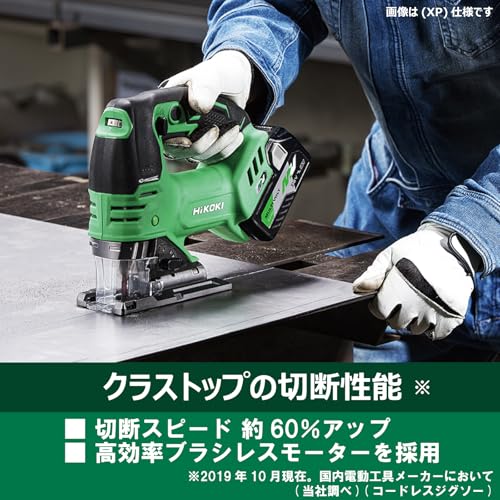
The CJ36DA is a cordless jigsaw for curved and straight cutting of wood, metal, and resin. Cutting capacity is 135mm in wood and 30mm in mild steel, covering interior renovation openings (countertops, flooring island cuts) to metal plate fabrication. The combination of dial-type variable speed and orbital switching (4 stages) lets you set optimal cutting action for each material.
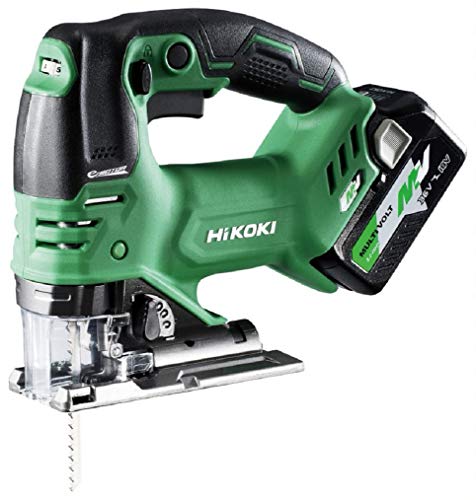
T-shank blades are the industry standard with abundant aftermarket availability — no expensive proprietary blade stockpiling. Blade changes are tool-free one-touch, with zero time lost switching between wood and metal work on-site.
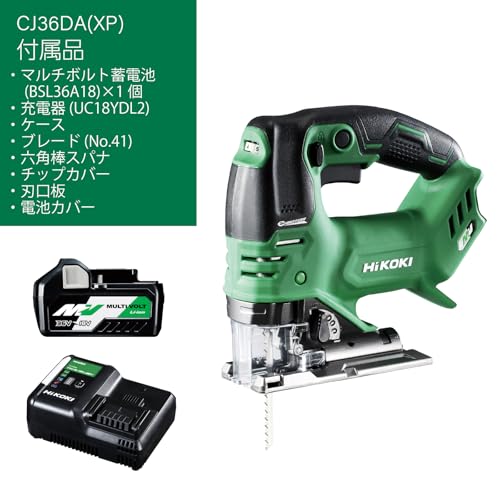
The jigsaw’s weakness is slower cutting speed versus circular saws, and straight-line accuracy is hard to achieve without a guide. Use the included fence guide or a straightedge to compensate for straight cuts. For applications with lots of curved cutting — interior renovation, furniture making, display fixture construction — it’s one of the tools that benefits most from going cordless.
HiKOKI RB36DB Cordless Blower 36V MultiVolt (2nd Generation)




 Mena
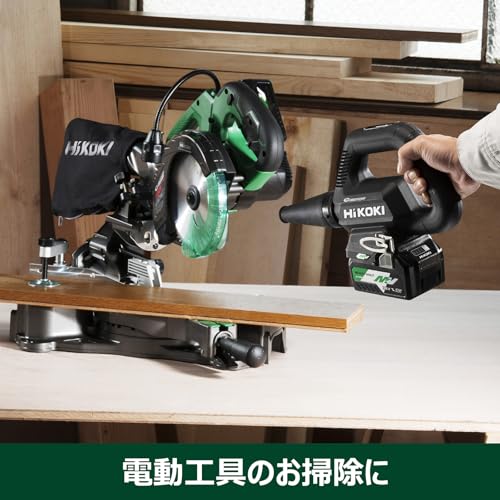
MenaI use this for blowing chips and dust off the worksite. Cordless means I can quickly clean around the workbench. It replaces an air blower.
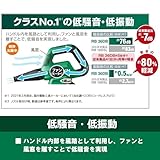
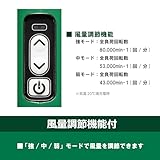
The RB36DB is HiKOKI’s 2nd-generation 36V cordless blower. Three-stage airflow switching covers delicate electronics dust removal (low) to heavy leaf and chip clearing (high). The low-noise design allows use in residential neighborhoods during early morning work and for indoor cleaning without disturbing neighbors.
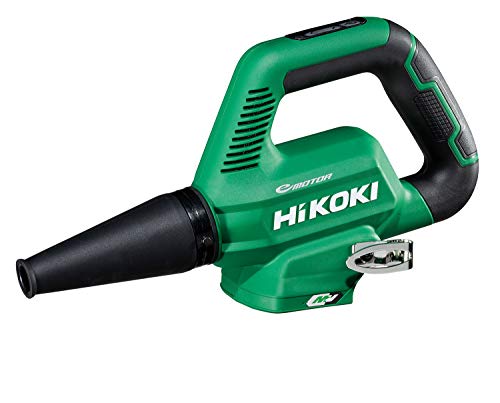
At 1.3kg, the compact, lightweight body can be held in one hand while freely redirecting the nozzle. Performing air blower-equivalent cleaning without a compressor gives it a major advantage in locations where bringing in large equipment is impractical (rooftops, high scaffolding).
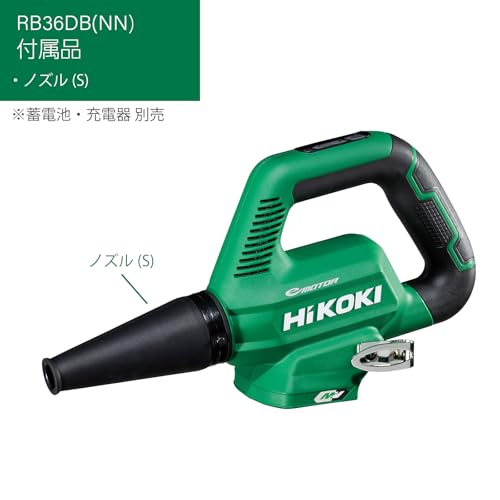
Note that maximum air pressure is lower than compressor-connected air blowers. It’s not suited for urethane foam spraying or high-pressure narrow-space cleaning — position it purely as a cleaning and leaf-blowing tool. Its ability to share MultiVolt batteries across HiKOKI’s tool lineup is valued by users who want to unify their battery system.
Summary: Why Unifying Your Tools Around MultiVolt Makes Sense
I’ve introduced 10 HiKOKI MultiVolt models. The biggest reason to choose this system is reduced management costs through battery unification. When an impact driver, hammer drill, and grinder all run on the same battery, you dramatically cut the number of chargers needed, the effort of swapping batteries, and the risk of running out of power at a critical moment.
For your first tool, the WH36DC impact driver is the most versatile. You can start using it immediately with existing 18V batteries, then upgrade to BSL36A18 batteries when budget allows to access full 36V power. After that, expanding with the circular saw (C3606DA) then hammer drill (DH36DPA) in order of need is the recommended progression.
MenaWhen in doubt about tool selection, check “Can the batteries be shared?” first. The HiKOKI MultiVolt system has top-class expandability in Japan on that front.
Related Reading
Related Articles
- Makita TD023D vs HiKOKI WH3DA: Pen Impact Driver Comparison [2026 New Models]
- Bosch Professional GDR Series Impact Driver: Complete Model Comparison [2026 Edition]
- HiKOKI MultiVolt (36V) Power Tools: Complete Series Comparison [2026 Edition] — The Complete Guide for Electricians and Professional Field Workers
- HiKOKI System Case: All 5 Models Reviewed — Systainer-Compatible Storage That Connects with Makita MAKPAC
- Panasonic EZ Series Power Tools: Top 11 Dual-Voltage Tools Reviewed | 14.4V/18V Compatible
- [Review] The Ultimate Showdown of 7 Brands! Power Tool Maker Rankings 2026 Explained – Features and Selection Guide