
Affiliate Disclosure: This article contains affiliate links. If you make a purchase through these links, we may earn a commission at no additional cost to you.
Hey, it’s Mena.
I’ve been using HiKOKI impact drivers and circular saws on job sites for years, but lately I’ve been seriously researching hearing aids as “the next most important tool in daily life after power tools.” It started when my 70-year-old father’s hearing began to decline — and I put together this article based on what I learned while helping him choose a hearing aid.
“There are so many types of hearing aids — which one should I choose?” and “The prices are too high and confusing” are common concerns. Just in terms of form factor, there are BTE (Behind the Ear), ITE (In the Ear), pocket-type, and RIC (Receiver in Canal) models, and the best choice varies depending on your hearing loss level and lifestyle.
 メナ
メナSince hearing aids are medical devices, ideally you should get your hearing measured and the device fitted at a specialist store. That said, I hope this article is useful as a starting point for gathering information on price ranges and type differences before you get to that stage.
This article covers the top 10 major hearing aids available in Japan, organized by type (BTE, RIC, ITE, pocket-type). Manufacturer, model number, specifications, hearing loss level compatibility, and price range are all summarized to help you narrow down the right hearing aid for you.
Types of Hearing Aids and Basics of How to Choose
Hearing Loss Level Comparison Chart
The first step in choosing a hearing aid is knowing your hearing loss level (hearing threshold level in dBHL). It is recommended to have a hearing test at a specialist hospital or hearing aid specialty store.
| Hearing Loss Level | Hearing Condition | Recommended Style |
|---|---|---|
| Mild (25–40 dBHL) | Normal conversation is audible, but difficulty in quiet voices or noisy environments | ITE, RIC, BTE (mild-range) |
| Moderate (40–60 dBHL) | Difficulty understanding speech even at normal volume | Standard BTE, RIC, pocket-type |
| Severe (60–90 dBHL) | Often unable to hear even loud voices | High-power BTE, pocket-type, digital pocket-type |
| Profound (90 dBHL+) | Everyday conversation almost impossible without a hearing aid | Pocket-type, high-power BTE, cochlear implant consideration |
Pros and Cons by Hearing Aid Style
Different styles vary in comfort, discreteness, and ease of use. Consider not only your hearing loss level but also your lifestyle when choosing.
| Style | Pros | Cons |
|---|---|---|
| BTE (Behind the Ear) | Long battery life, high power available, easy to put on/take off | More visible, may interfere with glasses |
| RIC | Small, discreet, less occlusion | Shorter battery life, receiver maintenance needed |
| ITE (In the Ear) | Most discreet, easy phone use | Some models require custom fitting, small controls can be tricky |
| Pocket-type | Easy to use, high power available, easy battery change | Cord management needed, not suited for active work |
Top 10 Hearing Aids — Comparison Overview
Here is a summary of all 10 models introduced in this article, organized by style, hearing loss level, and power source.
| Model | Style | Hearing Loss Level | Power Source | Key Feature |
|---|---|---|---|---|
| Rionet HB-D8C (Beige) | BTE | Mild–Moderate | Zinc-air battery | Japanese-made, classic entry model |
| Rionet HB-D8C (Gray) | BTE | Mild–Moderate | Zinc-air battery | Japanese-made, stylish color option |
| Rionet HB-D8L | High-power BTE | Moderate–Severe | Zinc-air battery | Japanese-made, higher output |
| Signia FUN SP | High-power BTE | Severe–Profound | Zinc-air battery | German brand, 4 programs |
| Rionet HB-J1TR-L | RIC | Mild–Moderate | Zinc-air battery | Japanese-made, discreet |
| Rionet HC-A1 | ITE | Mild–Moderate | Zinc-air battery | Japanese-made, both ears included |
| Panasonic WH-J25D-S | Pocket-type (rechargeable) | Mild–Severe | Rechargeable | Wireless connectivity |
| Panasonic WHA-25 | Pocket-type (analog) | Mild–Severe | AA battery | Simple operation, entry-level |
| Panasonic WH-A27 | Pocket-type (analog, high-power) | Severe–Profound | AA battery | High output for profound loss |
| Rionet HD-34 | Pocket-type (digital) | Mild–Severe | AA battery | Japanese-made, digital processing |
BTE (Behind the Ear)
BTE (Behind the Ear) style, where the main unit hooks behind the ear, is the most popular form factor for hearing aids. Because they can hold larger batteries, battery life is good and output power adjustment range is wide, making them suitable for a broad range of hearing loss levels from mild to profound. They are easy to put on and take off, making them user-friendly even for first-time hearing aid users.
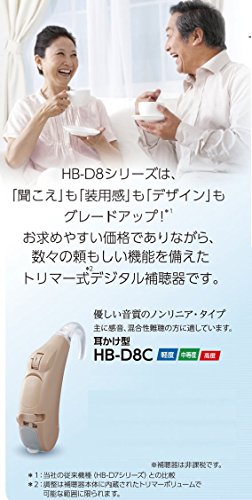
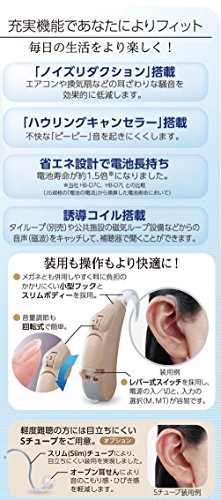
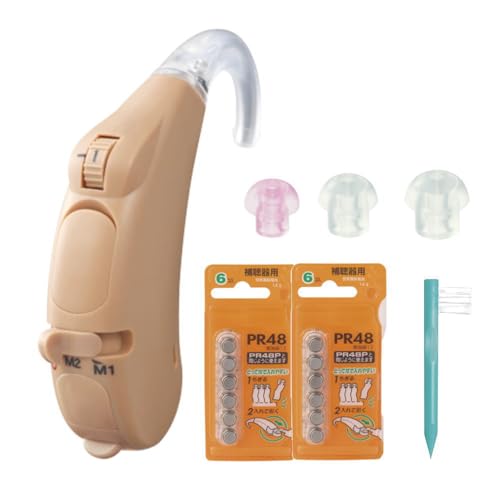
Rionet HB-D8C (Mild–Moderate Hearing Loss, BTE)
メナIf you insist on Japanese-made, go straight to Rionet. I’ve recommended the HB-D8C to colleagues who use it on electrical work sites. For mild to moderate loss, it’s highly satisfying as a first hearing aid.
| Manufacturer | Rionet (RION) |
| Model | HB-D8C |
| Style | BTE (Behind the Ear) |
| Hearing Loss Level | Mild–Moderate |
| Power Source | PR48 zinc-air battery (approx. 330 hours) |
| Made in | Japan |
| Medical Device | Certified (approval number obtained) |
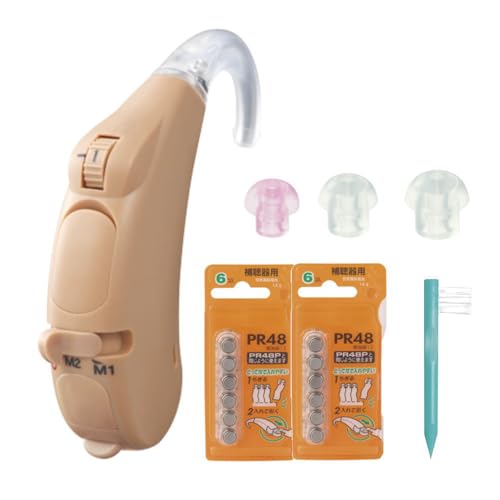
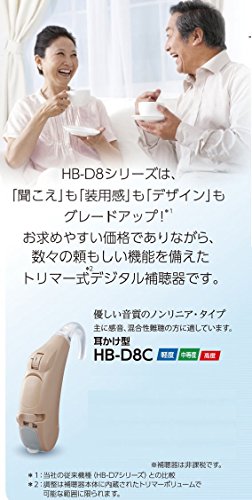
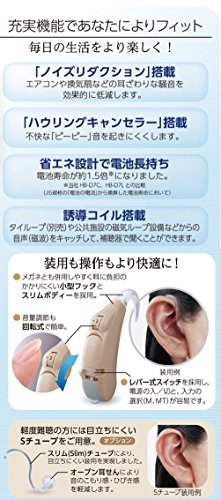
Who it’s for: The ideal entry model for those with mild to moderate hearing loss who have started noticing that “the TV sounds harder to hear” or “I’m asking people to repeat themselves more often.” The quality and peace of mind of Japanese manufacturing is the deciding factor.
Why we chose it: RION holds one of the top domestic market shares in hearing aids, with manufacturing and after-sales service handled entirely in Japan. The BTE style hooks easily behind the ear, making it an accessible design even for first-time hearing aid users.
Drawbacks: No Bluetooth smartphone connectivity or rechargeable battery. Those who prioritize smartphone integration or charging convenience may find it lacking.
Rionet HB-D8C Fresh Gray (Stylish Color Option)
メナFresh Gray is a just-right color — not too obvious, yet it fades from your consciousness that you’re hiding something. I think having color options that reduce the psychological barrier to wearing a hearing aid really matters.
| Manufacturer | Rionet (RION) |
| Model | HB-D8C Fresh Gray |
| Style | BTE (Behind the Ear) |
| Hearing Loss Level | Mild–Moderate |
| Power Source | PR48 zinc-air battery (approx. 330 hours) |
| Color | Fresh Gray |
| Made in | Japan |
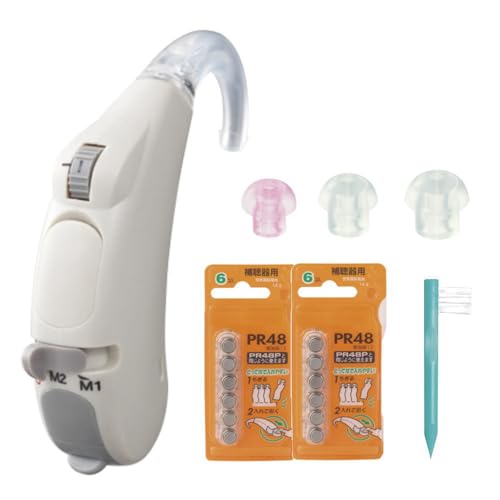
Who it’s for: Functionally identical to the HB-D8C Beige, but suited for those who don’t want the hearing aid to stand out, or those who prefer gray tones. Depending on hair and skin color, gray may blend in more naturally than beige for some people.
Color selection tips: The best way to choose is to try hearing aids on in person, but generally Fresh Gray tends to blend well with short hair, white/gray hair, while beige tends to work better for beige-to-brown hair tones.
Rionet HB-D8L (Moderate–Severe Hearing Loss, High-Power BTE)
メナThe HB-D8L’s high-power design is reliable when your hearing has progressed past moderate to “considerably hard to hear.” The high-volume design that performs even in noisy construction environments is reassuring for those who work on site.
| Manufacturer | Rionet (RION) |
| Model | HB-D8L |
| Style | High-power BTE |
| Hearing Loss Level | Moderate–Severe |
| Power Source | PR48 zinc-air battery (approx. 330 hours) |
| Made in | Japan |
| Medical Device | Certified (approval number obtained) |
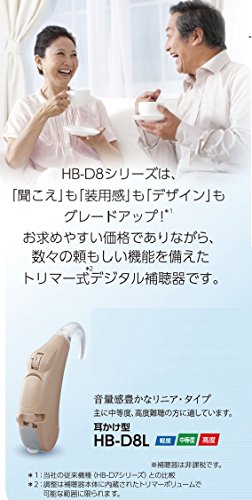
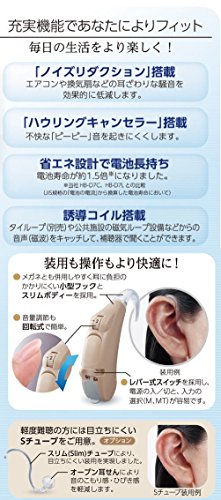
Who it’s for: Suitable for those approaching severe hearing loss from moderate, or those who feel the volume of the mild-range HB-D8C is insufficient. The high-output design makes it easier to hear distant voices and lower-pitched voices.
HB-D8C vs. HB-D8L: The key difference between HB-D8C and HB-D8L is maximum sound pressure level (output). Designed with higher amplification capability to handle moderate–severe hearing loss, it is important to choose the right model for your hearing level even within the same BTE style.
Drawbacks: Due to its high-power design, it may sound too loud for those with mild hearing loss. A hearing test and fitting at a specialist store is recommended before purchasing.
Signia FUN SP (Severe–Profound Hearing Loss, High-Power BTE)
メナSignia is a German brand rooted in Siemens hearing aid heritage, with top global market share. The FUN SP’s combination of simple operation and solid power has a proven track record — I recommended it to a colleague’s father with severe hearing loss.
| Manufacturer | Signia (Siemens) |
| Model | FUN SP |
| Style | High-power BTE |
| Hearing Loss Level | Severe–Profound |
| Power Source | PR44 zinc-air battery |
| Programs | 4 programs |
| Water Resistance | Nano-coating (splash-proof) |
| Warranty | 2 years |
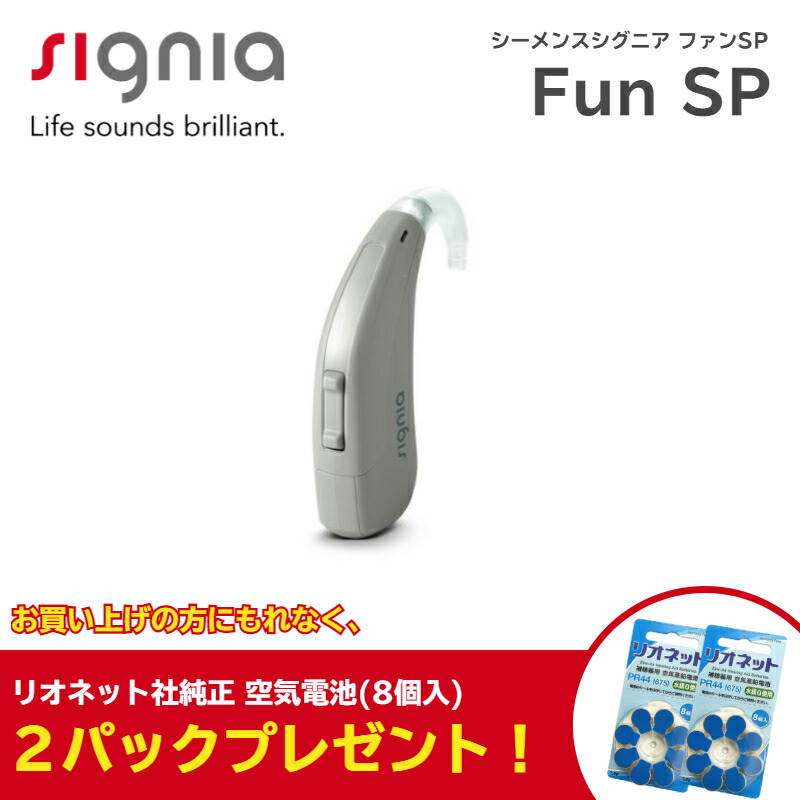
Who it’s for: Long-time hearing aid users whose hearing has progressed and current devices are no longer providing enough volume. The high-power design for severe–profound hearing loss ensures sufficient volume for everyday conversation. Simple operation makes it accessible for elderly users.
Why choose Signia: Signia carries on the heritage of Siemens hearing aids, a German brand, and holds a strong market share in Europe, Asia, and beyond. The FUN SP is positioned as an entry-to-standard model in that lineup, but offers full practical performance for daily life.
Drawbacks: No smartphone connectivity or rechargeable function. Noise suppression performance is at a basic level compared to high-end models (X Series, etc.).
RIC (Receiver in Canal)
RIC (Receiver in Canal) style is an evolution of BTE, where the speaker (receiver) sits inside the ear canal while the main unit remains behind the ear. The main body is smaller and lighter than standard BTE, less visible, and produces less occlusion (blocked feeling) in the ear canal. Popular among working-age adults and those who are conscious of appearance.
Rionet HB-J1TR-L (RIC, Discreet Hearing Aid)
メナRIC style is characterized by being “a BTE that’s hard to notice.” An acquaintance who wore the HB-J1TR said, “People didn’t even realize I was wearing a hearing aid.” I think it’s well-suited for working-age adults who are self-conscious about appearance.
| Manufacturer | Rionet (RION) |
| Model | HB-J1TR-L |
| Style | RIC (Receiver in Canal) |
| Hearing Loss Level | Mild–Moderate |
| Power Source | PR41 zinc-air battery (approx. 145 hours) |
| Made in | Japan |
| Medical Device | Certified |
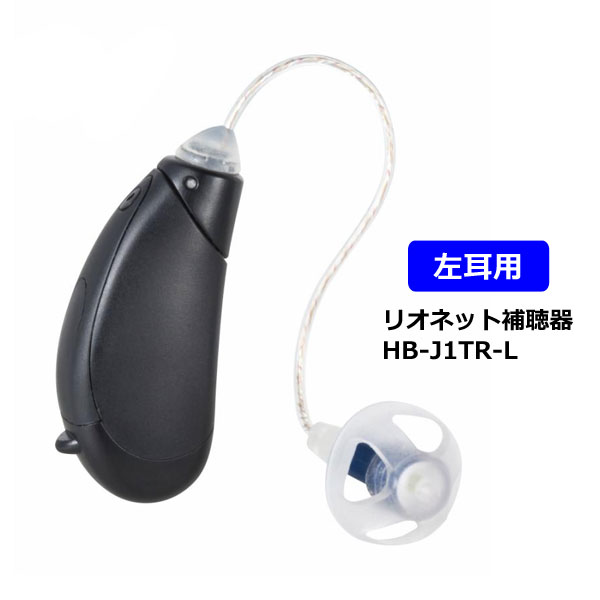
Who it’s for: Suitable for working-age adults or appearance-conscious individuals who don’t want the hearing aid to be noticeable. Smaller than a standard BTE, it fits snugly behind the ear and is barely visible from the front.
About RIC style: RIC (Receiver in Canal) places the receiver (speaker) inside the ear canal, with the main body behind the ear. Smaller and lighter than standard BTE, with less occlusion in the ear canal.
Drawbacks: The receiver that goes inside the ear is prone to sweat and earwax buildup, requiring regular maintenance. The PR41 battery lasts approximately 145 hours — notably shorter than BTE (PR48, approx. 330 hours).
ITE (In the Ear)
ITE (In the Ear) style, where the entire unit fits inside the ear canal, is barely noticeable even from the front — it’s hard to tell someone is wearing a hearing aid at all. Phone calls can be made naturally. No interference with glasses makes it suitable for eyeglass wearers.
Rionet HC-A1 (ITE, Both Ears Included, Made in Japan)
メナITE style has the biggest advantage of “no one can tell you’re wearing a hearing aid.” The HC-A1 carries a medical device approval number and gives you the peace of mind of Japanese manufacturing. It’s thoughtful that both ears come in the same package.
| Manufacturer | Rionet (RION) |
| Model | HC-A1 |
| Style | ITE (In the Ear) |
| Hearing Loss Level | Mild–Moderate |
| Set | Both ears (left and right) |
| Power Source | PR41 zinc-air battery (approx. 160 hours) |
| Made in | Japan |
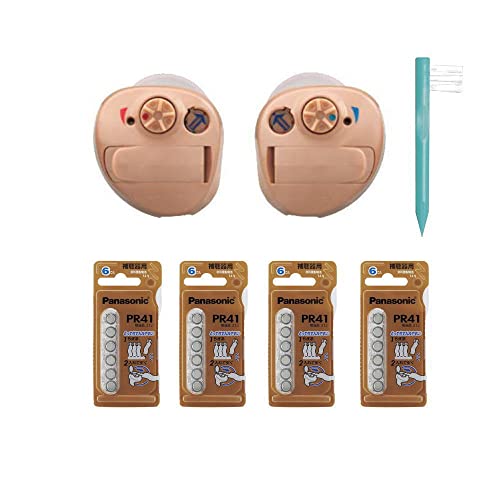
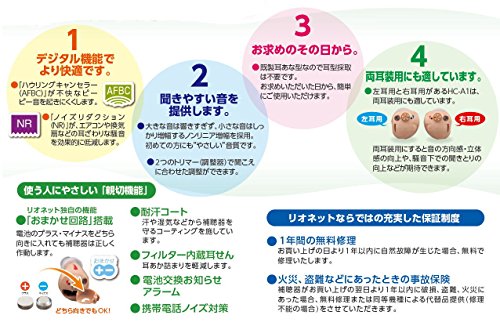
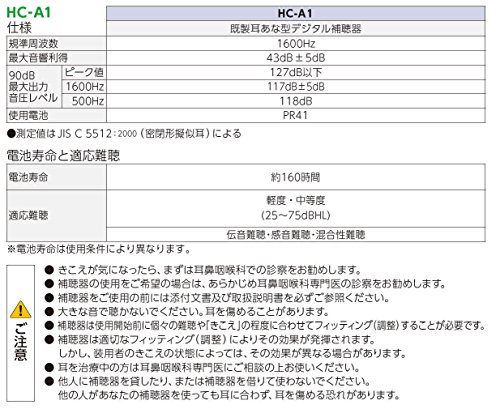
Who it’s for: Those who don’t want others to know they’re wearing a hearing aid, or those who prioritize the most natural appearance possible. Designed to fit the shape of the ear, it is inconspicuous even in formal attire or uniforms.
ITE style advantages: The ITE (In the Ear) style fits entirely inside the ear canal, enabling natural phone use. Also less interference with glasses than BTE style for eyeglass wearers.
Drawbacks: Some ITE models require a custom shell (custom mold) fitted to the ear shape. The HC-A1 uses trimmer adjustment, so fine-tuning at a specialist store is recommended. The small size also makes battery changes a finer motor skill task.
Pocket-Type
Pocket-type hearing aids (also called body-worn or box-type) involve a main unit kept in a pocket, connected to an earphone via cord. The large main body makes buttons easy to press and batteries easy to change. Well-suited for those who find technology difficult to operate or elderly individuals whose dexterity has declined. They still see consistent demand.
Panasonic WH-J25D-S (Rechargeable Pocket-Type with Wireless Connectivity)
メナThe WH-J25D-S’s biggest strength is wireless connectivity to TV, phone, and intercom. It’s often chosen as a gift for elderly parents. It feels less like a “hearing aid” and more like a “smart listening device.”
| Manufacturer | Panasonic |
| Model | WH-J25D-S |
| Style | Pocket-type (rechargeable) |
| Hearing Loss Level | Mild–Severe |
| Power Source | Rechargeable (USB) |
| Connectivity | Wireless to TV, phone, and intercom |
| Use | Binaural (both ears) |
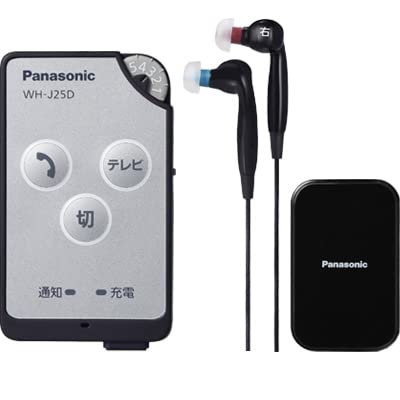
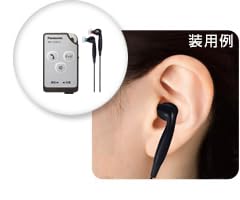
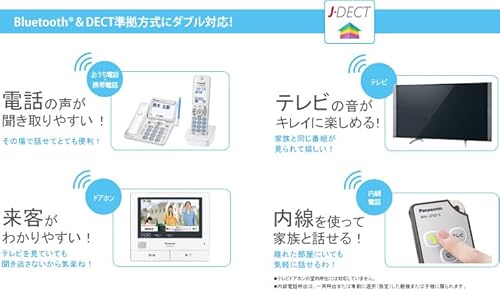
Who it’s for: Ideal for those who find it hard to hear the TV or struggle to understand phone calls. Rechargeable — no battery changes needed — which is a major advantage for elderly individuals with reduced dexterity. PC fitting is also supported for post-purchase adjustment.
About WH-J25D-S: Panasonic hearing aids offer rich wireless integration with intercoms, landline phones, and TVs, providing comprehensive support for the “hearing difficulties at home” that many people face. PC fitting is supported for post-purchase adjustments.
Drawbacks: Pocket-type devices connect the earphone to the main body via cord, making them less suited for use during active physical work. When going out, the unit needs to be stored in a pocket or bag.
Panasonic WHA-25 (Analog Pocket-Type, Simple Operation)
メナSome people think analog hearing aids are “outdated,” but a certain number of users find the sound more natural than digital. The WHA-25 sells on simplicity and is a classic “first hearing aid” for those who find technology intimidating.


| Manufacturer | Panasonic |
| Model | WHA-25 |
| Style | Pocket-type (analog) |
| Hearing Loss Level | Mild–Severe |
| Power Source | AA battery |
| Controls | Simple volume dial |
| Feature | Easy-to-understand entry model |
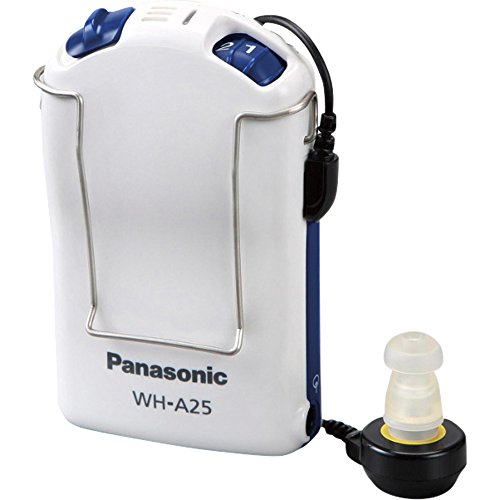
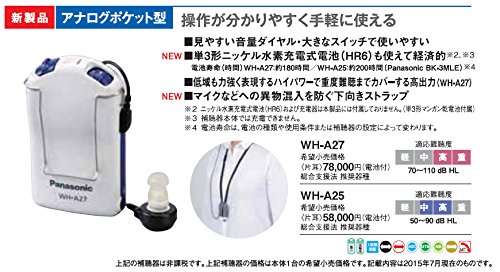
Who it’s for: Those who feel “digital sounds complicated,” or those who simply want something that works without fuss. Uses standard AA batteries, which are easy to find anywhere — another elderly-friendly design consideration.
About analog hearing aids: Compared to digital hearing aids, the sound processing is more natural and some users feel less of an “artificial” quality. Prices also tend to be lower, making them well-suited as a first hearing aid to try out.
Drawbacks: Advanced features like noise suppression, feedback cancellation, and multi-program switching found in digital hearing aids are not available. Hearing in noisy environments has its limits.
Panasonic WH-A27 (High-Power Analog Pocket-Type, Severe–Profound Hearing Loss)
メナThe WH-A27 is a powerful model for those whose hearing has declined significantly. The pocket-type’s strength is that it can still be used even into severe hearing loss — a colleague’s parent used it and was happy that “the volume is really there.”

| Manufacturer | Panasonic |
| Model | WH-A27 |
| Style | Pocket-type (analog, high-power) |
| Hearing Loss Level | Severe–Profound |
| Power Source | AA battery |
| Feature | High-output design, powerful amp |
| Color | White |
Who it’s for: Those with severe to profound hearing loss who feel standard hearing aids don’t provide enough volume. The powerful amp in the high-output design delivers stable, strong sound.
WHA-25 vs. WH-A27: While the WHA-25 is a standard-output model for mild to moderate hearing loss, the WH-A27 is a high-output model for severe–profound hearing loss. It is common for users to move from the WHA-25 to the WH-A27 as their hearing progresses and they feel the volume is insufficient.
Drawbacks: Analog design means no digital noise suppression features. Its high-output design for profound hearing loss may produce uncomfortably loud sound for those with mild–moderate hearing loss.
Rionet HD-34 (Digital Pocket-Type, Made in Japan)
メナThe Rionet HD-34 is consistently reliable among digital pocket-type hearing aids. It’s a great choice for those who want better speech clarity through digital processing while keeping the ease of use of a pocket-type format.
| Manufacturer | Rionet (RION) |
| Model | HD-34 |
| Style | Pocket-type (digital) |
| Hearing Loss Level | Mild–Severe |
| Power Source | AA battery |
| Made in | Japan |
| Processing | Digital |
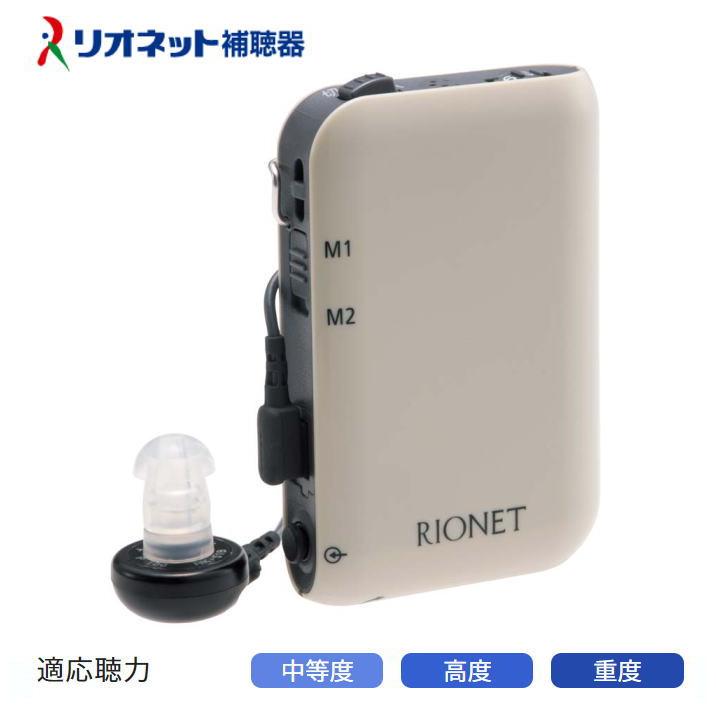
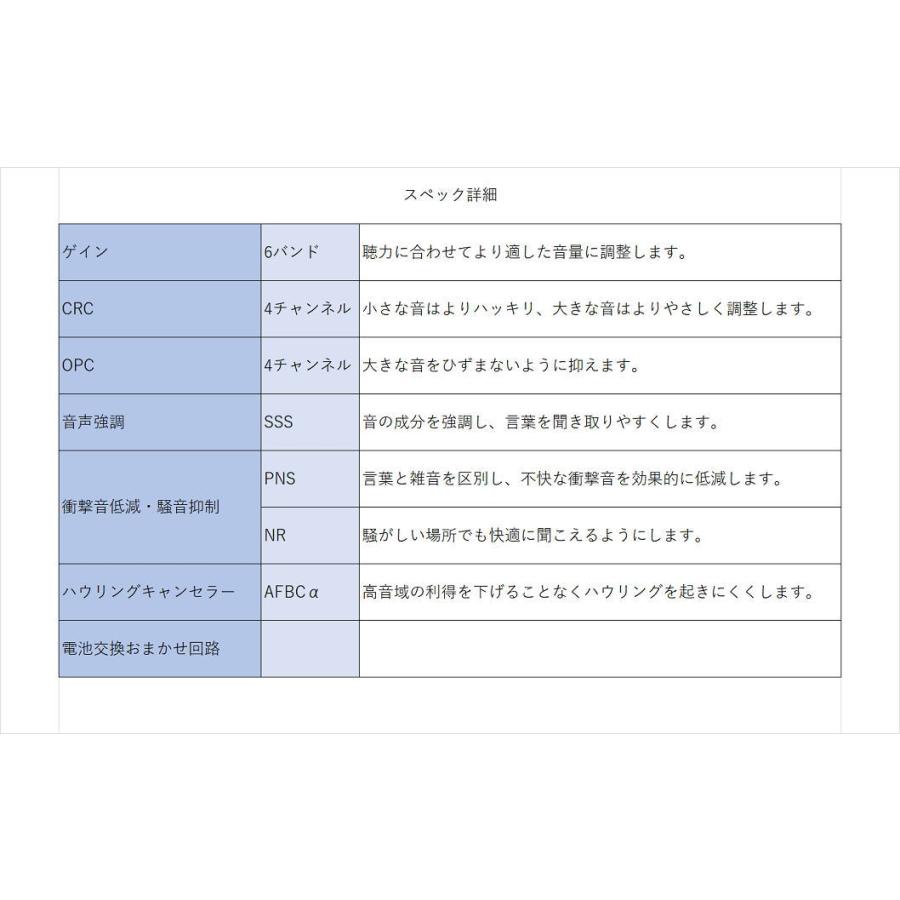
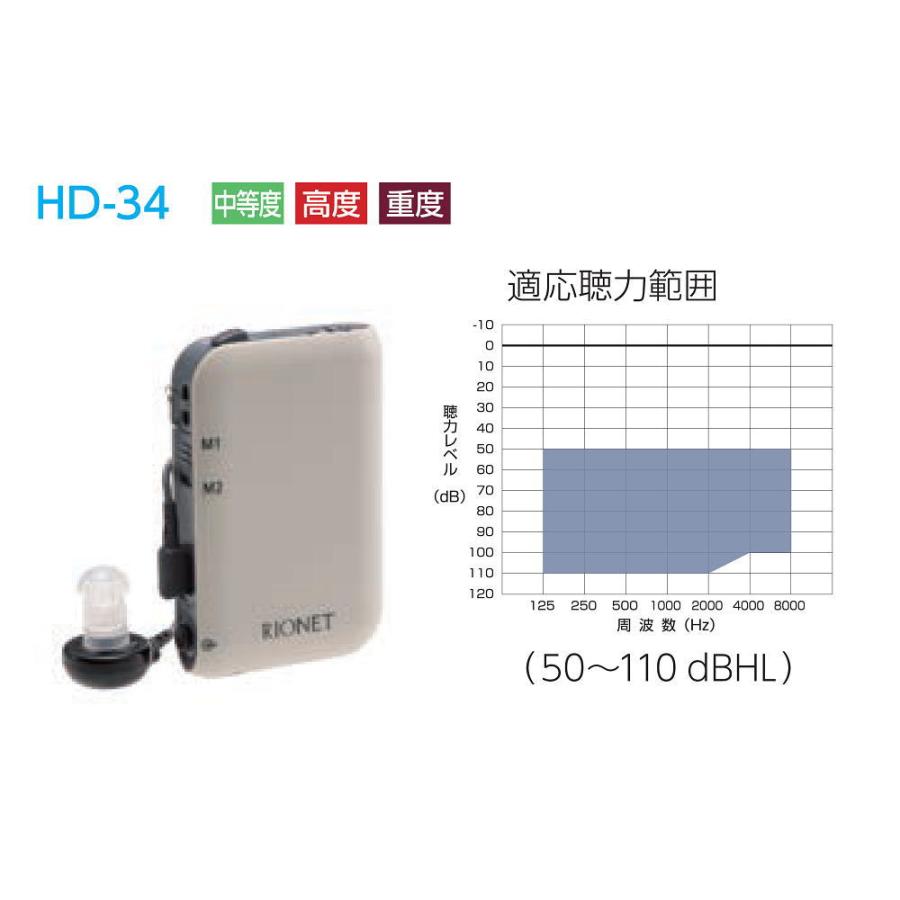
Who it’s for: Those who want clearer sound quality than the analog WHA-25, while maintaining the ease of use of a pocket-type design. Digital processing improves speech intelligibility and enhances conversation understanding.
Digital pocket-type advantages: Maintains the same ease of use as analog pocket types while providing digital processing benefits such as noise suppression and feedback cancellation. Rionet’s quality management and domestic after-sales service provide added peace of mind.
Drawbacks: As a pocket-type, cord and earphone management is still required, making it slightly less convenient outdoors than BTE style. Advanced features like Bluetooth connectivity are not included.
Frequently Asked Questions About Hearing Aids
Q1. What is the difference between a hearing aid and a sound amplifier?
A hearing aid is a medical device certified by the government under the Pharmaceuticals and Medical Devices Act (PMD Act) as a “controlled medical device.” It can be fitted (adjusted) to suit the type and level of hearing loss. A sound amplifier (also called a personal sound amplification product, or PSAP), on the other hand, is not a medical device — it is simply a consumer electronics product that amplifies sound. It cannot guarantee improvement in hearing loss or be adjusted to match specific hearing levels. Many products marketed as “inexpensive hearing aids” are in fact sound amplifiers. If you need reliable results, choose a hearing aid certified as a medical device.
Q2. Do I need a doctor’s prescription for a hearing aid?
In Japan, no prescription is required for hearing aids — they can be purchased at hearing aid specialty stores. However, it is strongly recommended to have a hearing test at an ear, nose, and throat (ENT) clinic before purchasing a hearing aid (some types of hearing loss may not be suitable for a hearing aid). To claim hearing aid costs as a medical expense deduction, a doctor’s written opinion is required.
Q3. How much does a hearing aid cost?
Hearing aid prices range widely, from around ¥30,000 per ear (entry models) to hundreds of thousands of yen (high-end models, both ears). The Rionet and Panasonic products featured in this article are mainly in the ¥30,000–120,000 range. European premium brands such as Signia, Oticon, and Phonak tend to cost ¥100,000–300,000+ per ear. There is a subsidy program available to those with a physical disability certificate, which may cover part of the cost.
Q4. Which is better — rechargeable or battery-powered?
Rechargeable (lithium-ion) models eliminate the need to change batteries and are well-suited for elderly individuals with reduced dexterity. However, if you forget to charge them, they won’t work. Battery-powered models use zinc-air batteries (PR44, PR48, PR41, etc.), which are easy to find anywhere — a reassuring quality. Depending on usage frequency, batteries may need to be changed every 1–2 weeks.
Accessories and Consumables for Hearing Aids(アクセサリー)
Here is a summary of accessories and consumables to help your hearing aids last longer.
Hearing Aid Battery PR44 (Zinc-Air)
Primarily used in high-power BTE models (Signia FUN SP, etc.). Domestic brands are widely available and easy to find.
Hearing Aid Battery PR48 (Zinc-Air)
Used in Rionet HB-D8C/HB-D8L and others. Standard size for BTE style hearing aids.
Hearing Aid Battery PR41 (Zinc-Air)
Used in RIC style (HB-J1TR) and ITE style (HC-A1). Smaller battery for compact models.
Desiccant and Storage Case for Hearing Aids
Moisture-proof storage is the single most important factor in extending the life of a hearing aid. Essential for overnight storage.
Summary: How to Choose the Right Hearing Aid for You
Choosing the right hearing aid requires balancing three factors: “hearing loss level × lifestyle × budget.”
· Mild–moderate loss, prioritize discreteness → RIC style (Rionet HB-J1TR-L) · BTE with trusted Japanese manufacturing → Rionet HB-D8C (mild–moderate) / HB-D8L (severe) · Profound loss, prioritize power → Signia FUN SP / Panasonic WH-A27 · Prioritize simple operation → Panasonic WHA-25 (pocket-type) · Wireless connectivity, rechargeable → Panasonic WH-J25D-S
メナA hearing aid isn’t “buy it and you’re done” — fitting (adjustment) is everything. I recommend trying one at a specialist store first. Take the model numbers from this article and consult your local hearing aid specialist store.