
 Mena
MenaHey, I’m Mena — as a hybrid engineer working across mechanical and electrical trades, I’ve spent plenty of cold mornings figuring out what actually keeps you warm on a jobsite versus what just looks warm. Today I’m comparing five Carhartt and Dickies pieces built for real winter trade work.
Affiliate Disclosure: As an Amazon Associate, I earn from qualifying purchases at no extra cost to you.
One thing this comparison deliberately leaves out: battery-heated jackets from brands like Milwaukee or DEWALT. They solve warmth in a completely different way — active heating zones and battery runtime instead of insulation and shell material — which changes the whole selection criteria. That makes them a separate category worth its own comparison, not a line item here.
Short version: for the coldest, most extreme conditions the Carhartt Yukon Extremes coat, for everyday cold comfort the Carhartt Sherpa Sierra jacket, for the warmest bib the Carhartt Arctic Quilt R03, for frequent on/off access the Dickies TB839 bib, and for a light year-round layering jacket the Dickies Eisenhower.
Quick comparison: all 5 pieces at a glance
All specifications come directly from official Carhartt and Dickies manufacturer pages as of 2026-08-11. Always check the current product page before you buy, since specs and availability can change.
| Model | Warmth | Best for |
|---|---|---|
| Carhartt Yukon Extremes (104460) | Level 4 Extreme | Coldest, most extreme conditions |
| Carhartt Sherpa Sierra (104392) | Level 3 Warmest | Everyday in/out-of-truck comfort |
| Carhartt Arctic Quilt Bib (R03) | Arctic-weight (warmest bib) | Sustained sub-freezing static work |
| Dickies Duck Bib (TB839) | 6oz mid-weight | Frequent on/off, knee protection |
| Dickies Eisenhower (TJ15) | Lightest in lineup | Year-round layering piece |
5 winter work pieces compared
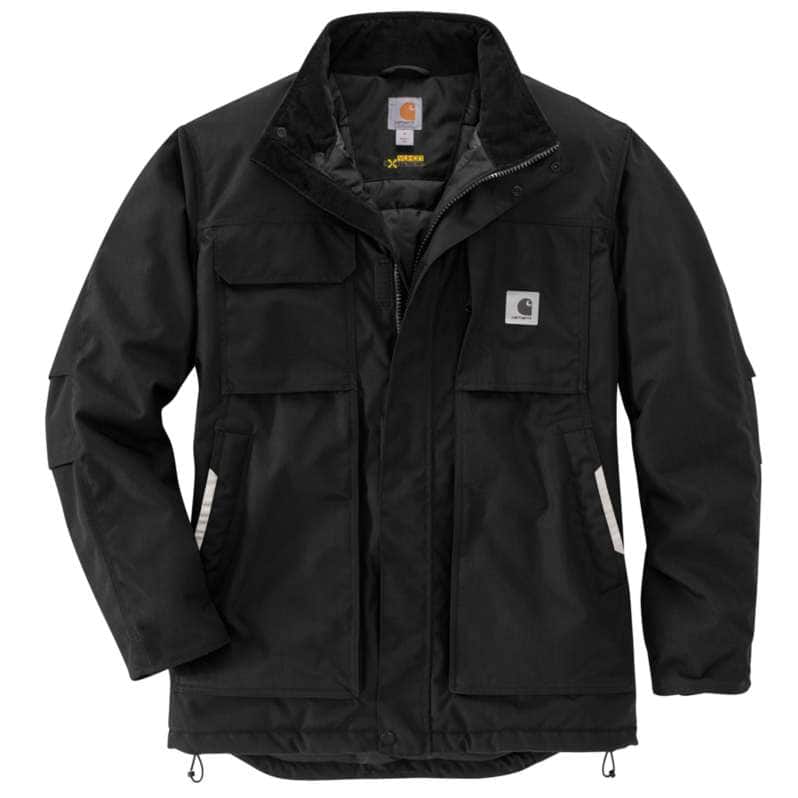
Carhartt Yukon Extremes Full Swing Insulated Coat
 Mena
MenaThe 500-denier Cordura shell on this one is no joke — I’ve seen guys work a whole ice-storm shift in it and the fabric just doesn’t give. 150 grams of Thinsulate sounds modest on paper, but paired with that windproof shell it’s genuinely rated for the coldest jobs Carhartt makes a coat for.
| Shell | 6.5oz 500-denier Cordura nylon, Wind Fighter windproof tech |
|---|---|
| Insulation | 150g 3M Thinsulate featherless, Rain Defender DWR |
| Warmth rating | Level 4 Extreme (Carhartt’s highest) |
| Mobility | Full Swing shoulder/arm panels, Freedom Gusset underarm stretch |
Per official Carhartt specifications (checked 2026-08-11), the Yukon Extremes combines a 6.5oz 500-denier Cordura nylon shell with Wind Fighter windproof technology, 150g of 3M Thinsulate featherless insulation, and Rain Defender DWR treatment, earning Carhartt’s Level 4 Extreme warmth rating — its highest.
The Rain Defender DWR sheds light rain and drizzle but isn’t fully waterproof — sustained heavy rain or wet snow calls for a separate rain layer on top.
Best for outdoor tradespeople in sub-zero winters — linemen, plow operators, and site crews who need real warmth without giving up shoulder mobility.
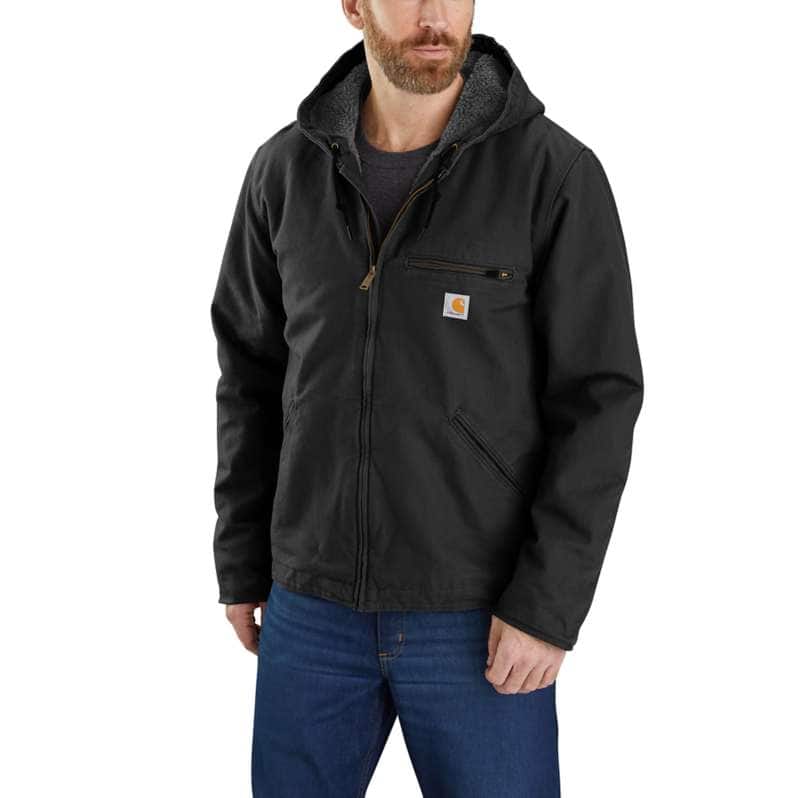
Carhartt Washed Duck Sherpa-Lined Sierra Jacket
 Mena
MenaThis is the jacket I’d hand a guy who’s in and out of the truck all day rather than standing still in a blizzard — the sherpa lining feels almost like a flannel shirt jacket but the 12-ounce duck shell shrugs off scrapes on the rack and ladder rungs.
| Shell | 12oz 100% ring-spun cotton washed duck |
|---|---|
| Lining | Sherpa fleece body, quilted-nylon sleeve lining |
| Warmth rating | Level 3 Warmest |
| Features | Attached sherpa-lined hood, rib-knit storm cuffs |
Per official Carhartt specifications (checked 2026-08-11), the Sierra Jacket pairs a 12oz ring-spun cotton duck shell with a sherpa-fleece body lining and quilted-nylon sleeve lining, rated Level 3 Warmest, with an attached sherpa-lined hood.

It’s warmer than a shell-only jacket but not built for extreme lows like the Yukon Extremes, and the washed-duck cotton offers only light moisture resistance rather than true waterproofing.
Recommended for indoor/outdoor movers — carpenters, HVAC techs, delivery drivers wanting everyday cold comfort without extreme-rated bulk.
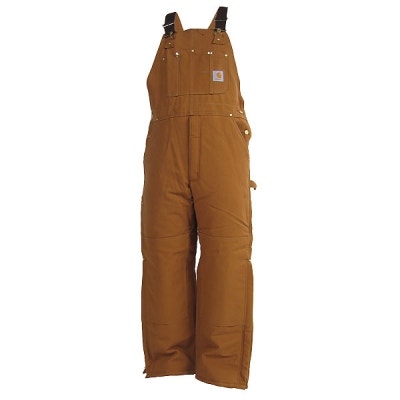
Carhartt Arctic Quilt Lined Duck Bib Overalls
 Mena
MenaThe zip-to-knee legs on these are the detail nobody mentions until they’re wearing insulated bibs over boots at 6am — you don’t have to strip the whole thing off just to get your boots on and off. Arctic-weight quilting is genuinely the warmest lining Carhartt puts in a bib.
| Shell | 12oz 100% ring-spun cotton duck |
|---|---|
| Insulation | Arctic-weight nylon quilted to polyester fill (Carhartt’s warmest bib lining) |
| Access | Ankle-to-knee zip with wind flap |
| Knees | Double-layer, cleanout bottom for kneepads |
Per official Carhartt specifications (checked 2026-08-11), the R03 combines a 12oz cotton duck shell with arctic-weight nylon-quilted-to-polyester lining, knee-to-ankle leg zips with wind flaps, and reinforced double knees built for kneepad use.

The arctic lining runs heavier and bulkier under a coat than a mid-weight option, so it suits standing or static work better than constant crouching or climbing.
Best for sustained sub-freezing outdoor work — utility crews, framers, and site laborers who need the warmest bib in the lineup with fast leg-zip access.
Dickies Duck Insulated Bib Overalls
 Mena
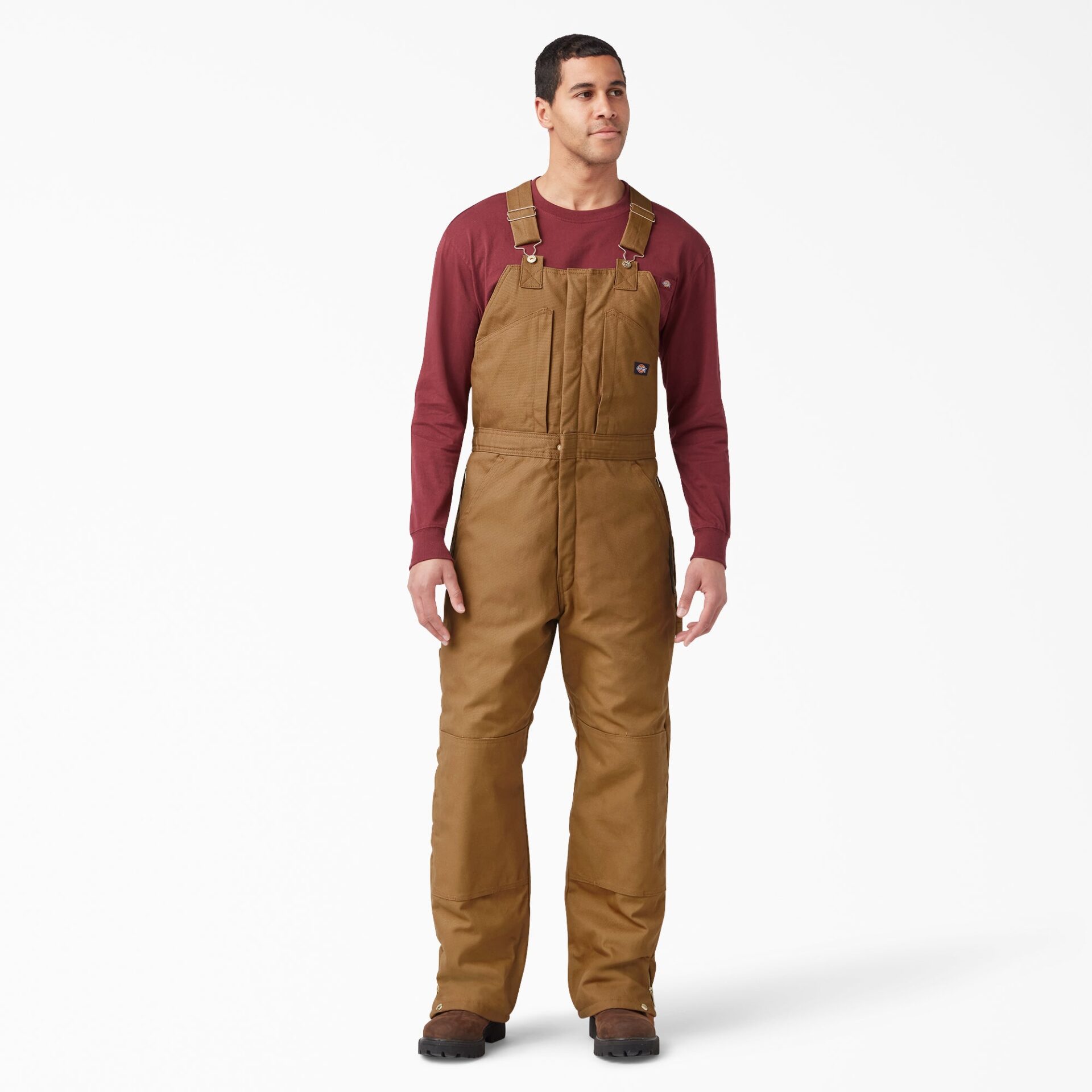
MenaThese sit a notch below the Carhartt arctic bibs on raw warmth, but the zip-to-waist design plus the Scuffguard knee panels make them the pair I’d grab for a day of ladder and crawlspace work where you’re constantly getting in and out of them.
| Shell | 10oz 100% cotton duck, water-resistant finish |
|---|---|
| Insulation | 6oz polyester fill quilted to nylon taffeta |
| Access | Zip-to-waist, adjustable elastic-back shoulder straps |
| Knees | Reinforced double knees with nylon Scuffguard panels |
Per official Dickies specifications (checked 2026-08-11), the TB839 pairs a 10oz cotton duck shell with a water-resistant finish over 6oz polyester-fill quilted lining, a zip-to-waist design, and nylon Scuffguard double knees.
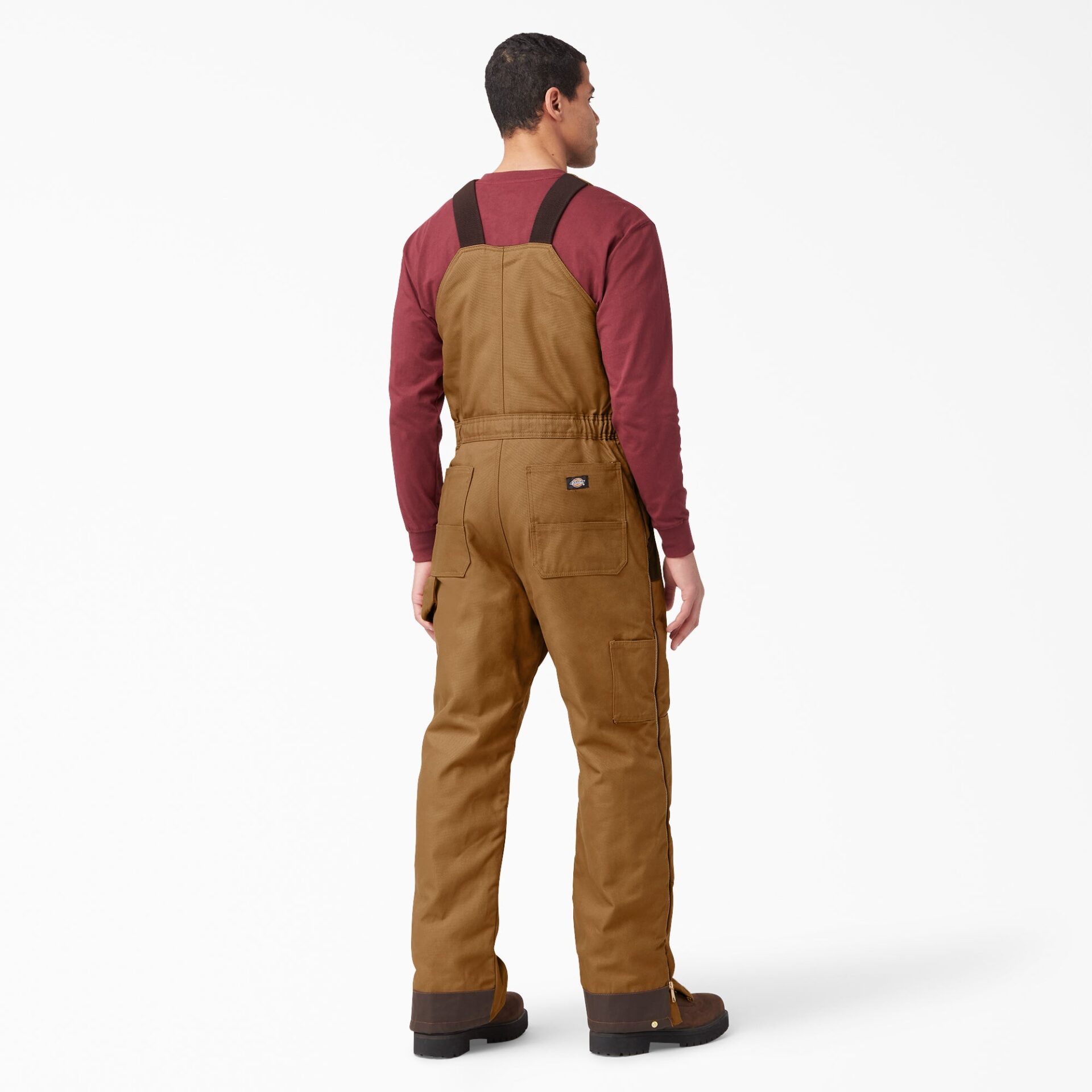
The mid-weight insulation runs cooler than the Carhartt arctic bibs in true sub-zero conditions, typically needing a heavier base or mid layer underneath.
Recommended for frequent on/off access and knee protection over maximum warmth — plumbers, electricians, and general contractors in cold garages or crawlspaces.
Dickies Insulated Eisenhower Jacket




 Mena
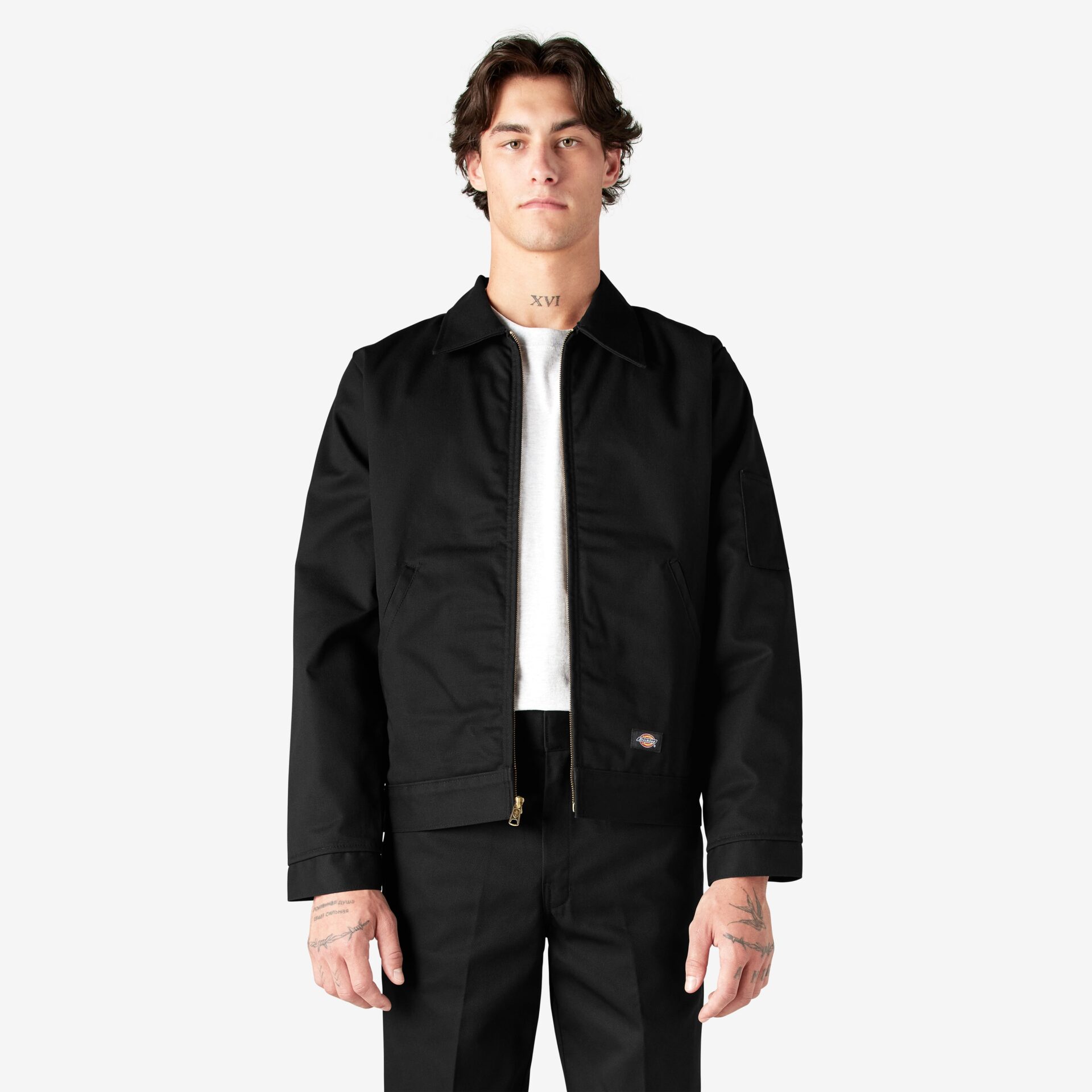
MenaThis is the lightest jacket in the lineup and that’s the point — it’s thin enough to layer under a coat on the coldest days but warm enough on its own for a mild-cold shift, which makes it the one I’d actually keep in the truck year-round instead of swapping seasonally.
| Shell | 8oz vat-dyed twill, 65% poly/35% cotton, DWR treated |
|---|---|
| Insulation | Nylon taffeta quilted to polyurethane foam |
| Closure | Heavy-duty brass zipper front |
| Fit | Adjustable waist tabs, two-piece sleeve construction |
Per official Dickies specifications (checked 2026-08-11), the Eisenhower jacket uses an 8oz poly/cotton twill shell with DWR treatment over a nylon-taffeta lining quilted to polyurethane foam, closed with a heavy-duty brass zipper.
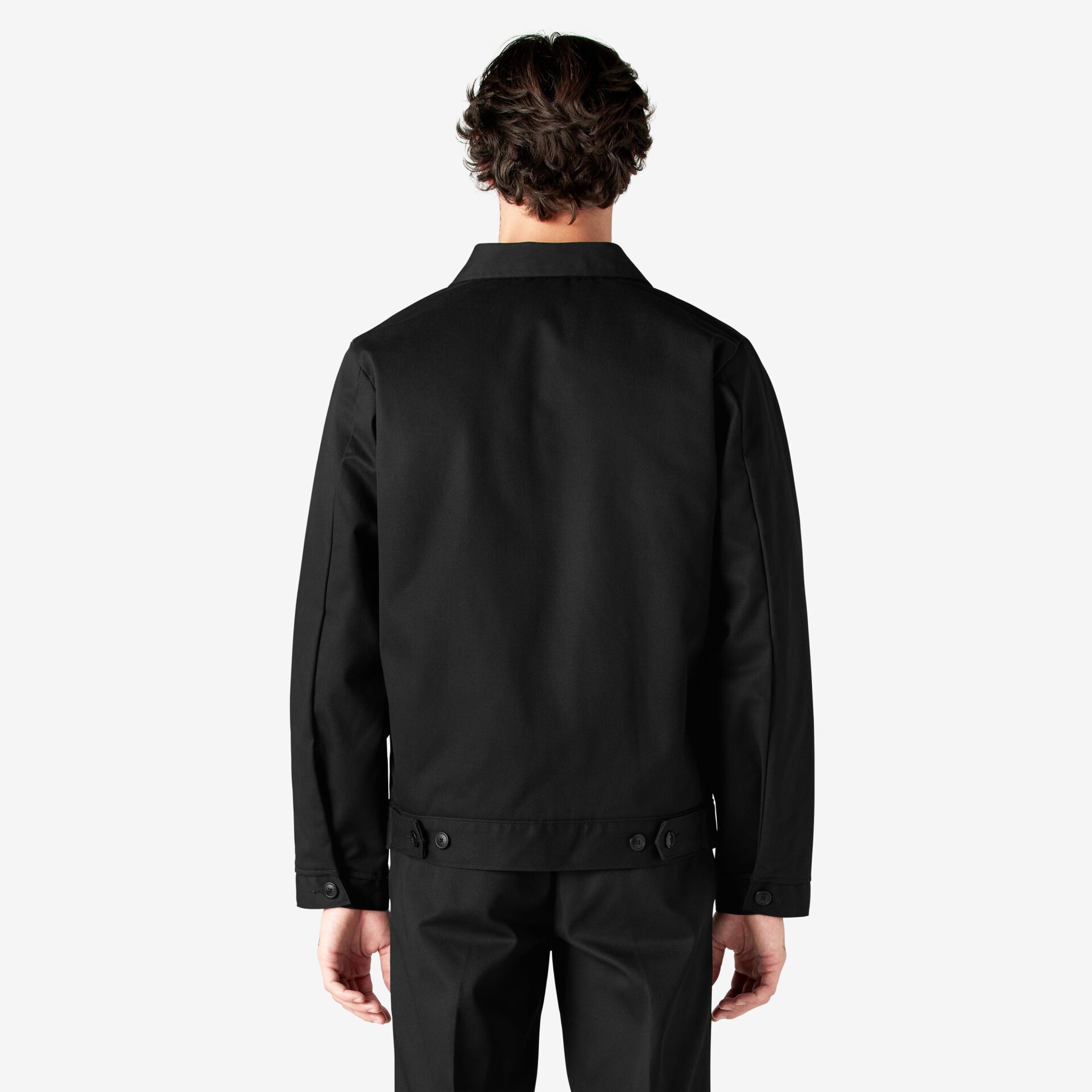
It’s lighter-weight than the duck-canvas coats and bibs in this comparison — not meant for standing outdoors in extreme cold for long stretches, but a solid transitional or layering piece.
Best as a lighter, more affordable insulated jacket for mild-to-moderate cold, or as a mid-layer under a heavier shell once deep winter hits.
How to choose winter work gear
Jacket, bib, or both?
A bib overall like the Carhartt R03 or Dickies TB839 covers your core and legs without a gap at the waist, which matters most for static outdoor work. A jacket alone like the Sherpa Sierra or Eisenhower is easier to shed indoors or in a warm truck cab.
Extreme cold vs. everyday cold
Reserve the Yukon Extremes coat and Arctic Quilt bib for genuinely extreme, sustained cold. For typical winter jobsite temperatures, the Sherpa Sierra or Eisenhower jacket avoids overheating when you’re moving around rather than standing still.
Static work vs. frequent movement
If you’re mostly standing in one spot, prioritize maximum insulation like the Yukon Extremes or Arctic Quilt bib. If you’re climbing ladders, kneeling, and moving constantly, the lighter Eisenhower or the zip-to-waist TB839 bib won’t slow you down.
Accessories: rounding out your cold-weather kit
A good insulated coat or bib is the core of a winter work kit, but a few add-ons round out the setup for genuinely cold jobsites.
Insulated work gloves
Cold hands lose dexterity fast, so a pair of insulated work gloves rated for the same temperature range as your jacket is worth pairing alongside any of these five pieces.
Knee pads for kneeling work
The Carhartt R03’s cleanout bottom is built to accept kneepads — worth adding if your winter work involves kneeling on cold concrete or frozen ground.
MenaMatch the piece to how cold it actually gets and how much you move around — the Yukon Extremes and Arctic Quilt bib for genuinely extreme static cold, the Sherpa Sierra or Eisenhower for everyday winter comfort on the move.
Bottom line: the right winter piece for your jobsite
Five pieces compared: the Carhartt Yukon Extremes coat for the coldest, most extreme conditions, the Carhartt Sherpa Sierra jacket for everyday comfort, the Carhartt Arctic Quilt R03 bib for the warmest static protection, the Dickies TB839 bib for frequent on/off access, and the Dickies Eisenhower jacket as a light, year-round layering piece.
★All specifications in this article come directly from official Carhartt and Dickies manufacturer pages as of 2026-08-11. Specs and availability can change, so always check the current product page before you buy.