
This article contains affiliate links. If you make a purchase through these links, we may earn a commission at no additional cost to you.
I’m Mena, and after more than a decade on interior finishing job sites, I’ve put together my definitive 2026 roundup of the tools that wallpaper installers and drywall finishers actually reach for. From smoothing knives and squeegees to seam rollers and paste brushes, these are the tools I keep coming back to on real jobs.
Wallpaper installation is a craft where tool quality shows up directly in the finished wall. Cut corners on tools and you risk torn seams, lifted edges, and rework that costs far more than the tools would have. Investing in professional-grade gear pays for itself the first time it saves you a callback.
Choosing Your Tools by Installation Stage
Wallpaper installation breaks down into four stages: surface prep, pasting, hanging, and finishing. Surface prep relies on putty knives and scrapers. Pasting and hanging lean on smoothing brushes, smoothers, and smoothing knives. Finishing is where cutters, seam rollers, and levels do the work. Matching the right tool to each stage is what separates a clean finish from a patchy one.
Blade choice also depends on material. Standard vinyl wallcoverings call for a stiffer 0.6mm-class blade, while imported paper- or fabric-backed papers do better with a softer 0.3-0.5mm blade. The real difference between pro-grade and hardware-store tools comes down to precision, durability, and how easily you can source replacement parts. When you’re using a tool dozens of times a day, starting with professional quality is worth it.
12 Essential Tools for Wallpaper Installers
1. Marshalltown 3508SD DuraSoft Taping Knife | A Genuine 8-Inch Stainless Blade for Seam Work
 Mena
MenaThis is genuinely a drywall taping knife, not a wallpaper-specific one — but the stiff stainless blade and offset-style control work just as well running a seam cut.

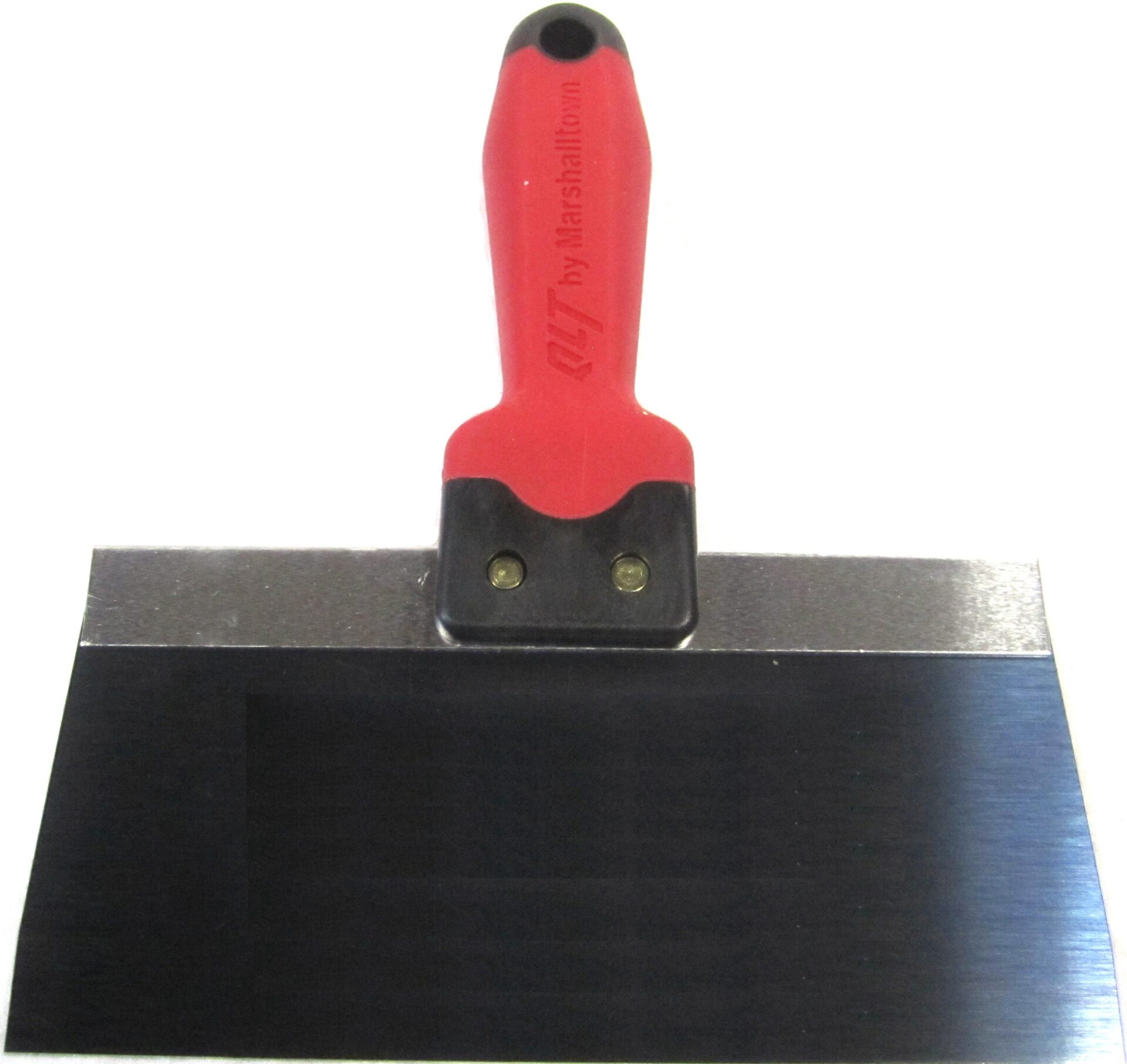
| Brand | Marshalltown |
| Blade | Tempered stainless, aluminum backing plate |
| Width | 8 inches (Model 3508SD) |
| Handle | DuraSoft ergonomic grip |
| Primary use | Drywall taping/finishing; also usable for wallpaper seam work |
To be upfront: this is Marshalltown’s DuraSoft I taping knife, built primarily for drywall finishing — not a dedicated wallpaper tool, despite the framing you might see elsewhere. The DuraSoft handle keeps pressure even and comfortable across the blade, and the stainless blade with aluminum backing flexes just enough for feathering without taking a permanent set.
The 8-inch width is the sweet spot for most residential jobs — long enough to run a full seam cut, short enough to control precisely at trim lines. The stainless blade resists rust even on damp job sites, which matters more than people expect once paste gets involved.
One caution: because the offset handle transfers force efficiently, new users can dig in too hard and mark the paper. Keep the blade corner lifted slightly off the surface rather than digging the tip in.
2. Tajima DFC561N Premium Cutter Series 561 | A Genuine Auto-Lock Utility Knife for Seam Work
MenaTajima doesn’t sell a wallpaper-specific cutter, but their auto-lock utility knives are genuinely built for repetitive daily cutting — that’s what actually holds up over a full hanging day.
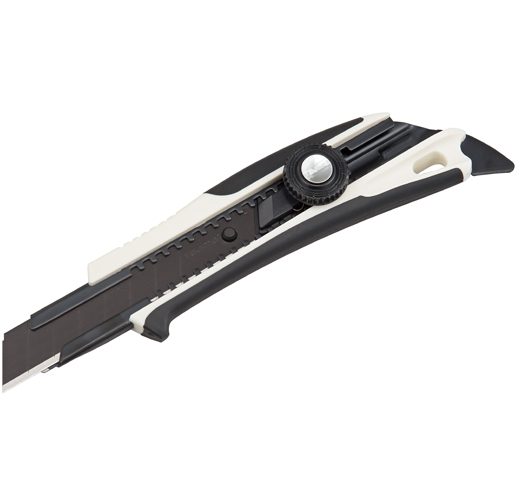

| Brand | Tajima |
| Blade | 18mm, dial blade lock |
| Mechanism | Extra-strong tempered blade sleeve, dial-lock extension/retraction |
| Model | DFC561N (Premium Cutter Series 561) |
| Purpose | General-purpose auto-lock utility knife, well suited to wallpaper seam trimming |
To be upfront: Tajima doesn’t currently sell a wallpaper-specific “drum-blade” cutter, despite what you might read elsewhere. What they do sell is this — a genuine auto-lock utility knife with an 18mm blade and a dial-lock mechanism for smooth one-handed extension and retraction, which matters when you’re making dozens of cuts back-to-back on a hanging day.
It’s built for opening cartons, scoring thick cardboard, and prying open lids per Tajima’s own spec — general-purpose duty that translates well to wallpaper seam trimming too. The extra-strong tempered blade sleeve holds up to repeated daily use without the blade rattling loose.
Tajima’s tools are widely stocked, so replacement blades are easy to find without hunting down a specialty supplier.
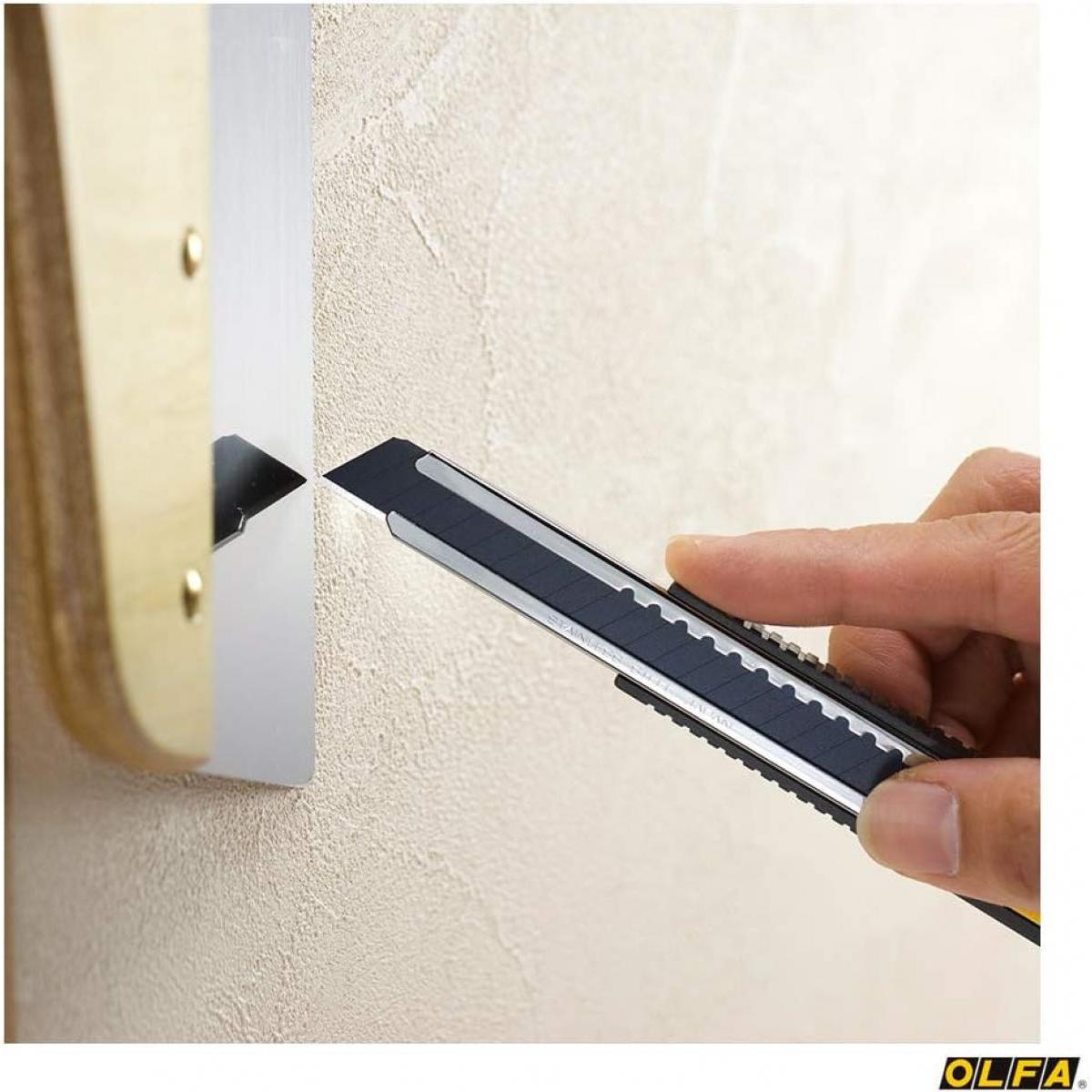
3. OLFA Long Blade Utility Knife | Big-Blade Power for Wide Wallcovering Cuts
MenaThe long blade earns its keep whenever you need to cut a full drop of wallpaper in one pass — short blades just can’t reach cleanly.
| Brand | OLFA |
| Blade width | 18mm (large blade) |
| Mechanism | Snap-off segmented blade |
| Best for | Wide cuts, multi-layer cuts |
| Also handles | Underlayment sheeting, masking film |
OLFA’s long-blade utility knife extends further than a standard-length blade, letting you cut a wide drop of wallpaper in a single continuous stroke. The 18mm blade cuts with real authority, so it holds up even when you need to trim through stacked layers.
Beyond wallpaper, it handles underlayment sheeting and masking film just as well, which makes it a genuinely versatile addition to an interior-trades kit. The segmented blade snaps off cleanly at the score line, so you always have a fresh edge without needing a separate sharpening step.
4. Hyde 3″ Flexible Putty Knife | The Go-To Blade for Surface Prep
MenaPick a putty knife by stiffness and width — this 3″ size is the one nearly everyone on a real crew already owns.
| Brand | Hyde |
| Width | 3″ (~7.5cm) |
| Blade | Stainless, balanced flex |
| Purpose | Skim-coating and joint repair before hanging |
| Reputation | Long-standing trade-standard brand |
This putty knife is what you reach for before any wallpaper goes up — skim coating seams, filling screw holes, and smoothing out the substrate. The stainless blade balances flex and rigidity, which is exactly what you want for laying down an even, level coat.
The 3″ width is ideal for tight joints and spot repairs. It gives you fine control when feathering compound, so it’s a forgiving size for anyone new to skim-coating. Hyde is a long-established name in this category, and both durability and parts availability are consistently solid.
For larger flat areas, pair this with a 6″ or wider knife to cover more surface per pass.
5. Zinsser Plastic Wallpaper Smoother | The Everyday Tool for Pressing Out Air Bubbles
MenaWorking out bubbles with a smoother is tedious, but skip it and you’ll see bubbling later. The mid-size smoother is the most practical to work with.
| Brand | Zinsser |
| Width | ~20cm (mid-size) |
| Material | Hard plastic |
| Purpose | Pressing out air and excess paste |
| Advantage | Smooth face resists marking the paper |
A smoother pushes trapped air and excess paste out from behind the paper after hanging. This mid-size smoother, at roughly 20cm wide, is the size most commonly used on standard residential wall work.
The hard plastic face is smooth enough to avoid marking the wallcovering while still firm enough to seat the paper solidly against the wall, pushing air toward the edges. Pair it with a dedicated corner tool at inside corners and reveals for a noticeably cleaner finish.
6. DQB Industries 12in Paper Smoother/Hanger | Soft-Edge Smoothing for Delicate Wallcoverings
MenaA UHMW-plastic smoother glides with less friction, so it’s my go-to for delicate or thin wallcoverings that mark easily.
| Brand | DQB Industries |
| Model | 11930, 12-inch |
| Width | ~300mm (12-inch) |
| Advantage | Wide smoothing face for large open areas |
| Best for | Ceilings and large open walls |
This UHMW smoother swaps standard plastic for an ultra-high-molecular-weight polyethylene face, which glides with noticeably less friction and is far gentler on delicate wallcoverings and imported papers.
At roughly 200mm wide, it works especially well on ceilings and large open walls where efficiency matters. It’s an essential tool for pressing air evenly across a full sheet, and paste wipes off the low-friction surface easily during daily cleanup.
7. Warner Wallpaper Seam Roller | Low-Friction Rolling for Clean Seams
MenaPress too hard on a seam roller and you’ll leave a shine line. A simple hard-plastic roller like this one still marks less than the old urethane wheels once you get a feel for the pressure.
| Brand | Warner |
| Roller size | 1 inch, single bracket |
| Material | Hard plastic (Model 422) |
| Advantage | Low friction, minimal paste pickup |
| Purpose | Bonding down seams after trimming |
This seam roller flattens and bonds double-cut seams evenly after trimming, preventing edges from lifting later. The hard-plastic roller barrel is gentle on the wallcovering surface and easy to control.
Paste doesn’t cling to the plastic roller as much as it does with older urethane rollers, so wipe-downs stay quick, and it maintains consistent performance even on textured wallcoverings.
8. Tajima Pocket Level 120mm | Compact Reference Lines Before You Hang
MenaI use this before every hanging job to strike my reference line. Tajima’s vials are easy to read and the size fits in a pocket.
| Brand | Tajima |
| Size | 120mm |
| Function | Level and plumb check |
| Advantage | Pocket-size, high-visibility vial |
| Purpose | Striking reference lines before hanging |
Before hanging a single sheet, you need an accurate reference line — and this compact Tajima level fits in a pocket for constant access on the job. Its 120mm body is short enough to carry all day without getting in the way.
The vials are easy to read at a glance, even in dim rooms, which speeds up level and plumb checks on walls and ceilings. Getting your reference line right before hanging is what keeps pattern-matched wallcoverings aligned across a whole wall. Tajima is a top-tier tool brand with a strong reputation for consistent quality.
9. Hyde Offset Wallpaper Scraper | The First Tool You Reach for on a Strip-Out
MenaStripping old wallpaper is a different job entirely with the right scraper. The offset blade is what makes catching a corner easy.
| Brand | Hyde |
| Blade | High-carbon steel, offset design |
| Handle | Wood |
| Purpose | Removing old wallcovering, catching edges on drywall substrate |
This offset scraper is purpose-built for removal work — the angled blade lets you catch and lift the edge of old wallpaper cleanly, which is the hardest part of any strip-out. It’s become the go-to first move on any re-covering job.
The high-carbon steel blade holds an edge even against stubborn, heavily-adhered paper. The wood handle stays comfortable over long strip-out sessions, and the offset curve is designed to catch edges without gouging drywall substrate underneath — an essential tool at the start of any re-cover.
10. Zinsser 97501 Wallcovering Paste Brush | A Genuine Paste Brush, Not a Paint Brush
MenaPurdy doesn’t make a dedicated paste brush — their range is paint brushes. This Zinsser is built specifically for applying wallpaper paste.
| Brand | Zinsser |
| Model | 97501 Wallcovering Paste Brush |
| Advantage | High-capacity bristles built for paste, not paint |
| Purpose | Pasting corners, seams, and edges |
| Note | Wear item, replace periodically |
This is what you reach for on edges, corners, and seams where a roller can’t reach precisely. It’s purpose-built to load and release paste evenly, unlike a general paint brush pressed into the same job.
It’s easy to handle for both first-coat pasting and small touch-ups at edges. It’s a consumable, so replacing it on a regular schedule keeps paste application consistent.
11. Hyde Multi-Purpose Wallpaper Shaver/Scraper | One Tool for Start-to-Finish Removal
MenaFor a full strip-out, this is the easiest tool to work with — it catches an edge and clears a wide section in the same motion.
| Brand | Hyde |
| Blade | Stainless, wide profile |
| Purpose | Removing old wallcovering, initial edge-catching |
| Advantage | Wide blade clears large areas per pass |
This multi-purpose scraper handles a full strip-out from start to finish — catching a stubborn edge and clearing a wide section of old wallcovering in the same tool. It has become a standard piece in interior finishers’ removal kits.
The stainless blade is firm enough to bite into adhered paper without gouging drywall underneath. The wide profile clears more surface per pass, which speeds up removal jobs considerably. As a wear item that sees daily use on re-covering work, its on-site reliability is a big part of the appeal.
12. Hamilton Prestige Paperhanger Brush | Even Paste Coverage Across the Full Sheet
MenaA smoothing brush is what people mean by a “paperhanger’s brush.” The 9-inch size works well overhead on ceilings too, and it doesn’t shed bristles.
| Brand | Hamilton |
| Line | Prestige Paperhanger Brush |
| Bristle | Blended natural/synthetic |
| Advantage | Even paste pickup, minimal shedding |
| Purpose | Full-wall and ceiling smoothing during hanging |
This is the classic “paperhanger’s brush” used to smooth wallcovering down and work air out during hanging. The 270mm-wide blended-bristle head picks up paste evenly across the full sheet.
Bristle shedding is minimal thanks to the set construction, which avoids the frustrating problem of stray bristles getting trapped under the paper mid-job. It’s sized to work equally well on walls and overhead ceiling runs, making it a genuinely all-purpose smoothing tool.
How to Choose Your Wallpaper Tools
Match your tools to both the installation stage and the wallcovering material. Here’s a quick breakdown by category.
Choosing a Smoothing Knife
Smoothing knife blades typically run 0.3mm to 0.8mm. A stiffer 0.6mm blade is easier to run in a straight line on standard vinyl wallcovering. For imported or paper-backed wallcoverings, a softer 0.3-0.4mm blade is gentler and less likely to mark the surface. Widths range from roughly 18-30cm, with the ~24cm class being the most versatile all-around choice.
Choosing a Cutter
Using a dedicated wallpaper cutter instead of a general-purpose knife is a hard rule in this trade. For seam trimming and detail work, a Tajima auto-lock utility knife (like the DFC561N) is well suited; for cutting wide drops, an OLFA long-blade utility knife is the better tool. A dedicated blade holds its edge far longer than a general-purpose one.
Choosing a Smoother or Roller
Choose a smoother based on material. General-purpose hard plastic smoothers are versatile and inexpensive. For thin or imported wallcoverings, a UHMW plastic smoother is gentler and less likely to leave marks. The same logic applies to seam rollers — prioritize the roller material over anything else.
Choosing Removal Tools
Re-covering jobs require dedicated removal tools. A combination of an offset scraper for catching edges and a multi-purpose shaver/scraper for clearing wide sections is the standard job-site pairing.
Frequently Asked Questions
Q. What size smoothing knife should I buy first?
A. Start with the ~24cm (8-inch class). It’s the most versatile size for standard vinyl wallcovering, handling everything from seam cuts to trim-line finishing with one tool. As you gain experience, add a smaller size for detail work and a larger one for big open areas.
Q. What makes a dedicated wallpaper cutter different from a regular utility knife?
A. Dedicated wallpaper cutters differ in three ways: edge retention, blade disposal, and grip design. They hold an edge through continuous use even with paste on the blade, and double-cutting seams won’t drag or tear the paper the way a dull general-purpose blade will. Given how many cuts you make in a single day, a dedicated tool earns its keep quickly.
Q. What size smoother should I choose?
A. The mid-size (~20cm) is the most versatile. It covers roughly 80% of the work on a standard residential wall. Use a larger smoother for wide ceiling areas and a smaller one for tight corner work to get the most even finish.
Q. What’s the minimum tool kit for a first wallpaper job?
A. Start with a core three: (1) a smoothing knife (Marshalltown-style, ~24cm), (2) a mid-size smoother, and (3) a dedicated auto-lock utility knife (Tajima-style). If you’re also removing old wallcovering, add (4) an offset scraper and (5) a smoothing brush to that list.