
 メナ
メナHey, I’m Mena — I work across both mechanical and electrical sides of things, and today it’s motorcycle torque wrenches. “I tighten it until it feels right” is a phrase I hear a lot, and it always makes me wonder how many people actually know what torque that “feel” corresponds to.
As an Amazon Associate, I earn from qualifying purchases.
Here’s the short version: axle nuts and engine mount bolts live in a 20-100 N·m high-torque zone, while cowl screws and electrical connector brackets need something gentler, more like 2-25 N·m. Those two zones are different enough that one wrench trying to cover both ends up compromising accuracy on the low-torque side. I run two or three wrenches split by job instead — and if you’re just starting out and want one wrench that won’t steer you wrong, a 10-50 N·m preset is the safest first pick.
This roundup covers five torque wrenches from KTC, SK11, and TONE, plus two supporting accessories — a drive adapter and a torque checker — all confirmed available on Amazon.com. I’ve mixed in both preset (click-type) and digital models, since each has real advantages depending on what you’re tightening.
Quick-Pick Summary Table
If engine mounts and axle nuts are your priority, lean toward the digital or high-torque preset models. For cowl screws and electrical brackets, use one of the low-torque-specific wrenches. KTC is the safer pick if you want the most established brand name; TONE gets you into the higher-torque range for noticeably less money.
| Product | Type | Drive | Torque Range | Best For |
|---|---|---|---|---|
| KTC CMPC0504 | Preset (click-type) | 1/2 in. (12.7mm sq.) | 10-50 N·m | One do-it-all wrench for everyday bolts |
| KTC GEK085-W36E | Digital adjustable | 3/8 in. (9.5mm) | 17-85 N·m | Digital torque logging for high-torque bolts |
| SK11 SDT3-060 | Digital | 3/8 in. (9.5mm) | 3-60 N·m | Best value first digital torque wrench |
| TONE T3MN100-QL | Preset (direct-set) | 3/8 in. (9.5mm) | 20-100 N·m | Axle-nut torque without the flagship price |
| TONE TMWM25 | Adjustable wrench type | Open-end/box-end | 5-25 N·m | Dedicated low-torque wrench for cowls and connectors |
| KTC BAE23 | Drive adapter | 1/4 in. → 3/8 in. | (not torque-rated) | Reuse your 1/4 in. sockets on a 3/8 in. wrench |
| CDI Torque 2503-F-DTC | Torque checker | 1/2 in. (12.7mm) | 33.9-339 N·m (25-250 ft-lb) | Verify your other wrenches haven’t drifted |
5 Motorcycle Torque Wrenches Worth Buying
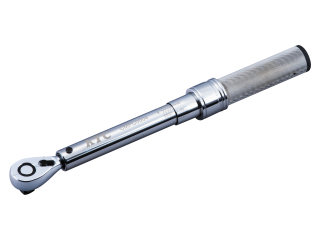
KTC CMPC0504 — 1/2″ Drive Preset Click-Type Torque Wrench (10-50 N·m)


 メナ
メナIf you ask me for just one torque wrench to start with, this is what I point people to. 10-50 N·m covers the bulk of the fasteners you’ll actually touch on a motorcycle.
| Maker | KTC (Kyoto Tool Co.) |
|---|---|
| Model | CMPC0504 |
| Drive | 1/2 in. (12.7mm sq.) |
| Torque range | 10-50 N·m |
| Type | Preset (click-type) |
Sprocket bolts on the drive chain, caliper mounting bolts, fork pinch bolts — the 10-50 N·m band shows up constantly in routine motorcycle work, and this preset wrench covers it in one tool. You feel and hear a distinct click the moment you hit the set torque, so there’s no battery to die on you mid-job, and it holds up fine outdoors.
The scale is finely graduated, which makes it easy to dial in an exact setting rather than eyeballing between marks. One habit worth building: preset click wrenches like this one should be wound back down near the low end of their range after use, not left cranked up — leaving the internal spring under tension for weeks at a time is what causes these tools to drift out of calibration early.
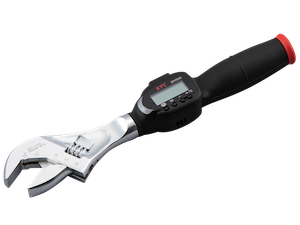
KTC GEK085-W36E — Digital Adjustable Torque Wrench (17-85 N·m)
 メナ
メナThe display gives you the actual number you tightened to, not just a click, so if you want a record of what engine mount bolts and axle nuts got torqued to, this is the one to reach for.
| Maker | KTC (Kyoto Tool Co.) |
|---|---|
| Model | GEK085-W36E |
| Drive | 3/8 in. (9.5mm), adjustable-head design |
| Torque range | 17-85 N·m |
| Type | Digital, LED + buzzer alert |
Engine mount bolts and axle nuts sit in the kind of high-torque zone where an undertightened fastener is a real safety problem, and that’s exactly where this tool is built to work. A built-in sensor reads the load through the grip itself, so accuracy doesn’t depend on exactly where or how you’re holding the handle — something a purely mechanical wrench can’t claim.
As you approach the set torque, an LED and buzzer step up in stages before you hit the limit, which makes it noticeably harder to blow past the spec and overtorque a fastener than with a click-type wrench alone. It runs on batteries, so pull them out before long-term storage to avoid corrosion inside the housing.
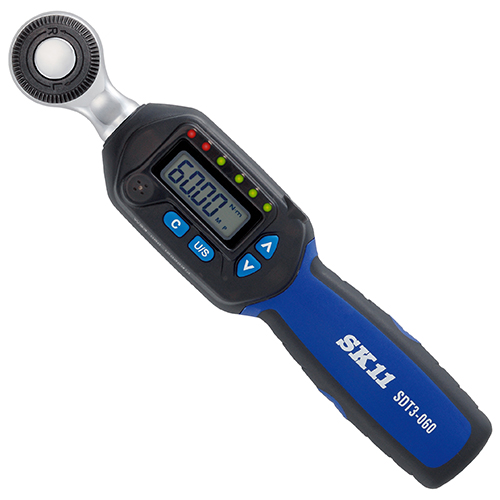
SK11 SDT3-060 — Digital Torque Wrench (3-60 N·m)
 メナ
メナThis one punches above its price. If you’ve never used a digital torque wrench before and just want to try the format, this is more than good enough to start.
| Maker | SK11 (Fujiwara Sangyo) |
|---|---|
| Model | SDT3-060 |
| Drive | 3/8 in. (9.5mm) |
| Torque range | 3-60 N·m |
| Type | Digital |
SK11 undercuts the KTC digital wrench above while still covering a genuinely useful 3-60 N·m span in a digital package. It has the core feature set you’d want: buzzer-and-LED alert at the set torque, left/right thread measurement switching, and an auto-sleep function so you’re not draining batteries between uses.
The 3 N·m floor means one digital wrench can realistically cover everything from light bracket bolts up through mid-torque fasteners. It’s not built to the same durability standard as a pro-grade digital ratchet, but for someone who just wants to see what digital torque feedback feels like before committing to a full lineup, it’s an easy recommendation.
TONE T3MN100-QL — 3/8″ Drive Preset Torque Wrench (20-100 N·m)
メナThe price surprised me, honestly — 20-100 N·m gets you all the way up into axle-nut territory without paying flagship money for it.
| Maker | TONE (Maeda Metal Industries) |
|---|---|
| Model | T3MN100-QL |
| Drive | 3/8 in. (9.5mm) |
| Torque range | 20-100 N·m |
| Type | Preset (direct-set type, digital scale reading) |
Front and rear axle nuts, swingarm pivot bolts, and other higher-torque fasteners live in this 20-100 N·m range, and TONE’s direct-set design lets you read the exact torque value straight off the scale rather than counting clicks against a reference chart.
TONE has been building torque tools in Japan for decades, and while this direct-set line doesn’t come with a full calibration certificate the way KTC’s premium models do, it’s a solid choice if you want genuine high-torque coverage as a second wrench without doubling your budget on the first one.
TONE’s official product pages serve images through a dynamic script rather than direct file links, so no manufacturer-official photo could be pulled for this listing.
TONE TMWM25 — Adjustable Wrench Type Torque Wrench (5-25 N·m)
メナIf you’ve ever cracked a cowl screw by tightening it with the same feel you’d use on an axle nut, this low-torque wrench is the fix.
| Maker | TONE (Maeda Metal Industries) |
|---|---|
| Model | TMWM25 |
| Drive | Adjustable open-end/box-end head |
| Torque range | 5-25 N·m |
| Type | Digital reading, adjustable wrench form factor |
Cowl fasteners, carburetor adjustment screws, connector bracket bolts — these are all fasteners that shear or crack easily if you tighten them with a high-torque mindset, and this 5-25 N·m wrench exists specifically to keep you out of that trouble.
If a single high-torque wrench is doing 100% of your tightening, you’re guaranteed to be overtorquing this low-torque range every time. Even on a tight tool budget, a dedicated low-range wrench like this one is worth carving out room for.
Same as the TMWM25 above: TONE serves product images through a dynamic script rather than direct file links, so no manufacturer-official photo was available for this listing either.
Torque Wrench Accessories — Adapters and Calibration Tools
Beyond the wrenches themselves, a drive-size adapter and a way to periodically check your wrenches’ accuracy both add real value. Here are two worth having in the toolbox.
KTC BAE23 — Quick Socket Adapter (1/4″ to 3/8″)
メナIf your only torque wrench is a 3/8 in., this is what lets you run the small 1/4 in. sockets and bits you’d otherwise need on a second tool.
| Maker | KTC (Kyoto Tool Co.) |
|---|---|
| Model | BAE23 |
| Conversion | 1/4 in. (6.35mm) female → 3/8 in. (9.5mm) male |
| Purpose | Drive-size conversion only (no torque function) |
Electrical connector brackets and small cover screws are usually 1/4 in. (6.35mm) drive, and you can’t seat that socket directly on a 3/8 in. torque wrench. This adapter bridges the two so one torque wrench covers both drive sizes, and its “fast-turning” design is shorter than a plain socket adapter, with a magnet that helps keep the socket from dropping off mid-job.
One caveat worth knowing: running torque through an adapter introduces a small amount of error — typically a few percent — versus using a wrench with the matching drive size directly. That’s fine for everyday maintenance, but skip the adapter for anything where you need an exact, certifiable number.
No direct manufacturer-official product photo could be located for this specific model within a reasonable search.
CDI Torque 2503-F-DTC — Digital Torque Wrench Checker
メナThis one is genuinely eye-opening the first time you use it — a click-type wrench you’ve trusted for years can be off by more than you’d expect once its spring starts to fatigue.
| Maker | CDI Torque |
|---|---|
| Model | 2503-F-DTC |
| Drive | 1/2 in. (12.7mm sq.) |
| Measuring range | 25-250 ft-lb (33.9-339 N·m) |
| Accuracy | ±0.5% of indicated value, CW & CCW |
Preset click-type wrenches drift out of calibration over time from age, drops, or being left set at high torque in storage, and there’s no way to know it’s happened just by feel. A checker like the 2503-F-DTC lets you apply a real load to a wrench you already own and read the actual torque delivered against what the wrench claims to be set to.
CDI Torque is a well-established name in US torque calibration gear, and this checker’s 1/2 in. drive and 25-250 ft-lb range comfortably cover everything on this list except the lightest low-torque wrench. It’s not a cheap accessory, and it’s overkill if you only own one torque wrench — but if you’re running two or three like the lineup above, an annual check-in with a tool like this is what keeps “set to 50 N·m” actually meaning 50 N·m.
CDI Torque’s official site could not be reached to pull a manufacturer-official photo (SSL handshake failure on fetch), so no image is included for this listing.
How to Choose a Motorcycle Torque Wrench
Match the drive size to the sockets you already own
3/8 in. (9.5mm) is the standard drive size for motorcycle torque wrenches, though you’ll run into 1/4 in. (6.35mm) sockets for small electrical bolts too. If you’ve already built up a socket collection, match your wrench to that drive size first. A drive adapter like the BAE23 above lets you bridge a mismatch, just know it costs you a small amount of accuracy versus using the matching drive size directly.
Preset (click-type) or digital — which one?
Preset click wrenches don’t need batteries, are tough, and hold up well outdoors — that’s their whole appeal. Digital wrenches show you the exact torque number and step up warnings with a buzzer and LED before you hit the limit, which gives real peace of mind on critical fasteners like engine mounts. If your budget allows it, digital for the high-torque work and preset for everyday maintenance is a combination that covers both bases well.
Don’t ask one wrench to cover the whole torque range
Look at the range across the five wrenches above and you’ll notice close to a tenfold spread between axle-nut-level high torque and cowl-screw-level low torque. A single wide-range wrench trying to cover all of it will almost always be less precise at the low end. If your budget allows, keeping at least two wrenches — one for high torque, one for low — is the most reliable way to avoid damaging parts.
FAQ
Q. Preset or digital — which should a beginner buy first?
A. Start with a preset (click-type) wrench. There’s no battery to worry about, and the click makes it obvious the moment you’ve hit the target torque. Consider a digital model later if you want to log exact numbers or work regularly in the high-torque range.
Q. How should I store a torque wrench between uses?
A. Wind a preset wrench back down near its lowest setting before putting it away. Leaving it set at a high value keeps the internal spring under constant load, which is a common cause of the wrench drifting out of calibration over time. On digital wrenches, pull the batteries out if you won’t be using the tool for a long stretch, to avoid corrosion from a leak.
Q. Can I use an adapter to run a different drive-size socket?
A. Yes, an adapter like the BAE23 works fine for everyday use, but it introduces a small torque error. That’s acceptable for routine maintenance, but for anything requiring an exact, verifiable torque figure, use a wrench with the matching drive size directly instead.
Bottom Line
Five torque wrenches and two supporting accessories, compared across drive size, torque range, and preset-vs-digital design. The precision you need for engine mounts and axle nuts is nothing like what you need for cowl screws and connector brackets, so splitting the job across two or more wrenches is worth the extra cost if you can swing it.
Building out a proper torque-managed maintenance routine also means checking those wrenches periodically — a preset wrench that’s drifted out of calibration will still click confidently at the wrong number. Between the right wrench for the job and a regular accuracy check, you’ve got what you need to stop guessing and start hitting spec.