
This article contains affiliate links. If you make a purchase through these links, we may earn a commission at no additional cost to you.
 メナ
メナI’m Mena, and I once made the mistake of lubing a chain without cleaning it first — the lube just trapped grit against the rollers and sped up wear I was trying to prevent. Cleaning always comes before lubing, and this is my full comparison of the chain care products I actually trust.
The short version: clean first, let it dry, then lube. Skipping that order does more harm than good. I’ve split this into four everyday consumables and two pieces of dedicated gear for anyone doing chain replacement or deeper cleaning.
How Chain Maintenance Actually Works
A dirty chain accelerates its own wear — grit trapped in the rollers acts like sandpaper against the sprockets every time the chain flexes. Cleaning removes that grit and old lube residue; lubricating afterward reduces friction and protects against corrosion.
Motul is the most complete single-brand lineup here, with dedicated cleaners and lubes for different riding conditions. Motion Pro rounds things out with the physical tools — a double-ended brush for scrubbing and a breaker/riveter for anyone doing their own chain swaps.
4 Everyday Chain Care Consumables
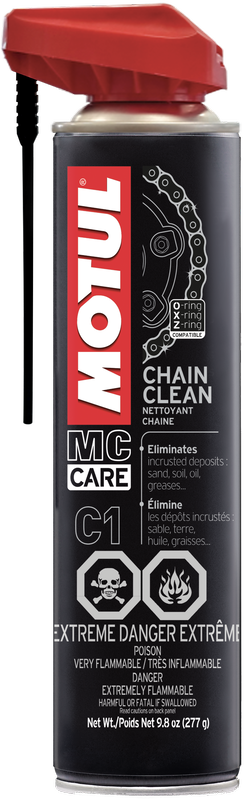
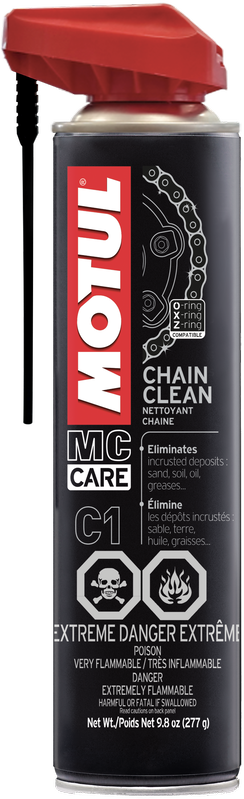
1. Motul C1 Chain Clean Degreaser Spray

 メナ
メナThis is the step I used to skip when I was in a hurry, and it’s exactly the step that matters most. Don’t lube over grime.
| Brand | Motul |
| Type | Heavy-duty degreaser spray |
| Compatibility | O-ring / X-ring / Z-ring safe |
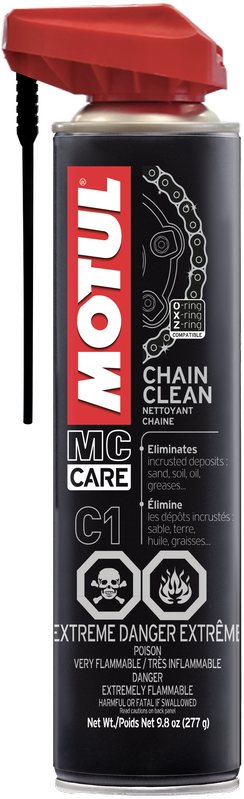
C1 is a heavy-duty degreaser that strips grease, road grime, and old lube residue without attacking the internal seals on modern O-ring and X-ring chains. It’s the first step, before anything else touches the chain.
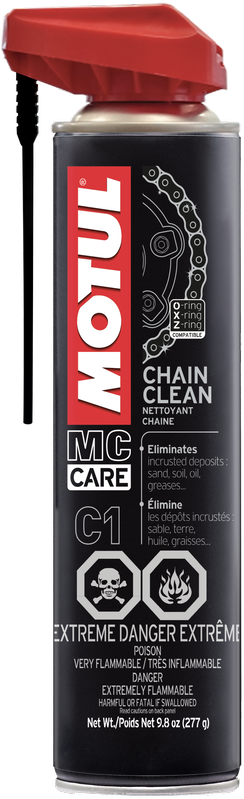
Spray it on, let it sit for a minute to break down the grime, then work it in with a brush before wiping clean. Let the chain dry completely before moving on to lube — rushing this step is exactly the mistake I made early on.
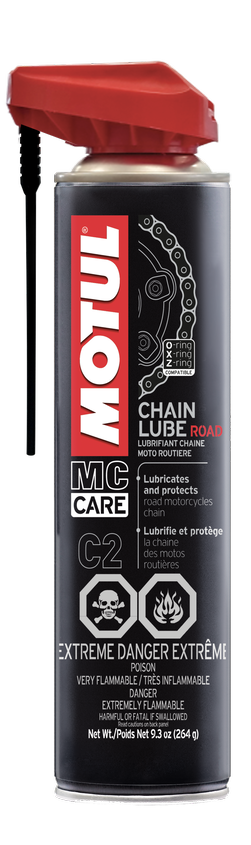
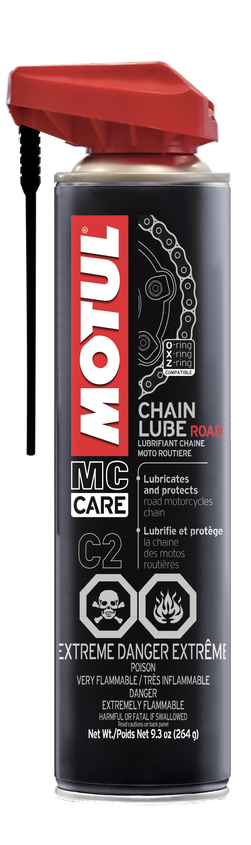
2. Motul C2 Chain Lube Road
 メナ
メナThis is the one I reach for on my daily commuter — good adhesion without being messy on street riding.
| Brand | Motul |
| Type | Road/street chain lubricant |
| Compatibility | O-ring / X-ring safe |
C2 is Motul’s dedicated lube for street and sport bikes, formulated to stay adhered to the chain at highway speeds instead of flinging off onto your rim and swingarm the way general-purpose oils do.
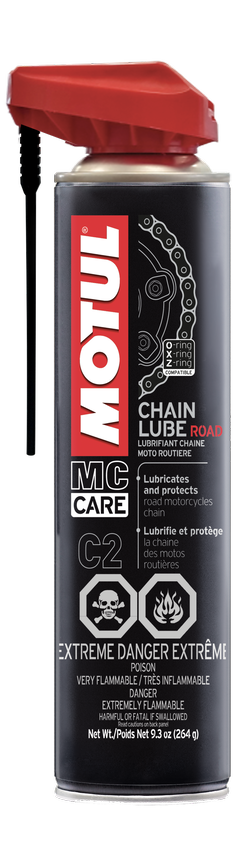
It goes on clear and tacky, and a light coat is enough — over-applying just attracts more dirt. Apply it after the chain has fully dried from cleaning, ideally right after a ride while the chain is still slightly warm.
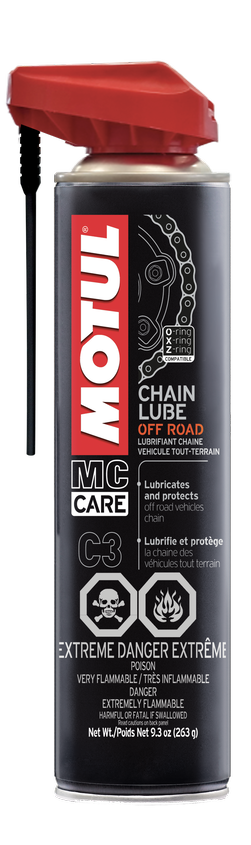
3. Motul C3 Off-Road Chain Lube
 メナ
メナIf you ride in mud or dust regularly, the extra tackiness here genuinely resists fling-off better than the road formula.
| Brand | Motul |
| Type | Off-road/dirt chain lubricant |
| Advantage | High adhesion, mud and dust resistant |
C3 trades some of the road formula’s cleanliness for stronger adhesion and resistance to mud and dust — exactly what off-road and dual-sport riding demands, where a lube that flings off after one muddy trail does you no good.
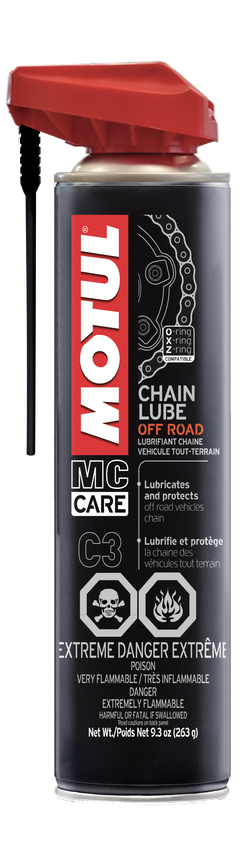
It’s O-ring safe like the rest of the C-series, so switching between C2 and C3 based on where you’re riding that weekend won’t cause any compatibility issues with your chain’s seals.
4. Motul C1 Chain Cleaner and C2 Chain Lube Kit with Brush
メナIf you’re starting from zero, this kit saves you from having to figure out what else you need — it’s all in the box.
| Brand | Motul |
| Includes | C1 cleaner, C2 lube, brush, gloves, sticker |
| Best for | First-time buyers, street bikes |
This bundle pairs C1 cleaner with C2 road lube and throws in a brush and gloves, which covers everything you need for routine chain maintenance in a single purchase.
Buying the kit works out cheaper than the cleaner and lube separately in most cases, and having a dedicated brush means you’re not sacrificing an old toothbrush that doesn’t really get into the rollers anyway.
Accessories & Dedicated Tools
These two are for anyone going beyond routine cleaning and lubing — deeper scrubbing, or doing your own chain replacement.
5. Motion Pro Chain Brush (Double-Ended)
 メナ
メナThe double-ended design wraps three bristle faces around the chain on one end, with a straight brush on the other for sprockets and hard-to-reach corners.
| Brand | Motion Pro |
| Type | Double-ended chain brush |
| Bristle material | Durable nylon |
This dedicated chain brush wraps three bristle faces around the chain at once, so a few passes back and forth cover the front, back, and side plates without repositioning constantly. The straight end handles sprocket teeth and tight spots the wrapped end can’t reach.
Compared to a generic parts-cleaning brush, the three-sided wrap cuts cleaning time noticeably, and having both bristle shapes on one tool means you’re not juggling two separate brushes mid-job.
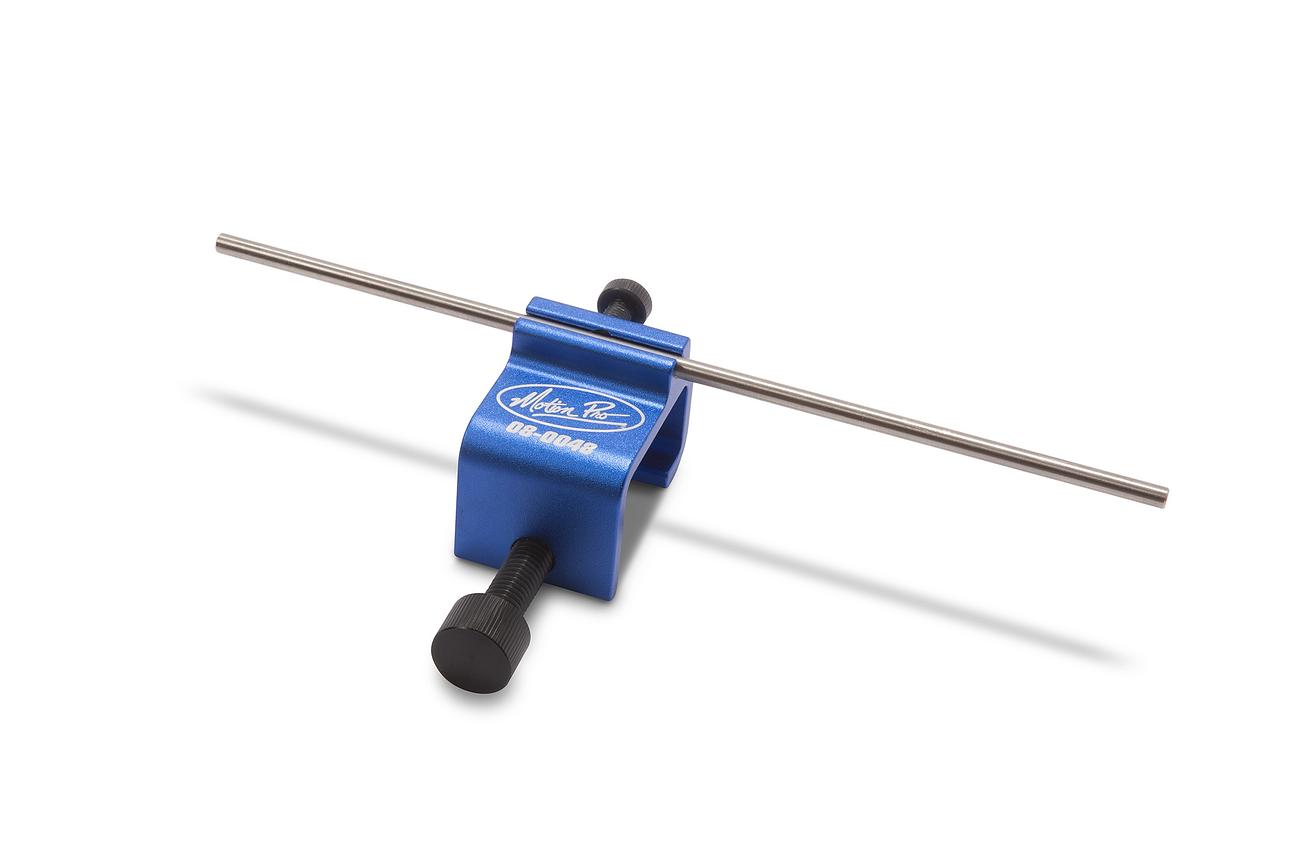
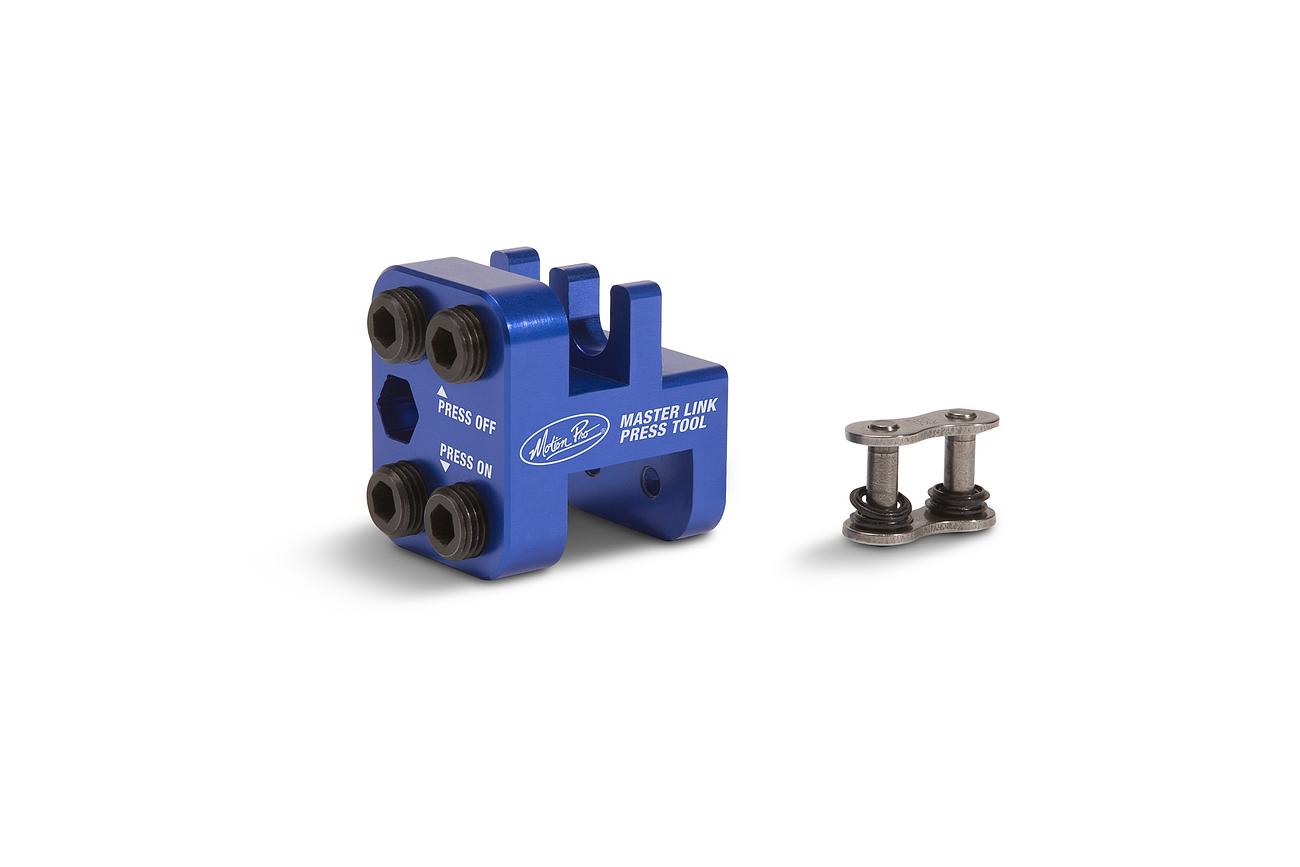
6. Motion Pro PBR Chain Breaker Riveting Tool
メナThe first time I riveted a master link with one of these, I was nervous about crushing it — following the instructions step by step made it far less intimidating than I expected.
| Brand | Motion Pro |
| Compatible chains | 520 / 525 / 530 |
| Functions | Press, break, and rivet in one tool |
This all-in-one tool presses, breaks, and rivets 520/525/530 chains, which covers the vast majority of street and sport bikes. Everything stores in the included case.
If you’re doing your own chain replacement or sprocket swap, a tool like this pays for itself the first time you skip a shop labor charge. Take your time on the actual riveting step — rushing it is the easiest way to end up with a link that’s too tight or too loose.
How to Choose Chain Care Products
Always Clean Before You Lube
Lubricating a dirty chain traps grit against the rollers and speeds up wear instead of preventing it. Clean, let it dry completely, then lube — skipping or reordering these steps is the single most common mistake.
Match the Lube to Your Riding Conditions
Street and commuter riding calls for a standard road lube like C2 that resists fling-off at highway speeds. Off-road, mud, or dust-heavy conditions call for a higher-tack formula like C3.
Confirm O-Ring/X-Ring Compatibility
Most modern bikes use sealed O-ring or X-ring chains. Some aggressive solvent-based cleaners can degrade those seals over time, so always check the label confirms seal-chain compatibility.
Frequently Asked Questions
Q. How often should I clean and lube my chain?
A. Roughly every 300-500 miles, or after any wet or muddy ride. Chain lube gets flung off as you ride, so it needs regular reapplication.
Q. Can I use just the cleaner or just the lube on their own?
A. Yes, if you already own the other one. If you’re starting from scratch, the kit (item 4) is the easiest way to get both plus a brush in one purchase.
Q. Is the chain breaker/riveting tool difficult to use for a first-timer?
A. It’s manageable if you follow the instructions carefully, but it’s worth watching a tutorial video first. Chain work affects how your bike rides, so if you’re unsure, have a shop do the first one while you watch.
Summary
We compared six chain care products across four everyday consumables and two dedicated tools. Clean first, lube second — start with the kit (item 4) if you’re building your setup from nothing, and add the chain breaker/riveter if you’re planning to do your own chain replacement.