
This article contains affiliate links. If you make a purchase through these links, we may earn a commission at no additional cost to you.
 メナ
メナHey, I’m Mena (@menachite), a hybrid mechanical/electrical engineer. This time I lined up 5 current fish tapes from Klein Tools, the go-to American brand for electricians, and compared them by length and material.
Short answer: for quick residential runs, grab the 50-foot 56331. For most commercial jobs, the 120-foot 56333 is the sweet spot. For long industrial pulls, the 240-foot 56334 (or the stainless 56341 if it’s a damp environment) is the one. And if you’re working anywhere near live equipment, the non-conductive fiberglass 56351 is the safe choice.
A fish tape is the tool electricians use to pull wire through conduit — you feed the tape through first, attach your cable to the tip, then pull it back through. Klein’s current lineup covers three lengths of steel tape (50/120/240 feet), a stainless steel version for wet environments, and a fiberglass version that’s non-conductive for work near energized panels.
We compared all 5 across length, material, weight, and tip type, since those are the three things that actually decide whether a fish tape is the right one for the job in front of you.
Conclusion: Quick Pick by Job
Here’s the short version. Short residential run? The 50-foot 56331. Typical commercial job? The 120-foot 56333. Long industrial pull? The 240-foot 56334, or the stainless 56341 if it’s wet or humid. Working near live equipment? Go non-conductive with the fiberglass 56351.
| Model | Length/Material | Weight | Best for |
|---|---|---|---|
| 56331 | 50 ft / Steel | 1.5 lbs | Short residential runs, light carry |
| 56333 | 120 ft / Steel | ~4 lbs | Most commercial/residential jobs |
| 56334 | 240 ft / Steel | 7.9 lbs | Long commercial/industrial pulls |
| 56341 | 240 ft / Stainless Steel | 7.9 lbs | Damp, humid, or outdoor conduit runs |
| 56351 | 100 ft / Fiberglass | 3.4 lbs | Work near live/energized equipment |
Klein Tools Fish Tapes: All 5 Current Models
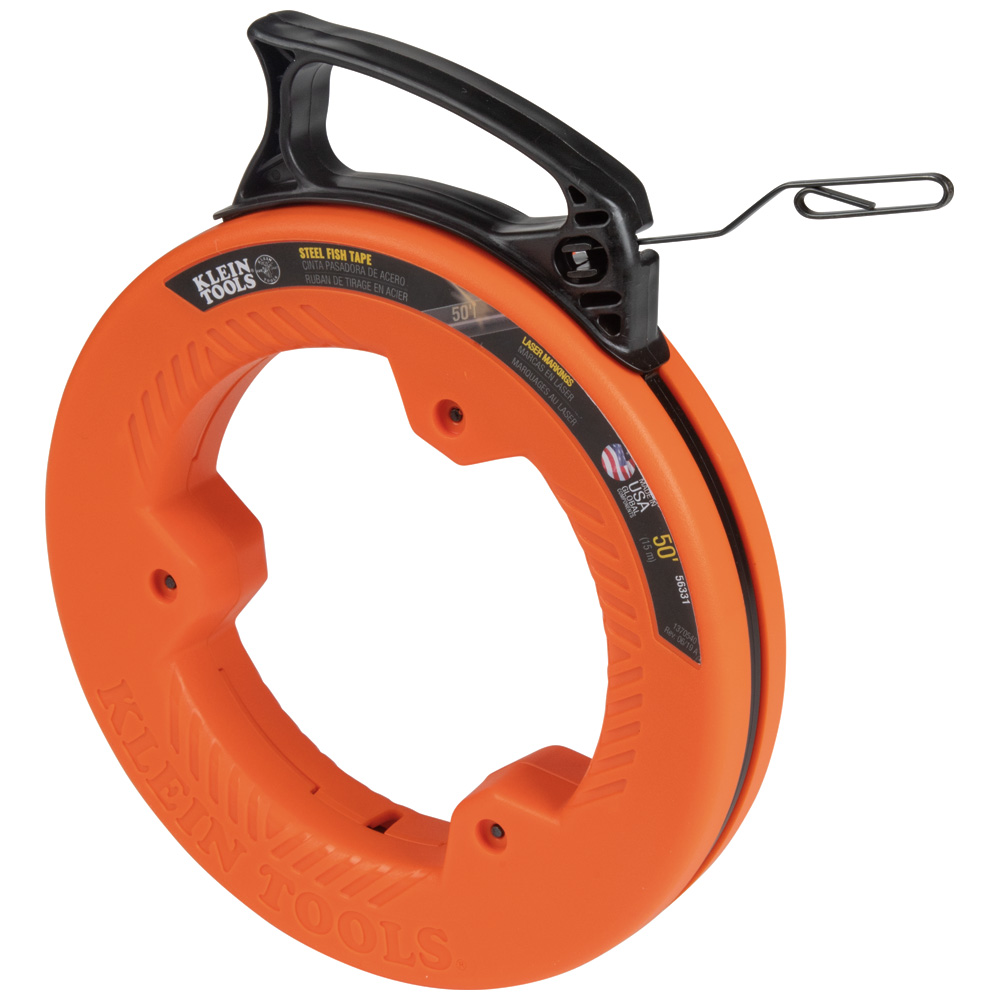
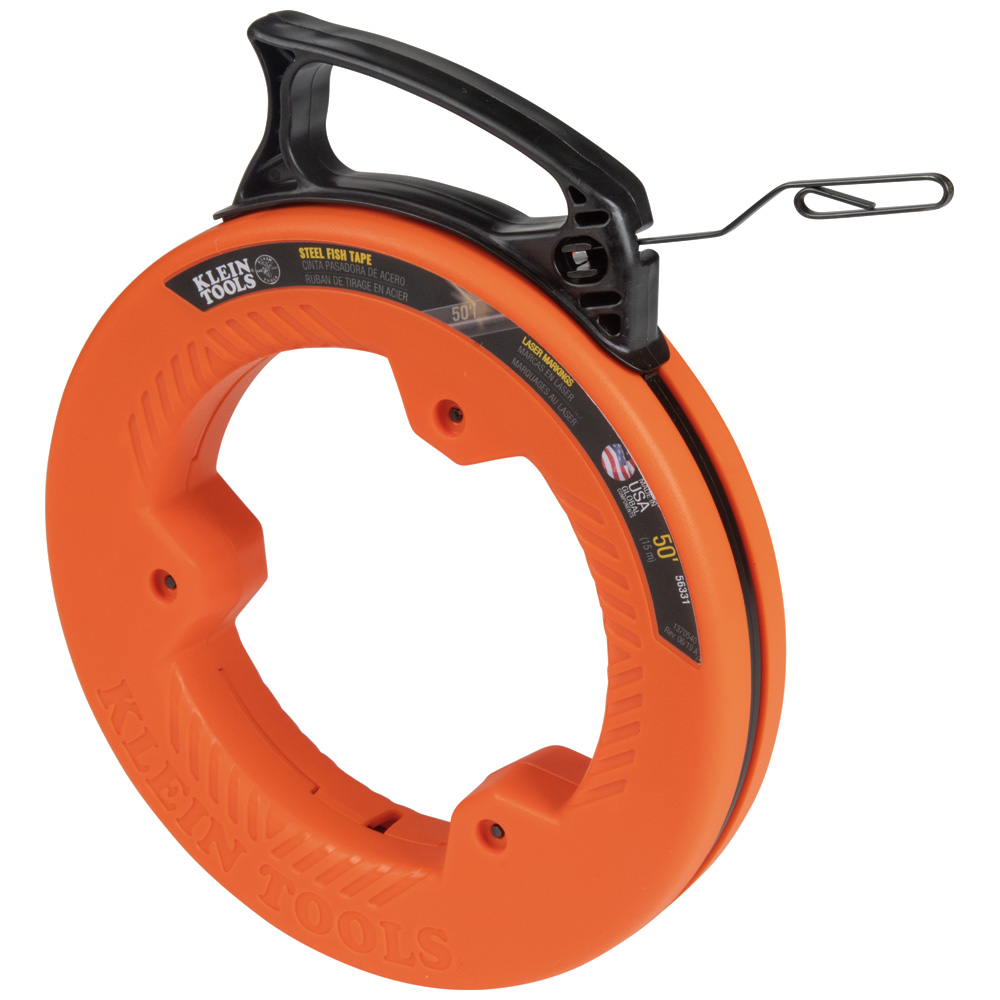
Klein Tools 56331 Steel Fish Tape, 1/8-Inch x 50-Foot

 メナ
メナThe 56331 was my go-to for a while on smaller residential jobs — at 1.5 lbs it’s light enough to carry all day without the case weighing down your bag.
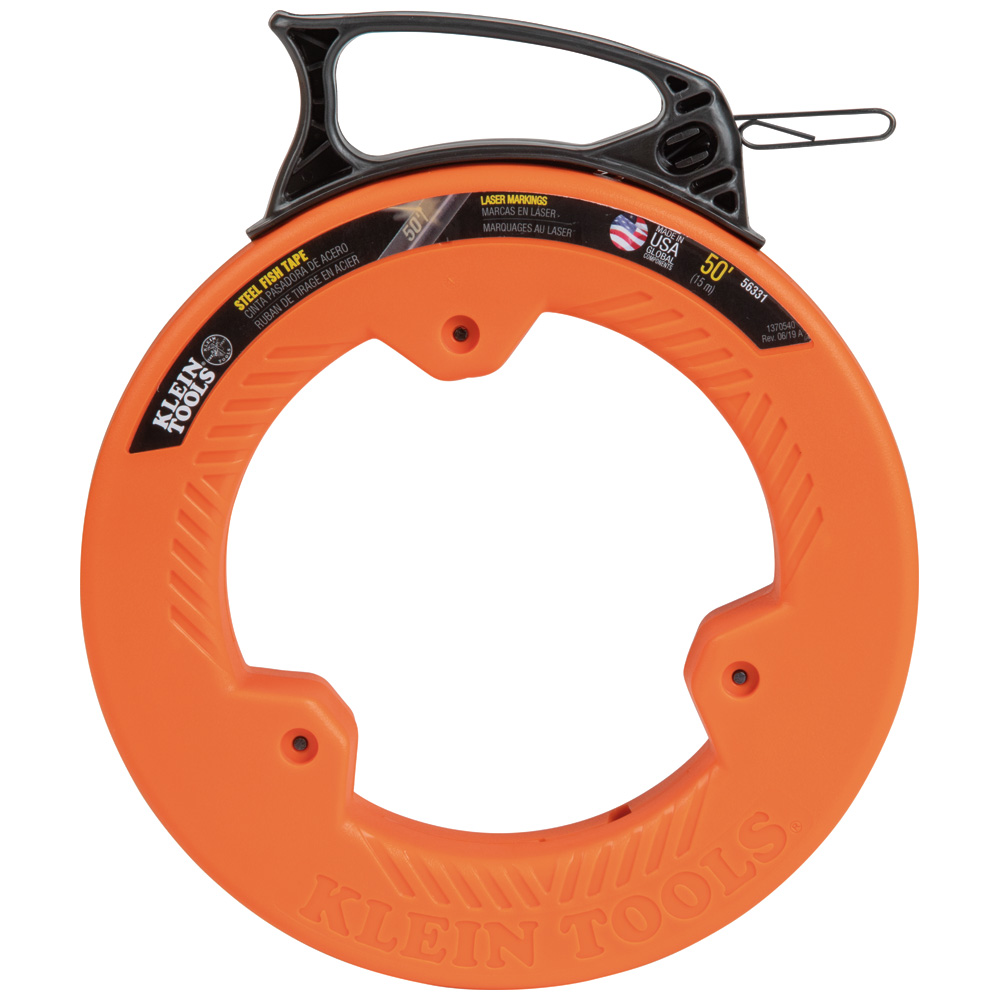
The Klein Tools 56331 is a 50-foot steel fish tape built for light commercial and residential wire runs. At 1/8-inch wide and just 1.5 lbs, it’s the lightest and most compact tape in the current Klein lineup, with a 7-inch case diameter that’s easy to stash in a tool bag.
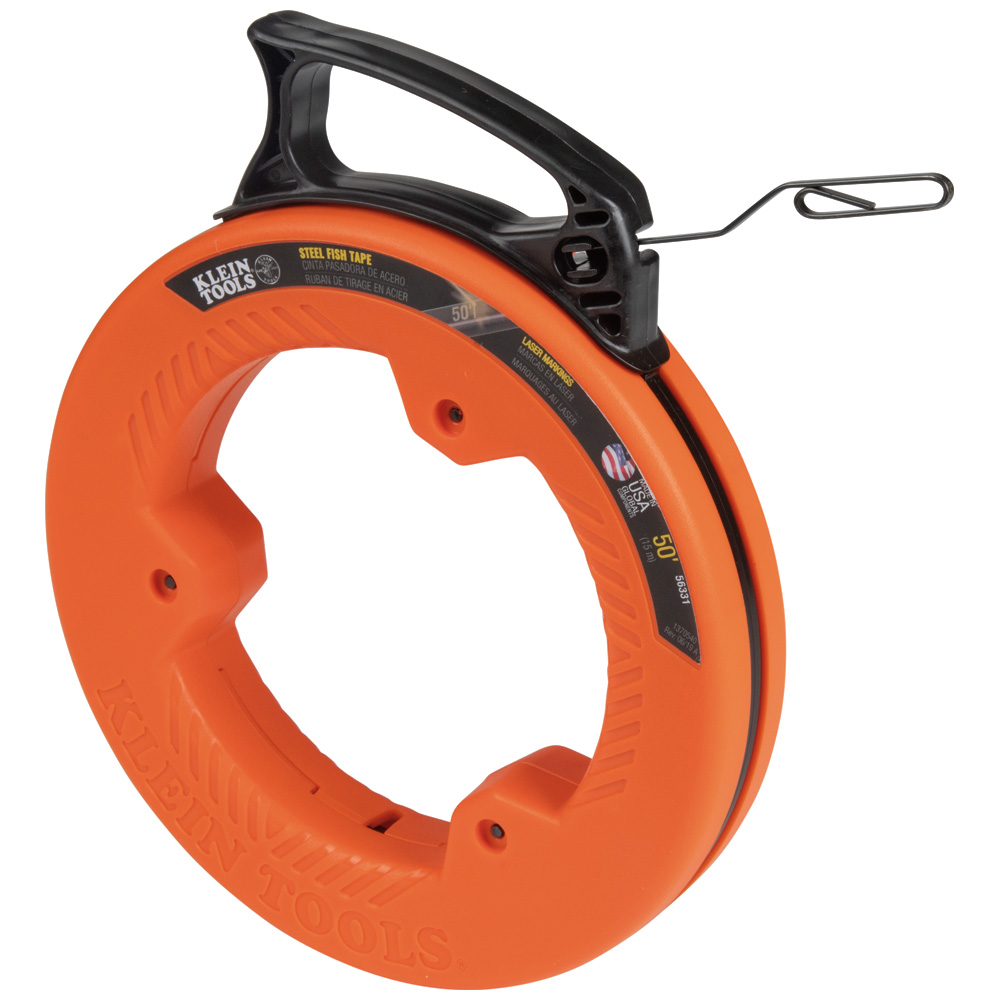
The steel tape’s double loop tip gives good stiffness for pushing through short runs, but 50 feet won’t cut it for anything beyond a single-room or short conduit job — for longer pulls you’ll want to size up.
A solid pick for electricians and DIYers who mostly deal with short residential runs and want something light enough to carry without thinking about it.
Klein Tools 56333 Steel Fish Tape, 1/8-Inch x 120-Foot
 メナ
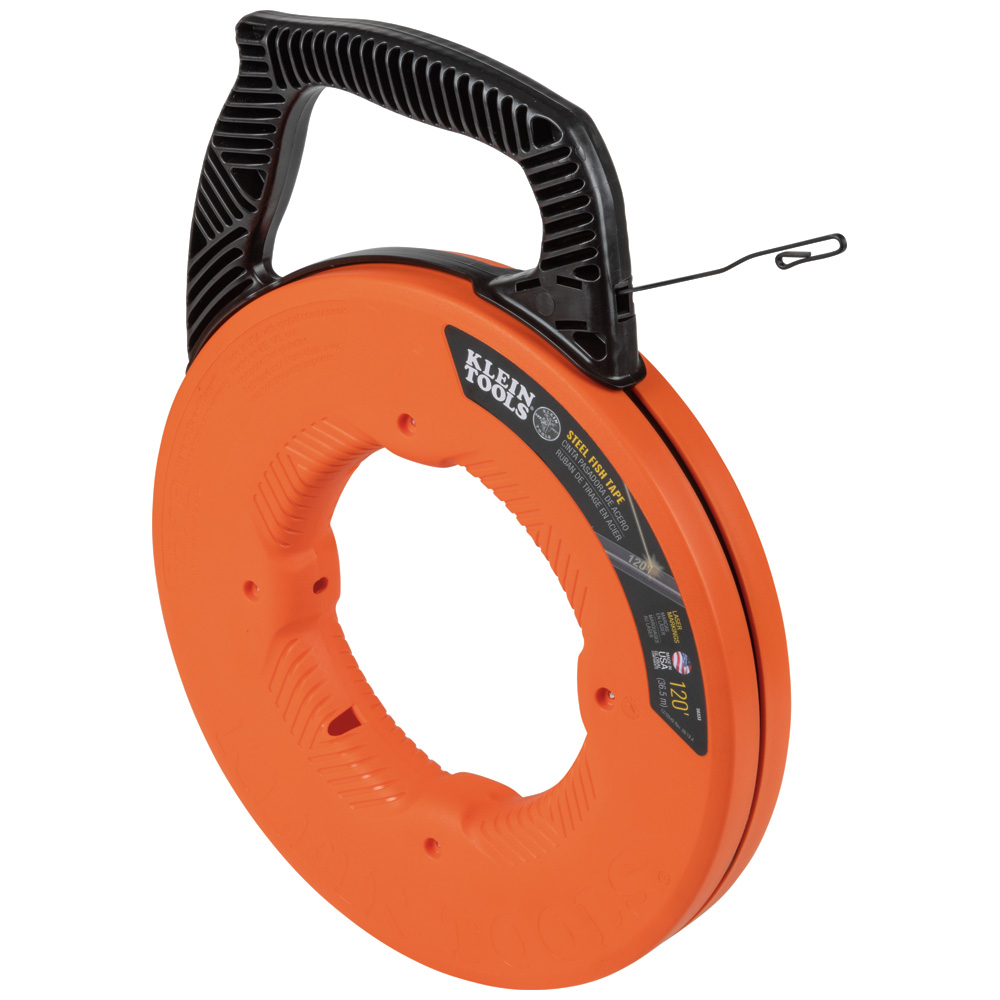
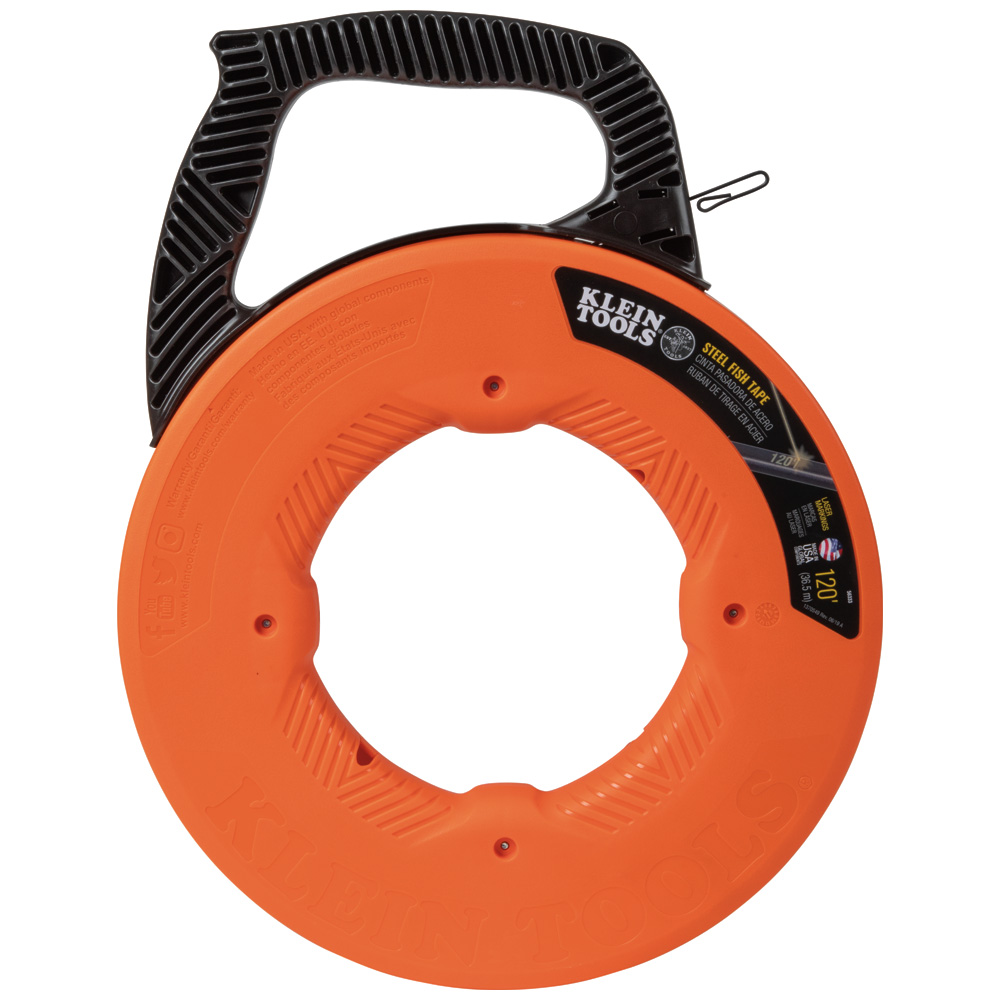
メナ120 feet turned out to be the sweet spot for most of the commercial jobs I’ve worked — long enough for a full floor run without the bulk of the 240-foot reel.
The 56333 is a 120-foot high-carbon steel fish tape with a protective coating to reduce corrosion. It uses Klein’s optimized housing design, which combines the leverage of a square case with the comfort of a round one, plus laser-etched descending markings every foot for measuring conduit depth as you go.
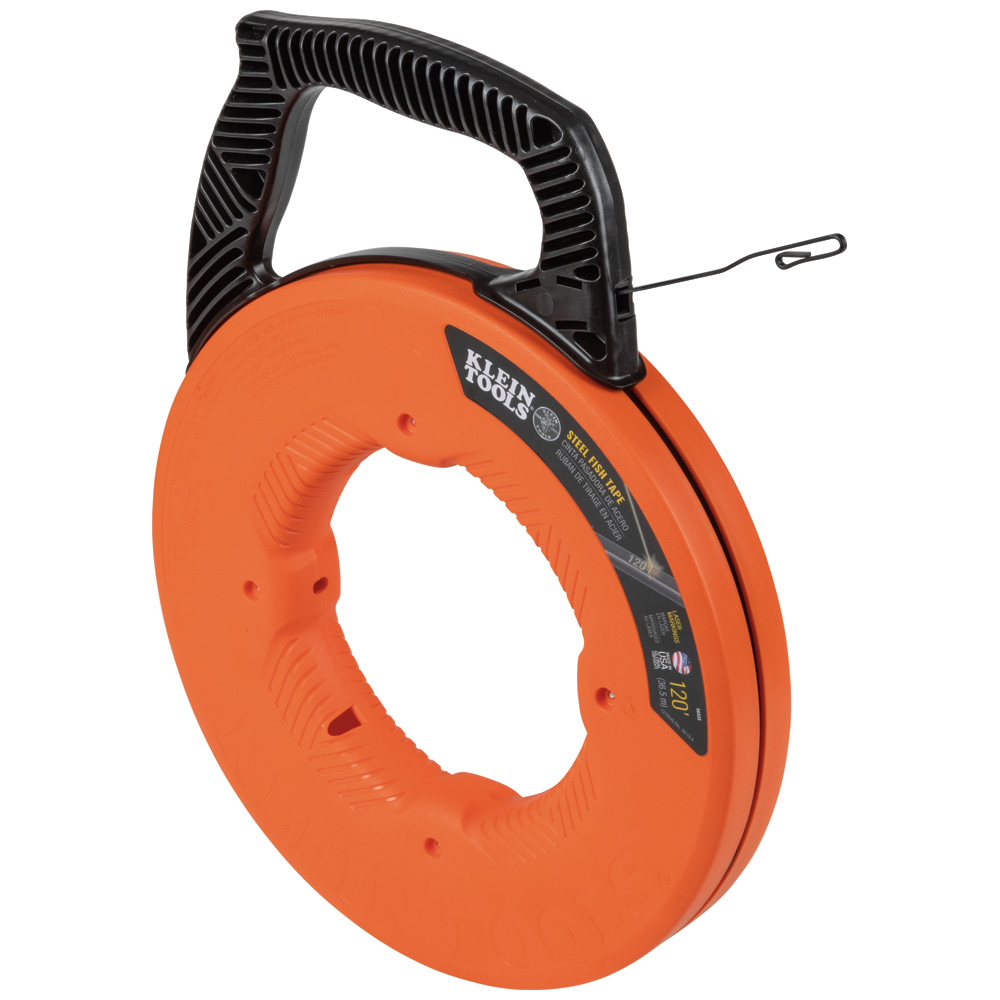
It’s noticeably heavier and bulkier than the 50-foot 56331, so for quick one-room jobs it’s more tape than you need — but for anything spanning a full commercial floor, that extra length earns its keep.
Best for electricians who regularly work mid-length commercial or residential runs and want one tape that covers most jobs without switching reels.
Klein Tools 56334 Steel Fish Tape, 1/8-Inch x 240-Foot
 メナ
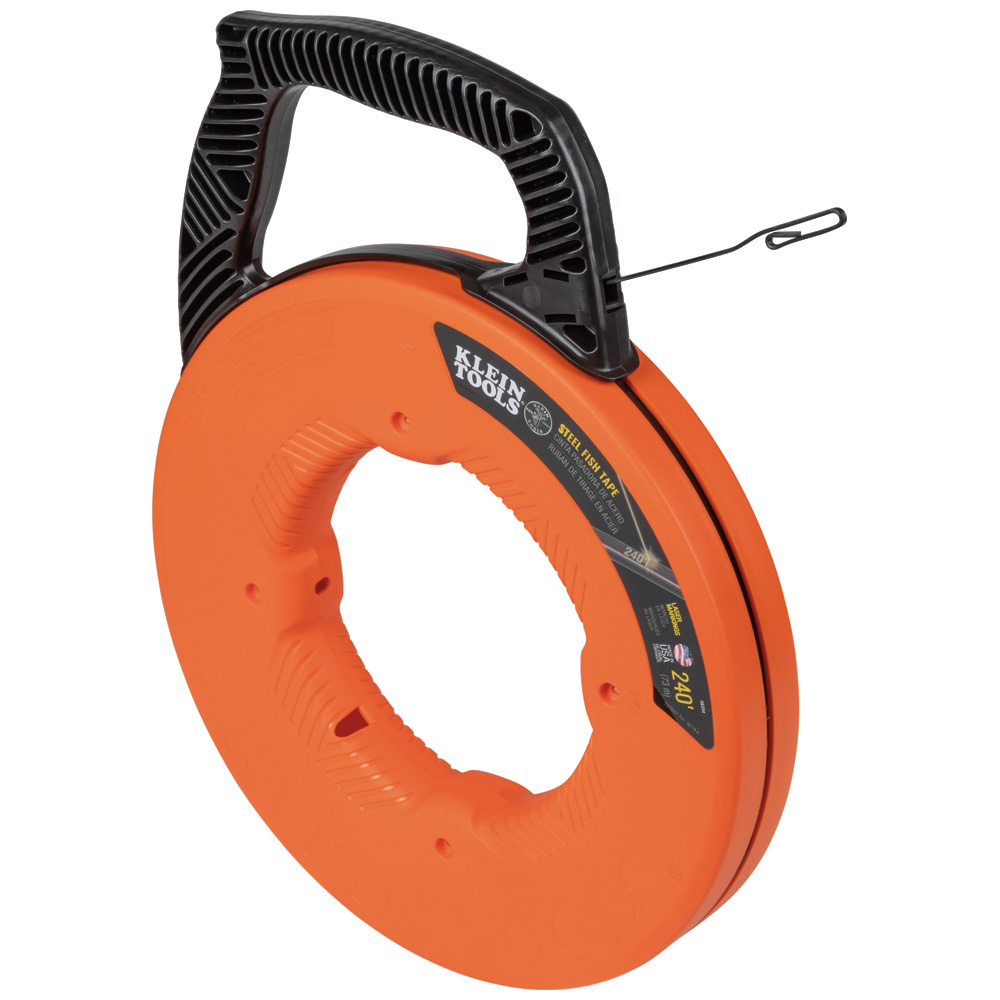
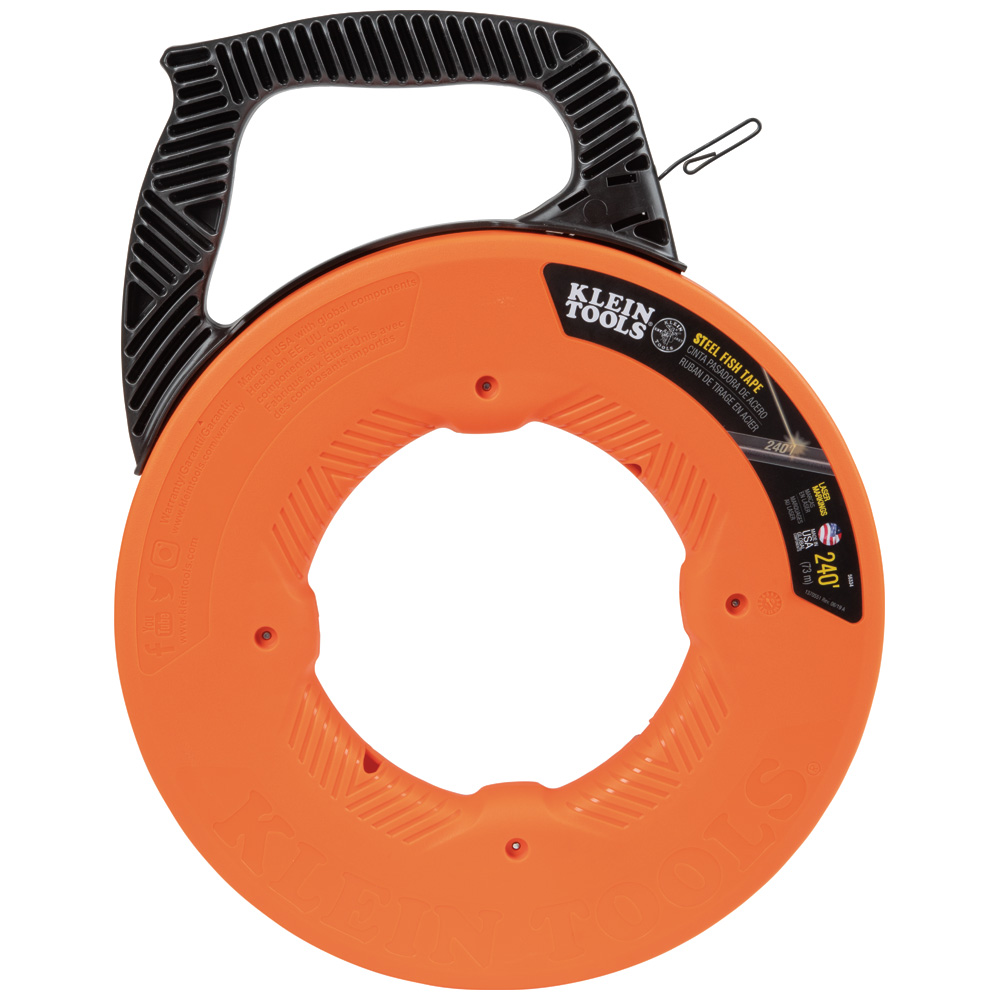
メナOn a long commercial pull where the previous tape came up short, switching to the 240-foot 56334 meant I didn’t have to splice or double back — it just reached.
The 56334 is Klein’s longest standard steel fish tape at 240 feet, firm yet flexible enough for long runs and large wire pulls. At 7.9 lbs it’s the heaviest tape in this lineup, with the same corrosion-resistant coating and slip-resistant case geometry as the 120-foot model.
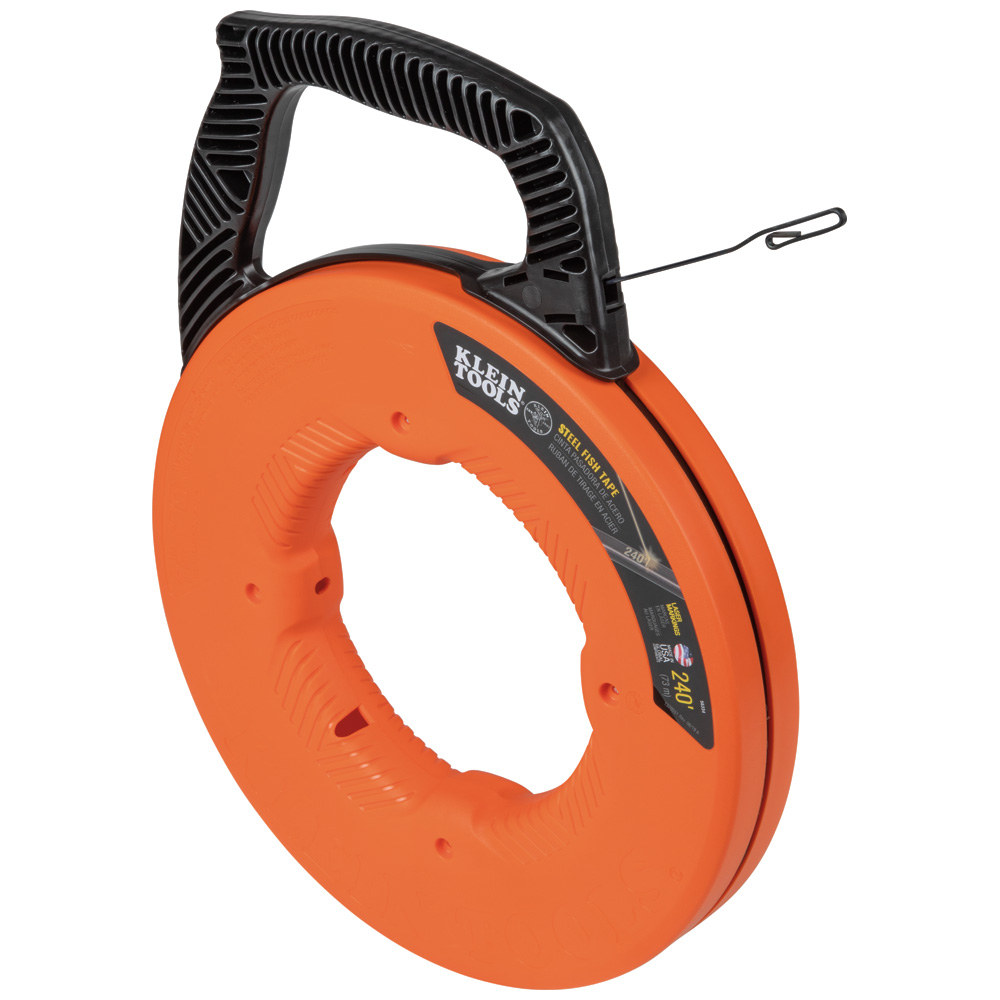
That extra length and weight makes it overkill for short residential jobs — you’re carrying a lot of tape you won’t use. It’s built specifically for long commercial or industrial conduit runs.
Recommended for electricians working large commercial buildings or industrial sites where conduit runs regularly exceed 120 feet.
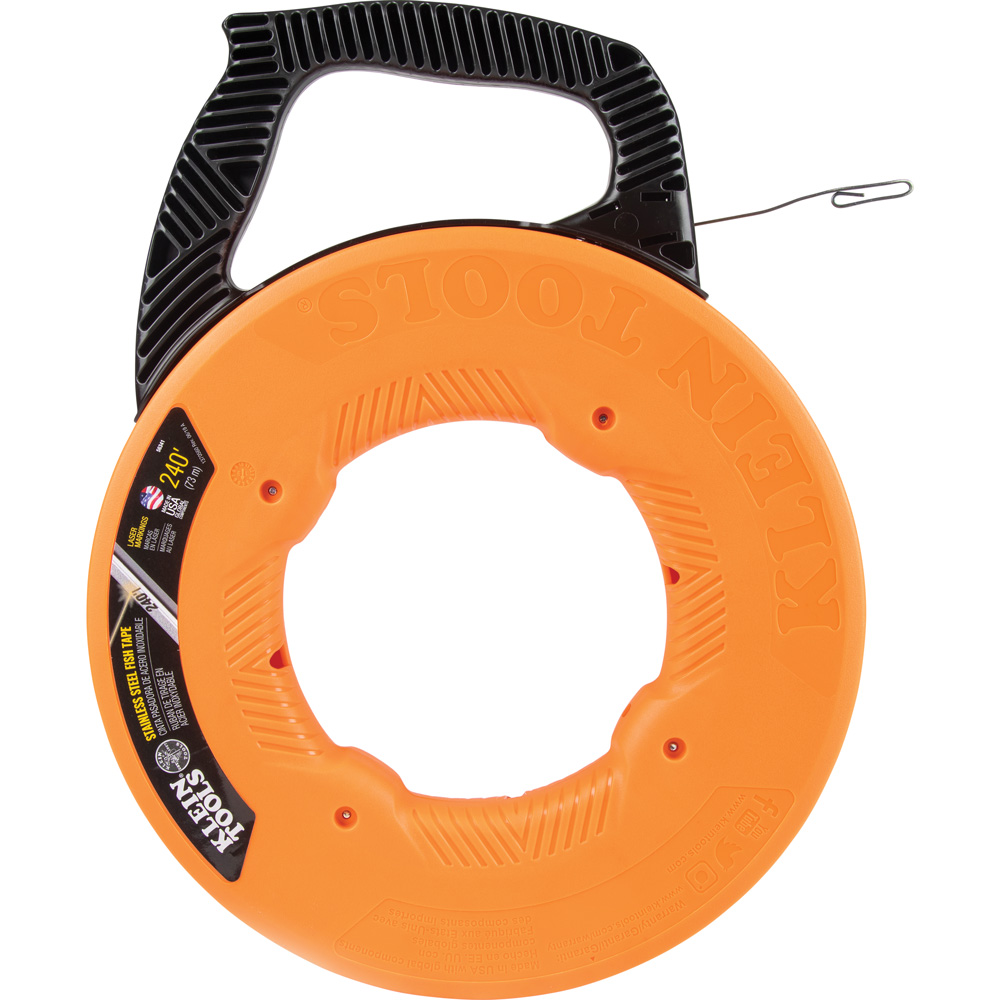
Klein Tools 56341 Stainless Steel Fish Tape, 1/8-Inch x 240-Foot
 メナ
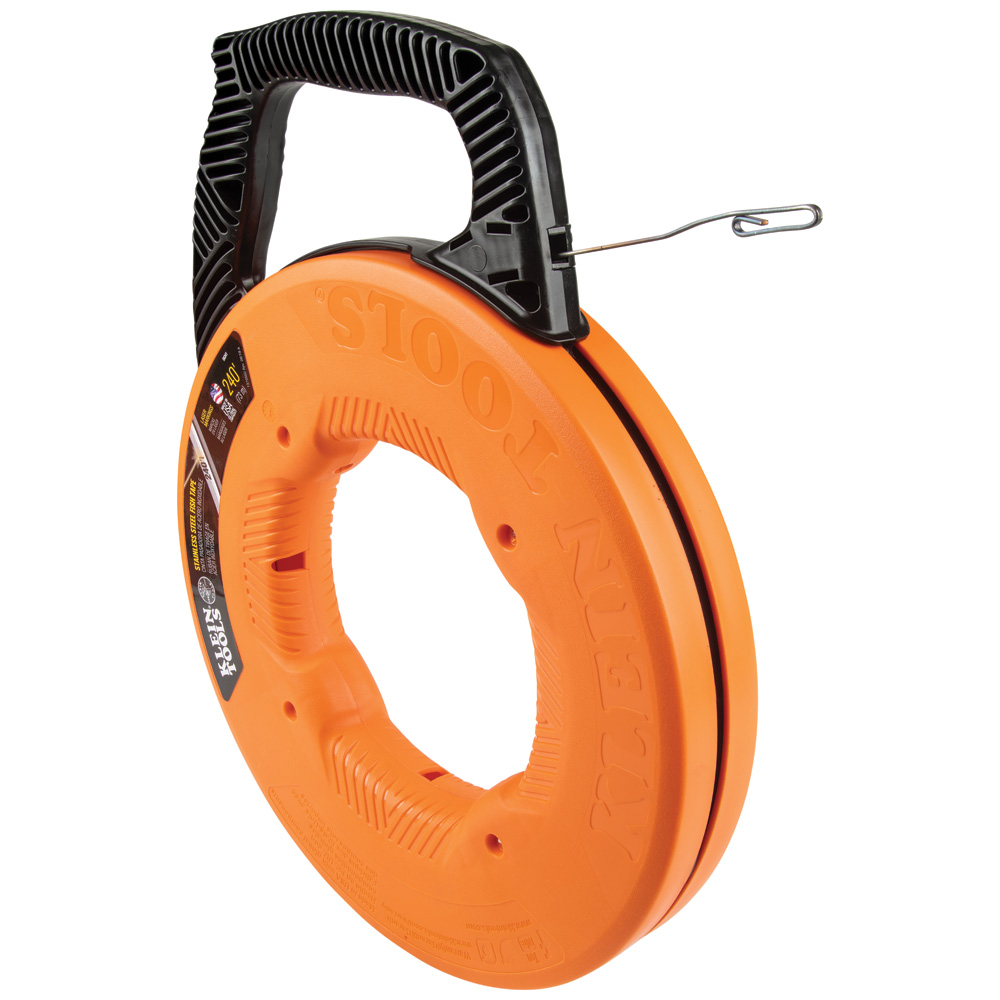
メナAfter leaving a coated steel tape in a damp crawlspace kit for a season, I switched to the stainless 56341 for anything humid — no more rust spots on the reel.
The 56341 matches the 56334’s 240-foot length and double-loop tip, but swaps the coated steel for solid stainless steel construction. That makes it noticeably more corrosion-resistant for damp basements, crawlspaces, or outdoor conduit work, at a comparable 7.9 lbs.
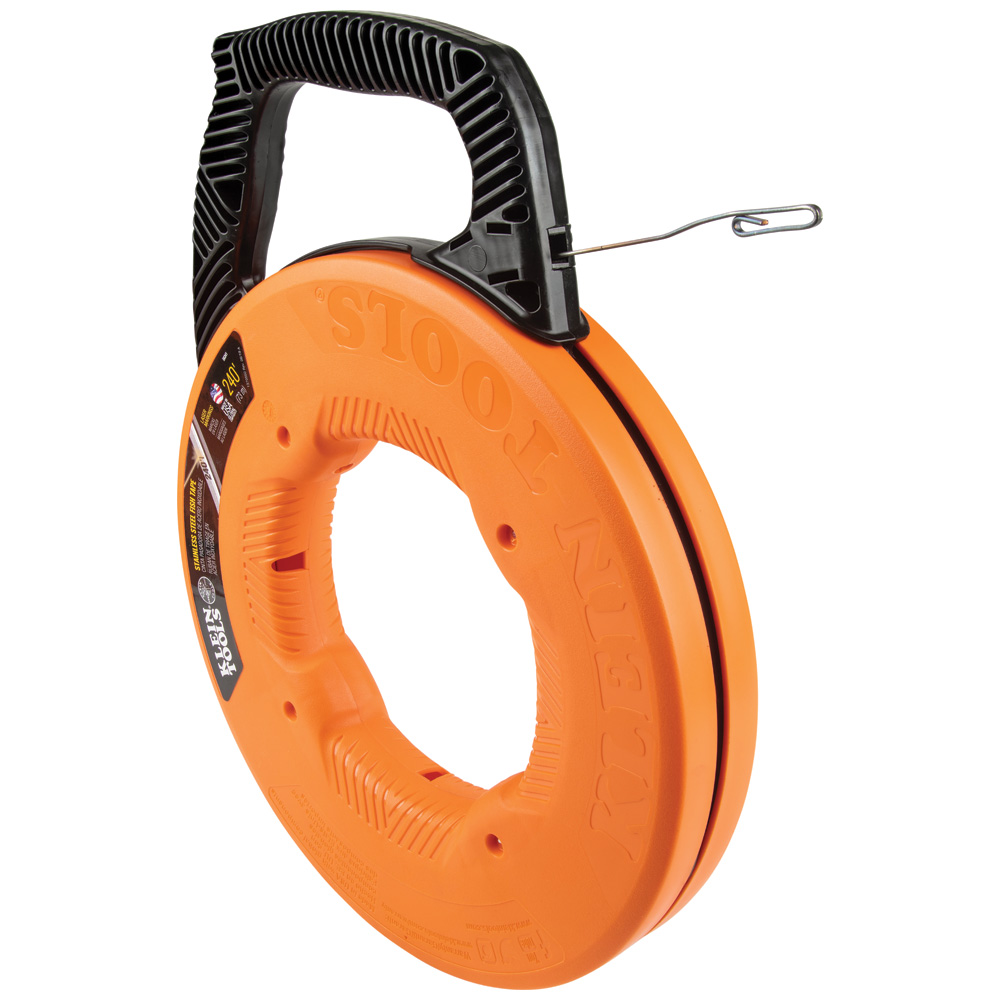
Stainless steel costs more than the coated steel equivalent, and for dry indoor jobs the extra corrosion resistance isn’t doing much work — the standard 56334 will serve just as well for less.
Worth the upgrade for anyone regularly pulling wire in humid, wet, or outdoor environments where a standard steel tape would rust over time.
Klein Tools 56351 Fiberglass Fish Tape with Spiral Steel Leader, 100-Foot
 メナ
メナWorking near a live panel, the non-conductive fiberglass tape is the one I reach for without a second thought — it’s just not a risk worth taking with steel.
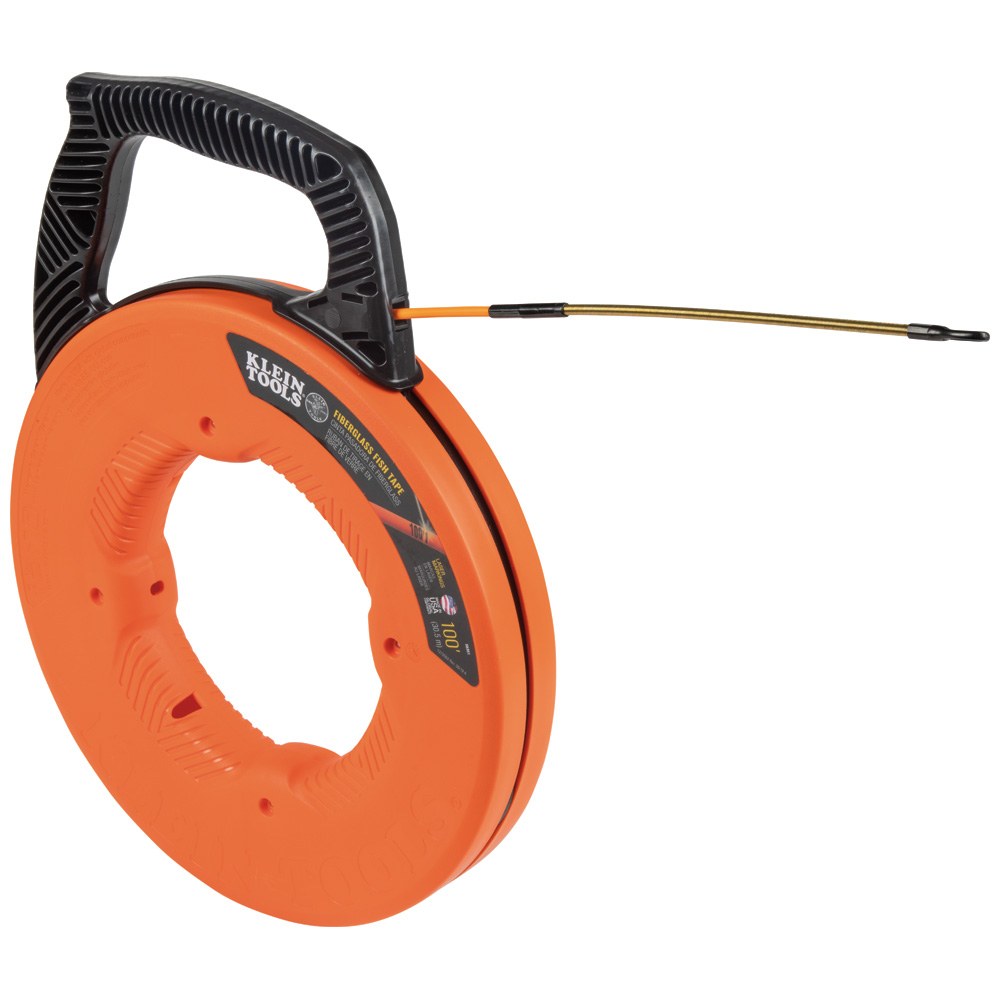
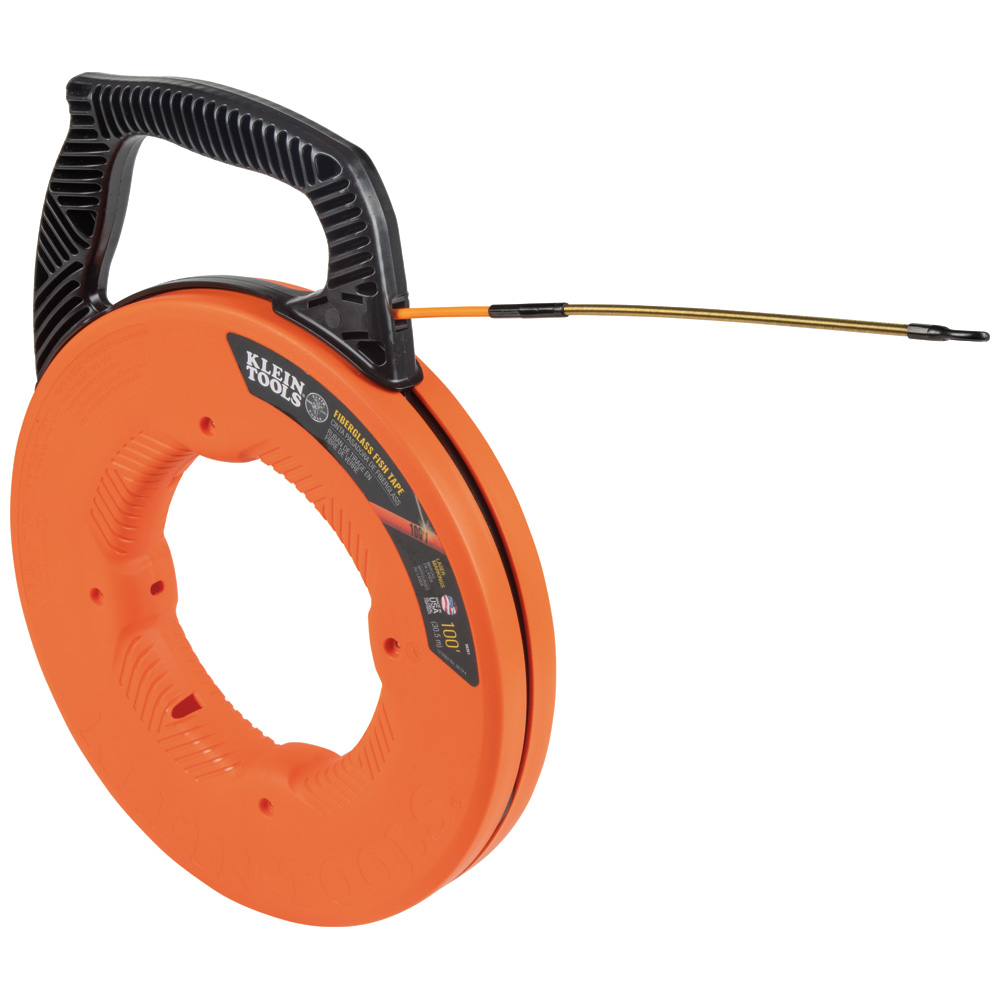
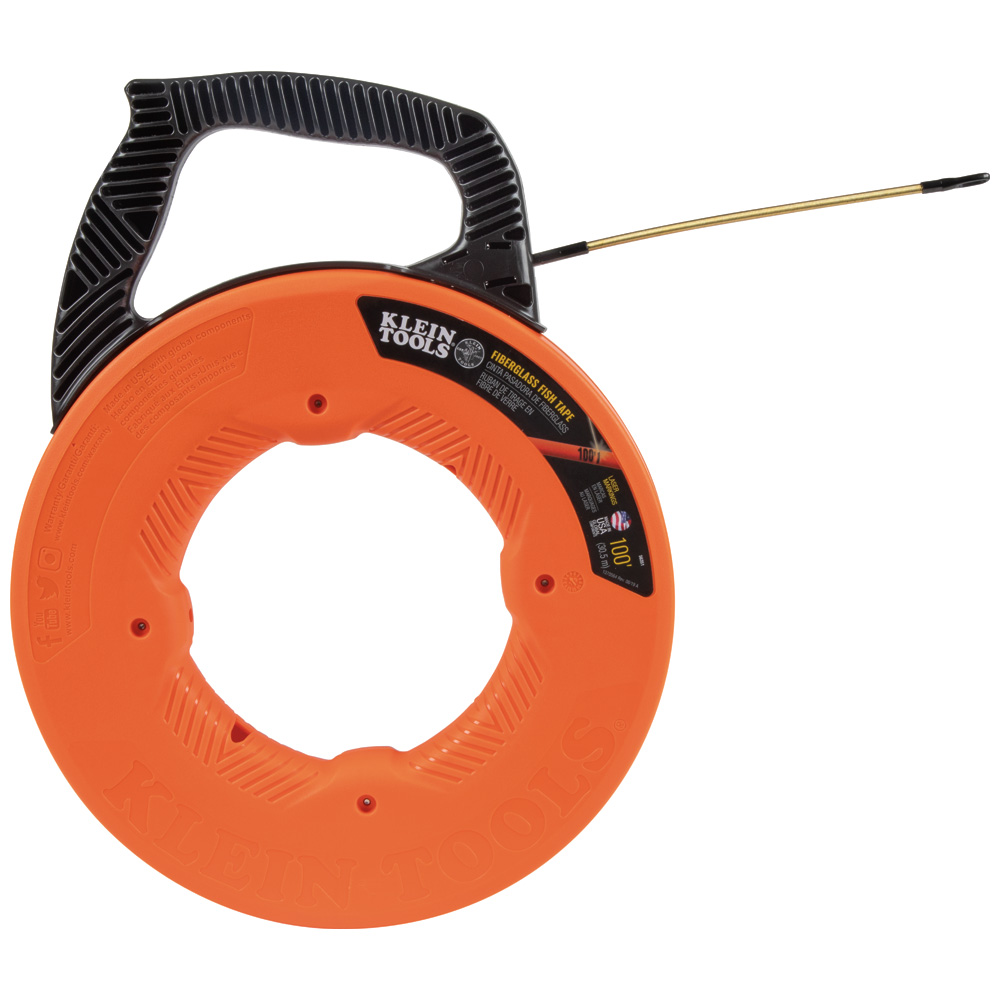
The 56351 is a 100-foot fiberglass fish tape with a 7-inch spiral steel leader tip. Unlike the steel models above, the fiberglass tape itself is non-conductive, making it the safer choice for work near energized equipment or panels. At 3.4 lbs it’s also lighter than the steel tapes of comparable length.
The fiberglass material has more give than solid steel, so on very long or heavily bent runs it can push slightly less firmly than a stiff steel tape. It’s also limited to 100 feet rather than the 240-foot options available in steel.
The clear pick when you’re working anywhere near live electrical equipment and need a tape that won’t conduct — the small tradeoff in stiffness is worth the safety margin.
Accessories Worth Pairing With Any Fish Tape
A fish tape alone gets most jobs done, but a wire pulling lubricant applied at the conduit entrance cuts friction dramatically on dry or long runs, making the difference between a smooth pull and a stuck tape.
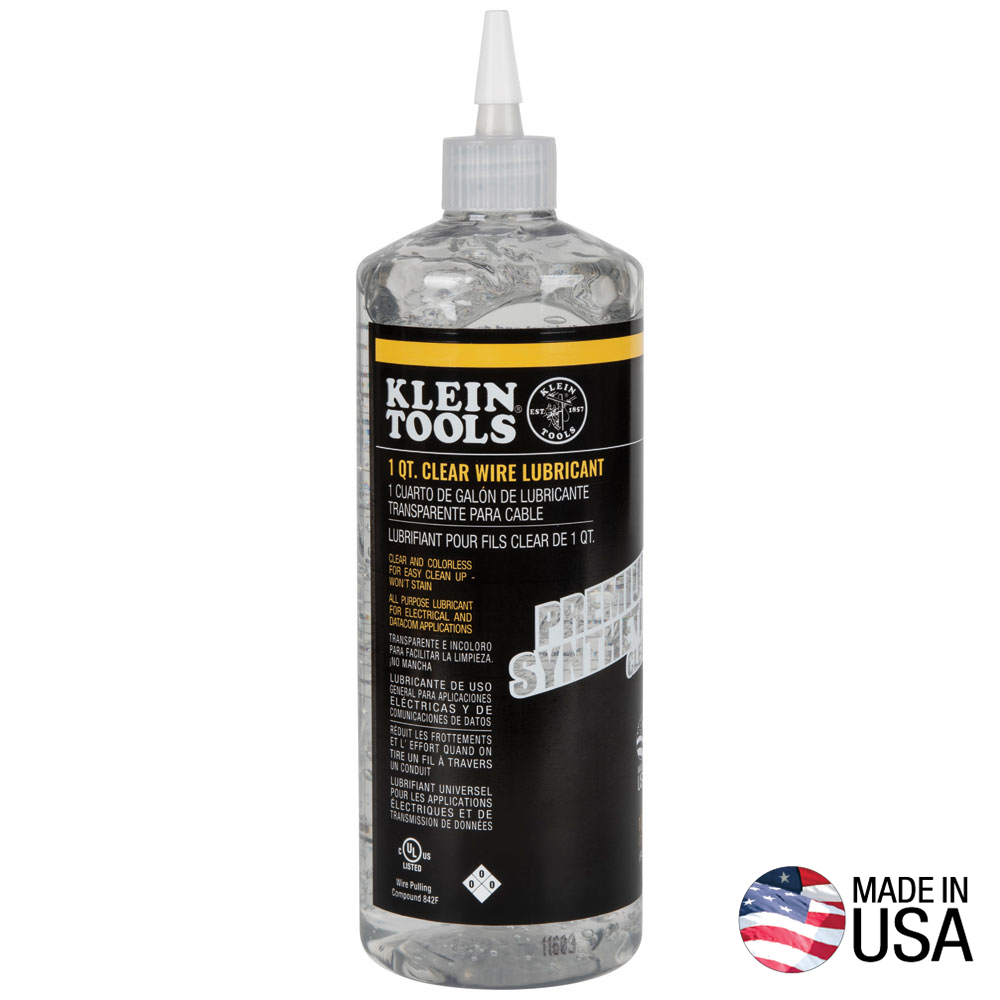
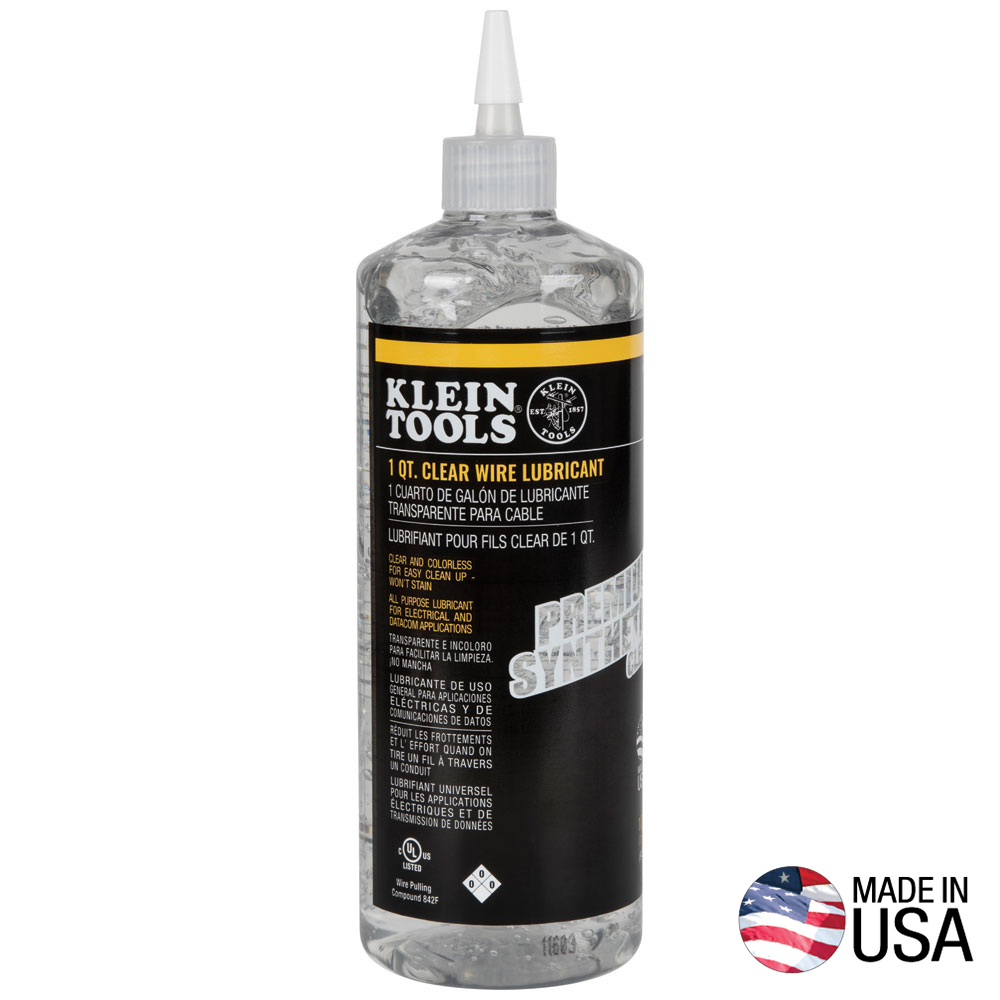
Klein Tools 51028 Premium Synthetic Clear Wire Pulling Lubricant, 1-Quart
 メナ
メナThe first time a tape stalled halfway through a dry conduit run, a squeeze of this at the entrance point got it moving again almost instantly — I keep a bottle in every kit now.
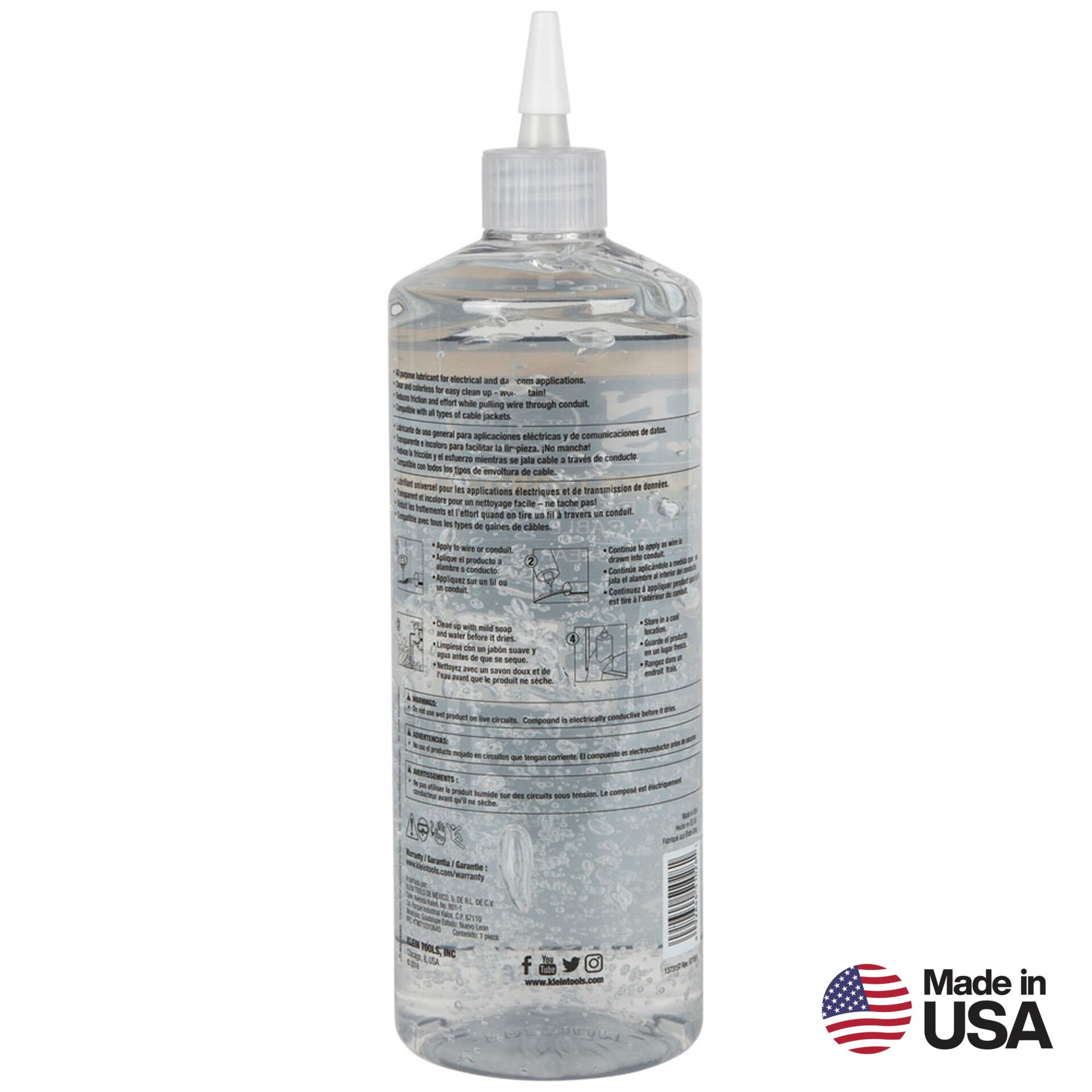
The 51028 is a crystal-clear synthetic wire pulling lubricant in a 1-quart bottle. It’s non-toxic, slow-drying, and compatible with most cable jacket types, and it’s formulated not to stain finished surfaces like painted walls or carpet — a real plus on occupied job sites.
It’s a lubricant, not a fish tape substitute — it won’t help if the tape itself is kinked or the conduit run is physically blocked. It’s meant to be used alongside a fish tape, not on its own.
Worth keeping in every kit if you regularly pull cable through dry or tight conduit runs where friction is the main obstacle.
Fish Tape Basics: Steel vs. Stainless vs. Fiberglass
Steel fish tapes are the standard choice — stiff enough to push through most conduit runs without buckling, and less expensive than the alternatives. Stainless steel adds corrosion resistance for wet or humid environments where a coated steel tape would eventually rust. Fiberglass tapes are non-conductive, which matters when you’re working near energized panels or equipment where a metal tape could pose a shock hazard.
Choosing a length
Match the tape length to your typical job size rather than always grabbing the longest one available — a 240-foot tape is heavier and bulkier than you need for a single-room residential pull, while a 50-foot tape will leave you short on a long commercial run.
Tips for Smoother Pulls
When a tape catches partway through a conduit run, resist the urge to force it — pushing too hard can kink the tape inside the conduit and jam it for good. Back off slightly, rotate the tape, and try feeding it again at a different angle.
A wire-pulling lubricant applied at the conduit entrance cuts friction dramatically on long or bent runs, and taping your cable to the tip in a tight, tapered bundle helps it glide through elbows without snagging.
FAQ
Q. Steel or fiberglass — which should I default to?
A. Steel for most everyday work — it’s stiffer and pushes more confidently through long runs. Switch to fiberglass specifically when you’re working near live electrical panels or equipment, since it won’t conduct if it contacts an energized part.
Q. My fish tape keeps getting stuck partway through the conduit.
A. Dry conduit is usually the culprit. A wire-pulling lubricant applied at the entrance point reduces friction significantly and often solves the problem outright.
Q. Is the 240-foot tape ever the wrong choice?
A. Yes — for short residential runs, the extra weight and bulk of a 240-foot reel just slows you down. Match the tape to the job size rather than defaulting to the longest one.
メナAll 5 of these share the same solid Klein build quality — the real decision comes down to how long a run you’re pulling and whether you need to worry about moisture or live equipment nearby.
Summary
We compared 5 current Klein Tools fish tapes across length, material, and weight. Steel covers most jobs, stainless steel is worth the upgrade for wet environments, and fiberglass is the safe non-conductive choice near live equipment.
Match the length to your typical job size — 50 feet for quick residential runs, 120 feet for most commercial work, and 240 feet for long industrial pulls.