
 メナ
メナHey, I’m Mena — as a hybrid engineer I work across both mechanical and electrical trades, and welding is part of my regular shop routine. Today I’m comparing four auto-darkening welding helmets, from a premium wide-view model down to a budget digital option.
Affiliate Disclosure: As an Amazon Associate, I earn from qualifying purchases at no extra cost to you.
An auto-darkening welding helmet switches to a dark shade the instant an arc strikes, so you don’t have to keep flipping your head position while you weld. Picking the right shade number matters: too light, and the UV/IR radiation from the arc can cause permanent eye damage. Every shade value in this article comes straight from official manufacturer specs, with no guessing or rounding on my part.
Short version: for the widest viewing area, go with the Lincoln Electric VIKING 3350; for the best all-around field of view with SideWindows, the 3M Speedglas 9100; for touchscreen convenience, the ESAB Sentinel A50; and for a solid budget start, the Jackson Safety Insight.
Standards first: understanding ANSI Z87.1 for welding helmets
The US doesn’t use Japan’s JIS T8141 system with its 19-step shade scale. Instead, ANSI/ISEA Z87.1 governs eye and face protection, including welding helmets, and OSHA requires employers to provide protection that meets it whenever workers face impact, radiant, or optical hazards (Source: OSHA 29 CFR 1910.252, Welding, Cutting, and Brazing, accessed 2026-08-08).
| Marking / Reference | What it means |
|---|---|
| Z87 marking | Passed the basic drop-ball impact test; suitable for general-purpose eye protection |
| Z87+ marking | Passed the high-velocity impact test as well; the marking to look for on any welding helmet |
| OSHA 1910.252 Table E-1 | Sets minimum recommended shade numbers by welding process and amperage (e.g., stick welding under 60A → shade 7 minimum, over 500A → shade 11 minimum) |
OSHA’s Table E-1 lists minimum shade numbers as a starting point — most working welders go one or two shades darker than the legal minimum for comfort. All four helmets in this comparison meet ANSI Z87.1 and support the shade ranges you’ll need to stay above OSHA’s minimums for common processes. ★Always confirm the exact shade for your amperage and process against the OSHA table or your helmet’s manual — this article won’t guess a number for you.
Quick comparison: all 4 helmets at a glance
All shade range and switching speed figures come directly from official manufacturer specifications as of 2026-08-08. Always check the current product page or manual before you buy, since specs and availability can change.
| Model | Shade range | Switching speed | Best for |
|---|---|---|---|
| Lincoln Electric VIKING 3350 | DIN 5-13 | 1/25,000 sec | Widest viewing area |
| 3M Speedglas 9100 | DIN 5, 8-13 | 0.1 ms | Best all-around view with SideWindows |
| ESAB Sentinel A50 | DIN 5-13 | 1/25,000 sec | Touchscreen convenience, 8 memories |
| Jackson Safety Insight | DIN 9-13 | 1/10,000 sec | Best budget start |
4 auto-darkening welding helmets compared
Lincoln Electric VIKING 3350 Auto-Darkening Welding Helmet (K3034-4)

 メナ
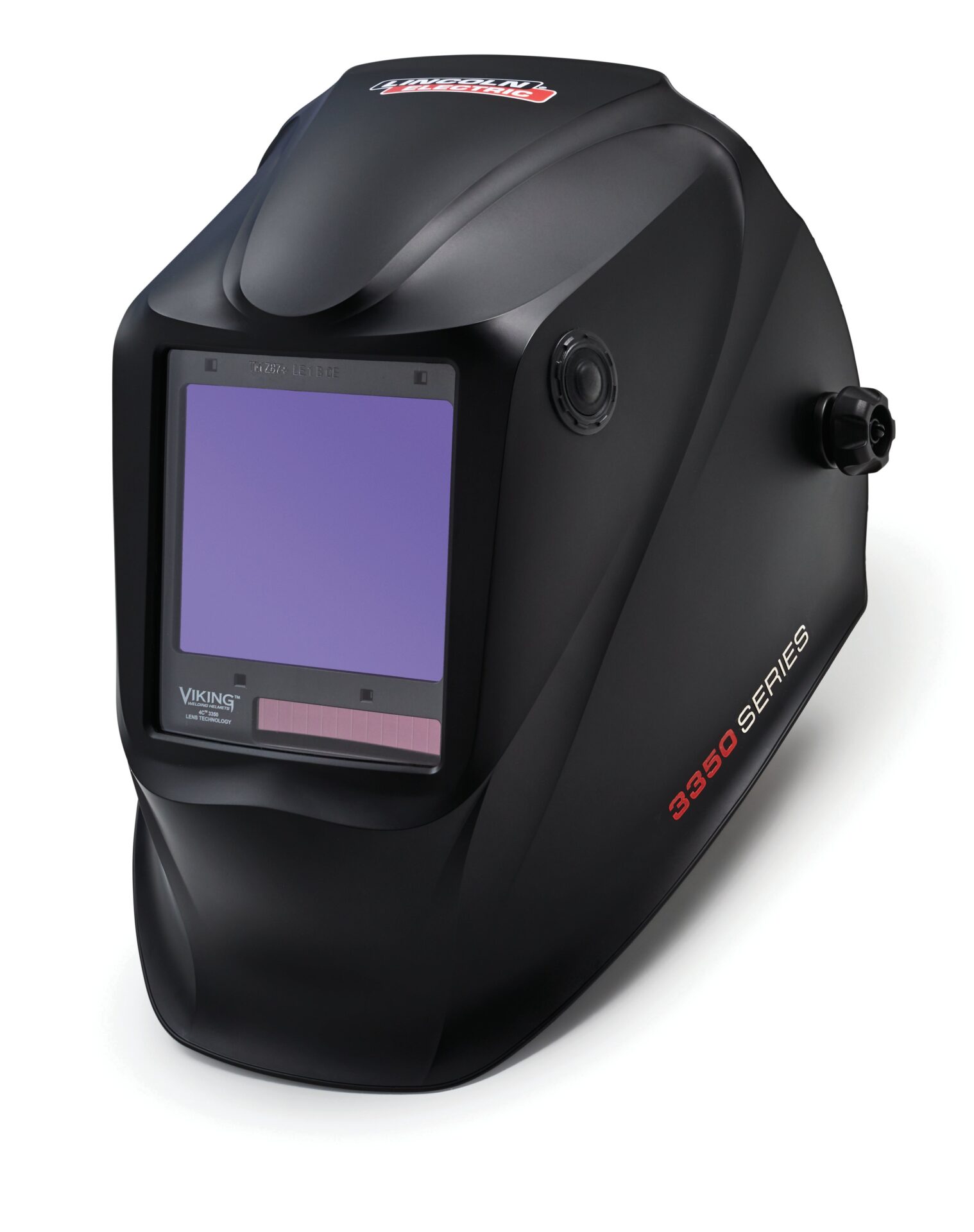
メナIf you want the biggest viewing window in this lineup, the VIKING 3350 is my top pick. 12.5 square inches of lens area makes a real difference when you’re tracking a weld puddle for hours, and the outdoor mode tells sunlight apart from an arc so it won’t false-trigger on you.
| Shade range | DIN 5-13, continuously variable |
|---|---|
| Switching speed | 1/25,000 sec |
| Optical class | 1/1/1/1 |
| Viewing area | 12.5 sq. in. (3.74″ x 3.34″) with 4C Lens Technology |
| Arc sensors | 4 |
The Lincoln Electric VIKING 3350 (K3034-4) uses Lincoln’s 4C Lens Technology to deliver a DIN 5-13 continuously variable shade range with a switching speed of 1/25,000 sec, according to official manufacturer specifications (checked 2026-08-08). Optical clarity is rated 1/1/1/1, the best possible score across all four EN379 criteria.
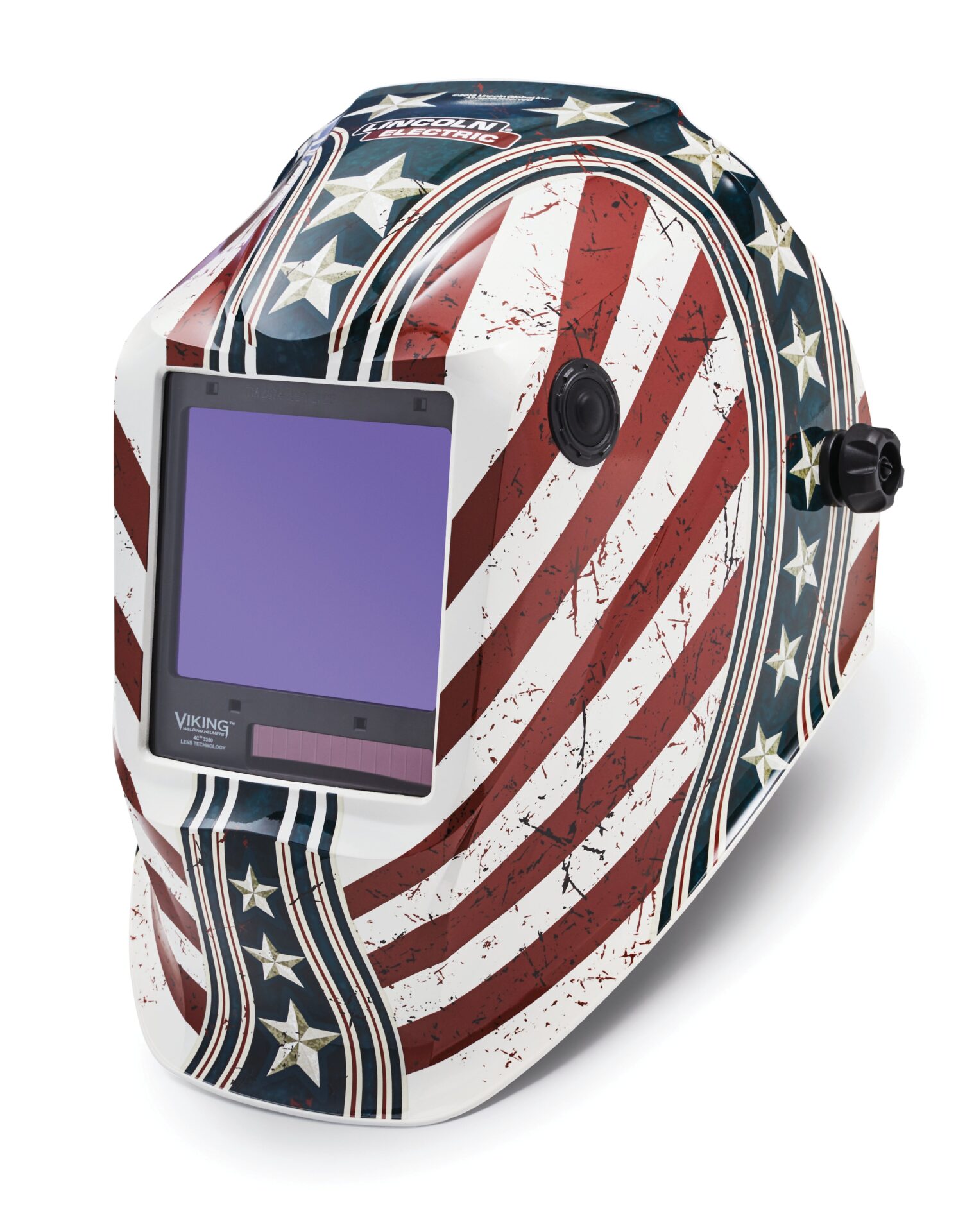
Four arc sensors cover a 12.5 sq. in. viewing area, one of the largest in this comparison, and an outdoor-performance mode automatically distinguishes sunlight from a welding arc so the lens won’t darken by mistake on a bright job site.
At the premium end of this lineup price-wise, the VIKING 3350 is built for welders who spend long hours under the hood and want the widest field of view available.
3M Speedglas 9100 Welding Helmet with SideWindows (9100XXi ADF)
 メナ
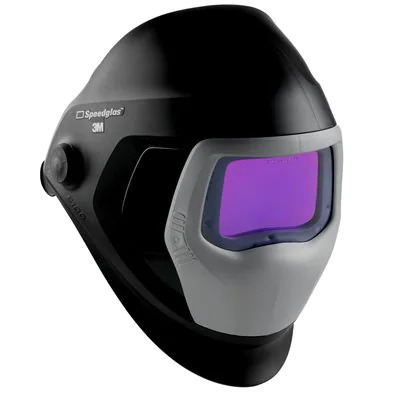
メナFor me, the Speedglas 9100 is the all-rounder among professional-grade helmets. The SideWindows give you near-180° peripheral vision at shade 5 — genuinely useful when you’re working in tight spaces or keeping an eye on a teammate.
| Shade range | Light state DIN 3, Dark state DIN 5, 8-13 |
|---|---|
| Switching speed | 0.1 ms (light-to-dark and dark-to-light) at 23°C |
| Standards | Meets EN166 / EN379 / EN175:B, ANSI Z87.1 compliant |
| Viewing area | 73 x 107 mm plus SideWindows (near-180° view at shade 5) |
The 3M Speedglas 9100 uses a continuously variable DIN 5, 8-13 dark-state shade range with a light-state shade of DIN 3, according to 3M’s official technical specification (checked 2026-08-08). Switching speed is 0.1 ms in both directions at 23°C.
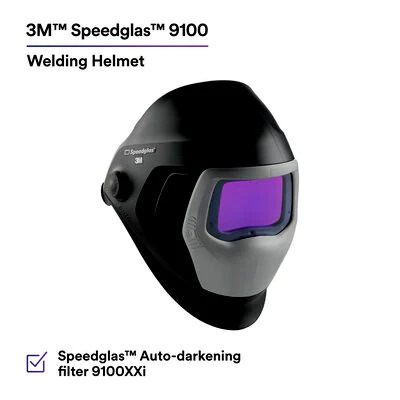
Certified to EN166, EN379, and EN175:B, and compliant with ANSI Z87.1 for US use. The SideWindows extend the field of view to nearly 180° at shade 5, which helps during breaks between welds when you need to check your surroundings. ★Standards currency note: EN166, EN175, and EN379 (along with EN170/171/172) were officially superseded by the new EN ISO 16321 standard family on 11 December 2025. Already-certified products remain valid until their certification expires, and the “EN379” designation continues to be used in practice (Source: BSI, Understanding EN ISO 16321, accessed 2026-08-11).
With one of the largest viewing areas in this comparison (73 x 107 mm), the 9100 is a favorite among professional welders who spend many hours a day under the helmet.
ESAB Sentinel A50 Auto-Darkening Welding Helmet
 メナ
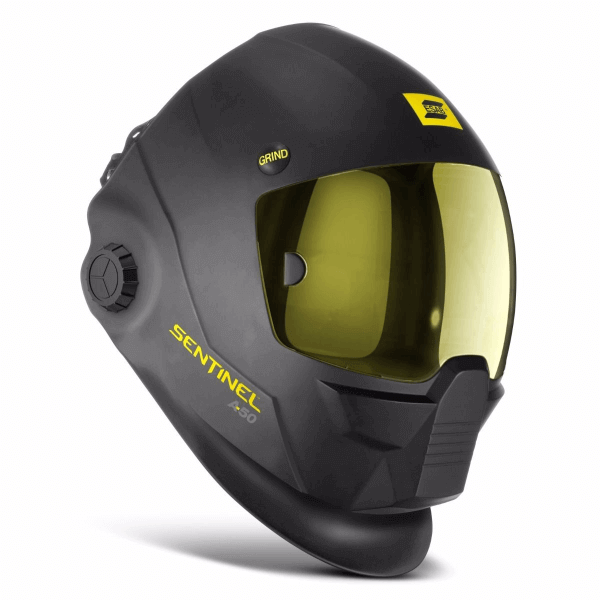
メナIf you switch between welding processes a lot, the Sentinel A50 makes life easy — a touchscreen instead of a dial, and you can pull up any of 8 saved settings in seconds.
| Shade range | DIN 5-13 (light/grind state DIN 4) |
|---|---|
| Switching speed | 1/25,000 sec light-to-dark |
| Optical class | 1/1/1/2 |
| Controls | Color touchscreen, 8 memory settings |
The ESAB Sentinel A50 offers a DIN 5-13 shade range with a very fast 1/25,000 sec light-to-dark switching speed, per manufacturer specifications. Optical class is 1/1/1/2, with a 100 x 60 mm viewing area.
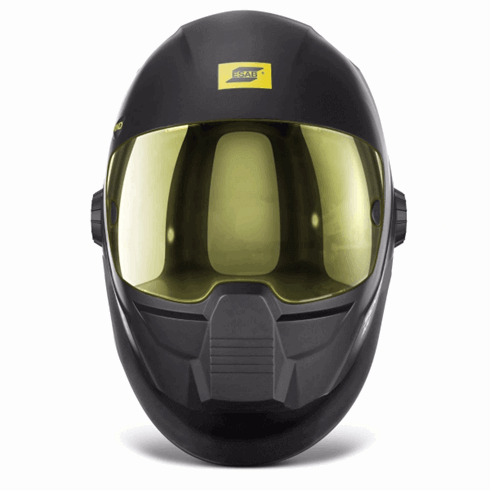
Controls run through a color touchscreen panel with 8 individually configurable memory settings, handy if you regularly switch between MIG, TIG, and stick welding and don’t want to reset everything each time.
Priced between the Speedglas 9100 and the more budget-friendly options in this comparison, the Sentinel A50 is a solid middle ground between features and cost.
Jackson Safety Insight Auto-Darkening Welding Helmet (HLX Shell)
 メナ
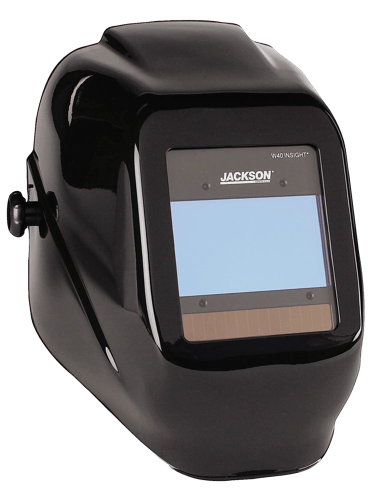
メナFor an entry point into digital-control helmets, the Insight is where I’d start — 4 arc sensors and dedicated Weld/Torch/Grind modes at a noticeably lower price than the premium options above.
| Shade range | DIN 9-13, digital controls |
|---|---|
| Switching speed | 1/10,000 sec |
| Optical class | 1/1/1/1 |
| Standards | ANSI Z87.1, CSA Z94.3 compliant |
| Modes | Weld, Torch, Grind |
The Jackson Safety Insight (HLX shell) covers a DIN 9-13 shade range with digital controls and a switching speed of 1/10,000 sec, according to official Jackson Safety specifications. Optical class is 1/1/1/1, the top rating on all four EN379 criteria.
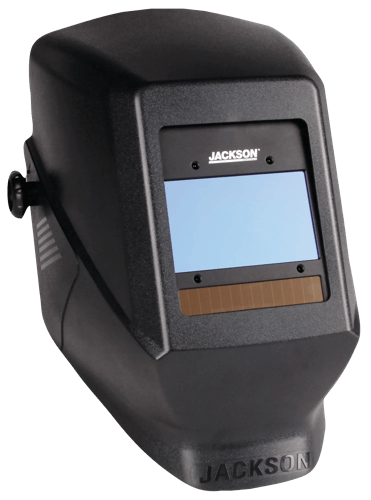
Four arc sensors are positioned to reduce blind spots, and dedicated Weld, Torch, and Grind modes let you switch tasks without digging through menus. Meets ANSI Z87.1 and CSA Z94.3 for US and Canadian use.
As the most affordable helmet in this comparison, the Insight is a good choice for occasional welders, maintenance crews, or as a reliable backup helmet without sacrificing core safety ratings.
Accessories: the rest of your welding setup
Beyond the helmet itself, it’s worth checking out the rest of your welding equipment. The following guides are currently available in Japanese only, but they give a good sense of our approach to welding machines and tools.
Welding machines (TIG/MIG/MAG)
A helmet only protects your eyes and face — you’ll need a separate welding machine. Our Japanese guide compares 10 TIG/MIG/MAG welding machines from hands-on field experience.
Tools for welders
Beyond the helmet, welders rely on a set of dedicated tools. Our Japanese guide covers 11 tools for everyday welding work.
How to choose the right welding helmet
Pick a shade range for your welding process
Higher amperage needs a higher shade number. Per OSHA’s Table E-1, stick welding under 60A calls for shade 7 minimum, while high-amperage TIG/MIG/MAG work often needs shade 12-13. Always confirm the exact number against OSHA’s table or your helmet’s manual.
Switching speed: faster is easier on your eyes
Switching speed is how fast the lens goes from light to dark once the arc strikes. In this comparison, the Jackson Safety Insight (1/10,000 sec) is the slowest, while the VIKING 3350 and Sentinel A50 (both 1/25,000 sec) and the Speedglas 9100 (0.1 ms) are all extremely fast.
Viewing area and comfort features
The VIKING 3350 and Speedglas 9100 both offer the largest viewing areas here, while the Sentinel A50 stands out for touchscreen convenience. If you’re under the hood for hours at a time, these comfort features make a real difference.
メナPick your shade range by welding process first, then compare switching speed and viewing area — that order gets you to the right helmet. And always check for the Z87/Z87+ marking before you buy.
Bottom line: the right pick for how you weld
Four auto-darkening welding helmets compared: the Lincoln Electric VIKING 3350 for the widest viewing area, the 3M Speedglas 9100 for the best all-around field of view with SideWindows, the ESAB Sentinel A50 for touchscreen convenience, and the Jackson Safety Insight for a solid, affordable start.
★All shade range and switching speed figures in this article come directly from official manufacturer specifications as of 2026-08-08. Specs and availability can change, so always check the current product page or instruction manual before you buy.