
This article contains affiliate links. If you make a purchase through these links, we may earn a commission at no additional cost to you.
Hello — I’m Mena, a hybrid engineer who has worked across carpentry, interior finishing, and electrical jobsites.
The first time I held a Makita circular saw was in my 20s, doing part-time flooring installation work. Back then it was a corded saw — managing the extension cord while running the saw was genuinely tedious. I still remember the moment I switched to cordless: “This is so much easier just from removing the cord.”
The HS series is the flagship cordless circular saw lineup from Makita. The voltage range is wide — from 10.8V ultra-compact models to 40Vmax top-tier — and blade diameters span 85mm, 125mm, and 165mm. With so many options, many people wonder “so which one do I actually choose?” This article organizes all major models by voltage and blade diameter, covering jobsite usability, strengths, and caveats from real experience.
What is the Makita HS Series? | The Flagship Cordless Circular Saw Line Chosen by Voltage and Blade Diameter
[40Vmax vs 18V Difference] The HS series comes in three voltages: 40Vmax, 18V, and 10.8V. 40Vmax delivers more cutting power than 18V and excels at heavy-load work like thick lumber and beams. 18V has highly versatile batteries that can be shared with other Makita 18V tools — the biggest advantage. 10.8V is lightweight and compact, positioned as a sub-machine for DIY and light work.
[How to Choose Blade Diameter] 165mm is the all-purpose size for timber construction, interior work, and woodworking — deep cut depth and easy to use. 125mm is compact and manageable, suited for cutting drywall, plywood, and interior materials. 85mm is an ultra-compact size specialized for DIY and subfloor material cutting. On professional jobsites, the typical pattern is 165mm as the main saw with 125mm as a secondary for interior finishing.
[Wireless Sync (AWS) Feature] Makita’s Automatic Wireless System (AWS) syncs the circular saw trigger to automatically start and stop a dust extractor. On jobsites where “dust collection while cutting” is standard, it saves significant effort. Wireless sync models have a model number one digit higher (e.g., HS610D → HS611D).
Makita HS Series — All Models Detailed: Full Comparison by Voltage and Blade Diameter
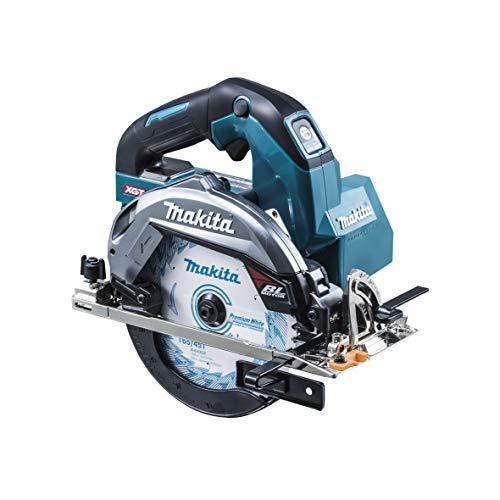
① HS001GZ | 40Vmax 165mm Standard Model
 メナ
メナThe HS001G is a solid entry point into 40Vmax. I can honestly recommend it to anyone who does not need wireless dust sync but wants maximum power in 165mm. The cutting headroom is in a different class from 18V.




| Battery Voltage | 40Vmax |
| Blade Diameter | 165mm |
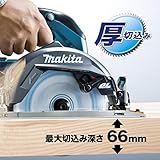
| Cut Depth (90°) | 66mm |
| Cut Depth (45°) | 45mm |
| Wireless Sync (AWS) | No |
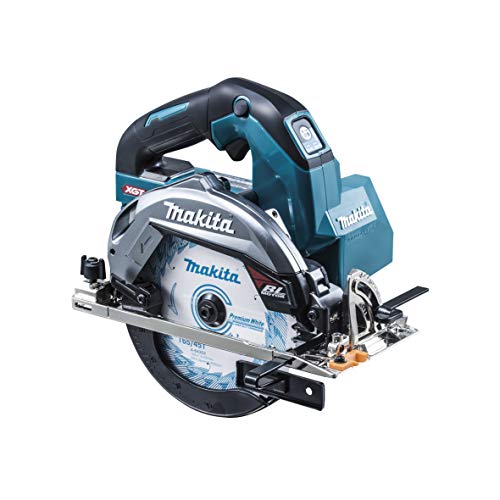
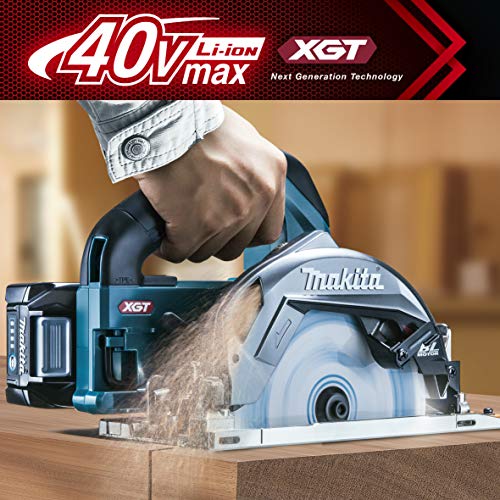
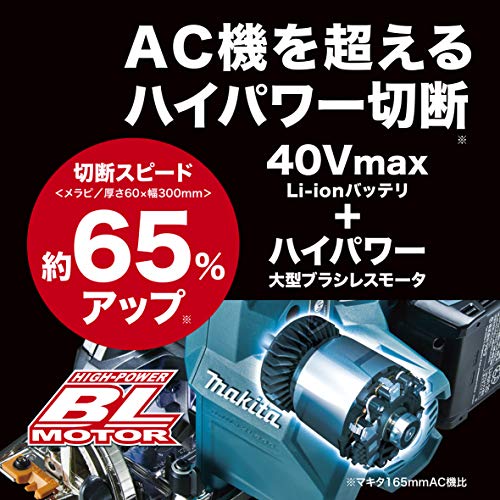
The HS001GZ is the base form of the highest-voltage HS series models, using a 40Vmax battery. There is no wireless sync (AWS), but the motor power of 40Vmax is on a different level from 18V. When cross-cutting plywood, engineered lumber, and rafters at 90°, you can work with the confidence that “the cut will go all the way through.”
The 66mm cut depth (90°) handles 2×4 lumber in a single pass with ease. If you do not need dust extractor sync or plan to use the saw standalone, the less expensive HS001GZ is sufficient compared to the HS002GZ. Purchasing the body-only (Z model) lets you use existing 40Vmax batteries.
② HS002GZ | 40Vmax 165mm Wireless Sync Model
メナThe only difference between the HS002G and HS001G is wireless sync. If you want dust extractor sync, choose the 002G; if you do not need it, the 001G is sufficient. There is a price difference, so choose based on your application.

| Battery Voltage | 40Vmax |
| Blade Diameter | 165mm |
| Cut Depth (90°) | 66mm |
| Cut Depth (45°) | 45mm |
| Wireless Sync (AWS) | Yes |
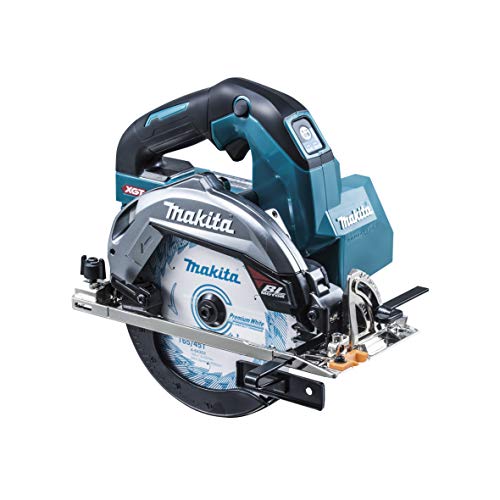
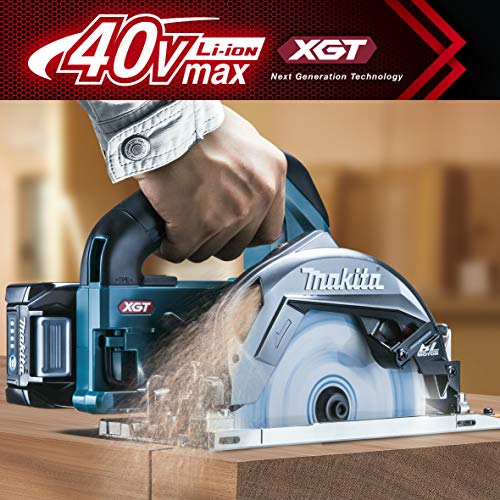
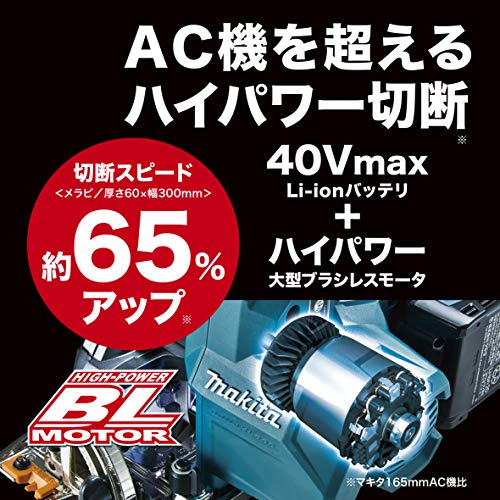
The HS002GZ is the premium version of the HS001GZ for 40Vmax 165mm, with wireless sync (AWS) added. The auto dust extractor sync means the extractor starts and stops simultaneously with the saw switch. Dust management is easier for jobsites with heavy MDF and plywood cutting.
Since the only difference is the wireless sync, the HS001GZ is sufficient if you do not use extractor sync. Conversely, on interior jobsites where a dust extractor is in constant use, the 002G reliably improves work efficiency.
③ HS005GZ | 40Vmax 125mm Plunge-Cut / Detachable Base Model
メナThe HS005G is specialized for “plunge-cutting” — cutting right up to a wall edge. Once you use it, there will be situations where you cannot work without it. For interior carpenters, this is worth owning as one of your saws.


| Battery Voltage | 40Vmax |
| Blade Diameter | 125mm |
| Plunge / Wall-Edge Cut | Yes (detachable base) |
| Wireless Sync (AWS) | No |
| Application | Wall-edge and plunge cutting |
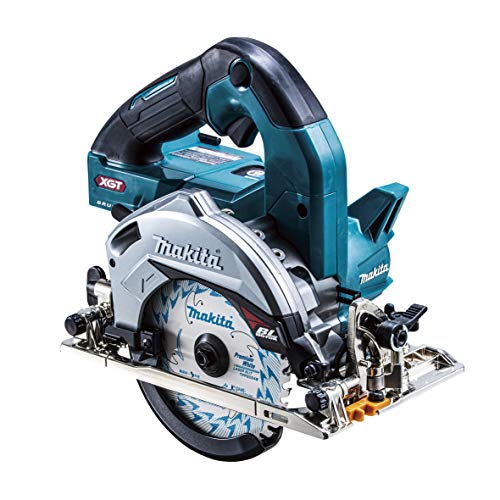
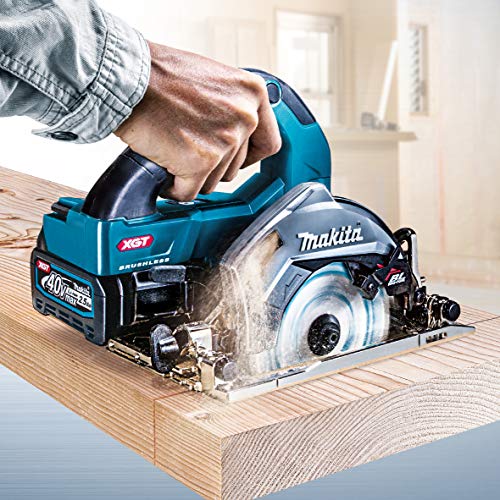
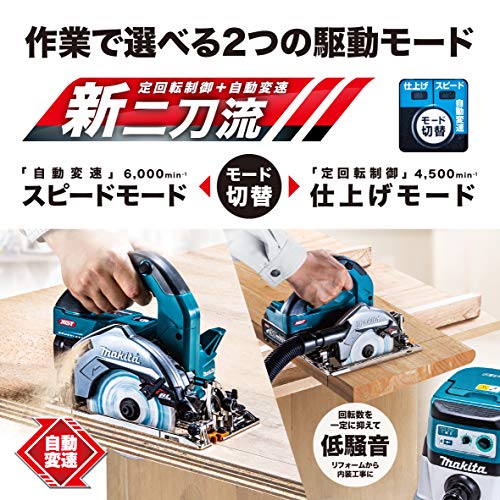
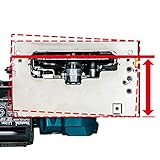
The HS005GZ has a base plate (shoe) that detaches from the body, allowing the blade to cut right up to a wall — the “plunge-cut model.” A standard circular saw cannot cut within approximately 30–40mm of a wall because the motor housing is in the way, but the 005G can get to 0mm.
It excels at flooring installation, baseboard trimming, and wall-edge cutting work. The 125mm blade diameter is not suited for thick lumber, but accepted as a dedicated tool for interior materials, flooring, and drywall, it becomes a powerful partner.
④ HS006GZ | 40Vmax 125mm Wireless Sync + Detachable Base Model
メナThe HS006G is the top-tier version of the 005G with wireless sync added. If you have the budget and want dust extractor sync, the 006G is the clear choice. Suited for jobsites that use both plunge cutting and dust extractor sync.


| Battery Voltage | 40Vmax |
| Blade Diameter | 125mm |
| Plunge / Wall-Edge Cut | Yes (detachable base) |
| Wireless Sync (AWS) | Yes |
| Application | Plunge cut + dust extractor sync |
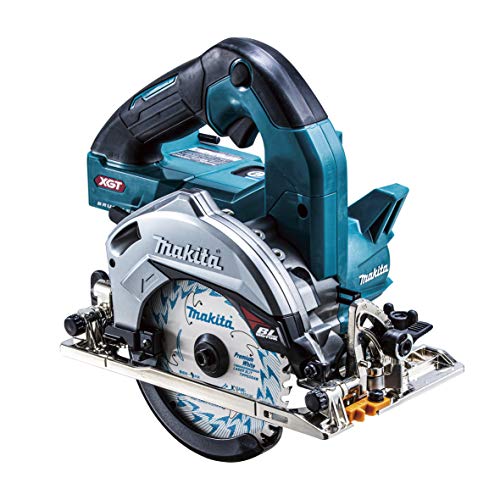
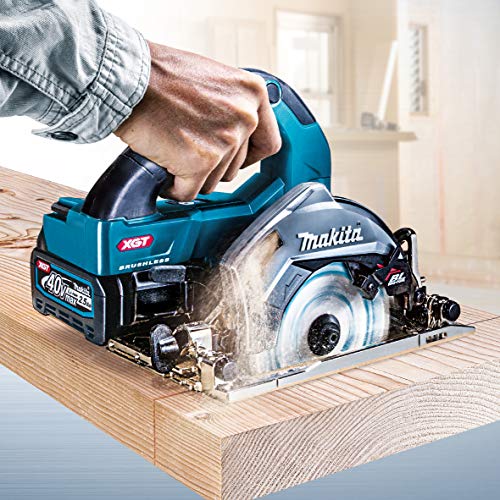
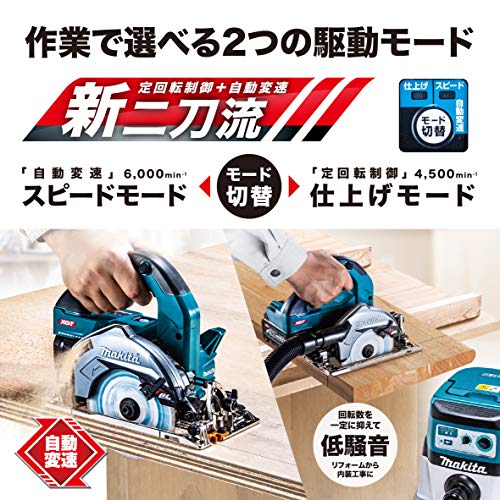
The HS006GZ adds wireless sync (AWS) to all the features of the HS005GZ (detachable-base plunge cut), making it the top model in the 40Vmax 125mm class. Optimized for interior jobsites that need both plunge-cut capability and dust extractor sync.
If the budget allows, choosing the HS006GZ over the HS005GZ prevents the regret of “I wish I had the dust sync too” down the line. For interior finish professionals who constantly use a dust extractor, the 006G is the clear choice.
⑤ HS631DZS | 18V 165mm Deep-Cut Model
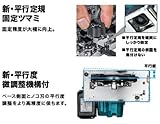
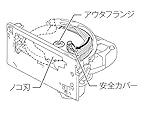
メナThe HS631D achieves a 66mm cut depth on 18V. That is 9mm deeper than the same 18V 165mm models HS611D and HS610D (57mm cut). For timber construction jobsites using beams and thick lumber, the 631D gets used a lot.




| Battery Voltage | 18V |
| Blade Diameter | 165mm |
| Cut Depth (90°) | 66mm (deep cut) |
| Cut Depth (45°) | 45mm |
| Wireless Sync (AWS) | No |
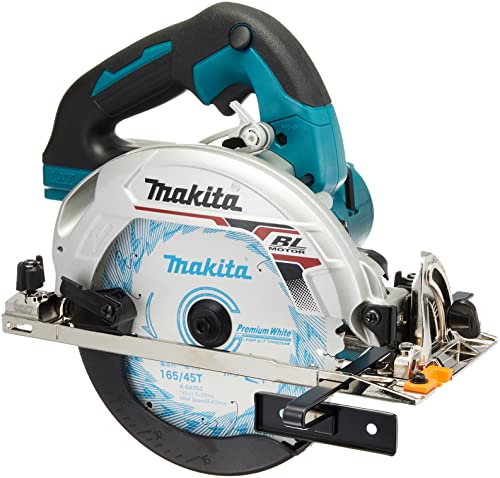
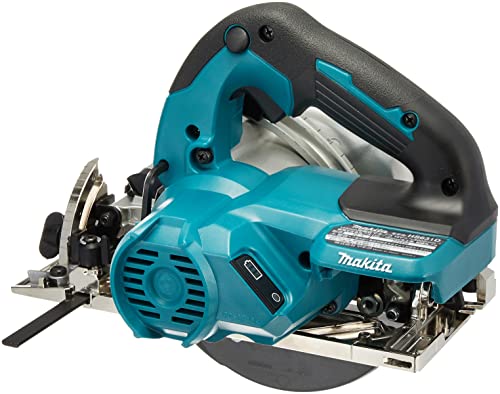
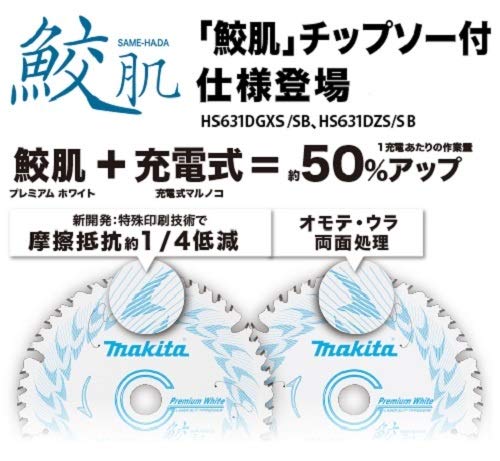
The HS631DZS is an 18V deep-cut specialized model that achieves 66mm cut depth (90°). That is 9mm deeper than the HS610D/HS611D models at the same 18V 165mm. That 9mm difference determines whether you can cut 45mm square lumber (45mm thick plywood) in a single pass — a meaningful difference in timber construction.
This model is for carpenters and woodworkers who want to stay on 18V but still need to cut thick lumber. It is a valid option when you want deep-cut capability without transitioning to 40Vmax.
⑥ HS611DZ | 18V 165mm Wireless Sync Model
メナThe HS611D is the 18V 165mm model that syncs with a dust extractor wirelessly. A wireless sync version of the HS610D. Choose between 610D and 611D based on whether you need dust extractor sync.


| Battery Voltage | 18V |
| Blade Diameter | 165mm |
| Cut Depth (90°) | 57mm |
| Cut Depth (45°) | 40mm |
| Wireless Sync (AWS) | Yes |
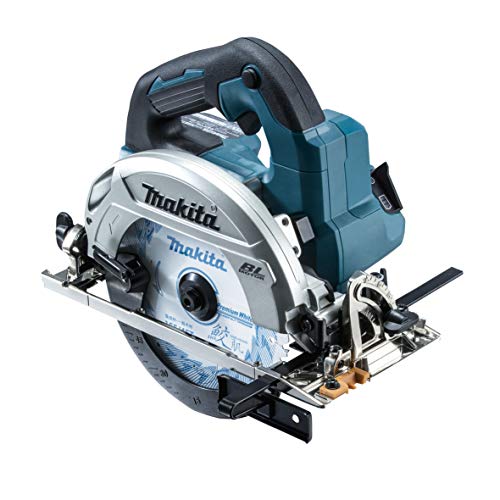
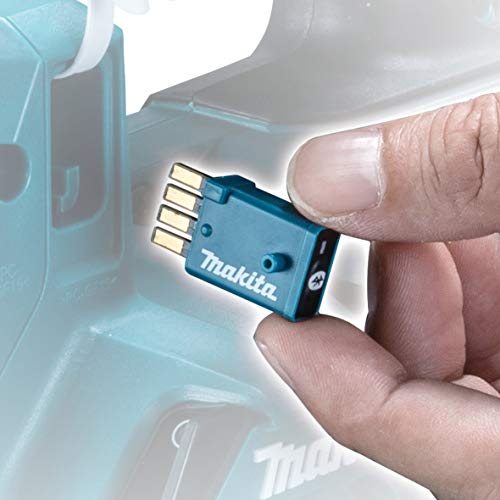
The HS611DZ adds wireless sync (AWS) to the HS610DZ for an 18V 165mm model. With the extractor synced, one switch starts both the saw and the extractor simultaneously. Suited for tradespeople on jobsites that require dust management or those who are health-conscious about dust exposure.
Cut depth is 57mm (90°) — shallower than the HS631DZS (66mm). If you frequently cut lumber thicker than 45mm, consider the HS631DZS. For interior finishing as your primary work, the 611D is sufficient.
⑦ HS610DZ | 18V 165mm Compact Model
メナThe HS610D’s best feature is its compact design. 267mm overall length is quite short for its class. For cramped jobsites or cutting while balancing by yourself, “small and light” is the right choice.


| Battery Voltage | 18V |
| Blade Diameter | 165mm |
| Cut Depth (90°) | 57mm |
| Overall Length | 267mm (compact) |
| Wireless Sync (AWS) | No |
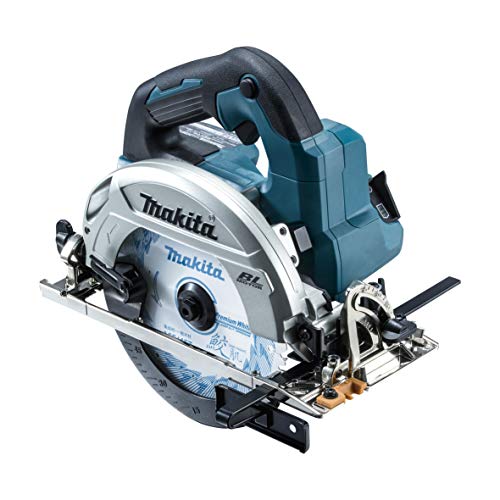
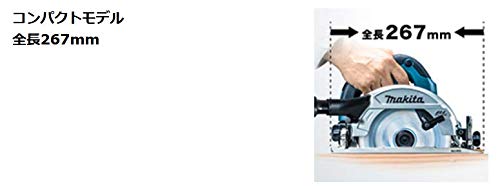
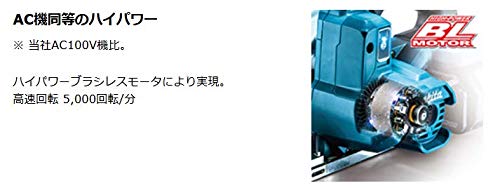
The HS610DZ’s standout feature is its 267mm overall length — outstandingly compact for the 18V 165mm class. Optimizing the motor and gear layout achieves a significantly smaller body compared to conventional models of the same voltage and blade size.
It shines in situations where maneuverability is paramount — cutting near ceilings in tight spaces, cutting on a ladder, and cutting on narrow scaffolding. For anyone who does not need dust extractor sync and simply wants the most compact 165mm available, the HS610DZ is the best choice.
⑧ HS474DZ | 18V 125mm Standard Model
メナThe HS474D is the standard 18V 125mm model. 125mm is the right size for interior work, drywall, and thin plywood. Smaller and lighter than 165mm, and its maneuverability earns it good marks on jobsites.





| Battery Voltage | 18V |
| Blade Diameter | 125mm |
| Cut Depth (90°) | 45mm |
| Cut Depth (45°) | 28mm |
| Wireless Sync (AWS) | No |
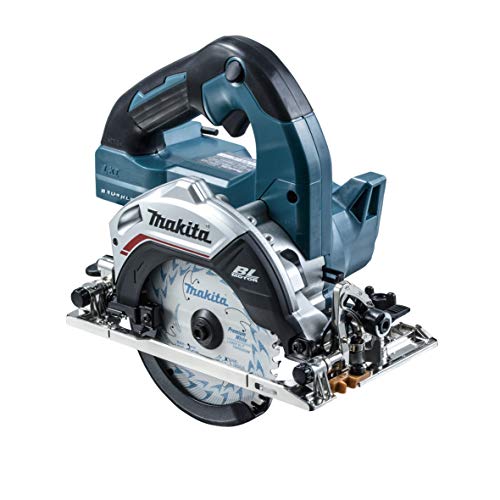
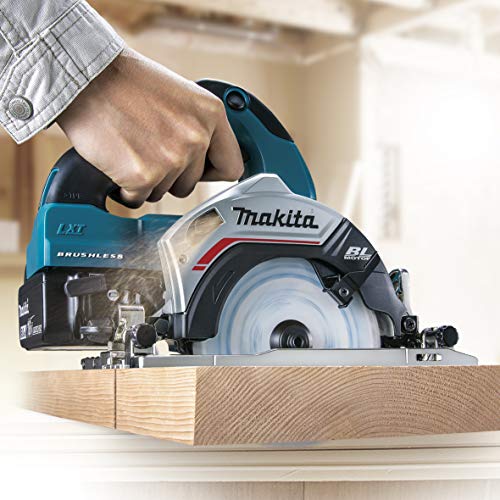
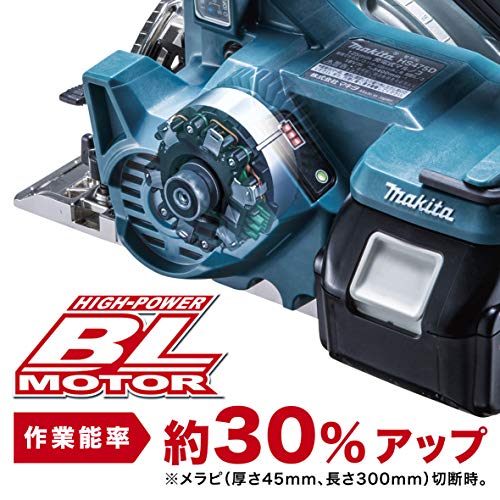
The HS474DZ is the standard 18V 125mm model. Its 45mm cut depth (90°) is more than adequate for cutting drywall, thin plywood, and flooring materials. The smaller blade diameter compared to 165mm means a lighter, more manageable body — why the jobsite appreciates it.
Interior finishing professionals often own a 125mm as a secondary saw alongside a 165mm. The only difference from the HS475DZ is the presence of wireless sync. If you do not need dust extractor sync, the HS474DZ is sufficient.
⑨ HS475DZ | 18V 125mm Wireless Sync Model
メナThe HS475D is the HS474D with wireless sync added. Just decide whether you need dust extractor sync — choose 474D if not, 475D if yes. The 475D is convenient for interior finishing work with a dust extractor.
| Battery Voltage | 18V |
| Blade Diameter | 125mm |
| Cut Depth (90°) | 45mm |
| Cut Depth (45°) | 28mm |
| Wireless Sync (AWS) | Yes |
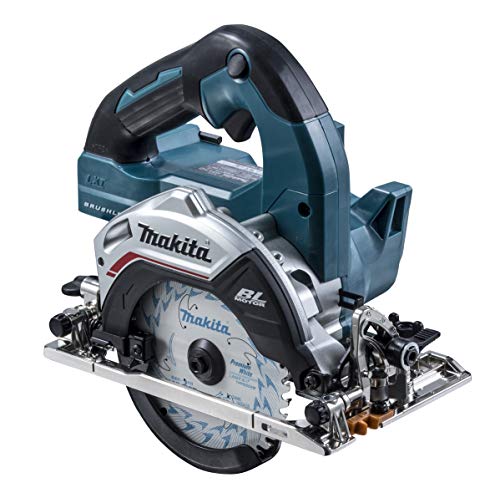
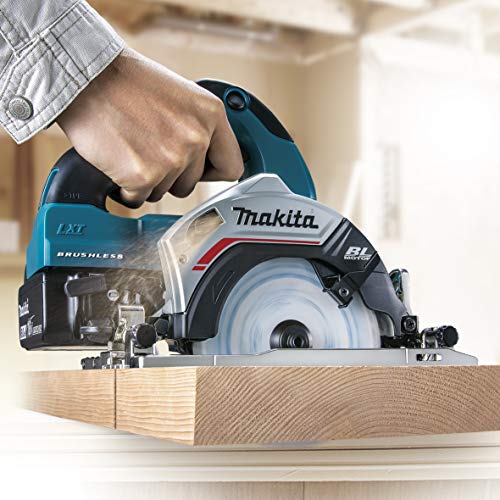
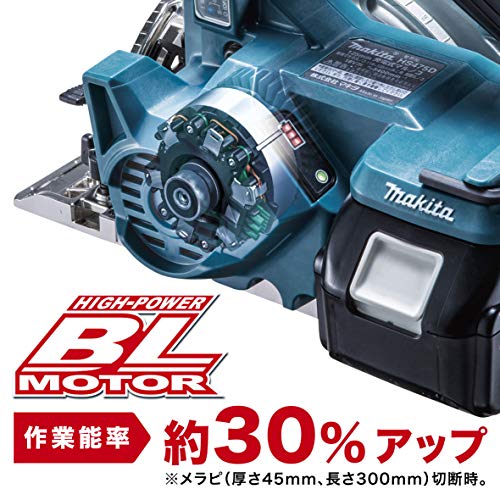
The HS475DZ adds wireless sync (AWS) to the HS474DZ for an 18V 125mm model. Specs and size are identical to the HS474DZ — the only difference is the automatic dust extractor sync feature.
Suited for interior finishing tradespeople who do dusty work (cutting drywall, calcium silicate board, etc.). On jobsites where a dust extractor is always on hand, choosing the HS475DZ leaves less room for regret.
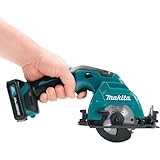
⑩ HS301DZ | 10.8V 85mm Slide Battery
メナThe HS301D is the current model using the slide battery (CXT 10.8V). A size and weight that even women and children can handle — often the first circular saw bought for DIY. That said, please understand the 85mm blade diameter limitation before buying.




| Battery Voltage | 10.8V CXT (slide-type) |
| Blade Diameter | 85mm |
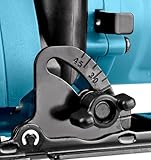
| Cut Depth (90°) | 26mm |
| Cut Depth (45°) | 17mm |
| Wireless Sync (AWS) | No |
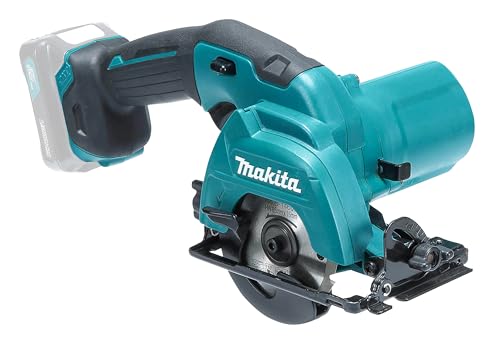
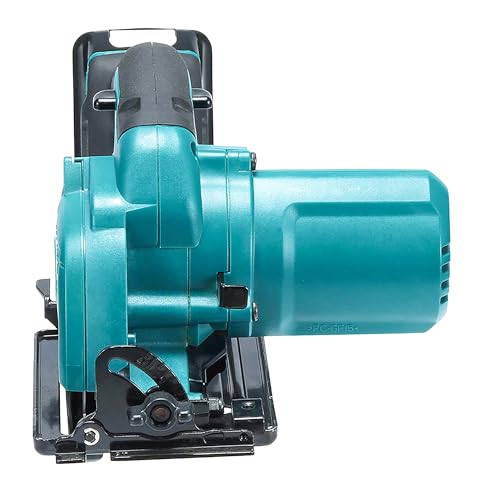
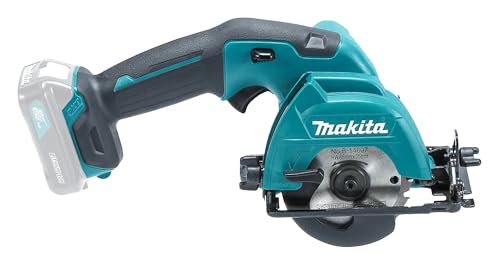
The HS301DZ is an 85mm circular saw that uses the Makita CXT (10.8V slide-type) battery. The lightweight body is easy to handle for beginners and first-time circular saw users. It has sufficient performance for DIY applications and cutting thin materials (12mm plywood, thin flooring).
However, please buy with the understanding that the 26mm cut depth (90°) is a real limitation. It cannot cut 2×4 lumber or thick boards. Its proper position is as a thin-material cutter, DIY tool, or sub-machine. It also suits CXT 10.8V users who share batteries across other tools.
⑪ HS300DZ | 10.8V 85mm Insert Battery (Legacy)
メナThe HS300D uses the legacy insert-type battery. The current mainstream is the slide-type HS301D. Buying the HS300D new today is generally not recommended — but for those with existing batteries, it remains an option.


| Battery Voltage | 10.8V insert-type (legacy) |
| Blade Diameter | 85mm |
| Cut Depth (90°) | 26mm |
| Current Model | HS301DZ (slide-type) recommended |
| Purchase Recommendation | For existing legacy battery owners |
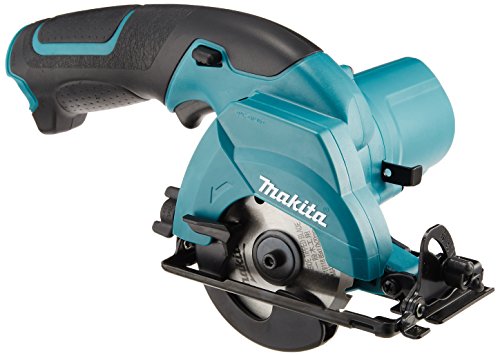
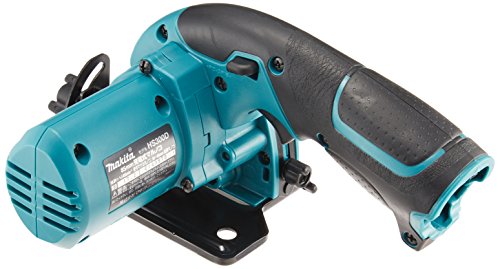
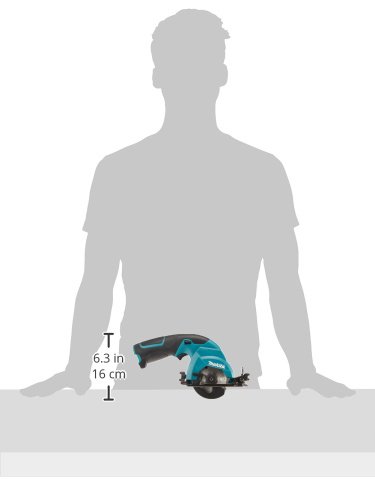
The HS300DZ is the 85mm model using the legacy generation 10.8V insert-type battery. The current HS series main lineup has moved to the slide battery (CXT) HS301DZ, and purchasing the HS300D new today is generally not recommended.
However, for users who already own multiple legacy 10.8V insert-type batteries, it functions as an option for depleting those batteries. Body specs and cutting performance are almost identical to the HS301DZ.
How to Choose the Makita HS Series | Recommended Flow by Trade and Application
[Professional Carpenter / Timber Construction] 40Vmax + 165mm is the first choice. Cutting power and 66mm cut depth handle thick lumber and beams in a single pass. Choose HS001GZ (no dust sync needed) or HS002GZ (with dust sync).
[Interior Carpenter / Flooring / Interior Finishing] The 18V + 125mm combination is the most practical. Use the HS474DZ (no sync) or HS475DZ (with sync) as your main saw; if you also do wall-edge work, consider adding the HS005GZ or HS006GZ. For jobsites where a dust extractor is in constant use, AWS-compatible models improve work efficiency.
[DIY Users / First Circular Saw] Start safely with the 18V + 125mm HS474DZ, or the 10.8V + 85mm HS301DZ. The HS301DZ is lightweight with high safety, and sufficient for cutting thin materials. If you plan to use other Makita 18V tools in the future, the 18V model with battery sharing is the better recommendation.
[Battery Compatibility Note] 40Vmax, CXT 10.8V, and 18V batteries are not interchangeable with each other. If you already own Makita batteries, choosing the same voltage model keeps costs down. Choosing the “Z series” (body only) avoids buying duplicate batteries and chargers.
Frequently Asked Questions (FAQ) | Makita HS Series
Q. Which should I buy, HS001GZ or HS002GZ?
Decide based on whether you want dust extractor sync. If you do not use a dust extractor or can operate it manually, the HS001GZ is sufficient. If you want automatic dust extractor sync, choose the HS002GZ. Both have identical cutting performance, battery, and body size.
Q. Is the practical difference between 18V and 40Vmax circular saws large?
There is a difference in cut depth and power under load. 40Vmax has higher motor output, with less speed drop when cutting hard timber and thick lumber. 18V’s advantages are battery versatility and lighter weight. If you regularly cut material thicker than 45mm, you will feel the 40Vmax difference.
Q. Can the plunge-cut models (HS005GZ / 006GZ) also be used for regular straight cuts?
Yes, they can also be used for regular straight cuts. Detachable-base plunge-cut models handle both regular cutting and wall-edge cutting by swapping the base plate. However, since the body structure is purpose-built, the standard models are simpler for those who do not need plunge-cut capability.
Related Articles
See also related Makita tool and power tool articles.
- Makita TD Series Impact Driver — All Models Comparison: Complete Guide for Electricians and Manufacturing Pros
- Hitachi (HiKOKI) Impact Driver WH Series — All Models Comparison: Recommended Models for Carpenters and Electricians
- ToughBuilt Tool Pouches and Belts: 12 Models for Construction, Electrical, and Carpentry — Full Guide