
Affiliate Disclosure: This article contains affiliate links. As an Amazon Associate and affiliate partner, I earn from qualifying purchases at no extra cost to you. I only recommend tools I have personally used and trust.
Here is my 2026 roundup of the bike maintenance tools I (Mena) have been using for over 10 years of weekend road-bike work. From hex keys and tire levers to chain cutters, torque wrenches, floor pumps, and cable cutters — I picked only the tools I genuinely can’t do without.
In bicycle maintenance, the quality of your tools directly affects the quality of your results. Anyone who has rounded a bolt with a cheap hex key or crushed a cable end with ordinary pliers knows exactly what I mean. Investing in pro-quality tools makes a huge difference in both precision and safety.
Bicycle Maintenance Basics | What to Know Before Choosing Tools
Bicycle maintenance divides roughly into four stages: routine inspection, consumable replacement, adjustment, and overhaul. Routine inspection centres on a floor pump and chain checker. Consumable replacement calls for a chain cutter and tire levers. Adjustment work relies on hex keys, a torque wrench, and cable cutters. Matching your tools to the stage is the fastest path to safe, quality maintenance.
The three tools to buy first are a hex key set, tire levers, and a floor pump. With these three you can handle basic puncture repairs and adjustment work. Add a chain breaker and chain checker as your second step and you can manage consumables entirely on your own.
Top 10 Recommended Bicycle Maintenance Tools
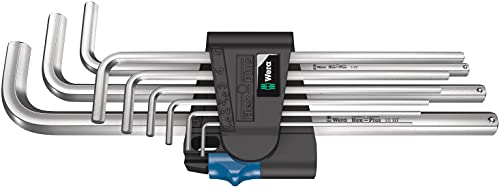
①Wera 950/9 Hex-Plus Multicolour Hex Key Set (9-piece) | Hex-Plus Shape Resists Rounding
 メナ
メナThe first time I used Wera’s Hex-Plus I could immediately feel the difference in how the key seats into a bolt — no slop, like it’s being drawn in. I haven’t gone back to cheap hex keys since.











| Brand | Wera |
| Model | 950/9 Hex-Plus HF |
| Contents | 9-piece set (1.5–10 mm) |
| Shape | Hex-Plus (enlarged contact area, round-out resistant) |
| Features | Multicolour coding, holding function |
| Made in | Germany |
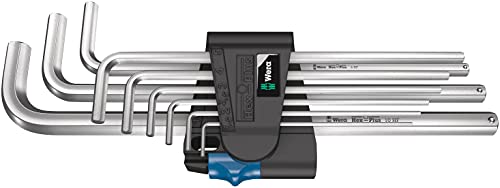
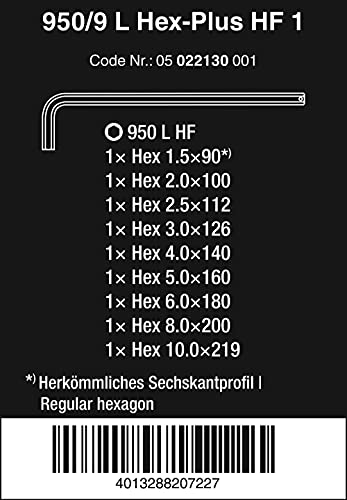
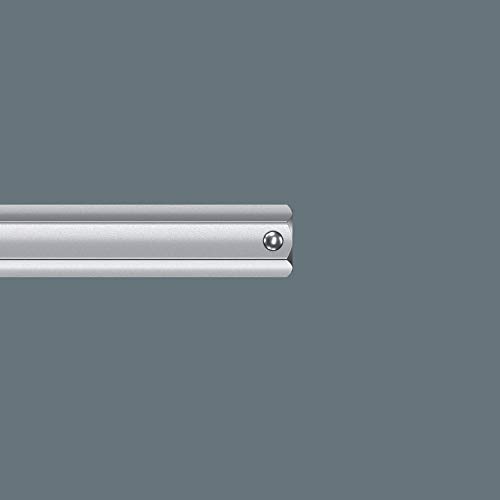
Wera’s Hex-Plus design offers a wider contact area with bolt faces compared with a standard hexagonal profile, making it far more resistant to rounding. The multicolour coding lets you grab the right size at a glance — a genuine help in low-light conditions.
Road-bike work mainly calls for 1.5 mm–6 mm sizes, so the 9-piece set covering 1.5 mm–10 mm gives you more than enough. The holding function grips bolts so you won’t drop them — invaluable when working overhead.
This is the tool I recommend starting with. The brand you choose for hex keys has an enormous effect on how well the key seats and how resistant it is to rounding.
②ParkTool TL-1.2C Tire Lever Set (3-piece) | The Shop-Standard Choice for Puncture Repair
メナWhen you get a puncture without tire levers, you’re stuck. Keeping just one in your saddle bag transforms a roadside flat from a disaster into a minor inconvenience.



| Brand | ParkTool |
| Model | TL-1.2C |
| Contents | 3-piece set |
| Material | High-strength plastic (rim-friendly) |
| Features | Spoke hook slot, solo-worker friendly |
| Use | Clincher tire removal and installation |
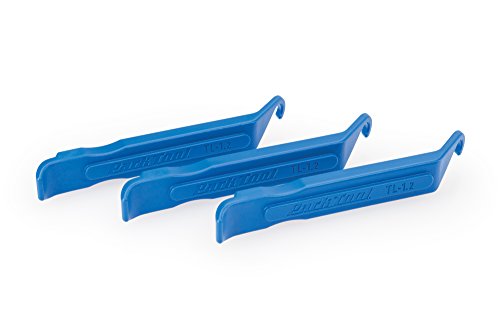
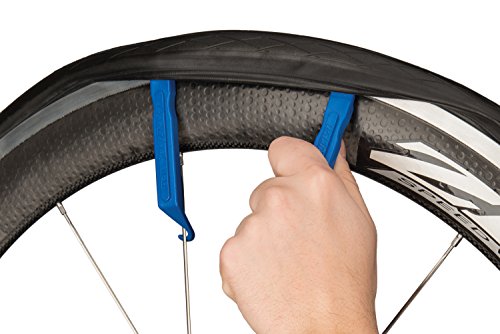
ParkTool’s tire levers are the standard choice in bike shops worldwide. The tip is shaped to avoid scratching the rim, and the spoke hook slot lets you work the tire alone without an extra pair of hands.
Once you’re experienced you can usually get most tires off with two levers, but three is much more reassuring when you’re starting out. Note that these are designed for clincher tires — for tubeless you’ll want dedicated levers.
③Shimano TL-CN28 Chain Cutter (6–11 Speed) | Reassurance of an OEM Tool
メナBecause it’s a genuine Shimano tool, the compatibility with Shimano chains is perfect and the feel as you push the pin is solid and controlled. The moment the chain separates is easy to detect — great for first-timers.


| Brand | Shimano |
| Model | TL-CN28 |
| Compatibility | 6–11 speed chains |
| Features | OEM design, smooth pin push, low chance of failed cuts |
| Use | Chain replacement and length adjustment |
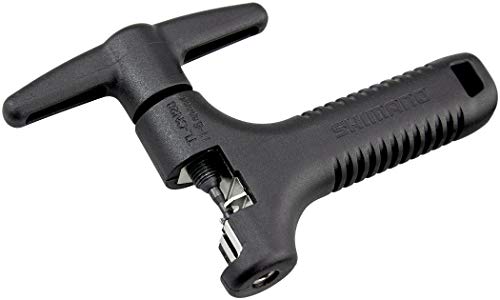
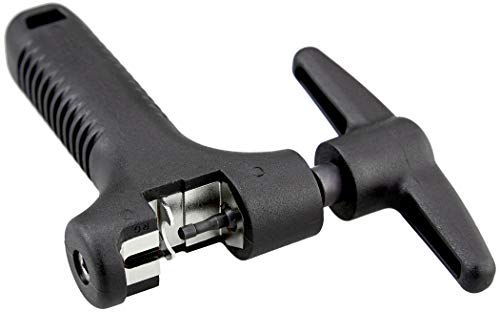
Shimano’s TL-CN28 is an OEM chain breaker compatible with 6–11 speed chains. It provides everything a home mechanic needs. The smooth pin-pushing action makes failed cuts unlikely.
Chain replacement happens once or twice a year, but even at that frequency this tool earns its keep. It’s more compact than professional versions and easy to store — ideal for home use.
④ParkTool SW-42 Spoke Wrench | 4-Sided Grip Design for Alloy Nipples
メナWheel truing feels intimidating at first, but simply owning a spoke wrench gives you a completely different sense of confidence — you know you can manage an emergency fix. The first step is getting the tool.


| Brand | ParkTool |
| Model | SW-42 |
| Compatibility | JIS #14/15 nipples |
| Features | 4-sided grip, minimal damage to alloy nipples |
| Use | Wheel truing, spoke tension adjustment |
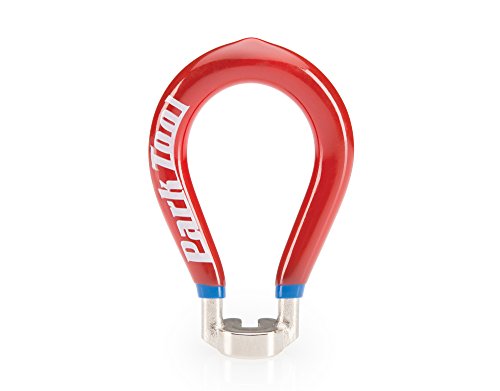
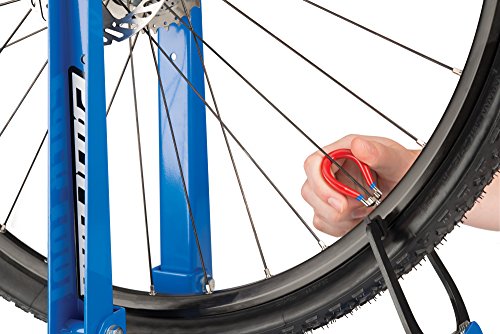
ParkTool’s SW-42 grips all four faces of the nipple, minimising damage to alloy nipples. It fits JIS #14/15 — the nipple size found on most domestic Japanese wheels.
Pair it with a truing stand and your wheel-building skills will improve steadily. Even if you’re not ready to do full truing yet, having the wrench means you can handle emergency spoke adjustments at any time.
⑤Shimano TL-CN42 Chain Wear Indicator | Preventive Maintenance to Protect Your Cassette
メナReplacing a cassette can cost over 10,000 yen. Catching chain wear early and replacing it for around 3,000 yen is a completely different story. This tool pays for itself every time you use it.

| Brand | Shimano |
| Model | TL-CN42 |
| Use | Chain wear measurement |
| Method | Roller-inner measurement (high accuracy) |
| Reading | Simply insert — immediate go/no-go result |
| Features | Compact, very easy to use |
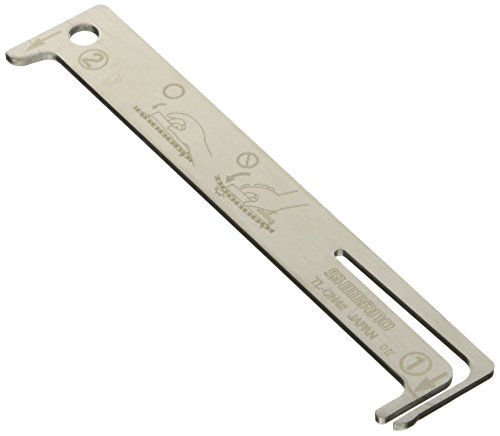
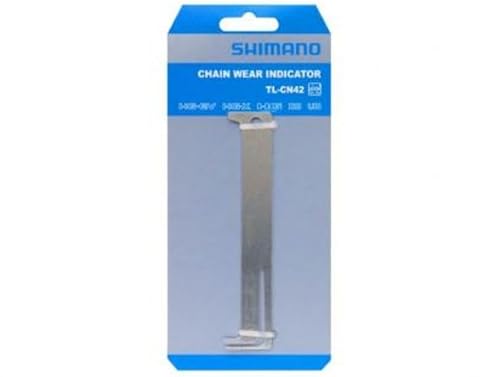
Shimano’s TL-CN42 judges chain wear not as a number but as a simple pass/fail. Because it measures from the roller inner surface rather than the outer, it’s considered highly accurate and isn’t thrown off by external roller wear.
To use it, just drop the gauge onto the chain — you’ll know immediately whether it’s time to replace. A quick check a few times a year is all it takes. Running a worn chain accelerates cassette wear rapidly, turning a 3,000-yen chain replacement into an over-10,000-yen cassette job.
⑥ParkTool PW-4 Professional Pedal Wrench 15 mm | 400 mm Handle Conquers Seized Pedals
メナPedals are almost always seized, and a short handle simply can’t generate the torque you need. The PW-4’s 400 mm handle lets you put your whole body weight into it without the tool giving way.

| Brand | ParkTool |
| Model | PW-4 |
| Size | 15 mm |
| Handle length | 400 mm (high-torque capable) |
| Features | Pro-grade, handles seized pedals |
| Note | Drive-side (right) pedal is reverse-threaded |
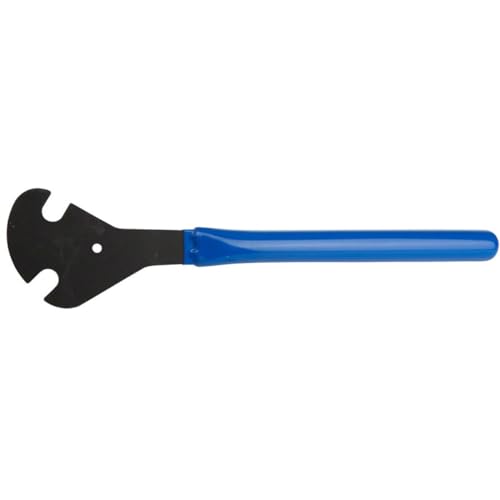
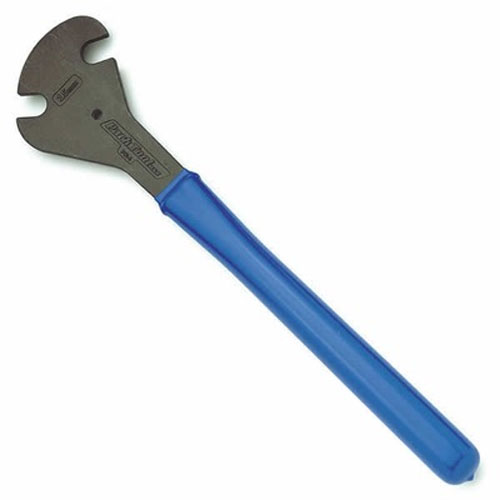
ParkTool’s PW-4 features a long 400 mm handle that lets you apply substantial torque with ease. Pedals tighten themselves further under pedalling forces, so removing them can require serious effort.
This is a shop mechanic’s tool — handle length is directly proportional to leverage. Remember: the drive-side (right) pedal is reverse-threaded, so turn clockwise to remove it.
⑦Topeak JoeBlow Max HP Floor Pump (160 psi) | 3-Valve Compatible with Large Gauge
メナThe JoeBlow series reminds me every time I use it just how important tyre pressure management is. Since I started checking the pressure for two minutes before every ride, punctures have dropped noticeably.

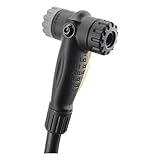


| Brand | Topeak |
| Model | JoeBlow Max HP |
| Max pressure | 160 psi (~11 bar) |
| Valve compatibility | Presta, Schrader, Dunlop (twin-head, no swap needed) |
| Gauge | Large dial pressure gauge |
| Use | Road bikes to MTB fat tyres |
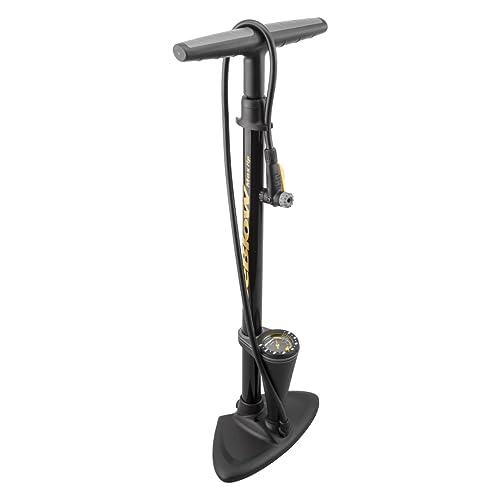
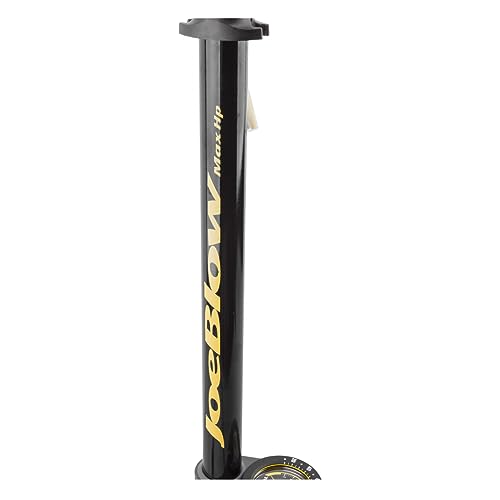
Topeak’s JoeBlow series is the benchmark for floor pumps. The Max HP handles up to 160 psi, covering everything from road bike clinchers to MTB fat tyres.
The twin-head fits Presta, Schrader, and Dunlop valves without swapping adapters. The large, easy-to-read pressure gauge makes accurate inflation simple. Just building the habit of checking pressure before every ride will dramatically reduce puncture frequency.
⑧Topeak ComboTorq Wrench & Bit Set (3–12 Nm) | Essential Torque Control for Carbon Parts
メナThe first time I used a torque wrench — when I was fitting a carbon handlebar — I was worried by how soon it stopped. But that was the right torque. The experience taught me just how important it is to stop trusting feel alone.
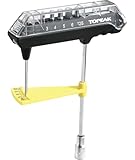

| Brand | Topeak |
| Model | ComboTorq Wrench & Bit Set |
| Torque range | 3–12 Nm |
| Included bits | Hex and Torx |
| Use | Torque management for carbon parts |
| Target parts | Handlebar, stem, seatpost |
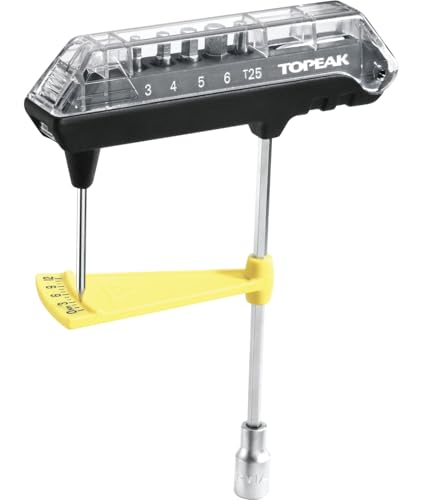
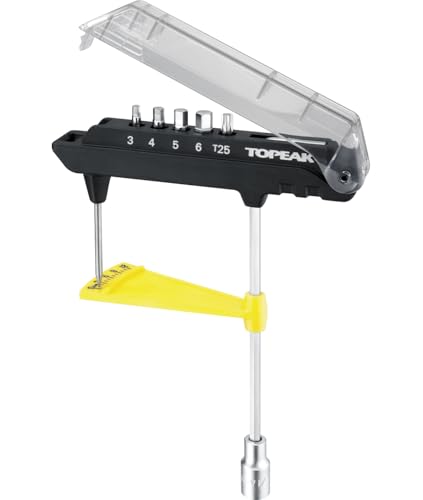
Topeak’s ComboTorq is an entry-level torque wrench with a 3–12 Nm range. It ships with the bits you’ll use most (hex and Torx), so you can start using it on carbon parts straight out of the box.
It handles carbon handlebar clamps, stems, and seatpost bolts. Carbon components can fracture without the usual tactile warning of over-torquing, so there are more situations requiring a torque wrench than you might expect.
⑨ParkTool CN-10C Professional Cable Cutter | Dedicated Design for Clean Cut Ends
メナThe difference between a cable cutter and ordinary pliers becomes obvious the moment you try one. A clean cut end makes feeding the cable through housing dramatically easier. One experience is enough to convince you of the need for a dedicated tool.


| Brand | ParkTool |
| Model | CN-10C |
| Features | Cuts inner and outer cable + crimps end caps |
| Blade design | Bypass blades (prevents crushed ends) |
| Use | Brake and shift cable cutting |
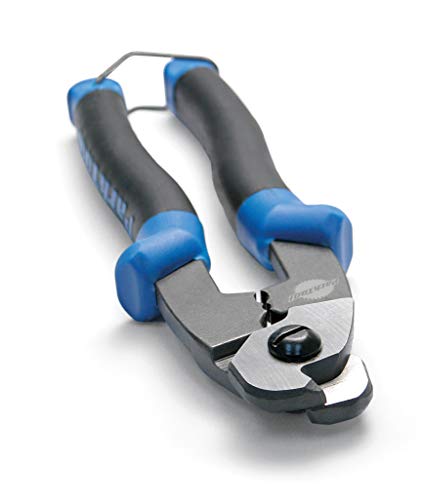
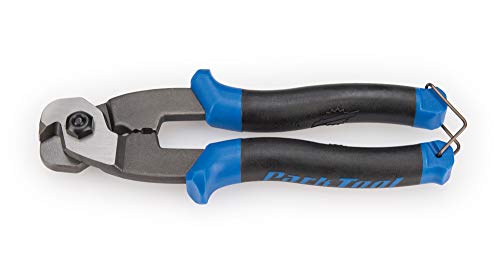
ParkTool’s CN-10C uses a bypass blade design that produces clean cut ends on both inner cable and outer housing. The same tool also crimps end caps.
Once you can re-run brake cables yourself, you gain the ability to dial in lever feel exactly to your preference. Cable is a consumable, so having a tool that handles the annual replacement is well worth it.
⑩Topeak PrepBox Bicycle Tool Kit (18-piece) | The All-in-One Starter Set for Home Mechanics
メナThere’s real comfort in having a complete tool kit. But as you use the individual pieces you’ll start thinking “I wish this hex key had a bit more precision” — and that’s the gateway to buying proper branded tools one by one.


| Brand | Topeak |
| Model | PrepBox |
| Contents | 18-piece set |
| Storage | Dedicated carrying case |
| Target user | Entry-level home mechanic |
| Includes | Hex keys, chain breaker, combination wrench, etc. |
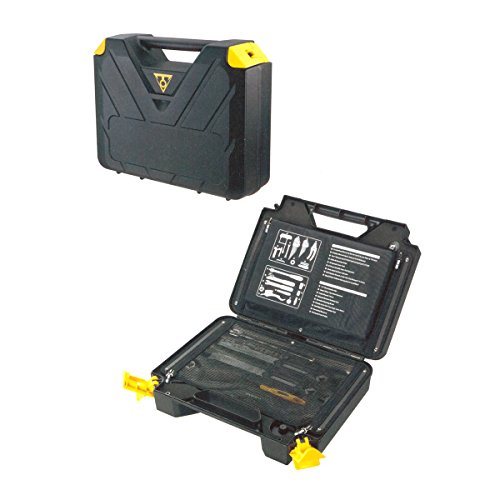
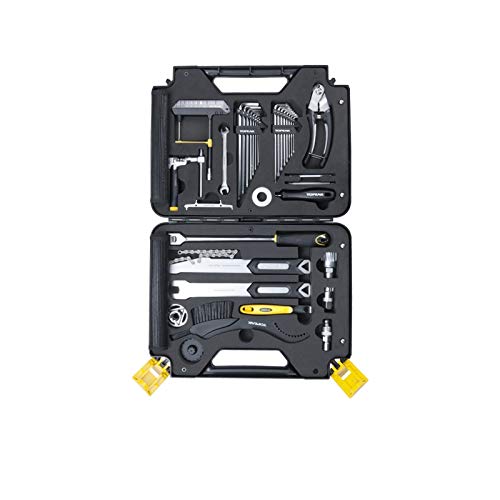
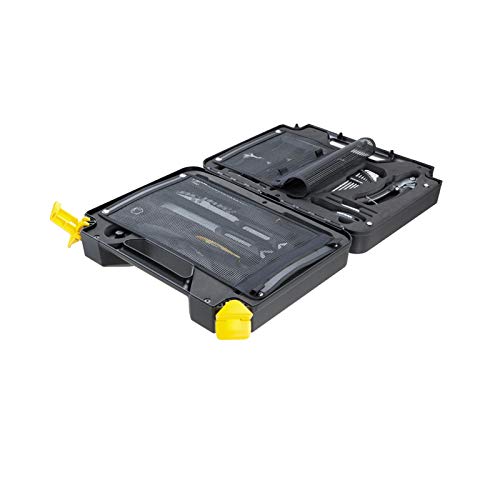
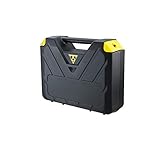
Topeak’s PrepBox is a 18-piece home-mechanic tool kit that comes in a dedicated storage case with hex keys, a chain breaker, combination wrenches and more — a good way to get an overview of what you need.
That said, individual tools in a kit are generally inferior to branded single items in precision. The practical approach is to use the kit to learn what each tool does, then swap out the ones you reach for most with high-quality replacements.
How to Choose Bicycle Maintenance Tools | Guide by Use Case
Match your tools to your maintenance goals and bike type. Here is a breakdown by task category.
Choosing Hex Keys
Hex keys are the most-used tool in bicycle maintenance. A single set covering 1.5 mm–10 mm handles virtually every bolt on the bike. Choosing a round-out-resistant design like the Wera Hex-Plus dramatically reduces mistakes on carbon parts and alloy bolts.
Choosing Chain Tools
Chain management is the heart of bicycle maintenance. Use the TL-CN42 (chain checker) to monitor wear regularly, then replace with the TL-CN28 (chain cutter) when the time comes. These two tools directly extend cassette life and reduce long-term costs.
Working with Carbon Parts
If you’re working with a carbon frame, handlebar, or seatpost, a torque wrench (Topeak ComboTorq) is non-negotiable. Over-tightening risks fracture; under-tightening risks the part slipping under load. Working to the specified torque is the foundation of safe maintenance.
Tyre Pressure Management
Road bikes need 6–9 bar (90–130 psi) — well beyond what a hand pump can achieve reliably. Having a floor pump (Topeak JoeBlow Max HP) at home is the standard solution. Checking pressure before every ride is the single habit that most reduces puncture frequency.
Frequently Asked Questions (FAQ)
Q. What tools should I buy first for bicycle maintenance?
A. Start with three items: ①hex key set (Wera 950/9), ②tire levers (ParkTool TL-1.2C), and ③floor pump (Topeak JoeBlow Max HP). These three cover puncture repair and basic adjustment work. Add a chain breaker and chain wear indicator as your next step.
Q. What is the difference between ordinary hex keys and Wera?
A. The contact area difference from the Hex-Plus profile is the key distinction. A standard hex concentrates force on the corner “points” of the bolt — making it prone to rounding. Wera’s Hex-Plus distributes force across the entire face, significantly reducing mistakes on alloy and carbon parts. Once you try it, you won’t want to go back.
Q. How often should I replace my chain?
A. Every 3,000–5,000 km is a rough guide, but it varies greatly with conditions (wet riding, maintenance frequency). Checking regularly with the TL-CN42 (chain wear indicator) is the most reliable method. Running a worn chain accelerates cassette wear rapidly — a 3,000-yen chain replacement becomes an over-10,000-yen cassette job.
Q. Do I need a torque wrench even without carbon parts?
A. For carbon parts it’s essential; for alloy parts it’s reassuring to have one. Carbon handlebars, seatposts, and stems in particular can fracture if over-torqued. The Topeak ComboTorq covers 3–12 Nm at a reasonable price — it’s the ideal first torque wrench.