
 メナ
メナHey there — I’m Mena (@menachite), a hybrid engineer who handles both mechanical and electrical work. Today I’m comparing noise-cancelling true wireless earbuds across the price spectrum, from entry-level to flagship.
Affiliate Disclosure: This article contains affiliate links. If you make a purchase through these links, we may earn a commission at no additional cost to you.
A lot of people aren’t sure how much ANC performance actually changes between a budget model and a premium one. The short answer: the higher the price, the more types and volumes of sound get cancelled, up to and including low-frequency drone like an airplane engine. I’ll get into why below.
This comparison covers 9 models spanning roughly $80 to $330, from Sony, Apple, JBL, Bose, Anker Soundcore, final, and Google. I’m looking at ANC strength, sound quality, fit, and price to help you figure out how much you actually need to spend.
One standout worth calling out up front: the JBL Tour Pro 3, whose biggest feature is a touchscreen built right into the charging case, letting you check and control things without opening the lid.
Bottom Line: Best Pick by Use Case
Here’s the short version. Want to try ANC cheaply? Anker Soundcore P42i. Sound quality above all? final ZE3000 SV. Want Sony’s reputation at a lower price? WF-C710N. Deep in the JBL case’s touchscreen experience? Tour Pro 3. Want iPhone integration front and center? AirPods Pro 3. Won’t compromise on ANC or sound? WF-1000XM6 or Bose QuietComfort Ultra Earbuds.
| Product | Focus | Price (approx.) | Best for |
|---|---|---|---|
| Anker Soundcore P42i | Entry ANC, compact | ~$80 | Trying ANC affordably |
| final ZE3000 SV | Sound-quality-first ANC | ~$100 | Prioritizing sound quality |
| Sony WF-C710N | Budget Sony ANC | ~$120 | Sony quality at a lower price |
| Anker Soundcore Liberty 5 | Dolby Audio ANC | ~$130 | Wanting spatial sound too |
| Google Pixel Buds Pro 2 | Android-optimized ANC | ~$180 | Android / Pixel users |
| Bose QuietComfort Ultra Earbuds (2nd Gen) | ANC-focused flagship | ~$280 | Prioritizing ANC performance above all |
| Apple AirPods Pro 3 | iPhone-optimized flagship | ~$250 | Prioritizing iPhone integration |
| JBL Tour Pro 3 | Touchscreen case ANC | ~$250 | Wanting a unique case experience |
| Sony WF-1000XM6 | Industry-leading ANC | ~$330 | Wanting the best ANC and sound available |
9 Noise-Cancelling Earbuds Compared
Anker Soundcore P42i True Wireless Earbuds (Adaptive ANC, LDAC)

 メナ
メナBoth the earbuds and case shrank from the P40i, and ANC jumped to generation 3.5. Getting LDAC at this price genuinely surprised me.
The Soundcore P42i is the successor to the best-selling P40i. Adaptive noise cancellation moved from 2.0 to 3.5, automatically tuning ANC strength to your surroundings and how the earbuds fit. It’s under $80 and now supports the LDAC codec.
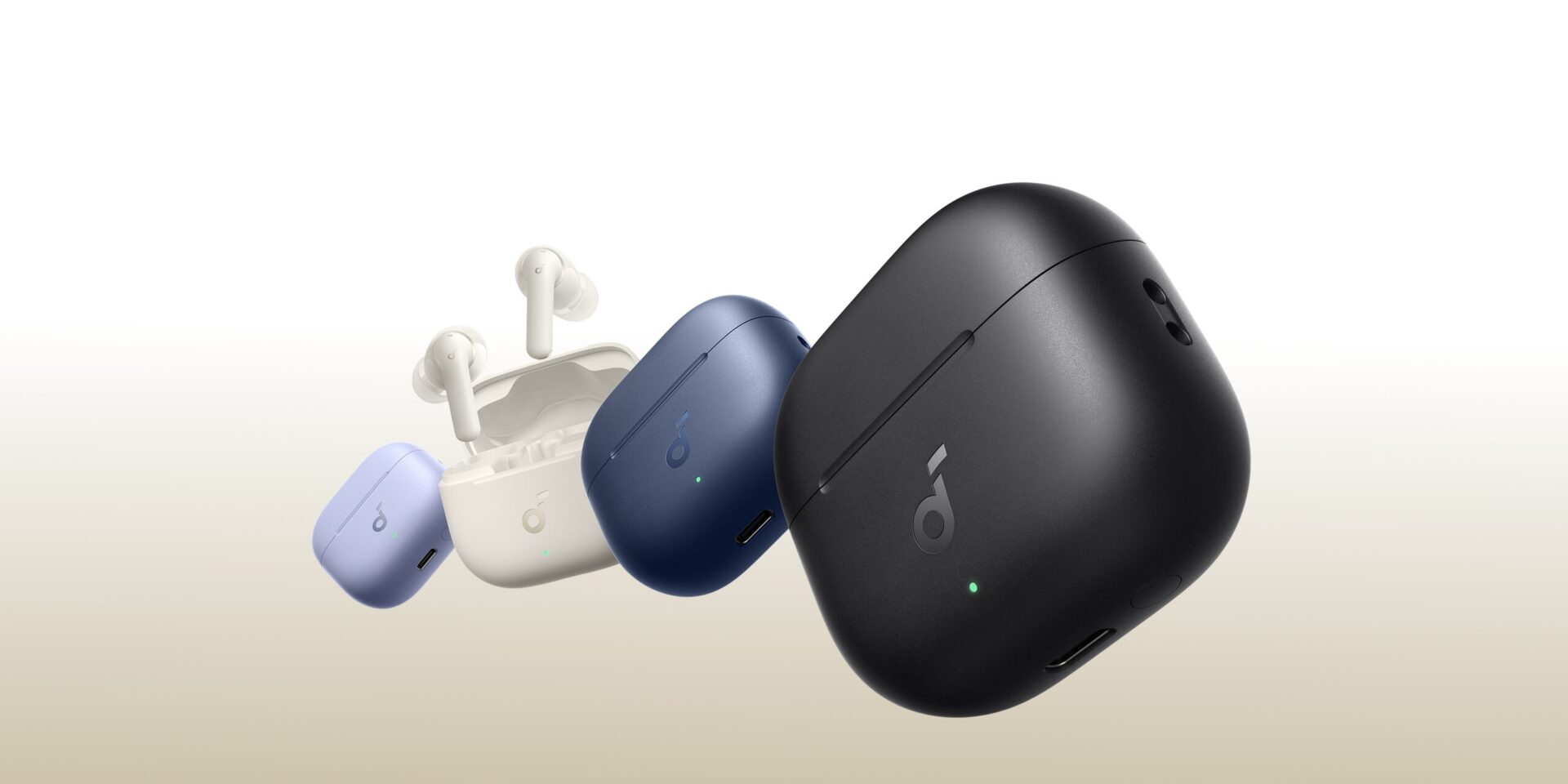
Honestly, ANC here tops out at “noticeably softens train noise” — it won’t fully cancel airplane engine drone the way Sony’s flagship does. Keep expectations calibrated to the price.

Lightweight and comfortable for long wear, this is a solid pick if you want an affordable way into ANC or a backup pair you don’t stress about.
final ZE3000 SV True Wireless Earbuds (Hi-Res, ANC)
メナfinal’s signature clean, detailed sound is genuinely hard to believe at this price. If sound quality is your top priority, give these a listen.
The final ZE3000 SV comes from final, a company that makes nothing but audio gear. It’s tuned for vocal and instrument clarity with Hi-Res support, built for people who want to prioritize sound quality above all else.
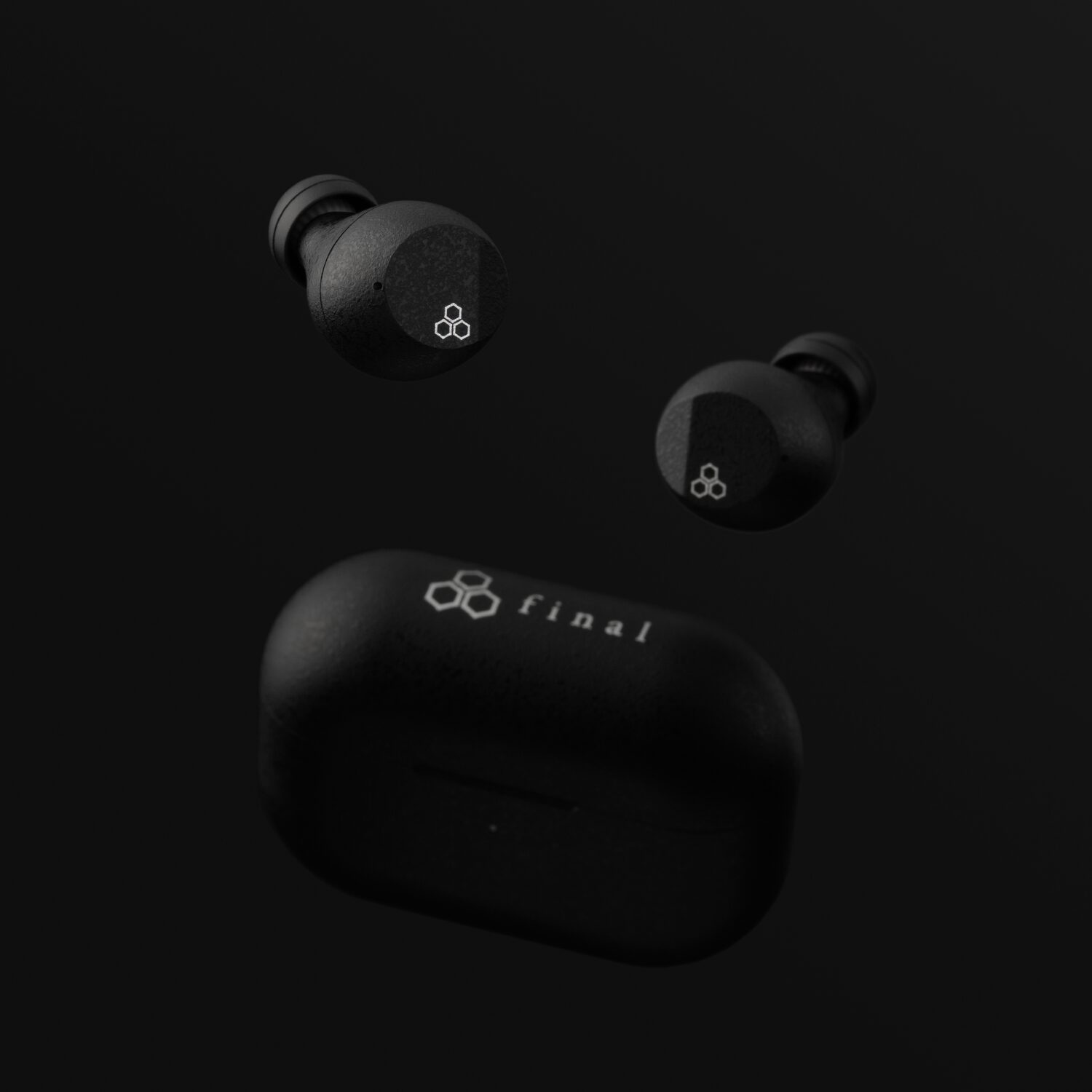
It does have ANC, but honestly it’s not in the same league as Sony’s flagship-tier cancellation — think of it as a sound-quality-first model with ANC as a bonus, not the other way around. If you want to fully block train noise, look elsewhere.
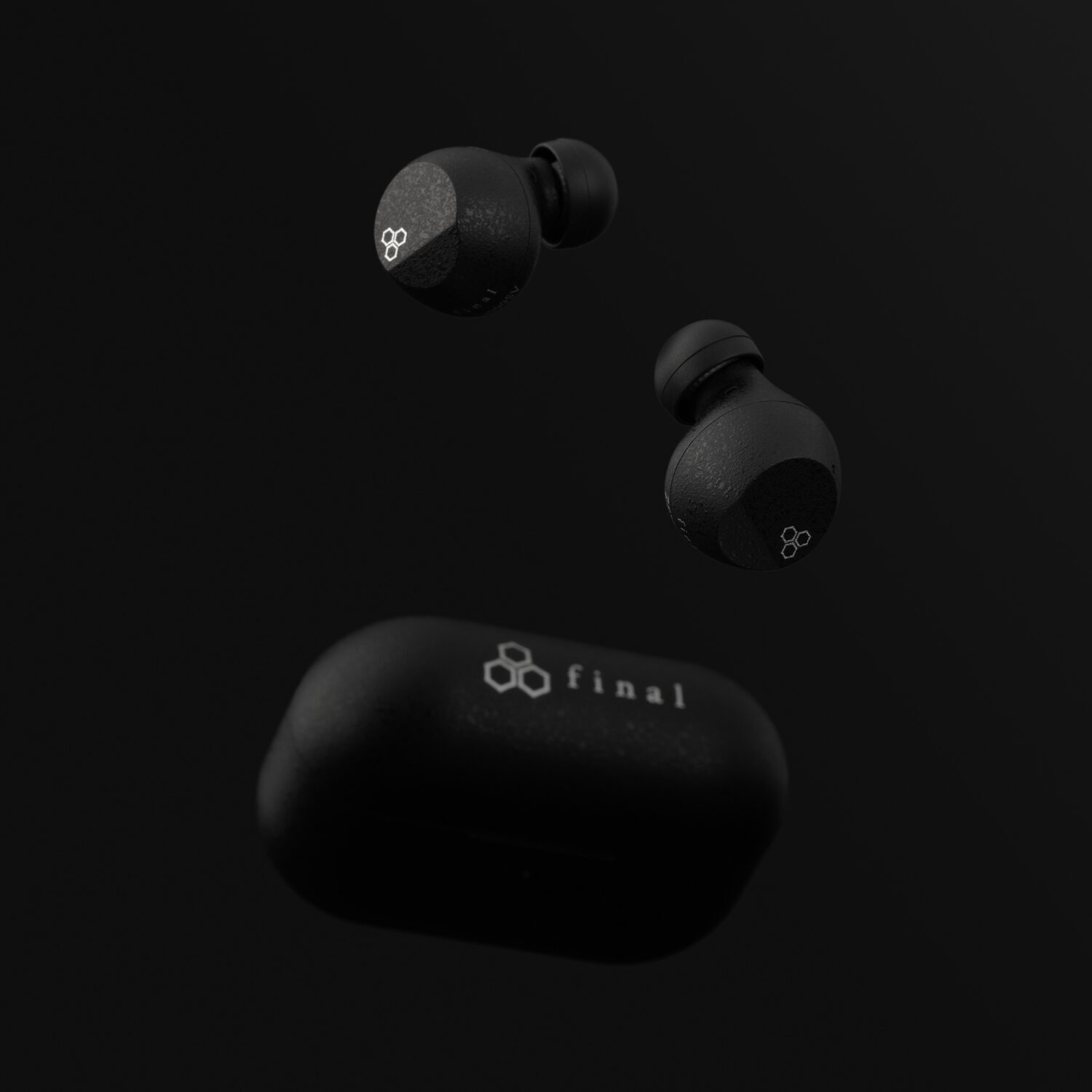
Physical-feeling push controls instead of touch sensors mean fewer accidental taps too — a nice bonus if you want both great sound and usable ANC in one pair.
Sony WF-C710N True Wireless Earbuds (ANC, Multipoint)
The Sony WF-C710N is a budget ANC model that inherits noise cancellation processing from Sony’s higher-end lineup, delivering surprisingly strong ANC for the price.
Honestly, the driver unit is simplified compared to Sony’s flagship, so low-end weight is noticeably lighter than a true flagship pair. Think of it as “Sony-quality ANC at an accessible price,” not a flagship in disguise.

Multipoint connection lets you stay linked to your PC and phone at once, which is handy if you’re switching between calls and music during the workday. A solid pick if you want Sony’s ANC reputation without flagship pricing.
Anker Soundcore Liberty 5 True Wireless Earbuds (Dolby Audio, ANC)
 メナ
メナThe previous Liberty 4’s heart-rate sensor was a fun gimmick, but Liberty 5 drops it entirely to focus on ANC and sound. The added dimensionality from Dolby Audio is a genuine step up.
The Soundcore Liberty 5 is Soundcore’s first true wireless model with Dolby Audio support. Adaptive noise cancellation also moved from 2.0 to 3.5, and supported content gets a noticeably wider, more spatial sound.
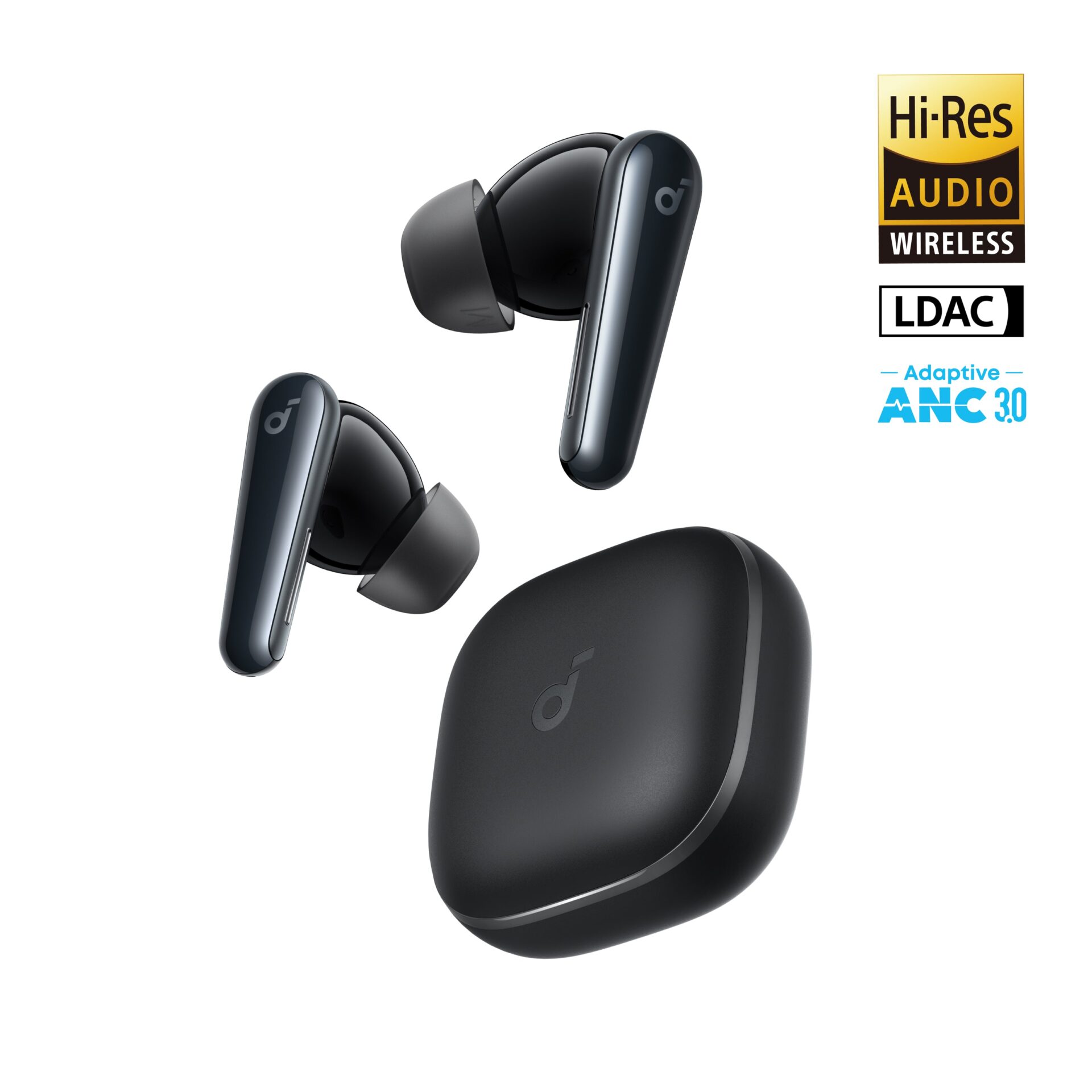
The heart-rate sensor in the case from the previous Liberty 4 is gone here — a genuine step back if you picked that model for workout tracking. This is a shift toward prioritizing ANC, sound, and spatial audio over fitness features.
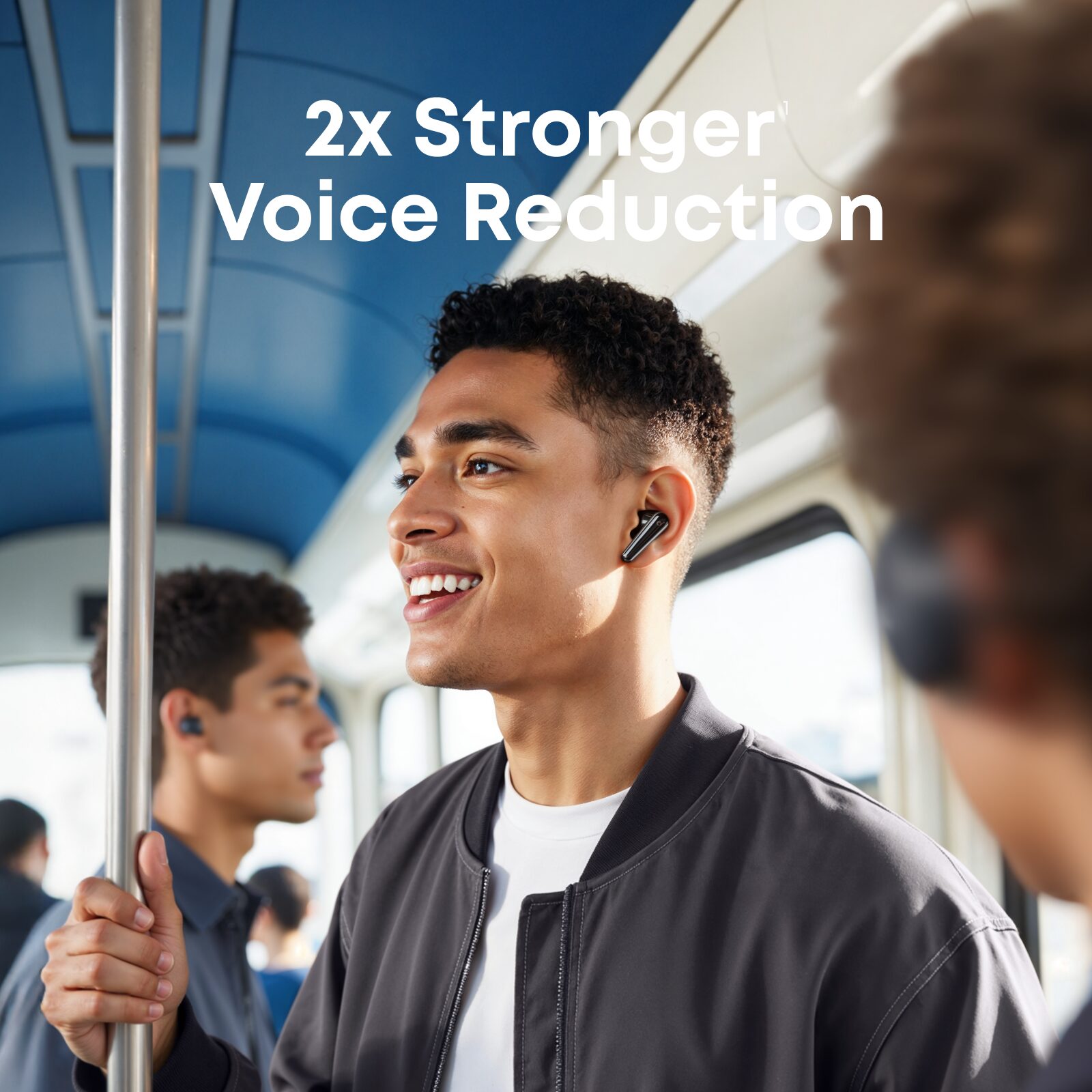
ANC trails Sony’s top-tier models but is plenty practical in the low-$30s range. A good pick if you want spatial sound from Dolby Audio content plus dependable everyday ANC.
Google Pixel Buds Pro 2 True Wireless Earbuds (Tensor A1, ANC)
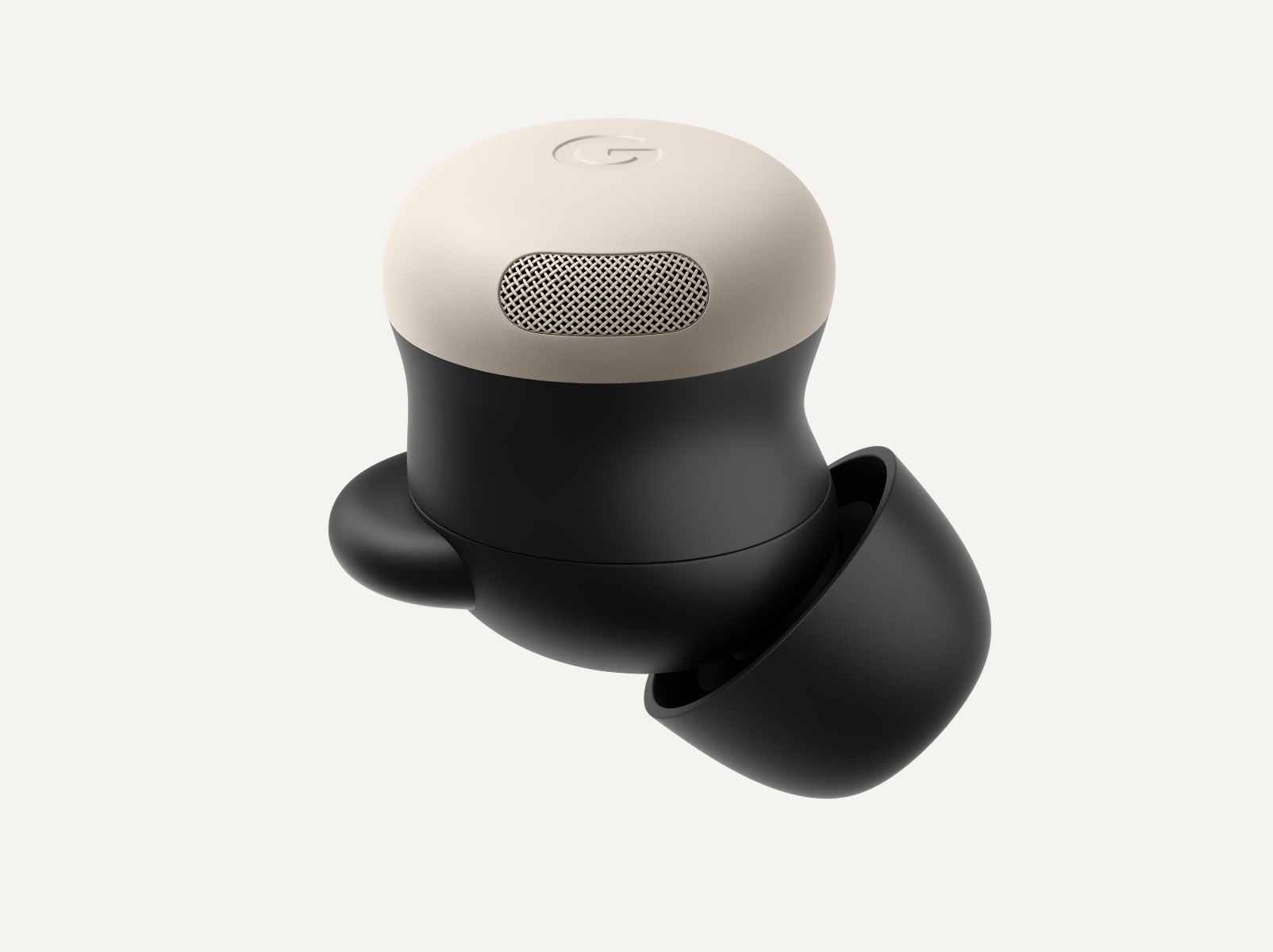
Google Pixel Buds Pro 2 runs on Google’s own Tensor A1 chip. Noise cancellation is rated at roughly double the previous model, and beamforming mics plus a wind-reducing mesh cover boost call quality too.
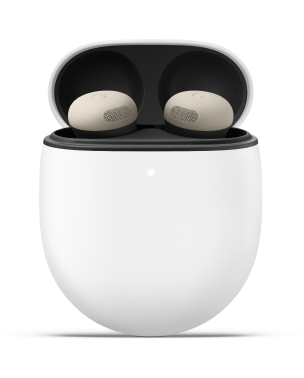
The ear tips are designed from over 4.5 million ear-shape data points, and a rotating adjustable arch improves fit during workouts. They work fine with any Android phone, but the real payoff — Gemini AI voice assistant integration and the AirPods-like ecosystem features — is Pixel-exclusive. Most of that integration is unavailable on iPhone.
Priced a bit below true flagship territory, this is a strong pick for Android users hunting for serious ANC earbuds, especially if you’re already on a Pixel phone.
Bose QuietComfort Ultra Earbuds (2nd Gen)
メナBose’s long history as an ANC specialist shows — the way it ‘erases’ surrounding sound feels distinctly different from Sony or Apple. The AI noise suppression on calls is quietly excellent too.
The Bose QuietComfort Ultra Earbuds (2nd Gen) is the flagship from Bose, a company with decades of dedicated ANC expertise. “ActiveSense” auto-adjusts ANC strength to your environment, while “CustomTune” calibrates sound and fit to your ears.
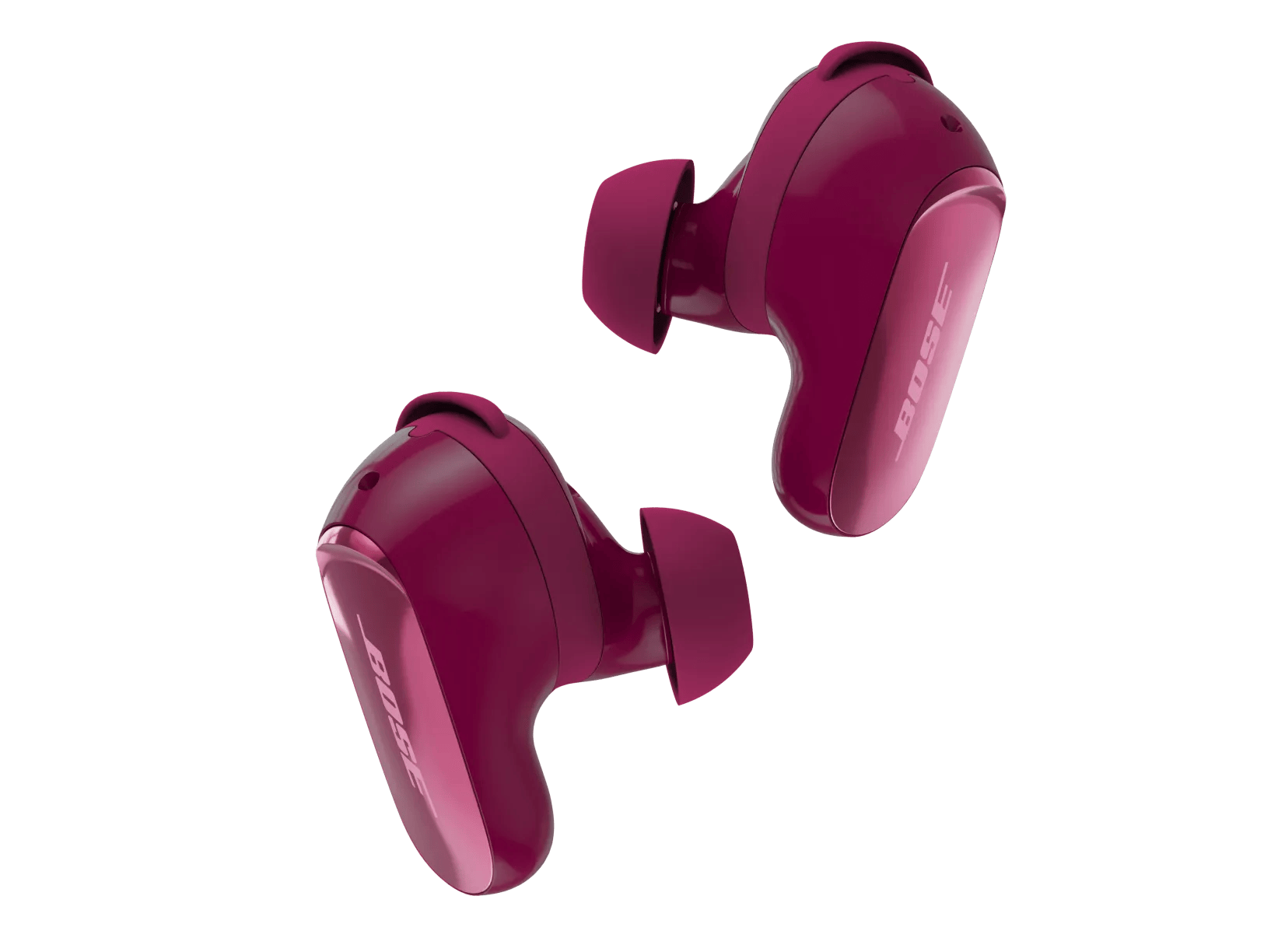
Calls use AI background-noise suppression to isolate your voice, and “Cinema Mode” adds a movie-like immersive feel. It skips hi-res codecs like LDAC entirely, supporting only SBC/AAC/aptX/aptX Adaptive — audiophiles chasing hi-res may find that a genuine limitation.

Battery life shortens further with Immersive Audio engaged, so keep an eye on charge during long outings. Best for anyone who wants ANC performance as the single top priority.
Apple AirPods Pro 3 (Live Translation, Heart Rate)
メナLive Translation sounded like a gimmick I’d never use — but on an actual business trip abroad it turned out to be quietly useful. For iPhone users this is an easy first pick.
Apple AirPods Pro 3 is the freshly announced flagship. Apple states noise cancellation is up to 2x stronger than the previous AirPods Pro (2nd gen), and up to 4x versus the original. New ultra-low-noise mics and a foam-plus-silicone ear tip improve passive isolation too.
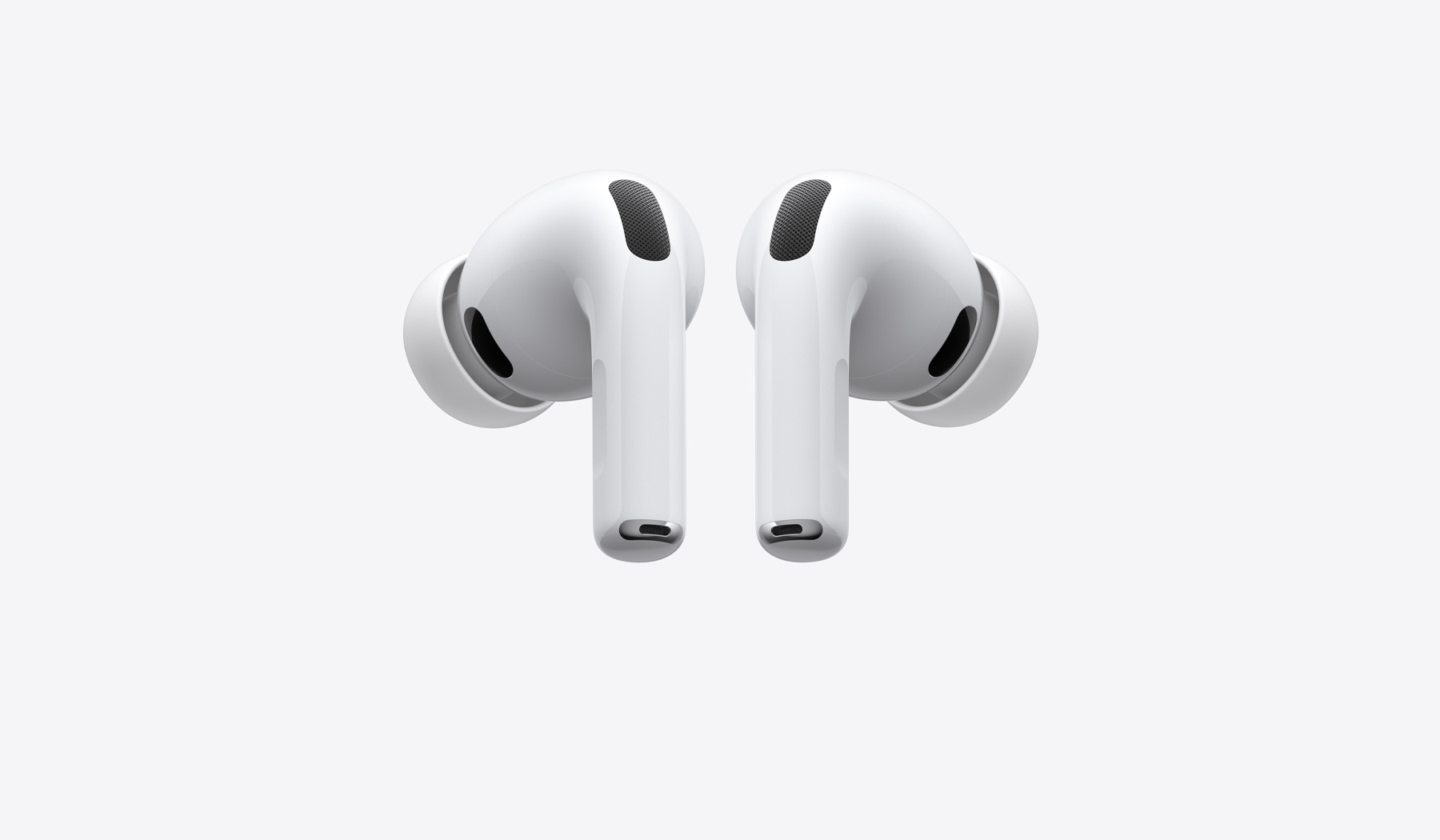
New heart-rate sensing, live translation, and hearing-assist features push this past “just an earbud” into health and communication device territory. All of that is built around iPhone integration — using them with Android means missing out on most of these extras.

A redesigned shape improves stability for running and lifting. The clear pick if you’re deep in the Apple ecosystem and want the newest features first.
JBL Tour Pro 3 True Wireless Earbuds (Smart Charging Case)
メナChecking a track name or a notification without flipping the case lid open is more useful in practice than it sounds — I noticed myself reaching for my phone a lot less on the train.
JBL Tour Pro 3 is the most unique model here, with a touchscreen built into the charging case itself. You can check track info, adjust volume, switch ANC modes, and view notifications without opening the case lid — the screen is about 29% larger than the previous Tour Pro 2.
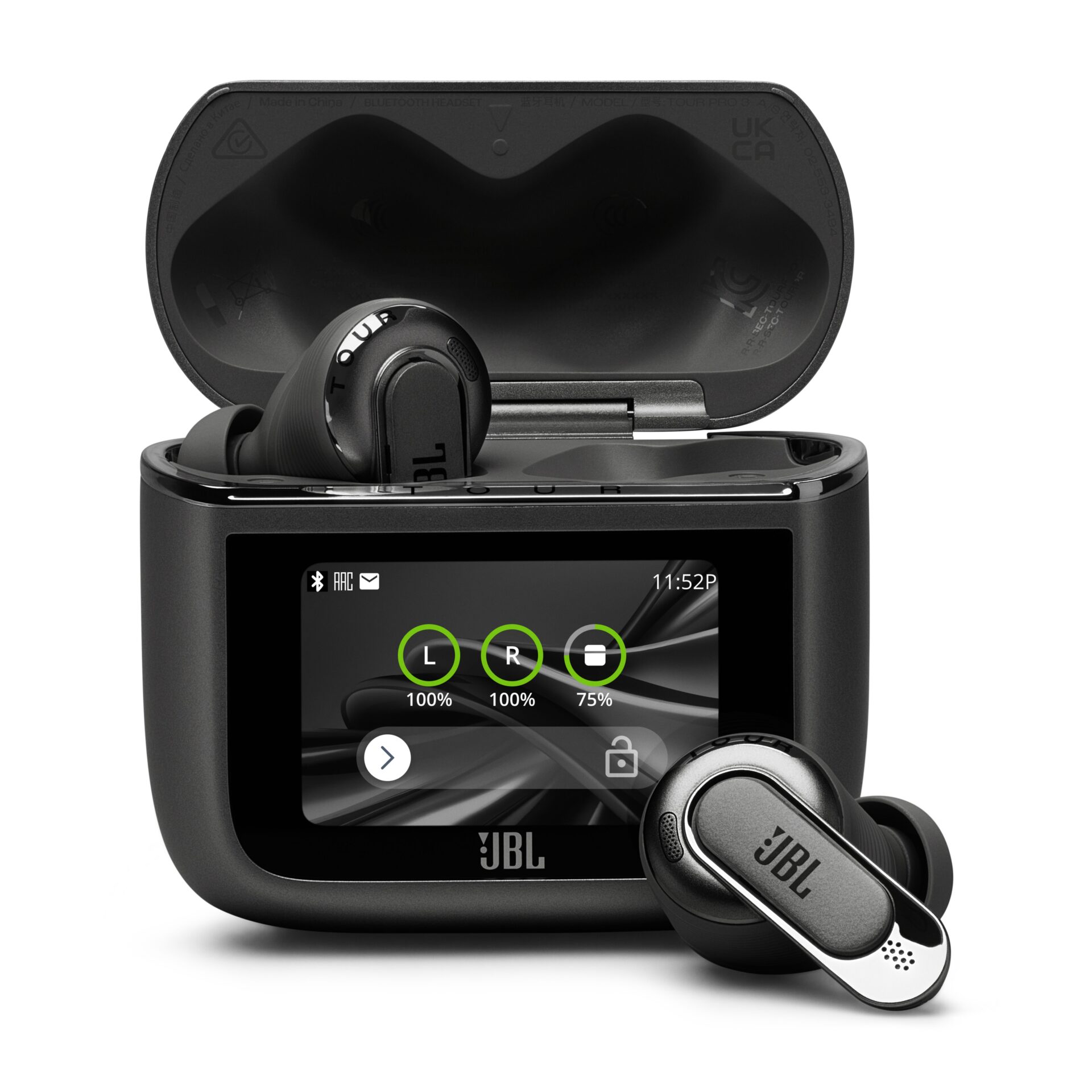
A dual-driver setup (dynamic + balanced armature) pairs with hybrid ANC. The touchscreen case adds real bulk and weight, though, so if compact and light is your priority, this isn’t the pick.
Multipoint connection is supported too, handy for switching between PC and phone. Best for anyone bored of same-y competitors and drawn to the case’s near-future interaction model.
Sony WF-1000XM6 True Wireless Earbuds (Flagship ANC)
メナThe ANC that fully tames even engine drone on a flight genuinely impresses me every time I use these on a business trip. With four mics per side (eight total) now, it’s noticeably quieter than before.
Sony WF-1000XM6 is the industry-leading ANC flagship. A newly developed integrated processor (“QN3e”) paired with a boosted 4-mic-per-side array (up from 3, 8 total) significantly cuts ambient noise across trains, planes, and offices.
The design also moved from the classic round shape to an elongated pill shape for both case and earbuds — fit will feel different if you were used to the old round shape, and some people notice the difference immediately. Honestly, this is also the most expensive model in this lineup, which may be overkill if you just want basic ANC.

Standard support for next-gen Bluetooth (LE Audio, LC3, Auracast) means more benefit as compatible devices spread. The most serious, no-compromise pick here if price isn’t a concern.
ANC Basics: How to Read the Specs
First, how ANC (Active Noise Cancellation) actually works. Modern earbuds use “hybrid ANC,” combining a “feedforward” mic on the outside that predicts incoming ambient noise, with a “feedback” mic on the inside that detects what actually reaches your eardrum and corrects for it. More microphones and a more capable processing chip generally mean a wider range of frequencies and volumes get cancelled — which is why the Sony WF-1000XM6’s 4-mic-per-side (8 total) array tends to reach further into low-frequency train and airplane noise as price goes up.
Next, Bluetooth codecs. The three main options are standard SBC, AAC (common on iPhone), and LDAC (up to 990kbps, high-resolution transmission on Android with a compatible app). A common point of confusion: even if a pair supports LDAC, iPhone falls back to AAC and won’t get the benefit, and on Android you still need the right app settings. Note that Bose’s QuietComfort Ultra Earbuds in this roundup uses aptX Adaptive instead of LDAC.
Driver design varies too. Standard dynamic drivers are strong on bass reproduction, and some models like final’s ZE3000 SV use a proprietary larger-diameter driver (6mm to 10mm) for even more low-end presence — bigger diameter generally means more bass output. Others, like the Sony WF-1000XM6’s 8.4mm driver or the JBL Tour Pro 3’s dual-driver setup, boost resolution through processor and driver combinations rather than diameter alone.
Finally, water resistance (IP ratings). IPX4 is a “splash resistant from any direction” everyday standard — fine for sweat or light rain, but not submersion-rated. IP55 (used by the Soundcore P42i, Liberty 5, and JBL Tour Pro 3 in this roundup) adds a first digit for dust resistance and a stronger second digit for jet-spray resistance (roughly shower-level). AirPods Pro 3’s IP57 goes a step further, though Apple itself frames it as suited for exercise rather than swimming — none of these are submersion-rated. IPX4+ is a reasonable minimum for running, and IP55+ if you’re expecting outdoor rain exposure.
One more growing trend: expanded functionality in the case itself and ecosystem integration. The JBL Tour Pro 3 builds a touchscreen into the charging case for lid-closed control and notifications. Apple AirPods Pro 3 unlocks live translation and heart-rate sensing when paired with iPhone, while Google Pixel Buds Pro 2 unlocks Gemini AI integration with Android/Pixel. Beyond raw sound quality and ANC, “how well it works with the phone you already carry” is an increasingly important axis to weigh.
Buying Notes
ANC performance varies a lot by what kind of noise you’re trying to block. If you need to tame low-frequency drone like trains or airplanes, look at the Sony WF-1000XM6 or Bose QuietComfort Ultra Earbuds tier. If office chatter fading into the background is enough, an entry-level model will satisfy you.
Fit varies a lot person to person in this category. Where possible, try them on in person at a store before buying to check comfort.
FAQ
Q. Does ANC performance scale directly with price?
A: Not perfectly linearly, but generally yes — higher price tends to mean more microphones and more capable processing, which widens the range of frequencies and volumes that get cancelled. Comparing the P42i (~$80) and WF-1000XM6 (~$330) in this lineup, the practical difference is roughly “train noise gets softened” versus “airplane engine drone gets properly cancelled.”
Q. What’s the difference between IPX4 and IP55? Can I get these wet in the rain or shower?
A: IPX4 is everyday splash resistance from any direction. IP55 adds dust resistance and stronger jet-spray resistance (roughly shower-level). AirPods Pro 3’s IP57 goes further still, but none of these are submersion-rated — showering, swimming, or dropping them in water isn’t covered.
Q. Does LDAC work on any pair of earbuds?
A: No — LDAC only delivers its benefit on an Android device with a compatible app. On iPhone, connections fall back to AAC regardless of whether the earbuds support LDAC. Note that Bose’s QuietComfort Ultra Earbuds in this roundup uses aptX Adaptive instead of LDAC.
Q. What is multipoint connection?
A: It lets one pair of earbuds stay connected to two devices at once — a laptop and a phone, for example — so you can take a call notification on one while still playing audio from the other. Handy if you’re bouncing between a work laptop and your phone. The WF-C710N and JBL Tour Pro 3 in this roundup both support it.
Q. How do I pick earbuds that won’t hurt my ears?
A: Fit varies a lot person to person, so trying them on in a store is the most reliable approach. As a general rule, lighter earbuds (like the P42i) and models with a wide range of ear tip sizes tend to be more comfortable for long wear.
Q. How much does battery life change with ANC on versus off?
A: It varies by model, but as an example, the WF-C710N runs about 8.5 hours on the earbuds alone with ANC on, versus up to 12 hours with ANC off. Turning ANC off in quiet indoor settings where you don’t need it stretches battery life.
Q. Can I use just one earbud at a time?
A: Yes — all 9 models in this roundup are true wireless earbuds, so either side can be used independently. Handy for call-focused use if you want to conserve battery by running single-earbud.
メナComparing 9 models really drove home that ANC performance climbs in steps with price. Multipoint connection support is also spreading fast, driven by people wanting to switch between work calls and music on the go.
Conclusion
We compared 9 ANC true wireless earbuds across noise cancellation, sound quality, fit, and price. Even under $100 you can get genuinely usable ANC, and in the $300+ tier you get industry-leading cancellation plus extras like touchscreen cases, heart-rate sensing, and AI translation.
If you just want to try ANC affordably, start with the Anker Soundcore P42i. If you want sound quality as the top priority, the final ZE3000 SV. If you want Sony’s reputation without flagship pricing, the WF-C710N or WF-1000XM6. If you want the case’s touchscreen experience, the JBL Tour Pro 3. And if iPhone or Android integration matters most, the AirPods Pro 3 or Pixel Buds Pro 2.