
Affiliate Disclosure: This article contains affiliate links. If you make a purchase through these links, we may earn a commission at no additional cost to you.
 Mena
Hey there, this is Menachite (@menachite), a hybrid engineer who handles both mechanical and electrical work. Today I’m comparing reciprocating saws (also called sabre saws). I picked only real, currently sold models that hold up on demolition and renovation jobsites.
If you’re shopping for a reciprocating saw, it’s easy to get lost in how motor voltage class and vibration-reduction mechanisms actually translate into real-world work. The short answer: pick a high-power 36V-class saw for heavy demolition work, and a compact 18V-class saw if portability and handling matter more. I’ll explain why below.
This roundup compares five products across five brands: HiKOKI, Makita, Bosch, DEWALT, and Milwaukee. Looking at power output, vibration-reduction design, and included accessories tells you which one actually fits your jobsite.
Demolition, renovation, and pruning each call for very different power and handling needs. I’ll be straightforward about the trade-offs.
Conclusion: Quick Picks by Use Case
Here’s the short version. If demolition-grade power is your priority, go with the HiKOKI CR36DA. If you’re already invested in Makita’s 18V system, the Makita JR189DZ (sold in the US as the XRJ08Z) is the safe pick. If you work in tight, overhead spaces — electricians cutting conduit, for example — the compact Bosch GSA18V-083B is a strong candidate, and if you cut at odd angles often, the DEWALT DCS380 is worth a look.
| Product | Power/What’s included | Best for |
|---|---|---|
| HiKOKI CR36DA | 36V MultiVolt / tool only | Demolition work where power matters most |
| Makita JR189DZ | 18V / tool only | Anyone already on Makita’s 18V platform |
| Bosch GSA18V-083B | 18V / tool only, CORE18V battery sold separately | Tight, overhead spaces (electricians, conduit/pipe work) |
| DEWALT DCS380 | 18V / 4-position clamp, 2 batteries included | Frequent odd-angle cutting |
| Milwaukee M18 FUEL Hackzall (2719-20) | 18V / compact, tool only | Pruning and lighter DIY cutting |
5 Recommended Reciprocating Saws
HiKOKI 36V Cordless Reciprocating Saw CR36DA (Bare Tool, Battery/Charger/Case Sold Separately)
MenaThis is one of the few cordless models that keeps up with corded-saw cutting performance on a demolition site. Vibration is low enough that your arms notice the difference on long jobs.
The HiKOKI CR36DA is a cordless sabre saw that runs on a 36V MultiVolt battery. A twin-swivel counterweight mechanism cuts vibration by roughly 50%, and an orbital action (moving the blade in an elliptical path) improves cutting efficiency. Swap blades and it handles wood, metal, PVC pipe, and more.
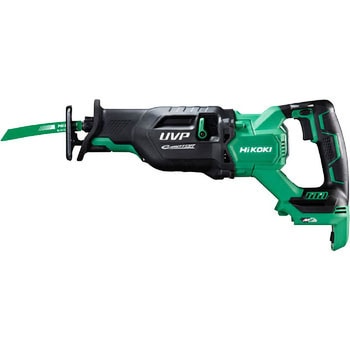
To be upfront: this is a bare-tool listing, so the battery, charger, and case are all sold separately. If you already own HiKOKI MultiVolt gear, that keeps your extra cost down — but if this is your first HiKOKI tool, it’s worth comparing kit versions too.
Tradespeople who need corded-saw-level performance on demolition and renovation jobs rate this one highly. If raw power is your top priority, it belongs on your shortlist.
Makita 18V Cordless Reciprocating Saw JR189DZ (Battery, Charger, Case & Blade Sold Separately)
MenaThe one-handed lightness is the big draw here. Thanks to the counterweight design, it stays surprisingly steady even when you’re only using one hand.
The Makita JR189DZ is a cordless reciprocating saw that runs on an 18V battery. A high-power brushless motor delivers 3,100 strokes per minute, and a counterweight mechanism keeps vibration down. The one-hand grip is easy to maneuver, and blades swap without tools.
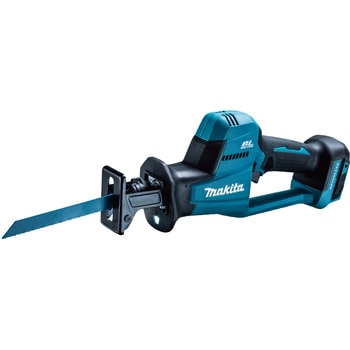
To be upfront: this is a bare-tool listing — the battery, charger, case, and blade are all sold separately. If you already have Makita’s 18V batteries, that keeps costs down, but if this is your first purchase into the system, the total adds up fast.
It covers everything from pruning and cutting lumber to DIY demolition, and it’s a natural pick if you’re already building out a Makita 18V toolkit.
Bosch 18V Compact Reciprocating Saw GSA18V-083B (Bare Tool, CORE18V Battery Sold Separately)
MenaIt’s genuinely light for what it is. Working overhead or wedged into a tight cavity, that low weight makes a real difference by the end of the day.
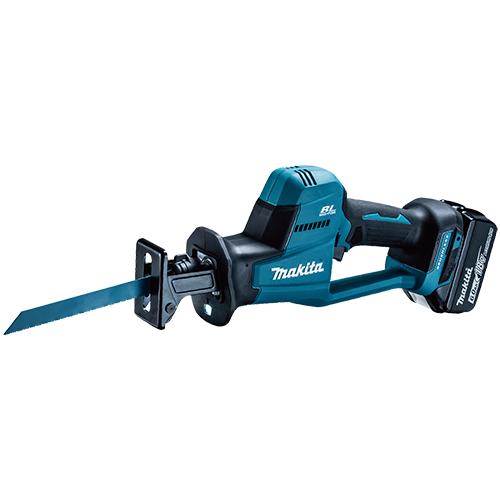
The Bosch GSA18V-083B is a compact 18V cordless reciprocating saw built for tight spaces and overhead work. It has a 0.83″ (21mm) stroke length at up to 3,050 strokes per minute, a variable-speed trigger, tool-free blade change, and an LED light. At 4.4 lbs bare, it’s one of the lighter saws in this lineup, and it runs on Bosch’s CORE18V battery platform (sold separately).
To be upfront: its shorter stroke length means it’s not built for heavy demolition work — it’s aimed at electricians and carpenters cutting conduit, pipe, and framing in cramped or overhead spots. If you need serious cutting power, a 36V-class saw like the HiKOKI CR36DA is the better fit.
Recommended if you regularly work in tight or overhead spaces and want a lightweight saw that’s easy to control one-handed.
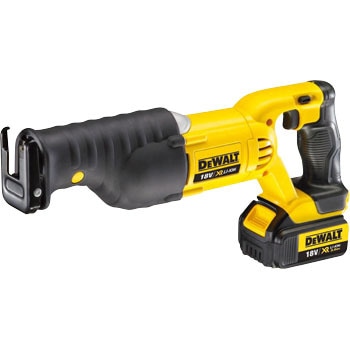
DEWALT Cordless Reciprocating Saw, Brushless Motor, 4-Position Blade Clamp, 18V with 2 Batteries & Charger, DCS380
MenaThe 4-position blade clamp is genuinely handy — it lets you reorient the blade so you’re not stuck in an awkward position when cutting near a ceiling or in a tight corner.
The DEWALT DCS380 is an 18V cordless reciprocating saw with a brushless motor. The blade clamp supports 4 positions, so you can choose your cutting angle freely. It ships with two 4.0Ah batteries and a charger, so you can start using it right out of the box.
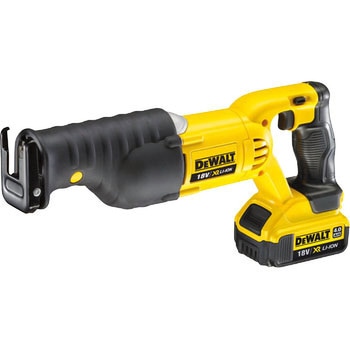
To be upfront: as a North American/European brand, parts and service support can be more limited in some regions compared to HiKOKI or Makita. It’s the right pick if you’re already on DEWALT’s 18V platform or comfortable buying tools from an international brand.
The blade-clamp flexibility is a real strength no other brand here matches, and it earns its keep on jobs with a lot of odd-angle cutting.
Milwaukee M18 FUEL Hackzall Compact One-Handed Reciprocating Saw, 2719-20 (Bare Tool)
MenaThe compact body is well balanced and easy to maneuver on tight scaffolding or when pruning trees in the yard. The tool-free blade change is a small but genuinely convenient touch.
The Milwaukee 2719-20 (M18 FUEL Hackzall) is a compact, one-handed cordless reciprocating saw that runs on an 18V battery. Its POWERSTATE brushless motor delivers up to 3,000 strokes per minute with a 7/8″ (22mm) stroke length, and a dual-gear counterbalance mechanism keeps vibration low. At around 1.9kg bare, it’s built for one-handed control.
To be upfront: its cutting capacity is more modest than the 36V-class saws on this list, so it’s better suited to yard pruning and DIY-level cutting than heavy demolition work. If demolition is your main job, look at a high-power saw like the HiKOKI CR36DA instead.
A solid pick if you value a compact, easy-to-handle saw for tree pruning or lighter DIY cutting jobs.
Reciprocating Saw Basics & How to Choose
A reciprocating saw (sabre saw) cuts wood, metal, and PVC pipe by moving a blade back and forth. Unlike a circular saw, it isn’t limited to straight lines, which makes it well suited to tight spaces, curved cuts, and rough demolition cutting.
1. Power (Voltage) and Stroke Rate
18V-class saws are easy to handle and provide plenty of power for pruning, light demolition, and DIY use. Step up to a 36V-class (MultiVolt) saw and you get higher power and cutting speed, close to corded-saw performance on heavy demolition jobs. A higher stroke rate (strokes per minute) means faster cutting.
2. Vibration-Reduction Design
Models with a counterweight or counterbalance mechanism put less strain on your arms during long cutting sessions. Treat a high-vibration model as suited for short jobs only, and always check for a vibration-reduction mechanism if you plan to use the saw for extended periods.
3. What’s Included (Bare Tool vs. Kit)
Bare-tool listings are cost-effective if you already own compatible batteries and a charger. Kits that bundle a battery, charger, and case are the better option if this is your first tool on that platform, or if you’d rather avoid shopping around for accessories separately.
Tips for Getting the Most Out of It
Choosing the right blade for the material you’re cutting makes a bigger difference to the result than most people expect. Coarse, low-tooth-count blades work best for wood; fine, high-tooth-count blades work best for metal. Use the wrong blade for the material and you’ll not only cut slower, you’ll chip the teeth.
I’ve made this mistake myself — rushing into a demolition cut without picking the right blade first, and wrecking the blade in a matter of minutes. Since then, I always check that the blade matches the material before I start. When you begin a cut, let the saw’s own weight ease the blade in slowly rather than forcing it — that gives you a cleaner cut without straining the tool.
Buying Notes
Bare-tool listings don’t include a battery or charger, so double-check the total cost before you buy. If you already own batteries for that brand, you’ll save money — but if this is your first tool on the platform, a kit can end up cheaper overall.
Pricing in this category shifts with availability. The listing links above were verified as live, in-stock product pages on Amazon at the time of writing, but always check the current price and stock on the product page before you buy.
Accessories Worth Grabbing Alongside It
A reciprocating saw is useless without a blade. Since blades are consumables, it’s worth picking up a few general-purpose wood/metal blades at the same time you buy the saw.
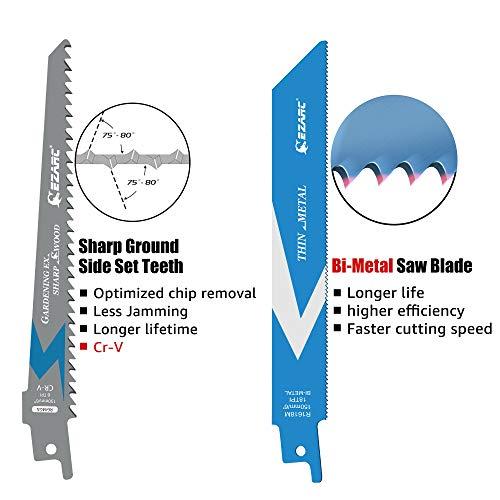
EZARC Reciprocating Saw Blades, Bi-Metal, for Demolition, Wood & Metal, 150mm, 12-Pack
MenaBuying just the tool won’t get you anywhere without blades. Keeping a stock of general-purpose bi-metal blades means you’re never stuck on a job.
EZARC’s bi-metal reciprocating saw blades are general-purpose blades that handle both wood and metal. At 150mm and sold in a 12-pack, they’re good for stocking up, and they fit standard reciprocating saws across major brands, including HiKOKI, Makita, Bosch, DEWALT, and Milwaukee.
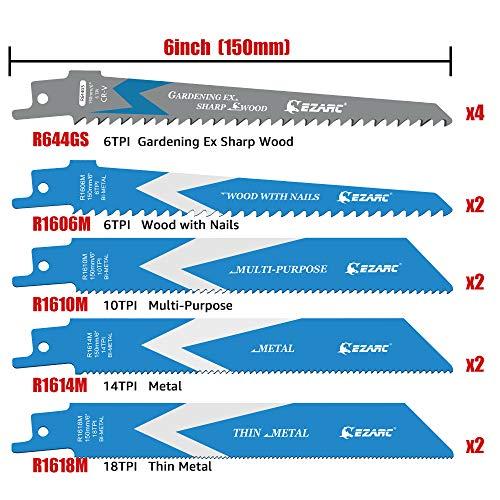
Reciprocating saw blades wear out and can break during use, so they’re a genuine consumable. Grabbing spares when you buy the saw itself means a broken blade won’t stop you cold on the job.
FAQ
Q. What’s the difference between a reciprocating saw and a circular saw?
A. A circular saw uses a round blade for fast, straight cuts, while a reciprocating saw moves its blade back and forth. Circular saws win on straight-cut precision and speed, but reciprocating saws excel in tight spaces, curved cuts, and rough demolition cutting.
Q. Should I get an 18V or a 36V (MultiVolt) saw?
A. If pruning and DIY-level cutting are your main use, an 18V-class saw is plenty. If you’re doing heavy demolition work or running the saw continuously for long stretches, consider a 36V (MultiVolt) saw for extra power and endurance.
Q. What should a first-time buyer choose?
A. For a first saw, look for a kit listing that bundles a battery, charger, and case — it saves you from having to shop for accessories separately. If you already own batteries for a specific brand, picking that brand’s bare-tool version will keep your costs down instead.
MenaGet a handle on power (voltage), vibration-reduction design, and what’s included, and you’re unlikely to go far wrong picking a reciprocating saw. Work backward from what you’ll actually be cutting on the job.
Summary
I compared five reciprocating saws across power output, vibration-reduction design, and included accessories. For demolition work where power matters most, go with the HiKOKI CR36DA; if you want to stay in the Makita system, the JR189DZ is the pick; and if you regularly work in tight or overhead spaces, the lightweight Bosch GSA18V-083B is a strong candidate.
Every model here earns its place on demolition, renovation, and pruning jobs. Pick the one that matches your use case and your existing battery platform.