
Affiliate Disclosure: This article contains affiliate links. If you make a purchase through these links, we may earn a commission at no additional cost to you.
 メナ
メナHey, I’m Mena, a hybrid engineer working across mechanical and electrical systems. This time I’m comparing motorcycle-specific dash cams — not car dash cams bolted to a bike, but cameras actually engineered for the vibration, weather, and blind spots riding involves.
A quick note on scope: several Japanese brands that dominate this category at home (Mitsuba Sankowa, Daytona’s Mio MiVue line, DRIVEMAN) simply aren’t sold through real US retail channels, so rather than list them as filler, I’m sticking to INNOVV — a motorcycle-dashcam specialist that’s been building for this exact use case since 2013 and is genuinely stocked on amazon.com.
This guide covers 3 real INNOVV models — the K6 (entry point), K7 (stabilized dual 2K), and RC6 (dash cam plus blind spot radar) — so you can match the model to what you actually need instead of guessing.
The Short Version
Just want a first dash cam? K6. Want the sharpest footage front and rear? K7. Ride in traffic where blind spots are a daily problem? RC6 — the radar is worth the premium.
| Product | Resolution | Waterproof | Price | Best for |
|---|---|---|---|---|
| INNOVV K6 | 2K + 1080P | IP67 | ~$259 | First motorcycle dash cam, budget-conscious |
| INNOVV K7 | 2K + 2K, EIS stabilized | IP67 | ~$368 | Best image quality + GPS logging |
| INNOVV RC6 | 2K + 1080P + radar | IP67 | ~$412 | Riders who deal with blind spots daily |
3 INNOVV Motorcycle Dash Cams, Compared
INNOVV K6

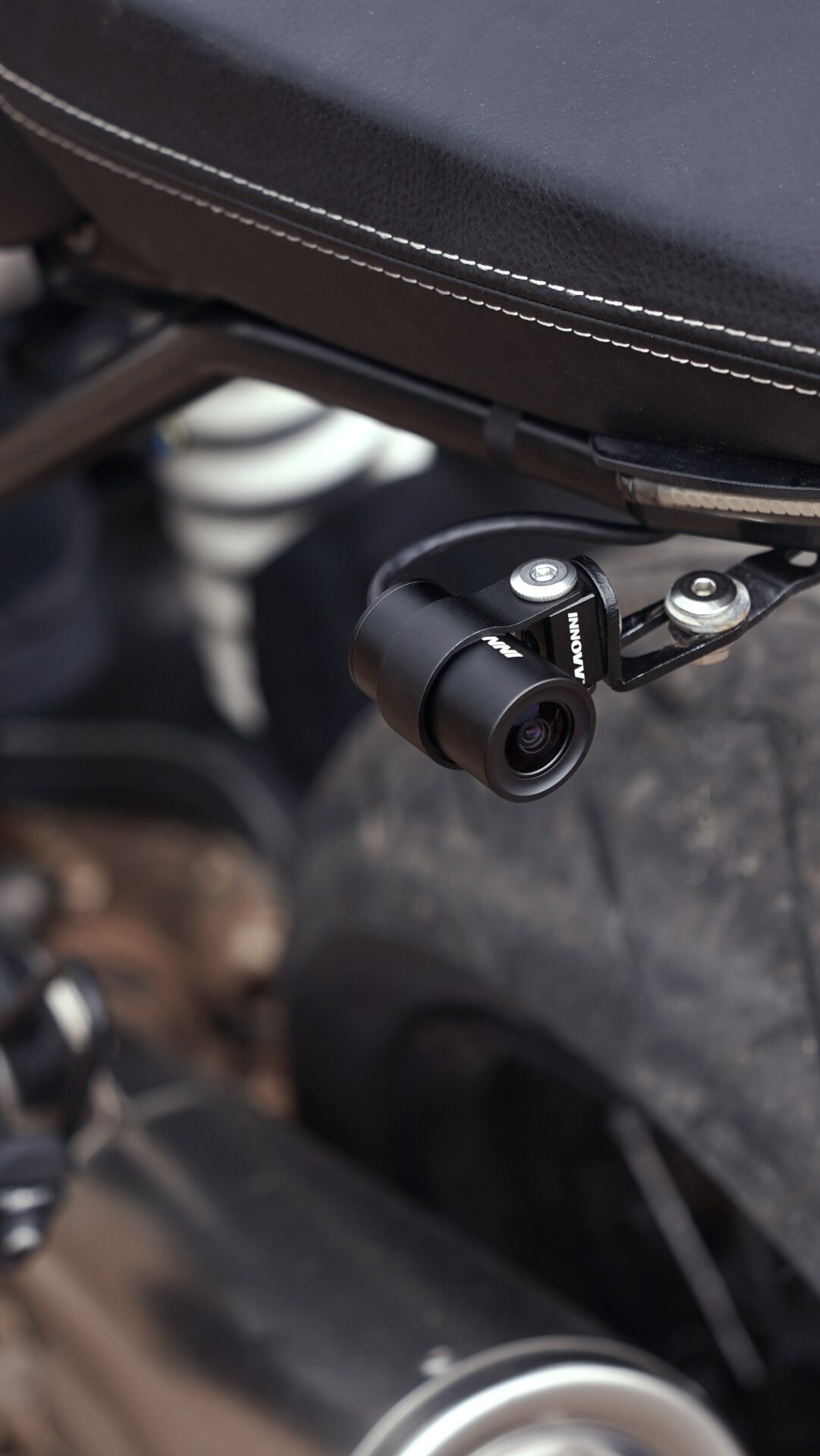
| Resolution | 2K (2560×1440) front + 1080P rear, 30fps |
| Sensors | Sony STARVIS IMX335 (front) / IMX307 (rear) |
| Waterproof | IP67, submersible to 0.5m for 30 min |
| Storage | microSD up to 256GB |
| Connectivity | Wi-Fi 2.4G, USB-C |
| Price | around $259 (list $288) |
メナIf you’ve never run a dedicated motorcycle dash cam before, the K6 is where I’d start — 2K up front is genuinely sharp, and IP67 means you don’t have to think twice about riding it in the rain.
The INNOVV K6 is a compact dual-channel dash cam built specifically for motorcycles, pairing a 2K front camera with a 1080P rear camera, both on Sony STARVIS sensors for usable night footage. It’s rated IP67 and can survive full submersion in 0.5m of water for 30 minutes, which matters more on a bike than a car since the unit sits fully exposed to weather.
Installation is simpler than most wired dash cams — it runs off USB or the bike’s battery, connects to the INNOVV app over 2.4G Wi-Fi, and supports microSD cards up to 256GB. There’s no GPS module on this model, so if you want speed and location data burned into your footage, that’s the main thing you’re trading away for the lower price.
For a first dash cam, the K6 covers the fundamentals — 2K clarity, real waterproofing, and a manufacturer that’s been building motorcycle-specific cameras since 2013 — without paying for features you may not need yet.
INNOVV K7
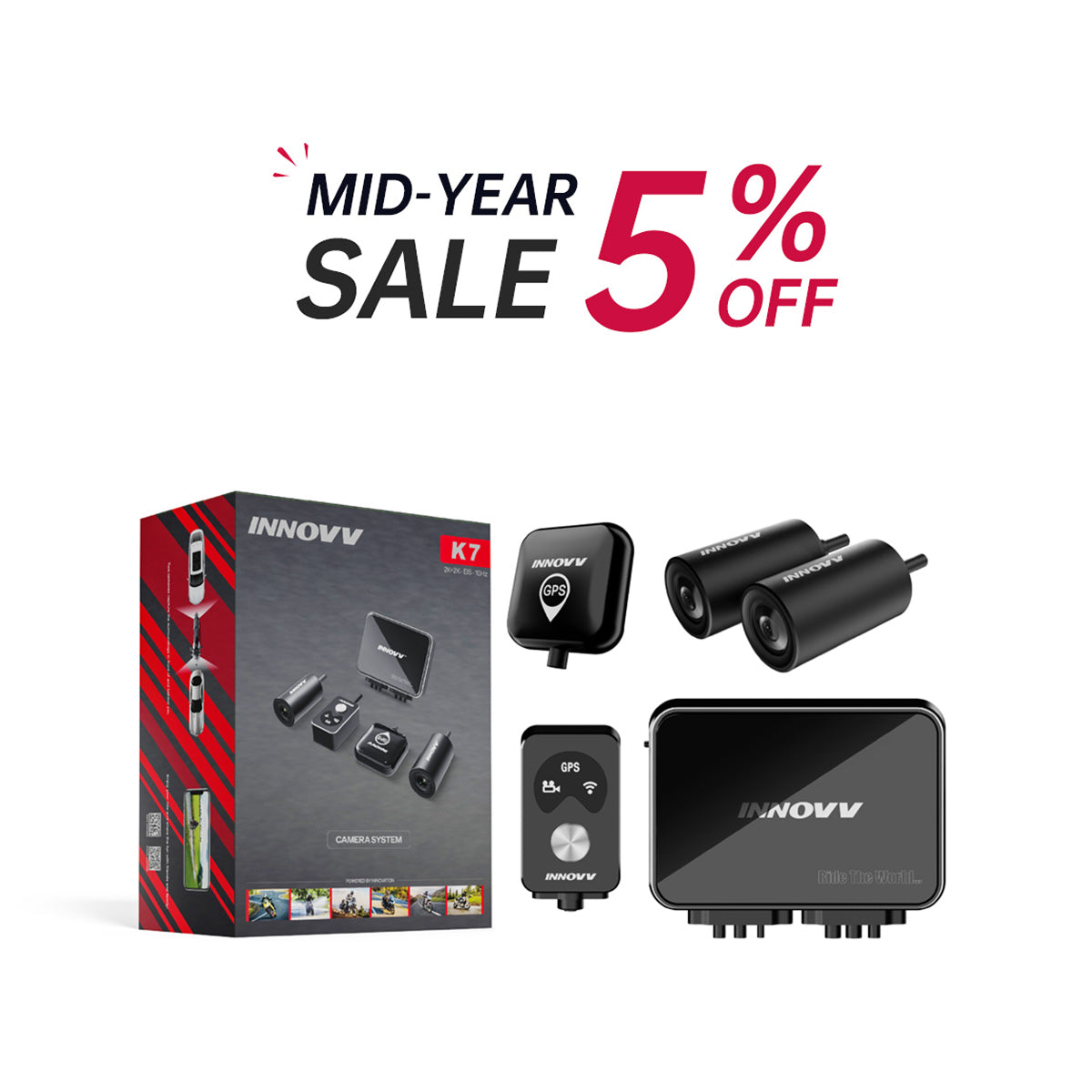
| Resolution | 2K+2K @ 30fps or 1080P+1080P @ 60fps |
| Sensors | Sony STARVIS IMX335 front and rear |
| Waterproof | IP67, fully enclosed construction |
| Storage | microSD, V30/U3 rated, up to 512GB |
| Connectivity | Dual-band Wi-Fi (2.4G/5.8G), 10Hz GPS, Bluetooth remote |
| Price | around $368 (list $388) |
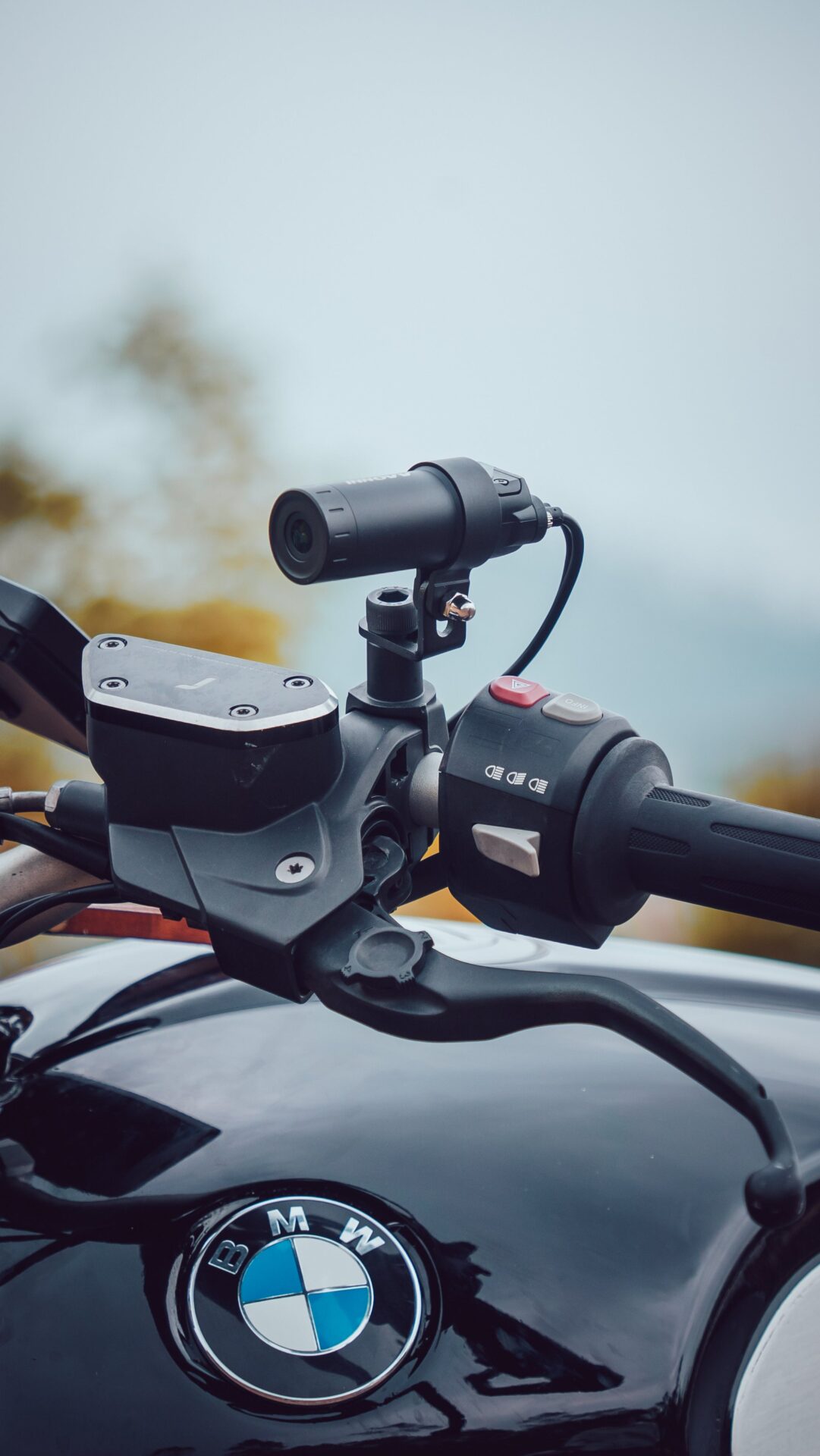
メナThe K7’s 3-axis EIS is what actually sold me on it over the K6 — footage off a bike is naturally shakier than a car’s, and stabilized 2K front and rear both hold up noticeably better on rough pavement.
The INNOVV K7 steps up to matched 2K resolution on both the front and rear cameras, with 3-axis electronic image stabilization to compensate for vibration — something a car dash cam never has to deal with but a motorcycle unit absolutely does. It can also drop to 1080P+1080P at 60fps if you’d rather prioritize frame rate over resolution.
Dual-band Wi-Fi (2.4G and 5.8G) speeds up footage transfer to the app considerably compared to the K6, and the K7 adds 10Hz GPS logging plus a Bluetooth remote for one-touch event marking while riding. 24-hour parking mode with G-sensor triggering is also included for watching the bike while it’s parked.
It’s a genuine step up in both image quality and feature set, and the price reflects that. If stabilized, GPS-tagged 2K footage front and rear matters more to you than saving $130, this is the one to get.
INNOVV RC6
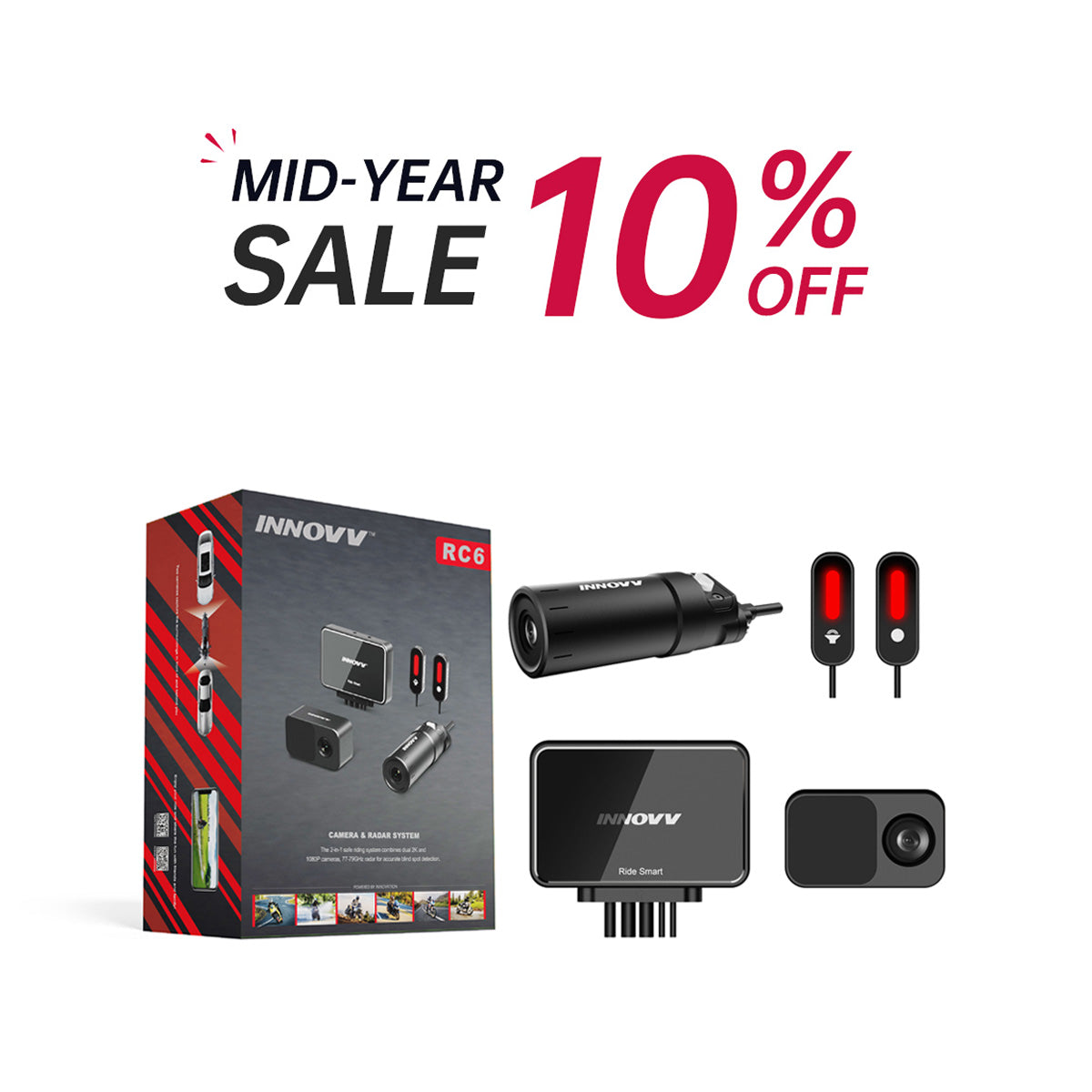

| Resolution | 2K front (1440P) / 1080P rear, 30fps |
| Blind spot radar | 77-79GHz, 50m range, 150° coverage, up to 64 targets |
| Alert response | Voice + LED indicator alerts, ~3 second response time |
| Waterproof | IP67 |
| Storage | microSD up to 256GB |
| Price | around $412 (list $458) |
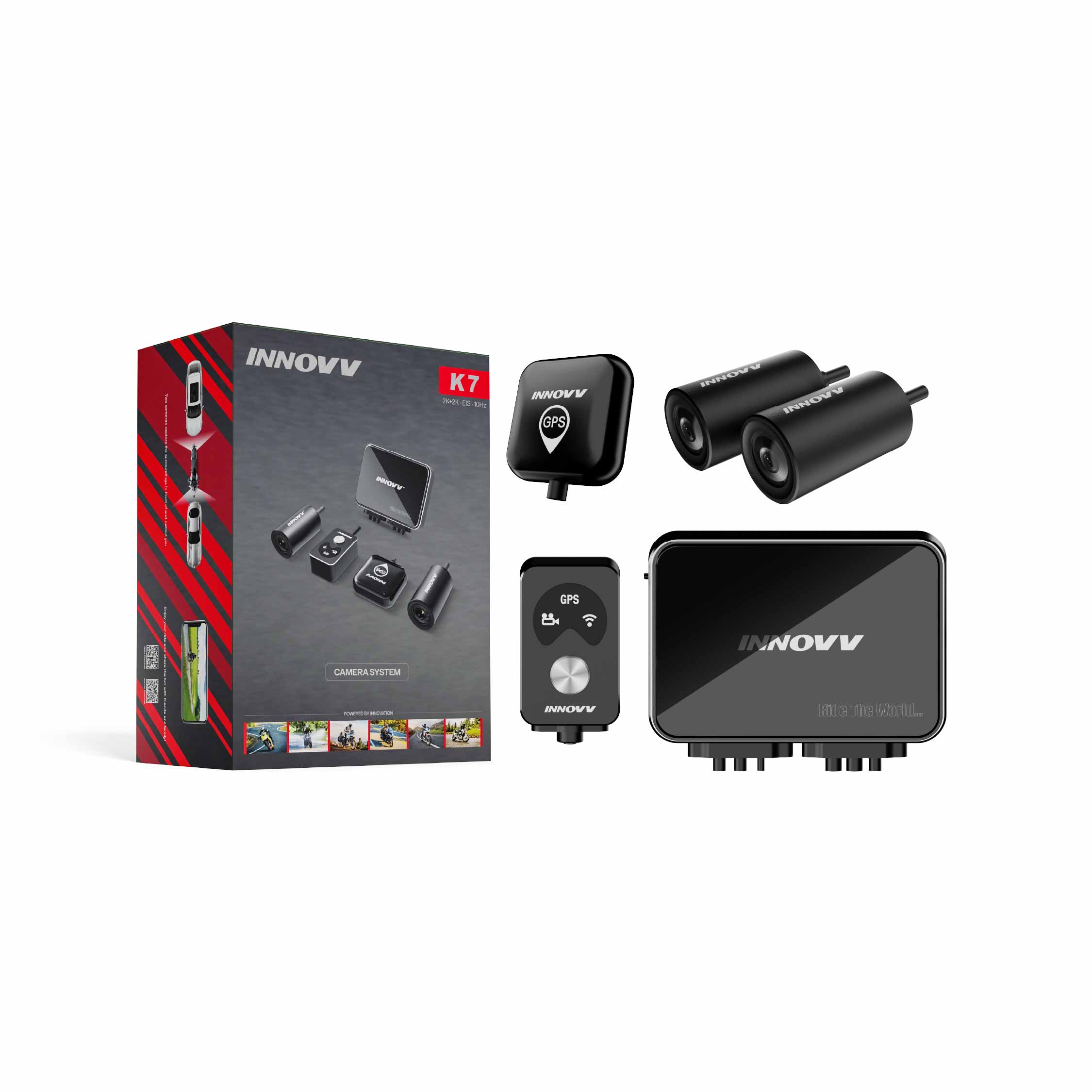
メナThis is the one I’d actually recommend if you split lanes or commute in heavy traffic — a dash cam only records what already happened, but the radar warns you about the car in your blind spot before it happens.
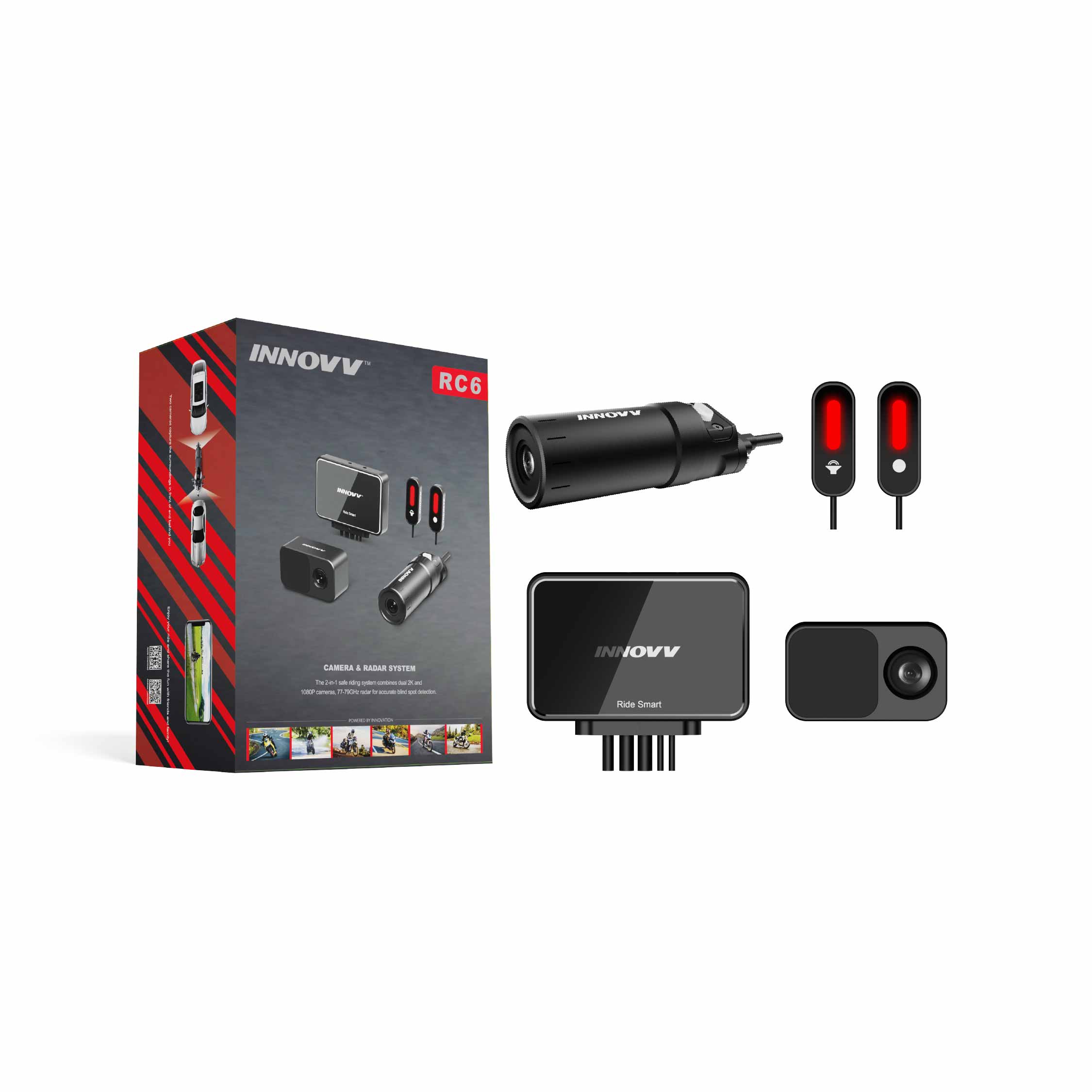
The INNOVV RC6 combines a 2K+1080P dash cam with a genuinely useful safety feature: 77-79GHz millimeter-wave radar that watches your blind spots out to 50m with 150° coverage, tracking up to 64 targets at once. When something enters your blind spot, you get a voice alert plus an LED indicator, with roughly a 3-second response time.
It’s worth being clear about what this is and isn’t — it’s not a lane-change assist system that intervenes for you, it’s a warning layer on top of your own mirror checks. Video resolution is a step below the K7 (2K front, not 2K+2K), since the radar hardware and processing take priority over matching the K7’s dual 2K image quality.
For riders who deal with blind spots daily — lane splitting, commuting, or just riding a bike with mirrors that never show quite enough — the radar earns its price premium over the K6 and K7 in a way pure video resolution can’t.
Motorcycle Dash Cam Accessories
None of the cameras above ship with everything you’ll want long-term. These two extras cover the gaps regardless of which model you pick.
High-endurance microSD card
Loop recording constantly overwrites the card, which wears out a standard consumer microSD card fast. Use a card rated for dash cam/surveillance duty (V30/U3 minimum) — INNOVV recommends this explicitly for the K7’s 512GB support, and it applies just as much to the K6 and RC6.
Hardwire fuse kit or portable jump-starter
Running 24-hour parking mode draws down the bike’s battery over time. A hardwire kit with a low-voltage cutoff protects against a dead battery, and keeping a small portable jump-starter in your kit is cheap insurance if you forget to disable parking mode before a long stretch unused.
What to Check Before You Buy
Waterproofing actually matters here
A motorcycle dash cam sits fully exposed to rain, road spray, and washing — there’s no bodywork protecting it the way a car’s windshield does. IP67 (submersible to 1m for 30 minutes) is the baseline to look for; anything less risks water ingress on a wet commute.
Wiring vs. plug-and-play
All three of these run off the bike’s 9-16V system rather than a removable battery, so budget for a proper wiring job (or a shop visit) — routing cable to a rear camera on a bike with the frame fully exposed takes more care than tucking wires behind a car’s interior panels.
Blind spot radar is a warning, not an autopilot
If you’re considering the RC6 for the radar feature, understand it’s an alert system layered on top of your own mirror checks and shoulder checks, not a system that changes lanes for you. It’s a genuinely useful extra layer of awareness, not a replacement for riding attentively.
Frequently Asked Questions
Q: Do I need GPS on a motorcycle dash cam?
Only the K7 and RC6 in this lineup log GPS data (speed, location, route) alongside video. That’s mainly useful as extra evidence after an incident — the K6 records clean 2K video without it, which is enough for most riders who just want footage of what happened.
Q: Can I install this myself?
It’s doable for anyone comfortable with basic bike wiring, but running a rear camera cable cleanly (and waterproofed) through the frame is more involved than a typical car install. If you’re not confident routing wiring around a fuel tank or subframe, a motorcycle shop install is worth the cost.
Q: What’s the real difference between the sharpest and safest option?
The K7 prioritizes image quality — matched 2K front and rear with stabilization. The RC6 trades a bit of that resolution for built-in blind spot radar. Pick based on whether sharper footage or blind spot warnings matter more for how you actually ride.
メナStart with the K6 if this is your first motorcycle dash cam, step up to the K7 for the sharpest footage, and go RC6 if blind spots are a daily hazard where you ride.
Summary
All three INNOVV models here are IP67-rated and built specifically for motorcycles, not repurposed car cameras. The K6 gets you a real 2K dash cam at the lowest entry price, the K7 adds stabilization and GPS for the best footage quality, and the RC6 pairs a dash cam with genuinely useful blind spot radar.