This article contains affiliate links. If you make a purchase through these links, we may earn a commission at no additional cost to you.
 メナ
メナHey there, I’m Mena (@menachite), a hybrid engineer who handles both mechanical and electrical work.
My job is manufacturing production equipment — I build things like automotive assembly lines.
This time, I’ve selected high-quality tools that are essential when assembling mechanical components for equipment.
Use this as a reference when choosing your tools!
Assembly
Hex Wrench
When it comes to assembly, it all starts and ends with wrenches. If there’s one tool to buy first, this is it.
WERA Hex Wrench
When you think hex wrench, this is the one! It resists flex and achieves a tighter tightening angle.
Some people prefer a little flex, but in tight equipment spaces, a smaller tightening angle is generally better.


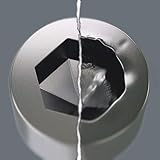


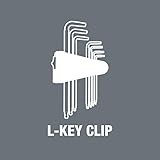


PB Hex Wrench
This is PB’s hex wrench. It’s also highly resistant to bending, but what sets it apart from WERA is that the size is printed directly on the wrench in color.


Short-Head Wrench
Mitoloy Short-Head Wrench
The Mitoloy short-head wrench has the shortest head available, making it easy to access tight spaces.
There are also versions with shorter handles — those are worth recommending as well.


Combination Wrench
A tool that has an open-end wrench on one side and a box-end wrench (ring wrench) on the other.
Used for tightening hex bolts — the great thing is you can use the open end for fast spinning, and switch to the box end when final tightening where stripping is a risk.
The box end is also frequently used for accessing bolts in tight spaces — a highly practical tool.
KTC Combination Wrench


Wire Cutters (Nippers)
There are two types: power nippers that can cut wire, and thin-blade nippers that can cut plastic.
Fujiya Power Nippers


Knipex Thin-Blade Nippers
The Knipex nippers catch the offcut when cutting plastic cable ties so fragments don’t scatter — keeping the work area clean. A surprisingly handy feature!


Pliers and Needle-Nose Pliers
Used when strong gripping force is needed.
Fujiya Needle-Nose Pliers
Needle-nose pliers that support holding and gripping in tight spaces.
An indispensable tool for the job!


Fujiya Pliers
Not used as frequently, but there are situations that call for strong gripping force where these come in handy.


Hammer
You’ll need hammers made from iron, copper, and resin respectively.
Buying them separately takes up space, so a combo hammer with different materials on each end is the practical choice!
TONE Iron and Plastic Combo Hammer
A slightly compact size, but this size is just right for working in tight spaces and for picking up speed.
You don’t need that much force when using the plastic side anyway.


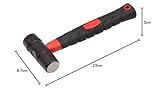
OH Industry Copper Hammer
Used for driving in precision-critical parts like locating pins.
Not much force is needed for this either, so one compact copper hammer is all you need.

PB Dead-Blow Hammer
It’s good to have one large hammer as well — useful for driving in anchors and similar tasks.
A dead-blow hammer cancels out the impact upon striking, eliminating rebound for safer operation.


Snap Ring Pliers
Used for installing small parts like E-rings and snap rings.
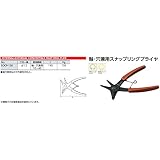
KTC Snap Ring Pliers
Snap rings require a closing action when fitting from the inside and an opening action when fitting from the outside — so it’s safer to buy a type that can handle both.



Water Pump Pliers
Versatile enough for steel pipe work, clamping components, and more — used across many trades.
Given how frequently they are used, it’s worth investing in a good one.
Knipex Alligator
Knipex water pump pliers allow for precise adjustments — not just for gripping, but even for gripping and turning hex bolts, making them an exceptionally versatile classic tool.


C-Clamp / Bar Clamp
Used to temporarily fix parts together with strong force, among a variety of other applications.
Lobster C-Clamp


Machining
Files
Used for deburring or grinding metal.
Whetstone
Scissors
Used for cutting thin shim stock (sheet material).
SK11 Heavy-Duty Scissors


Tap Drill & Holder
Tap drills and the tap holder used with them.
TRUSCO Spiral Tap Drill
A tap drill I can recommend for its decent precision at a reasonable price.
When it comes to cutting performance, a spiral tap is generally preferable to a straight tap in most situations.


Straight Tap Holder
A rare model that handles up to M10, with a 3/8 ratchet connection head on top — a well-designed tap handle that even accounts for work efficiency.


Hand Reamer
Used for finishing intersecting holes when pin driving doesn’t go as planned.
Utility Knife
OLFA Utility Knife
A utility knife said to cut smoothly thanks to its titanium coating.


Measurement & Adjustment
Here are tools used for measuring gaps, component dimensions, and hole sizes.
In the measurement category, Shinwa Sokutei (Shinwa Measuring) tends to appear frequently.
Ruler
Shinwa Measuring Straight Gauge
When it comes to measurement, this is the go-to! Buy a few extras to keep on hand.


Feeler Gauge (Thickness Gauge)
A gauge for measuring tight gaps where a caliper won’t fit. Insert it into the gap to measure.
Shinwa Measuring Thickness Gauge


Try Square (Machinist Square)
A try square used to verify right angles during installation.
Shinwa Measuring Try Square
Another Shinwa Measuring right-angle gauge. A classic machinist square.


Level (Spirit Level)
Almost every equipment installation requires a level — let me introduce what I use!
Levels come in many types: some measure only one axis (X), while others measure both X and Y. Digital levels have also become more common recently.
A level is a very delicate instrument, so pay attention to after-sales service quality, guaranteed accuracy, and cost when choosing one.
TRUSCO Level
A level that measures down to 0.05mm precision — sufficient for leveling equipment.
TRUSCO is a major manufacturer, so you can feel confident about after-sales support if anything goes wrong.


Digi-Pas Level
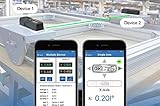
Measures digitally down to 0.02mm and reads both X and Y axes simultaneously.
Connects to your smartphone so you can check readings remotely while leveling equipment — great for work efficiency. An easy recommendation with no reservations.
The one concern is that it’s not a well-known brand, so don’t count on a warranty.
Even factoring that in, the cost-performance ratio is outstanding. Levels lose accuracy from even minor impacts, so if you’re confident in how carefully you handle tools, this level is worth it.
Even if it breaks and you have to rebuy it, it still offers better value than a digital level from any other brand.




Hydraulic Jack
Used to adjust the height of equipment.
TORIN Hydraulic Jack
A low-profile design that can lift even equipment with minimal ground clearance.


Magnetic Base
TRUSCO Magnetic Base
TRUSCO’s magnetic base. Used when taking measurements with a dial test indicator or similar tools.


Dial Test Indicator
Mitutoyo Test Indicator
A test indicator from the trusted brand Mitutoyo.
It has 0.01mm graduation markings — the right measurement range for machine assembly work.

String Line
Used to establish the centerline of equipment. It’s essentially just string, but one that doesn’t break easily and has some stretch is easier to use.
Shinwa Measuring String Line


Plumb Bob
Mainly used when you need to establish a conveyor line above the ground level of installed equipment.
Tajima Plumb Bob
There are magnetic versions, but I personally prefer this one for its versatility — you can fix it with tape and use it in many ways.
What I especially like is the quick settling time of the string, the precise centering of the string and weight tip, and the overall ease of use.


Piping
Tools used for installing pneumatic hoses.
That said, a hose cutter covers most of the job, so the rest are more of a bonus.
Hose Cutter
SMC Tube Cutter
SMC is a top manufacturer of pneumatic components, and this hose cutter comes from them.
Being an OEM product means maximum peace of mind.


Air Gun (Air Duster)
Useful for blowing away debris or briefly driving pneumatic equipment.
SK11 Air Duster
A standard air gun model.


Air Hose Reel
Mainly used when extending an air hose to use pneumatic tools.
Straight Air Hose Reel
Rated up to 1.4MPa, so it works practically anywhere. Hang it from the ceiling or carry it around — both work great.


Related Articles
Also check out these related articles.