
Affiliate Disclosure: This article contains affiliate links. If you make a purchase through these links, we may earn a commission at no additional cost to you.
=== TITLE === Protect Your Lithium Battery: The Complete Guide to 10 Storage Tips for Longer Battery Life === TAGS === BL1860B,BSL36A18,DC18RF,HiKOKI,battery case,battery storage,Makita,lithium-ion battery,lifespan extension,power tools === CONTENT ===
Many people treat power tool batteries as consumables, but with proper storage and charging habits, you can get 2–3 times more life out of the same battery. I (Mena) share the lithium-ion battery storage and lifespan-extension know-how I’ve refined on real job sites — from the fundamentals all the way to choosing the right products.
I’ll tackle the questions that pros and DIYers struggle with most: “How much charge should I store the battery at?” “Is leaving a battery in a hot car in summer really that bad?” “Do third-party batteries degrade faster than OEM ones?” I answer all of these from both field experience and technical specifications.
 メナ
メナSloppy battery management can cut capacity in half within two years. I’ve seen multiple cases on job sites where proper storage kept batteries going strong for five years or more.
Lithium-Ion Battery Basics
What Is Ah? Understanding Capacity and Runtime
Ah (ampere-hours) is the unit that indicates how much electrical charge a battery can store. A 3.0 Ah battery can supply 3 A of current for one hour. If a tool draws the same current, a 6.0 Ah battery gives you roughly twice the runtime of a 3.0 Ah battery — though high-demand tasks draw more current, so it’s not always a simple ratio.
What Is Charge Cycle Life?
One charge cycle equals the equivalent of a full discharge from 100% to 0%. Makita and HiKOKI OEM batteries are typically rated for 1,000–1,500 cycles. A tradesperson who uses a battery fully five times a week logs roughly 200–300 cycles per year, meaning a 3–5 year lifespan is realistic. However, neglecting the storage and charging practices described below can cause significant capacity loss in fewer than 500 cycles.
How Storage Temperature Affects Capacity Degradation
Lithium-ion cells are sensitive to heat. Data shows that storing a battery at 40°C versus 25°C results in about 10–15% less capacity retained after one year. On a hot summer day, the interior of a car parked in direct sunlight can reach 60–80°C, causing irreversible cell damage within just a few days. Never leave a battery sitting in a parked car.
5 Field-Tested Principles for Extending Battery Life
Principle 1: Store at 40–60% Charge
Long-term storage at full charge (100%) or fully depleted (0%) accelerates cell degradation. The ideal storage charge level is 40–60%. Avoid charging immediately after use and then leaving the battery at 100%; instead, charge just before your next job.
Principle 2: Store at 15–25°C
A “cool, dark place” in practice means an indoor shelf or locker out of direct sunlight. Tool storage shelves can get surprisingly hot in summer. Avoid outdoor tool sheds and storage units — keep your batteries indoors where the temperature stays stable.
Principle 3: Let the Battery Cool Before Putting It in a Case
Immediately after charging, battery cells can reach 50–70°C. Putting the battery straight into a case at this temperature traps heat and damages the cells. Let it sit for 10–15 minutes after charging to return to room temperature before storing.
Principle 4: Top Up Once a Month During Long-Term Storage
If a battery sits unused for one to two months or more, self-discharge can drop it to a dangerously low level. An over-discharged battery may be flagged as “abnormal” by the charger and refused. A monthly top-up to around 50% prevents this.
Principle 5: Inspect After Drops and Impact Before Using
A battery that has taken a hard impact — such as dropping onto concrete — may have internal cell damage even if the exterior looks fine. Internal short-circuit paths can form without obvious signs. Before charging, always check for swelling, deformation, or unusual odors.
Top 10 Batteries, Chargers, and Storage Cases
Makita BL1860B Lithium-Ion Battery 18V 6.0Ah


 メナ
メナThe BL1860B is the battery I abuse hardest on the job. The 4-stage charge indicator means I never miss the right moment to stop and recharge. Being OEM, I’ve never had a compatibility issue with the charger.
Makita’s BL1860B is the flagship battery in the 18V platform, packing 6.0 Ah of capacity. The extended runtime per charge makes it ideal for demanding job-site work — electrical, demolition, carpentry — wherever continuous operation matters. The 4-stage charge indicator lets you plan recharging before you run out.
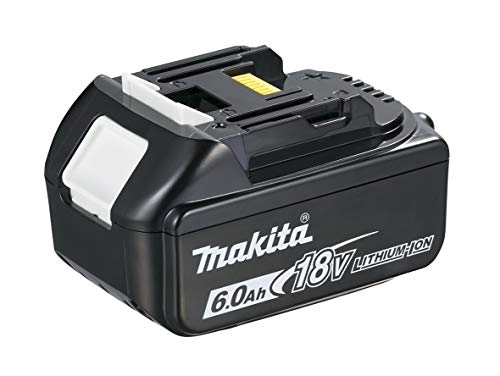
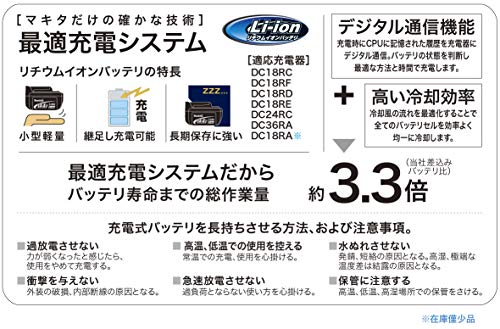
Fast-charged with the DC18RF, a full charge takes about 40 minutes; an 80% “practical charge” takes about 27 minutes. The self-diagnostic system automatically activates protection circuitry when it detects over-discharge, overheating, or overcurrent. Storing at 30–50% charge in a cool, dry location minimizes degradation.
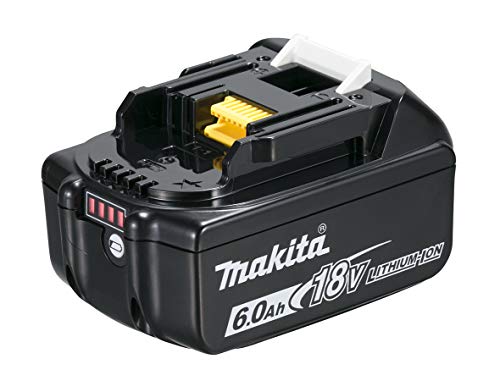
The biggest advantage over third-party batteries is cell quality and charger communication accuracy. Makita OEM chargers read each battery’s individual cell data and select the optimal charge curve, resulting in longer cycle life than compatible alternatives. Even for cost-conscious job sites, the BL1860B is well worth the investment.
Makita BL1830B Lithium-Ion Battery 18V 3.0Ah


 メナ
メナThe 3.0 Ah is light and easy to maneuver. It’s excellent as a secondary battery for overhead work or detailed finishing. Running it alongside the 6.0 Ah is the standard setup on any job site.
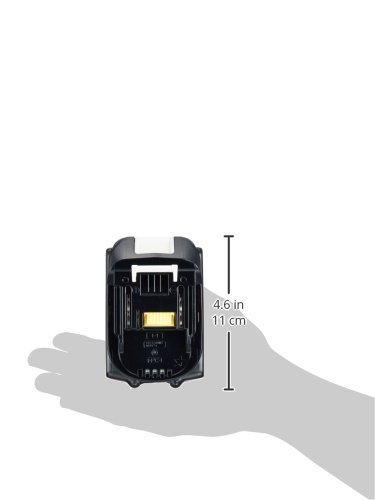
The BL1830B is the standard-capacity model in the 18V series, weighing about 290 g. It uses the same slide-type terminals as the BL1860B, making it fully compatible with the same chargers and tools. The weight advantage really shows with electric screwdrivers and wrenches that put strain on the wrist.
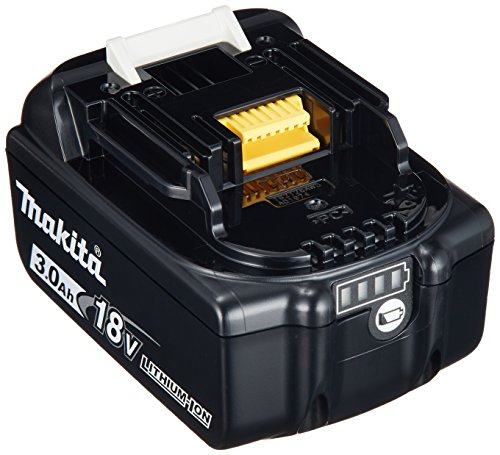
The 3.0 Ah capacity gives about half the runtime of the BL1860B, but charge time is proportionally shorter (about 22 minutes for a full charge with the DC18RF). With two batteries running in rotation, you can eliminate virtually all downtime. Buying it as a set with a fast charger offers good value.
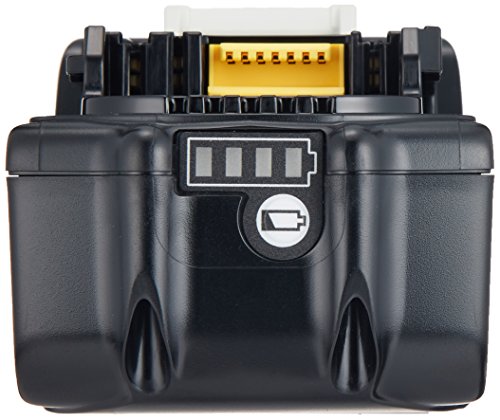
Storage guidelines are the same as for the BL1860B: the recommended charge level for long-term storage is 40–60%. Leaving a battery in an over-discharged state for extended periods risks making capacity recovery difficult, so a monthly top-up charge is recommended.
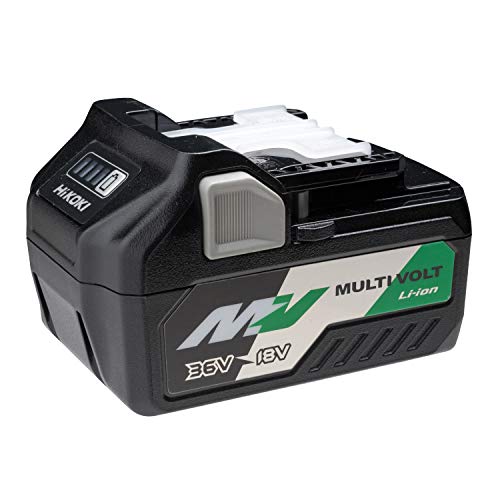
HiKOKI BSL36A18 MultiVolt Battery 36V 2.5Ah


 メナ
メナThe ability to cover both 36V and 18V with a single battery is the biggest draw. It switches automatically when you swap tools, so you don’t have to think about it. If you own multiple HiKOKI tools, this is a must-have.
HiKOKI’s BSL36A18 uses MultiVolt technology: insert it into a 36V tool and it operates at 36V/2.5Ah; insert it into an 18V tool and it automatically switches to 18V/5.0Ah. This eliminates the need to swap between battery packs — one battery covers everything from a HiKOKI 36V circular saw to an 18V driver.
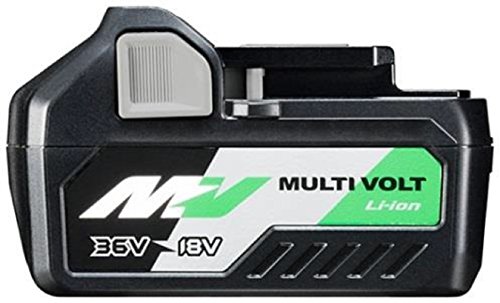
Remaining charge is displayed on a 4-stage LED indicator. Charge time with the UC18YDL charger is approximately 25 minutes (36V mode), significantly reducing job-site downtime. PSE-certified with a warranty of 2 years or 1,500 charge cycles, whichever comes first.
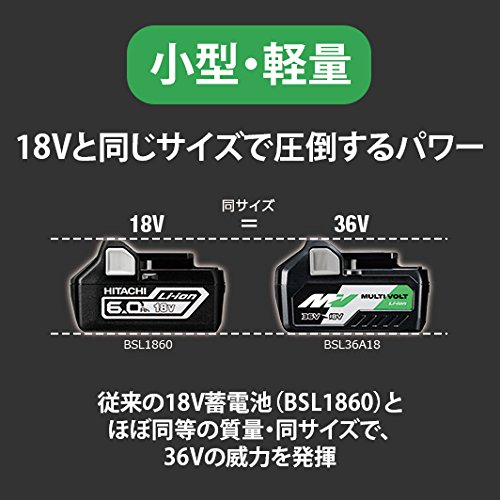
Store in a dedicated battery case and avoid direct sunlight and temperatures above 40°C. MultiVolt batteries have more cells than standard 18V packs, making temperature management even more important.
Makita DC18RF Rapid Charger 18V


 メナ
メナWhen it comes to fast chargers with a cooling fan, this is the only one I’d use. Even in the middle of summer, the charger itself doesn’t get hot. The USB port for charging your phone is a surprisingly handy bonus.
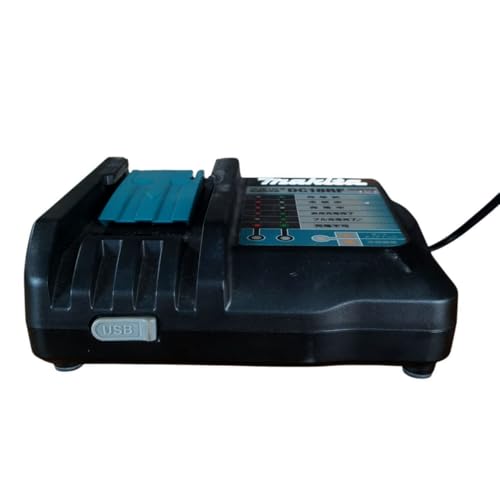
The DC18RF is Makita’s top-tier rapid charger, featuring an active cooling fan that blows cool air over the battery during charging. Even a hot battery fresh off a summer job site can be continuously charged, bringing a BL1860B to full in about 40 minutes. It accepts 100V AC single-phase input at 330W and works on any standard household outlet.
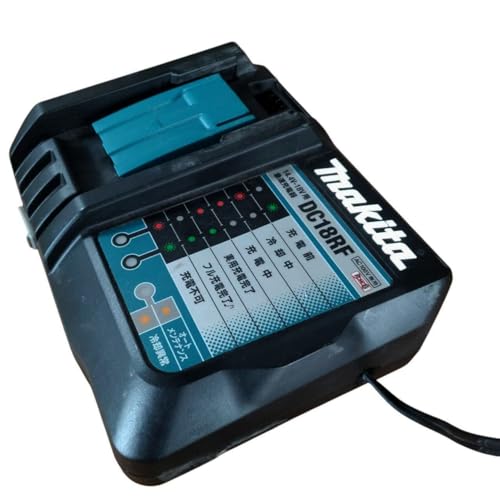
The front panel includes a USB output port (5V, up to 2.1A) so you can charge your smartphone at the same time. Wall-mount holes allow permanent installation in a workshop or fixed mount in a truck. A charge-complete melody makes it easy to hear when charging is done from across the room.
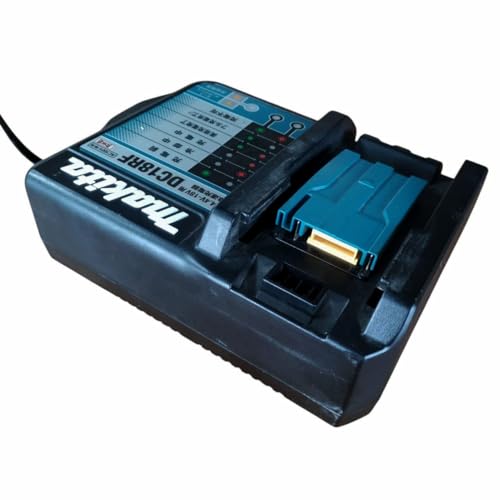
The charger’s storage environment matters too. Avoid storing the DC18RF — like any charger — in high humidity, direct sunlight, or extreme heat. Sealed car interiors in summer can exceed 60°C and accelerate degradation of internal electronics.
HiKOKI UC18YKSL Slide-Type Rapid Charger 14.4V–18V
メナThe UC18YKSL is simple and reliable. No unnecessary features — it just charges one battery at a time, dependably. I keep one on-site as a secondary HiKOKI charger.
The UC18YKSL is HiKOKI’s (formerly Hitachi Koki) slide-type charger compatible with 14.4V and 18V batteries. Its straightforward design starts charging automatically when you insert a battery, leaving no room for user error. The charger body weighs about 350 g — light enough to carry in a tool bag without a second thought.
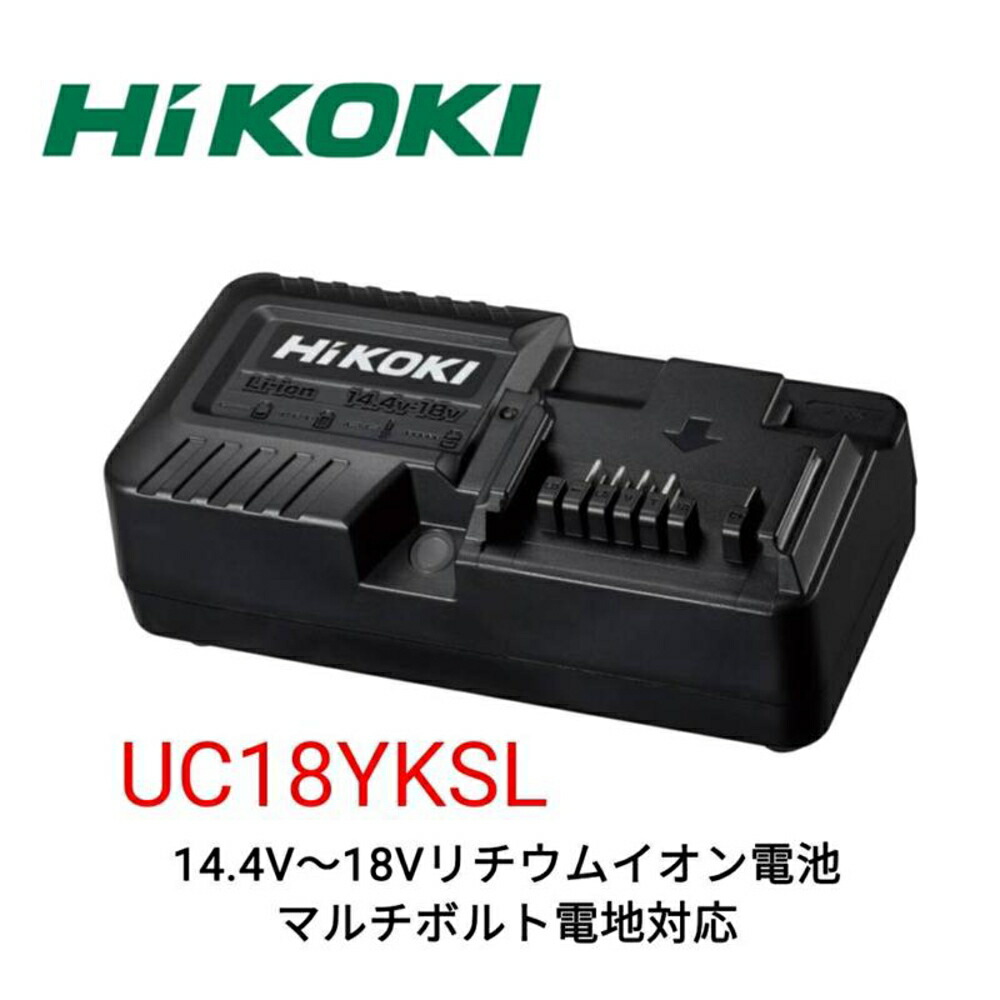
Charge time for a BSL1860 (18V 6.0Ah) is about 60 minutes. An LED indicator shows charging, complete, and error states at a glance. Compared to ultra-fast models like the UC18YDL, charge times are longer, but the lower price makes it ideal as a backup charger.
It does not have a low-voltage recovery (refresh) function, so an over-discharged battery will need to be handled separately with a charger like the DC18RF. Best used as a permanent on-site secondary charger to keep spare batteries topped up.
Compatible Battery for Makita 18V 6.0Ah — PSE & METI Certified



 メナ
メナIf you’re choosing a third-party battery on cost grounds, PSE and METI certification is the minimum bar. This one has a charge indicator and fault-diagnosis function — usability close to OEM.
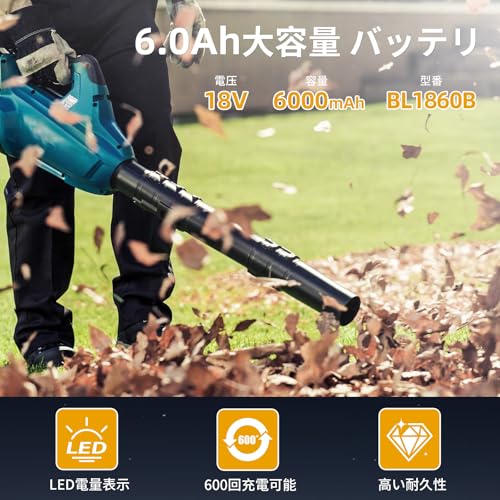
This is a third-party battery certified under Japan’s PSE (Electrical Appliance and Material Safety Act) and METI (Ministry of Economy, Trade and Industry) standards. The safety requirements are significantly higher than uncertified compatible batteries, with proper protection against overheating, short circuits, and overcharging. 6.0Ah capacity, compatible with Makita 18V tools.
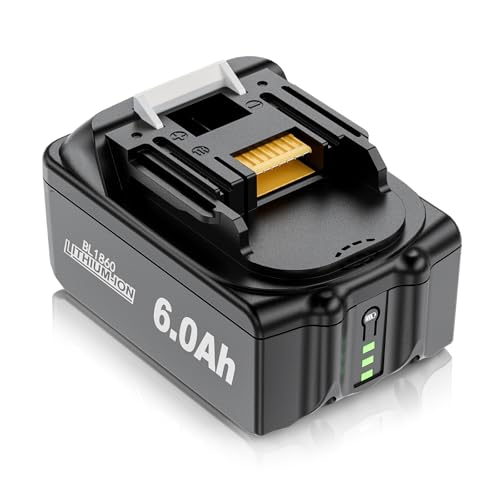
The LED charge indicator displays 4 levels, matching the visibility of the OEM BL1860B. Built-in fault diagnosis automatically stops charging and discharging if cell anomalies are detected. Third-party batteries may have slightly lower communication precision with the charger compared to OEM, so avoid leaving the battery in the charger after it’s full.
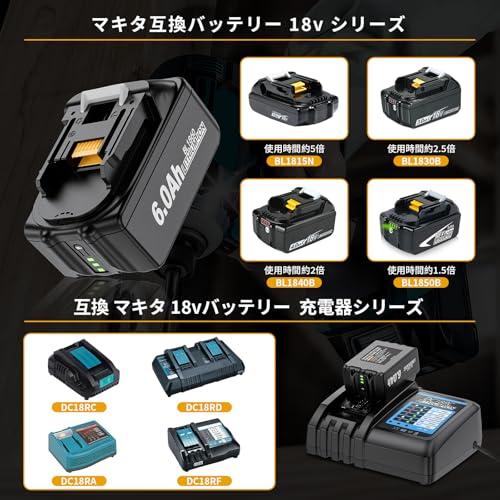
The single biggest tip for making third-party batteries last is managing storage temperature. Keeping them in a hot environment accelerates cell degradation faster than OEM. Store at 30–50% charge at room temperature (15–25°C), and top up every three months or more if unused.
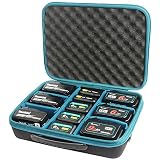
Waitley Battery Storage Case — Compatible with Makita 10.8V–18V–36V


 メナ
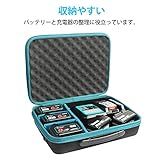
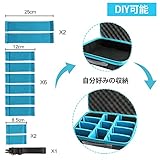
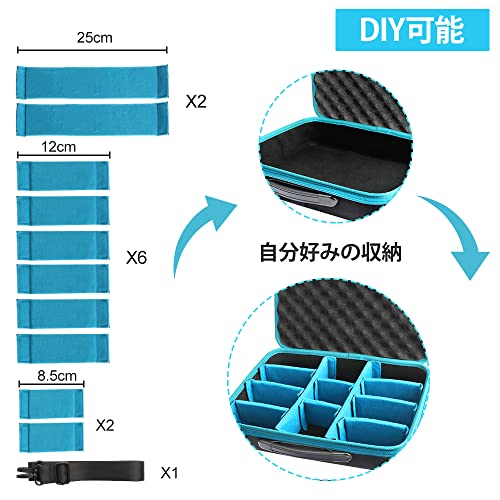
メナThe Waitley case is highly customizable. Moving the dividers lets me fit the BL1860B and charger together. Carrying everything to the job site has become dramatically easier.
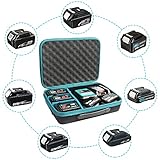
The Waitley battery storage case is sized to hold Makita 10.8V, 12V, 14.4V, 18V, and 36V batteries along with a charger in one place. The internal dividers are adjustable, so you can rearrange the layout to fit your number of batteries and charger size. The outer shell uses EVA shock-absorbing material to protect batteries from drops and stacking impact.
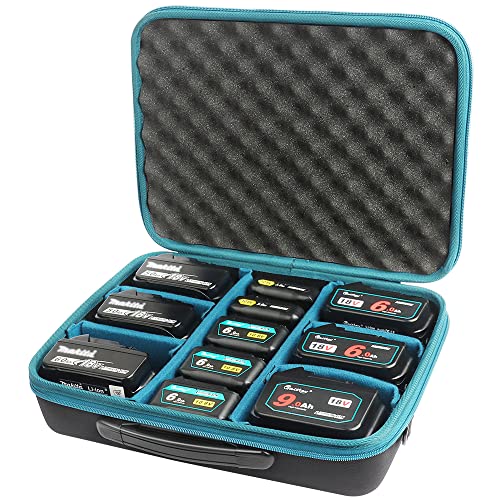
For long-term battery storage, a case earns its value by protecting against dust, moisture, and contact with foreign objects. Bare batteries are at risk of terminal corrosion and short circuits from conductive metal shavings. A proper case eliminates these risks.
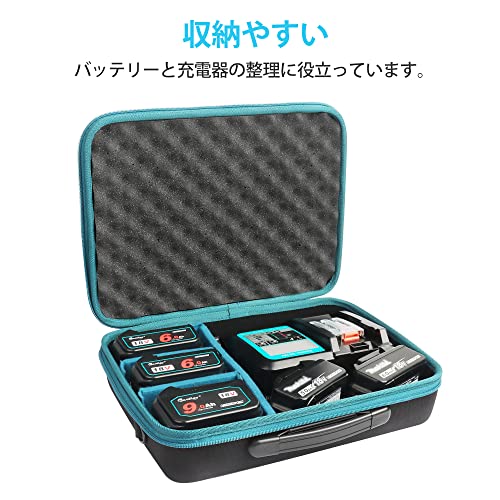
For bringing equipment to the job site, the handle lets you carry batteries and charger as a single unit in one hand. The semi-hard case holds its shape when standing next to a tool bag.
Makita Compact Tool Storage Case — Fits 2 Batteries + Charger


 メナ
メナMakita’s OEM storage case is engineered to exact dimensions so the batteries don’t rattle. Perfect for carrying an impact driver and batteries together.
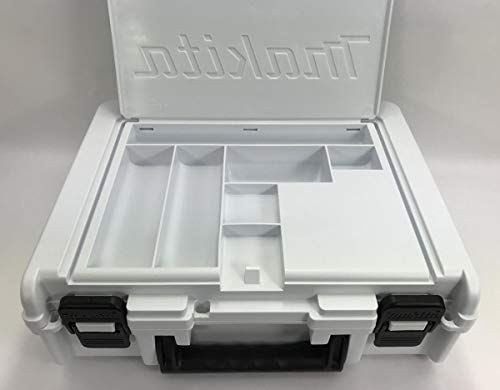
Makita’s OEM compact tool storage case is designed to perfectly fit an 18V compact driver or impact driver body, two batteries, and a charger. Being OEM, the holder contours match the tool’s shape exactly, preventing movement during transport and protecting battery terminals from contact.
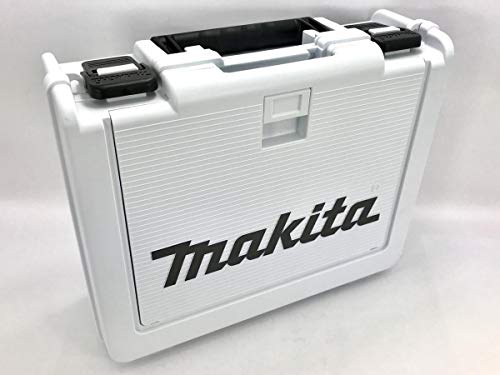
From a battery storage perspective, the OEM case has a slight concern with heat dissipation. Battery cells can reach 60–70°C immediately after charging, so always let the battery return to room temperature before sealing it in the case. Sealing a hot battery traps heat and affects cycle life.
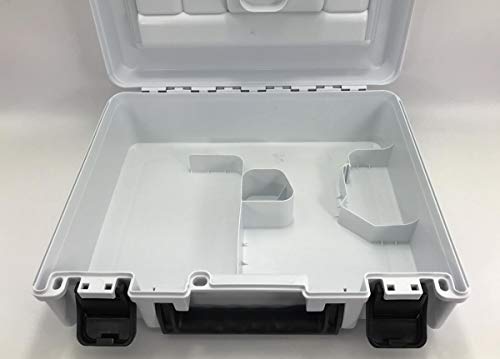
For long-term storage (more than a month without use), store in the OEM case in an indoor location away from direct sunlight. Placing the entire case in a plastic bag with silica gel desiccant provides complete moisture protection.
LiPo Battery Fireproof Explosion-Proof Safety Bag — Charge Protection Case



 メナ
メナKeeps any battery thermal runaway contained inside the case. I keep at least one in my on-site tool box and car as a risk-management measure.
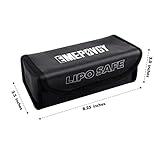
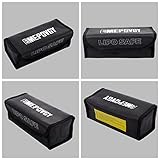
This safety bag uses a three-layer construction — outer PVC fiber, middle flame-retardant non-woven fabric, inner fiberglass — designed to contain flames and toxic gases inside the bag if a lithium-ion battery goes into thermal runaway. Compatible with power tool batteries as well as LiPo batteries for drones and electric bikes.
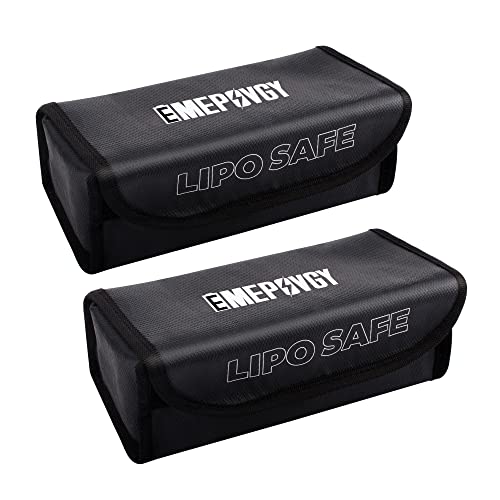
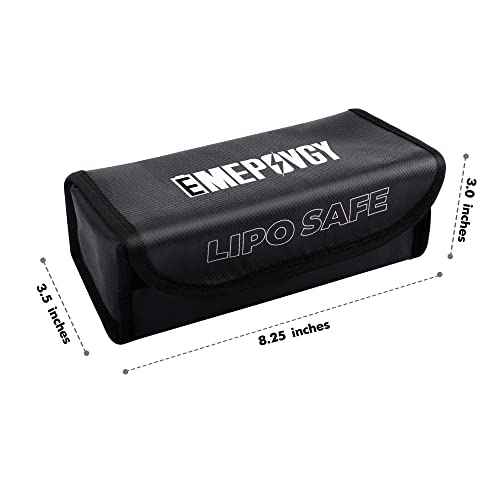
Measuring 21×9×8 cm, it fits 2–3 Makita 18V slide-type batteries (BL1860B equivalent). The zipper can be closed during charging, making it useful for unattended overnight charging and as a precaution when storing in a vehicle.
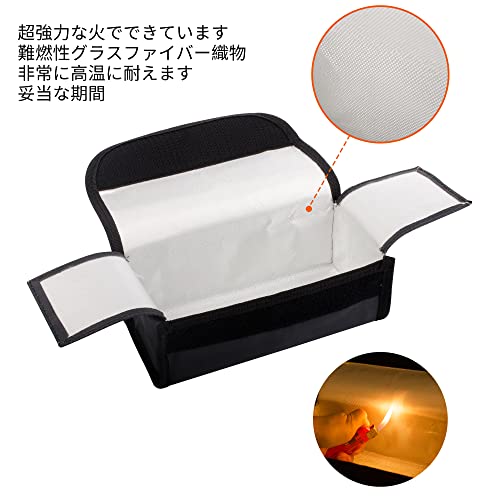
As a safety measure for battery storage, using a fireproof bag provides a dual benefit: prevention and damage containment. Combined with correct temperature and charge-level management, a safety bag minimizes the spread of fire to property and equipment in the unlikely event of an incident.
VANKO Large-Capacity Battery Storage Case — Compatible with Makita/HiKOKI 40V–18V




 メナ
メナThe VANKO case lets you store Makita and HiKOKI side by side — that’s the key advantage. For job sites with multiple brands, consolidated management is a lifesaver.
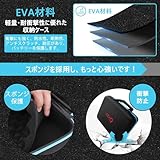
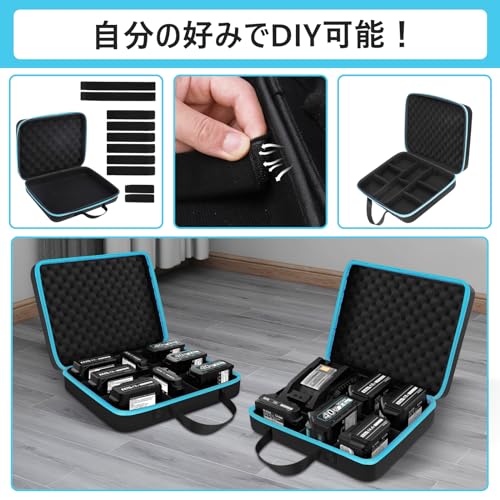
VANKO’s large-capacity battery storage case is designed to accommodate Makita and HiKOKI batteries and chargers from 10.8V to 40V. The internal dividers are fixed, but the layout matches the widths of common battery models, allowing you to manage a Makita BL1860B and a HiKOKI BSL36A18 in the same case.
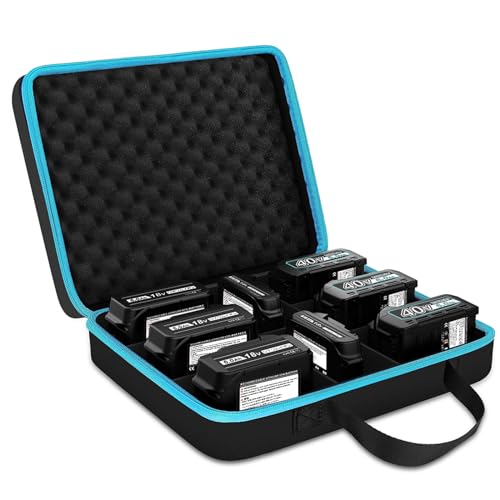
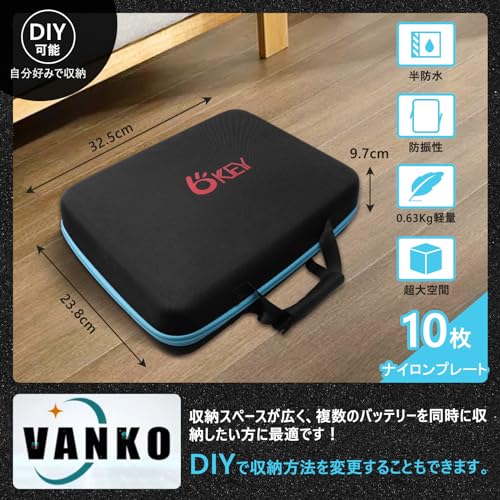
The outer shell uses a PVC + EVA composite material with water and dust resistance. The handle makes it easy to carry to the job site. Non-slip feet on the bottom keep it stable on trucks and workbenches.
For professionals who use multiple brands on the same job site, a single case for all batteries dramatically improves charge-status visibility and management efficiency. Being able to tell at a glance which batteries are fully charged is the foundation of never running out of power on the job.
Summary: Habits That Keep Your Batteries Going Longer
Extending lithium-ion battery life isn’t a complex technical challenge — it comes down to four habits: store at 40–60% charge, keep storage temperature at 15–25°C, let the battery cool after charging, and top up once a month during long-term storage. Follow these consistently and you’ll get the maximum cycle life out of any OEM battery.
Using a storage case is another overlooked factor. Leaving batteries exposed accumulates dust, metal particles, and moisture damage to terminals over time. A dedicated case is the best zero-cost battery protection measure you can implement today.
メナGood battery management protects your investment in tools. Monthly top-ups and temperature awareness alone can push back your next battery replacement by one to two years.