
Affiliate Disclosure: This article contains affiliate links. If you make a purchase through these links, we may earn a commission at no additional cost to you.
A cold job site slows everyone down — stiff hands, longer breaks, and a crew that just wants to get inside. A dedicated job site heater in the shack, garage bay, or warehouse corner makes a bigger difference to a winter workday than most people expect.
Job site heaters split into three basic types: propane and kerosene forced air (high heat output, no wall power needed for the fuel itself, but usually still need an outlet for the igniter/fan), portable radiant propane (fully cordless, smaller coverage), and electric (no fuel or fumes, but needs the right outlet). This comparison covers 5 models across all three types that are genuinely in stock and shipping through Amazon.com right now.
How to Choose a Job Site Heater
1. Fuel type: propane, kerosene, or electric
Propane and kerosene forced air heaters (Dyna-Glo RMC-FA60DGD, KFA50DGD) put out the most heat per dollar of hardware and work fine without wall power for the burner itself, but you’re refilling tanks and need ventilation for combustion exhaust. Electric heaters (King Electric, Lasko) skip fuel entirely but need matching voltage — check whether your space has 120V or 240V before buying.
2. Corded vs. fully cordless
Most forced air heaters still need an outlet to run the fan and electronic igniter, even though the heat itself comes from propane or kerosene. The Mr. Heater Big Buddy is the outlier here — it runs on 1 lb. propane cylinders with zero electrical connection, which matters a lot if you’re heating a space with no power at all.
3. Coverage area vs. space size
Match BTU/wattage to the space: a small job shack or single work bay is well served by the Big Buddy (400 sq ft) or Lasko CU12510 (spot heating), while a garage or warehouse corner wants the higher output of the Dyna-Glo forced air units (1,200-1,500 sq ft) or the King Electric (450 sq ft at 3750W).
Comparison Table: 5 Job Site Heaters
All five models at a glance.
| Model | Fuel/Type | Output | Coverage | Notes |
|---|---|---|---|---|
| Dyna-Glo RMC-FA60DGD | Propane, forced air | 30,000-60,000 BTU | up to 1,500 sq ft | Needs outlet for fan/igniter |
| Dyna-Glo KFA50DGD | Kerosene, forced air | 50,000 BTU | up to 1,200 sq ft | 98% fuel efficient |
| Mr. Heater MH18B | Propane, radiant | 4,000-18,000 BTU | up to 400 sq ft | Fully cordless |
| King Electric PGH2440TB | Electric, 240V | 3750W | up to 450 sq ft | Built-in thermostat |
| Lasko CU12510 | Electric, 120V | 1500W | spot heating | Standard outlet, pivoting legs |
5 Job Site Heaters Compared
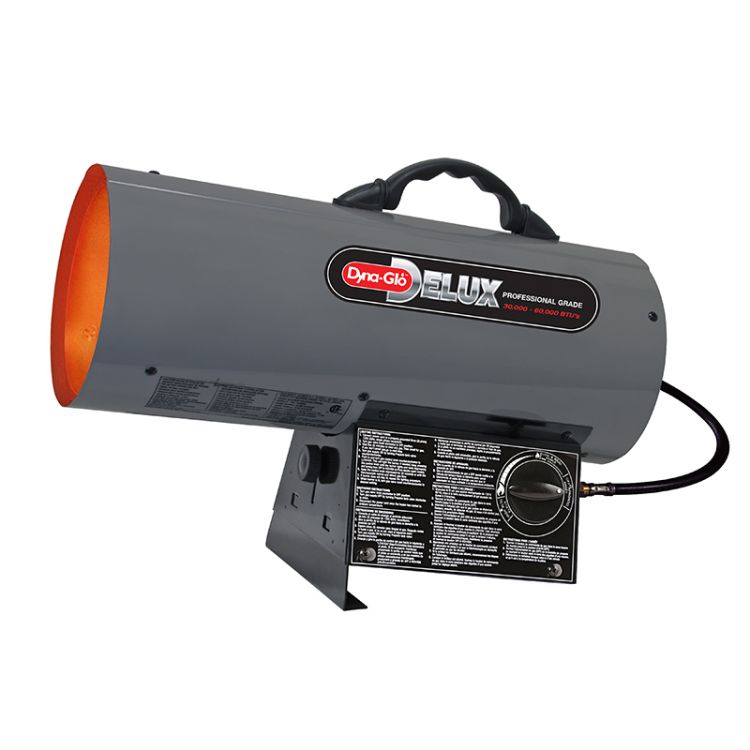
Dyna-Glo RMC-FA60DGD — Delux 30,000-60,000 BTU Liquid Propane Forced Air Heater


| Fuel | Liquid propane |
| Output | 30,000-60,000 BTU |
| Coverage | up to 1,500 sq ft |
| Power | Corded (needs outlet for igniter/fan) |
 メナ
メナThis is the one I’d reach for first on a job site with a full-size propane tank on hand. It puts out serious heat fast, and the variable BTU dial means you’re not stuck choosing between too hot and not enough.

The RMC-FA60DGD is a forced air propane heater with continuously variable output from 30,000 to 60,000 BTU, built for warming up job shacks, garages, and warehouse space in a hurry.
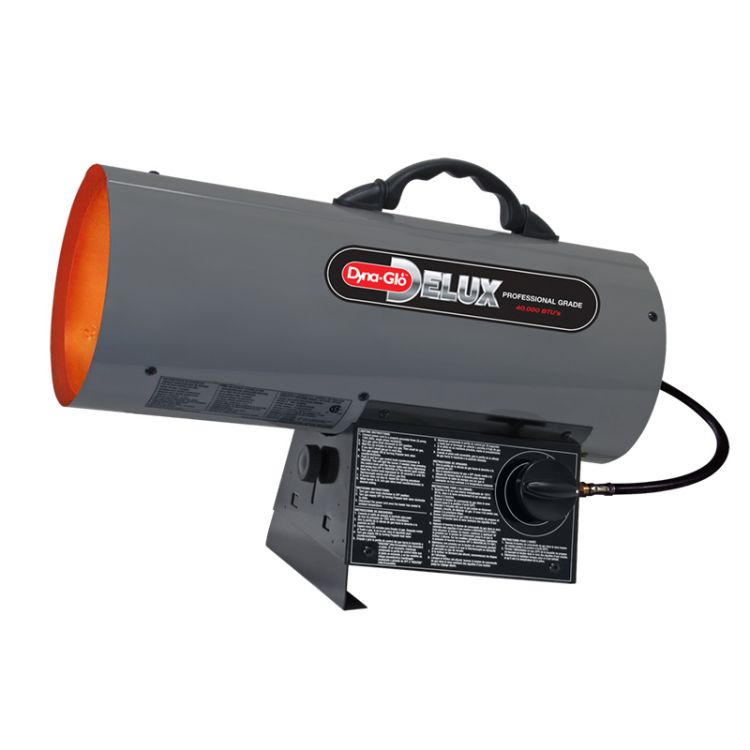
It runs on standard LP tanks (sold separately) with a hose and regulator included, and the electronic ignition means no matches or pilot light fuss in cold weather.
It still needs a wall outlet to run the igniter and fan, so it’s not a fully cordless option — keep that in mind if the space you’re heating has no power.
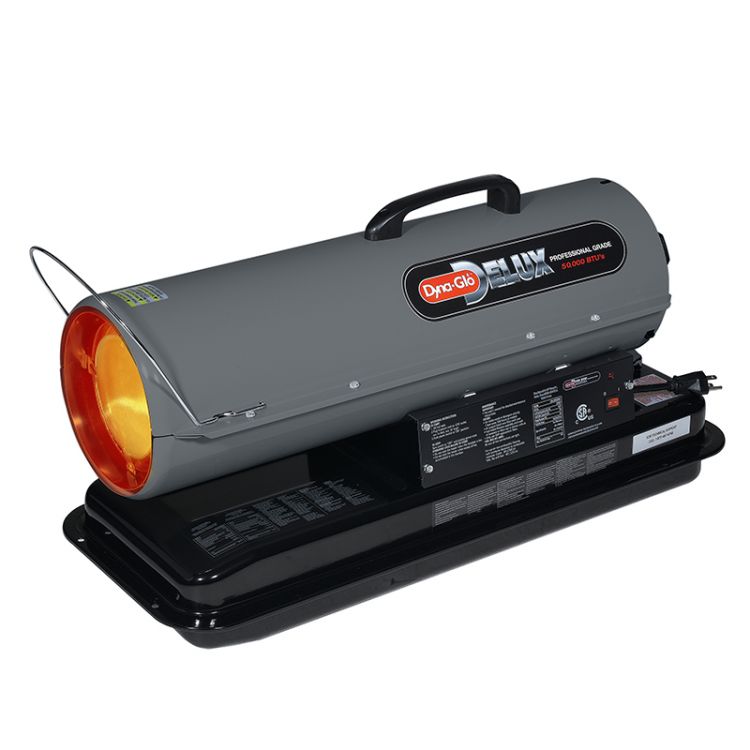
Dyna-Glo KFA50DGD — Delux 50,000 BTU Kerosene Forced Air Heater
| Fuel | Kerosene |
| Output | 50,000 BTU |
| Coverage | up to 1,200 sq ft |
| Efficiency | 98% fuel efficient |
メナKerosene runs cheaper than propane per BTU in a lot of markets, and this one is rated 98% fuel efficient — for a job that runs a heater all day, that adds up fast.

The KFA50DGD is a kerosene forced air heater rated for indoor and outdoor construction, industrial, and commercial use, covering up to 1,200 sq ft on a single tank.
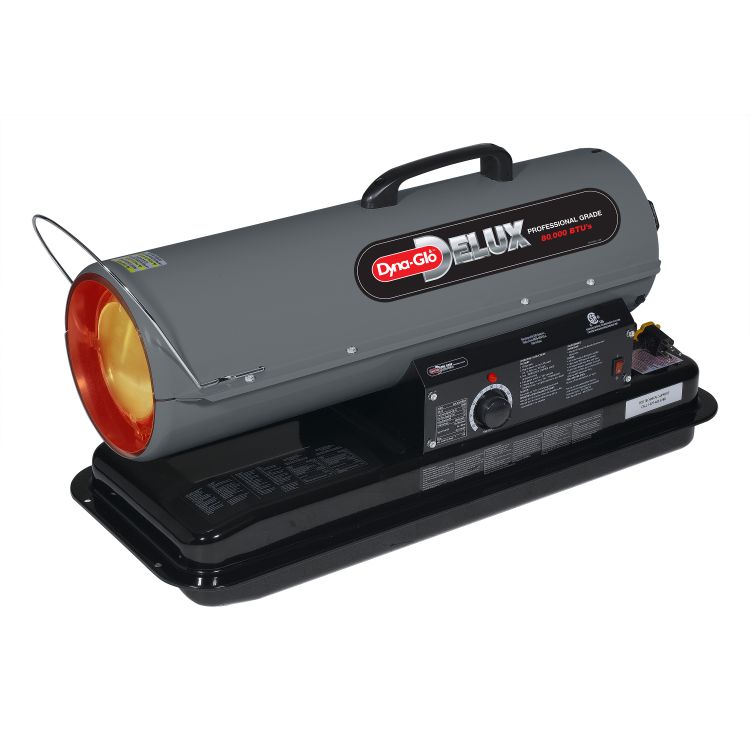
Setup is minimal — little to no assembly required — and the 98% fuel efficiency rating means less wasted fuel compared to older forced air designs.
Like the propane version, it needs an outlet for the fan and igniter, and kerosene models put off combustion exhaust, so ventilation matters if you’re running it in a closed space.
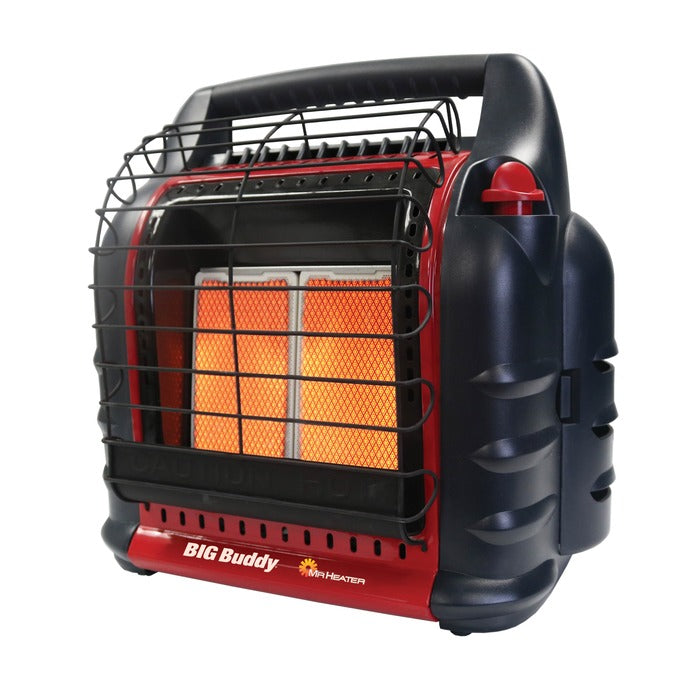
Mr. Heater MH18B — Big Buddy 4,000/9,000/18,000 BTU Portable Propane Heater
| Fuel | Propane (1 lb. cylinders or hose to a tank) |
| Output | 4,000/9,000/18,000 BTU (3-position) |
| Coverage | up to 400 sq ft |
| Power | None needed (fully cordless) |
メナThis is the one I grab for a small job shack or a trailer with no power at all. Swivel two 1 lb. propane cylinders in, and it’s running in about a minute — no cord, no outlet, nothing to plug in.
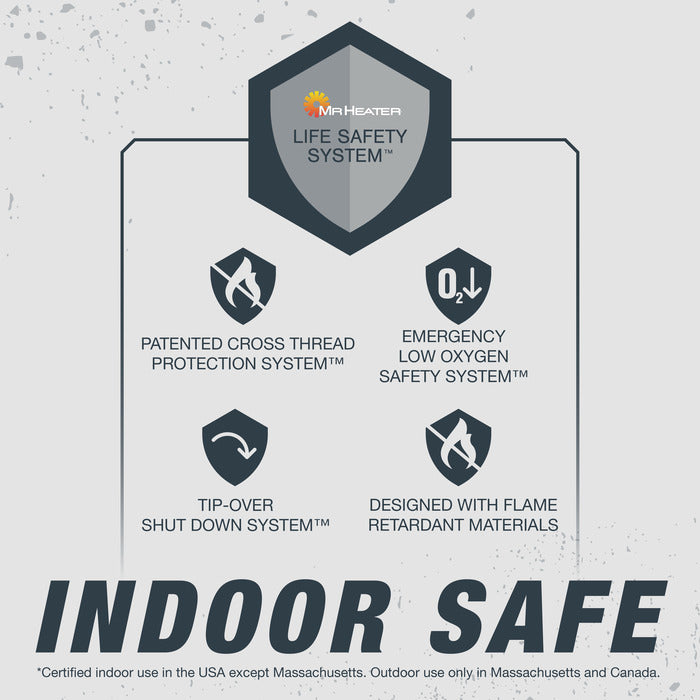
The Big Buddy MH18B is a radiant propane heater with a 3-position control (4,000/9,000/18,000 BTU) that’s rated indoor/outdoor safe thanks to its low-oxygen sensor and tip-over shutoff.
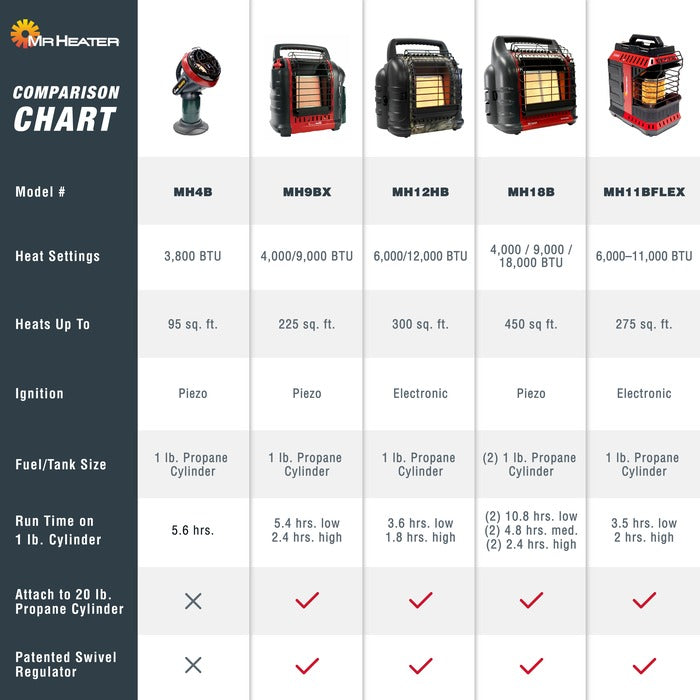
It runs on two 1 lb. propane cylinders, or connects to a larger tank with a hose kit (sold separately) for longer runtime — a genuinely useful bit of flexibility for a portable unit.
At 400 sq ft coverage it’s not going to heat a whole warehouse, but for a job shack, tent, or a single work bay it’s hard to beat for how fast it’s ready to go.
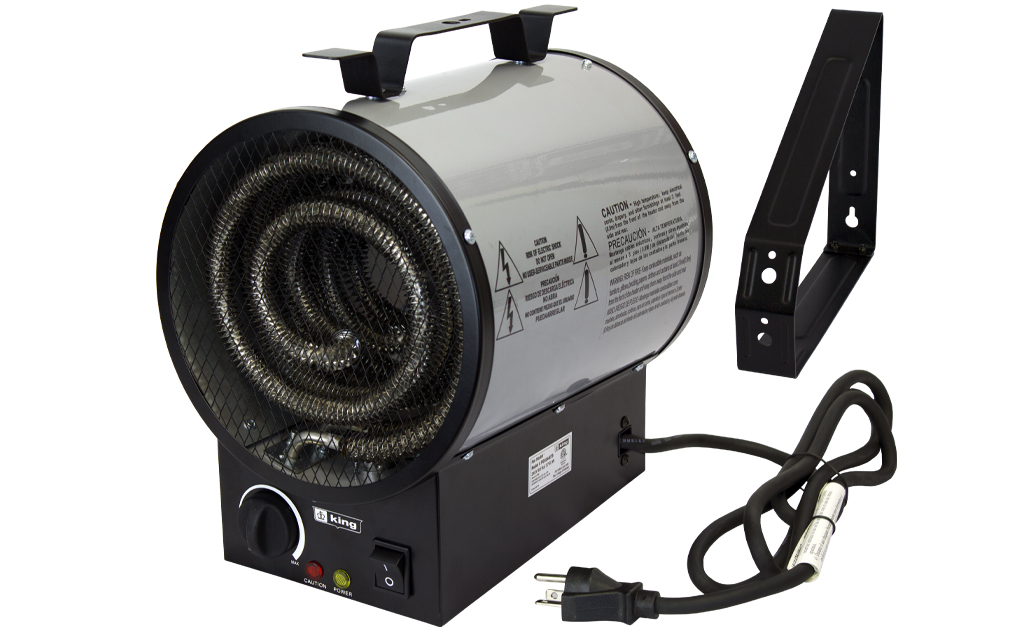
King Electric PGH2440TB — 3750-Watt 240-Volt Portable Garage Heater with Thermostat
| Fuel | Electric (240V, 20A plug) |
| Output | 3750W (12,800 BTU equivalent) |
| Coverage | up to 450 sq ft |
| Extras | Built-in thermostat, mounting bracket, 6 ft cord |
メナIf the space already has a 240V outlet, this skips fuel entirely — no tank refills, no combustion exhaust to vent, just plug it in and set the thermostat.
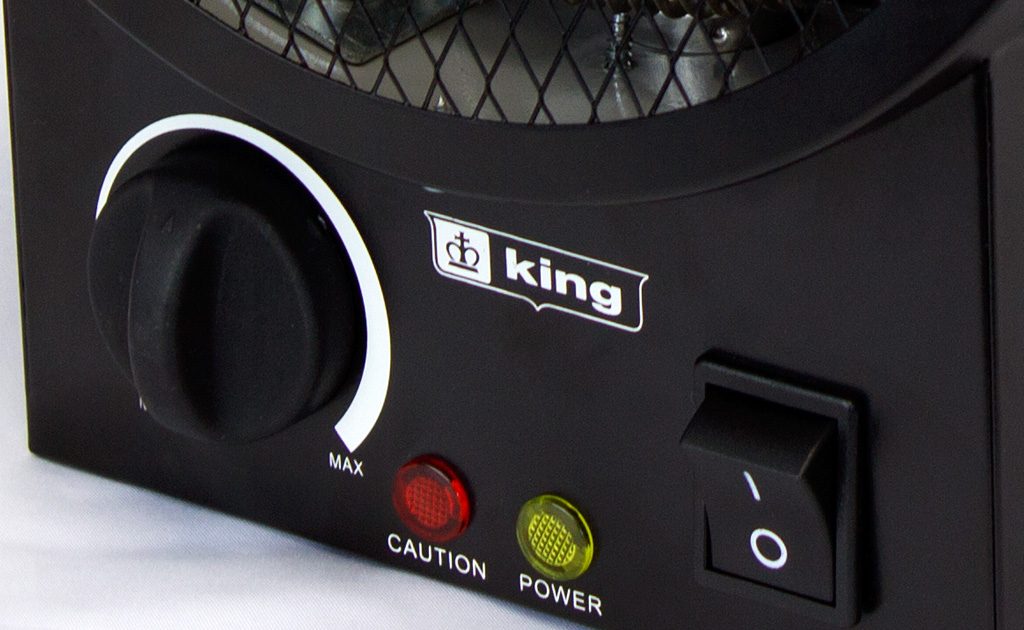
The PGH2440TB is a 3750W portable garage heater built for shops, garages, and job sites that already have 240V power available, with a built-in thermostat for hands-off temperature control.
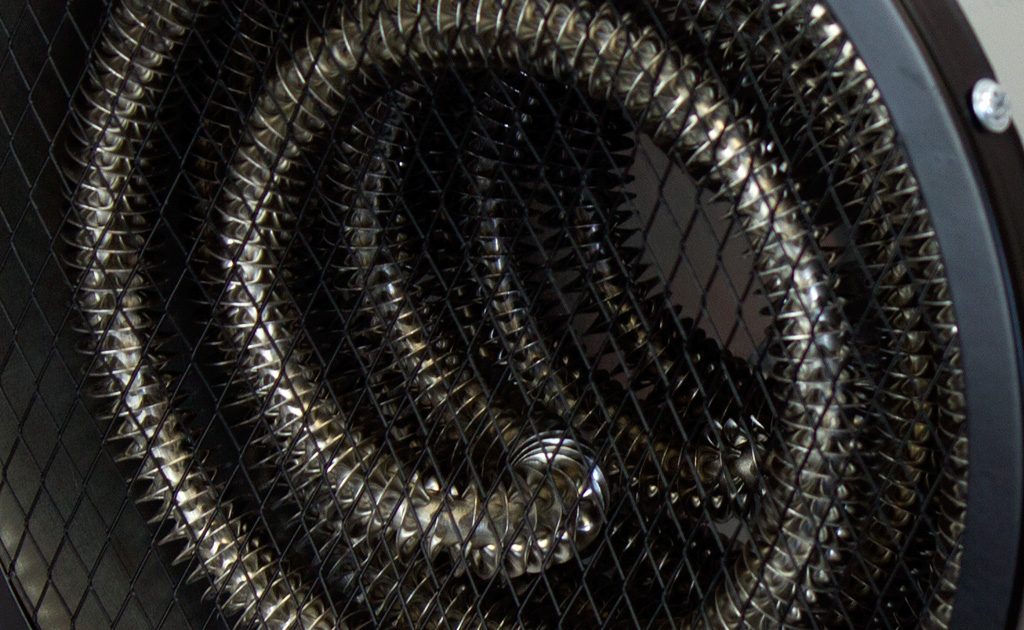
It ships with a mounting bracket if you’d rather hang it than leave it on the floor, plus a 6 ft cord with a 20A/240V plug — check that your outlet matches before buying.
No fuel, no fumes, and no tank to run out mid-shift make this the simplest option on this list to live with day to day, as long as you have the right power available.
Lasko CU12510 — Elite Collection 1500-Watt Ceramic Utility Heater with Timer
| Fuel | Electric (120V, standard outlet) |
| Output | 1500W |
| Coverage | small workspace / spot heating |
| Extras | Pivoting legs, digital thermostat, timer |
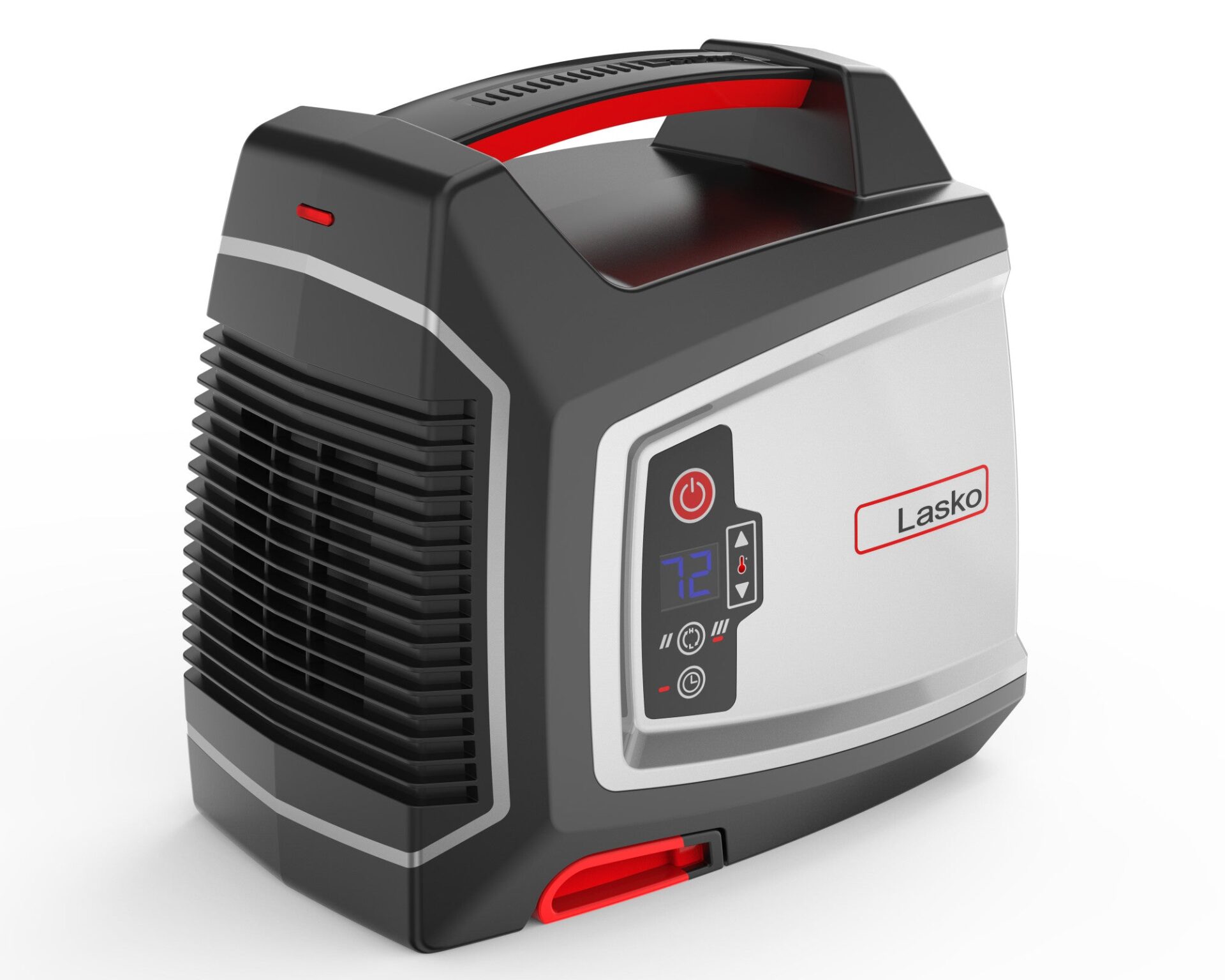
メナFor a small office trailer or a single workbench, this plugs into any standard outlet — no special wiring needed, and the pivoting legs let you aim the warm air right where you’re standing.
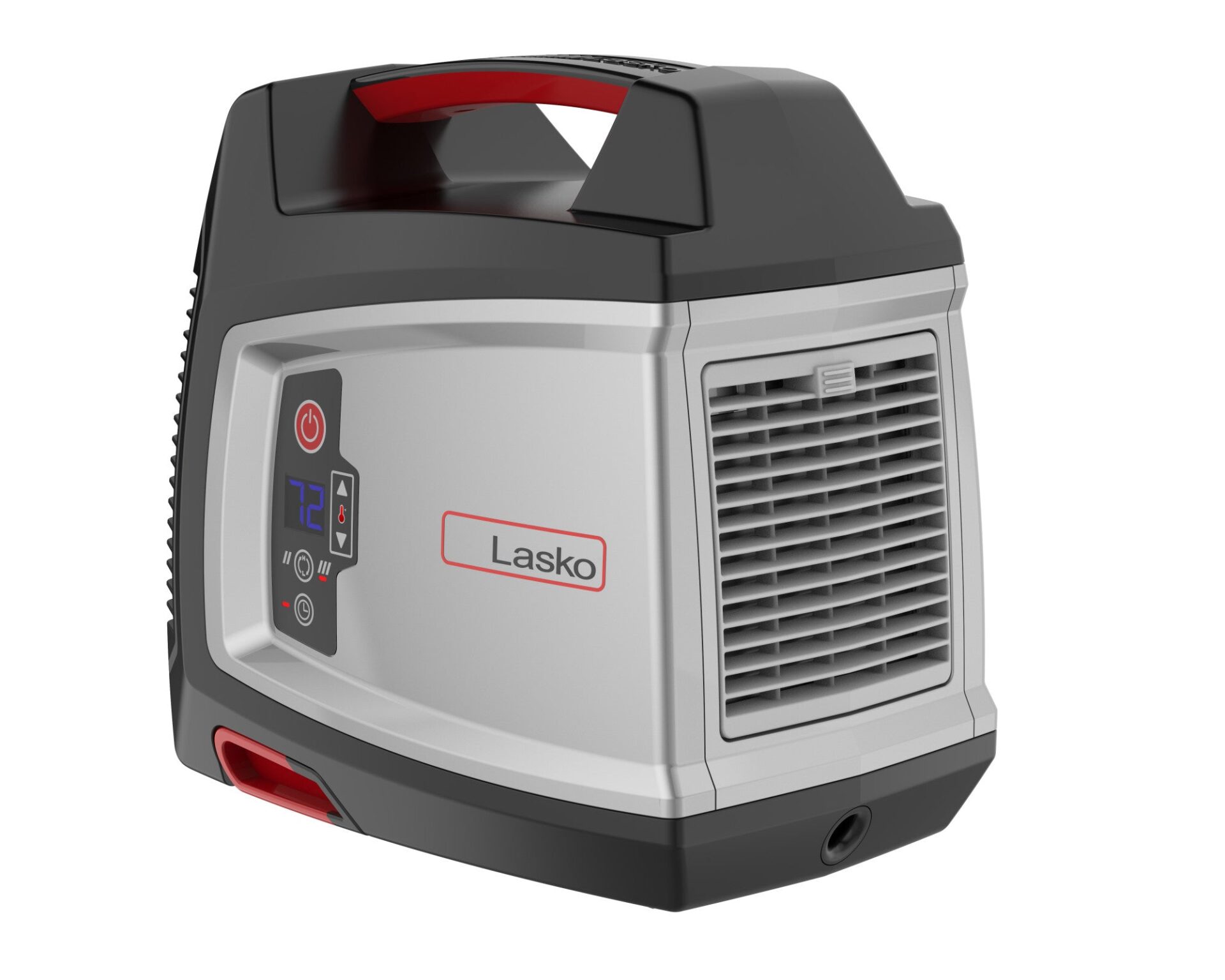
The CU12510 is a 1500W ceramic utility heater that runs on standard 120V household current, so it works anywhere there’s a normal outlet — no 240V circuit required.
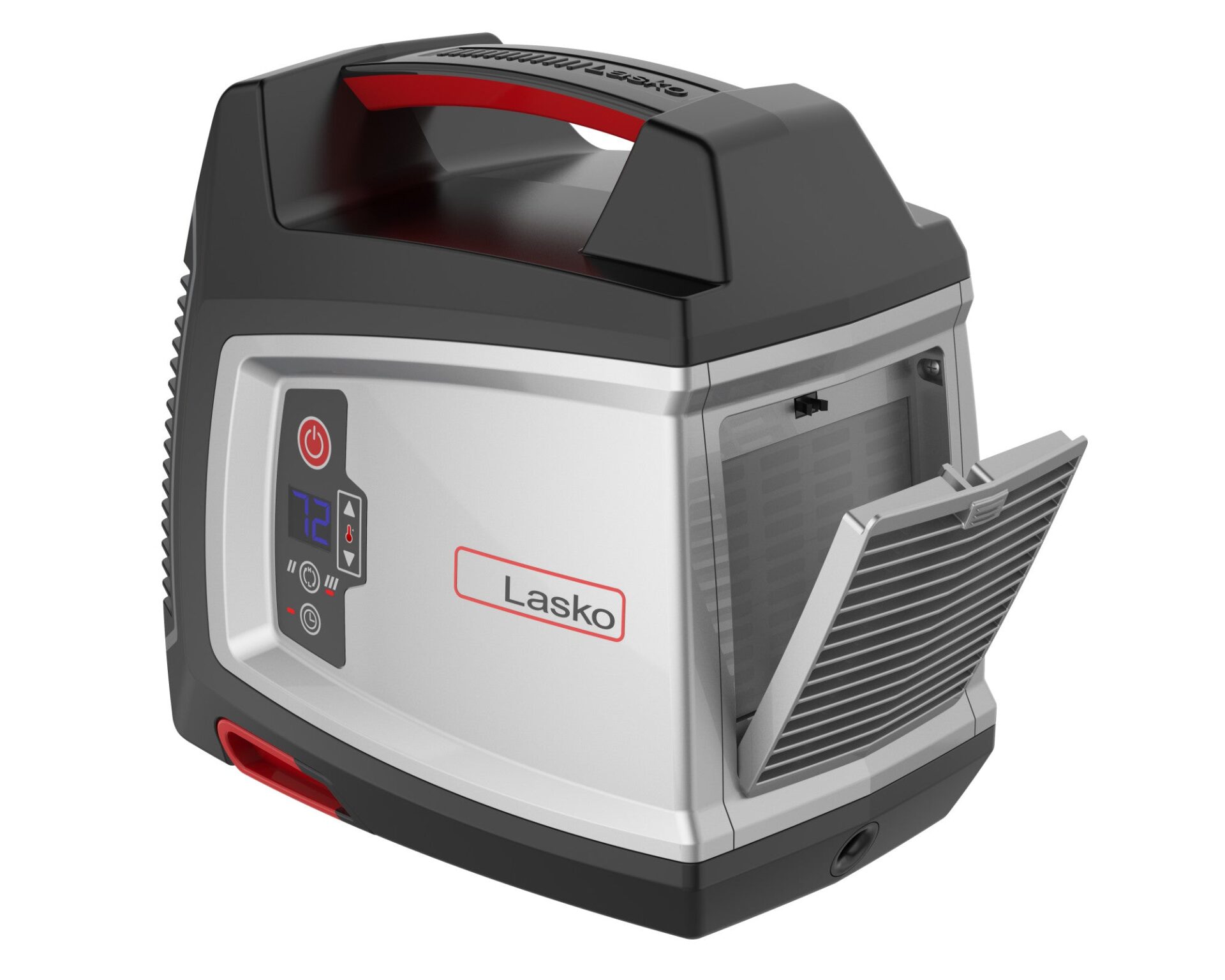
Pivoting legs let you angle the airflow upward toward a standing work area, and the digital thermostat with timer keeps it from running longer than needed.
It’s built for small spaces, not a whole garage — think a desk, a workbench, or a small office trailer rather than an open bay.
Job Site Heater Accessories
A few accessories make any of these heaters easier to live with day to day — worth picking up alongside the heater itself.
Propane Tank / Extension Hose Kit
Forced air propane heaters like the Dyna-Glo models and the Mr. Heater Big Buddy ship without a large propane tank. A hose and regulator kit lets you connect to a standard 20 lb. or 100 lb. tank instead of small cylinders, which cuts your running cost significantly on a job that runs a heater all day.
Heavy-Duty Extension Cord (for electric heaters)
The King Electric PGH2440TB draws up to 16A at 240V — a light-duty cord will overheat under that load. Use a cord rated for the heater’s full amperage, and keep runs as short as practical to avoid voltage drop.
Frequently Asked Questions
Can I run a propane or kerosene heater indoors?
Only if it’s rated for indoor use and the space has adequate ventilation. The Mr. Heater Big Buddy is explicitly rated indoor/outdoor safe with a low-oxygen sensor. Forced air units like the Dyna-Glo models are generally intended for well-ventilated construction spaces — check the manual before running one in a sealed room.
Do I need 120V or 240V for an electric heater?
It depends on wattage. The Lasko CU12510 (1500W) runs on a standard 120V household outlet. The King Electric PGH2440TB (3750W) needs a 240V/20A circuit — that’s a dedicated outlet most homes don’t have in every room, so confirm what’s actually available before buying.
メナFor most job shacks and garage bays, a forced air propane or kerosene heater like the Dyna-Glo models delivers the most heat for the money. Go cordless with the Mr. Heater Big Buddy if there’s no power at all, and go electric if the space already has the right outlet and you’d rather skip fuel entirely.
Conclusion: Match the Heater to the Space and Power You Have
We compared five job site heaters across propane forced air, kerosene forced air, portable radiant propane, and electric — from the Dyna-Glo RMC-FA60DGD and KFA50DGD to the cordless Mr. Heater Big Buddy and the electric King Electric and Lasko units. The right pick comes down to how much space you’re heating and what power or fuel is actually available there.