
 メナ
メナHey, I’m Mena — I’m an electrician, and I’ve been wearing composite-toe safety shoes to and from job sites for years now.
As an Amazon Associate, I earn from qualifying purchases.
Wearing safety shoes as your everyday shoes — if you don’t spend your day on a job site, that idea probably sounds strange. But if you do, you’ve almost certainly thought about it at least once.
I landed on this idea on a freezing evening after a job, dragging my feet into a convenience store. I looked down and thought, “there’s no way I’m walking into a restaurant in these.” Up until then I’d always just changed shoes without thinking about it. Then one day I picked up a pair of Puma safety shoes on a whim, and the first time I wore them home my wife asked if I’d bought new sneakers. When I told her they were safety shoes, she genuinely didn’t believe me. That’s when hunting down “safety shoes you’d actually wear off the clock” turned into a bit of a hobby.
Reebok, Skechers, New Balance, Puma, Timberland — sportswear and heritage footwear brands are all in this category now, seriously. Line them up next to a normal pair of trainers and, in a lot of cases, you genuinely can’t tell the difference. Wear them on-site, then keep them on for a beer after, a grocery run, whatever’s next. As someone who’s actually tried a stack of these pairs on real job sites, here are the 10 I’d point you toward.
What Makes a Safety Shoe “Casual-Wear”?
A “casual-wear safety shoe” is a shoe that clears real jobsite safety certification while still looking and feeling like an everyday sneaker — something you’d wear with jeans on your day off without a second thought. Ten years ago this basically didn’t exist as a category. Now it’s a real, growing corner of the footwear market.
In the US, the standard to look for is ASTM F2413 — the consensus standard that OSHA (29 CFR 1910.136) accepts for foot protection on the job. A shoe rated I/75 C/75 has passed testing for both impact resistance (a 75 foot-pound drop test on the toe) and compression resistance (up to roughly 2,500 lbs of static load). None of the products below use Japan’s JSAA rating system, which doesn’t apply outside Japan — every spec table here uses ASTM F2413 instead, the standard that actually governs safety footwear sold and used in the US.
Sportswear brands moving seriously into this space is what made the “looks like a sneaker” part possible. Composite and fiberglass toe caps replaced heavy steel, and a lot of these models now weigh somewhere in the 10-14 oz range per shoe — nowhere near the “lead brick” feeling of old-school steel-toe boots.
10 Casual-Wear Safety Shoes Worth Trying
Reebok Work Fusion Flexweave

 メナ
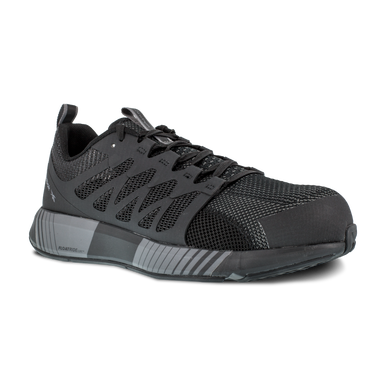
メナThe first time I wore the Fusion Flexweave, I forgot I even had safety shoes on until I was already three aisles deep in the hardware store. The knit upper breathes like a running shoe and the composite toe never once got in the way.
| Toe protection | Composite toe (XTR) |
|---|---|
| Weight | approx. 12 oz (340g) per shoe |
| Safety standard | ASTM F2413-18, I/75 C/75, EH rated |
| Cushioning | Floatride Foam midsole |
| Upper | Flexweave knit (figure-8 fiber weave) |
| Outsole | Oil/slip-resistant rubber |
If someone asks me where to start with a casual-wear safety shoe, this is the one I point to first. Nothing about it screams “job site” — it’s a knit athletic sneaker that happens to pass ASTM F2413 impact and compression testing, with electrical hazard (EH) protection built in. That combination of “looks normal, tests real” is exactly what this whole category is chasing.
The Flexweave upper (Reebok’s woven figure-8 fiber pattern, the same tech from their running line) flexes with your foot instead of fighting it, and the Floatride Foam midsole keeps it light enough that an 8-hour shift doesn’t turn into a slog. The composite toe is nonmetallic, so it won’t set off a metal detector and it insulates better than steel in cold conditions. If you want one pair that works for a warehouse shift and a Saturday errand run without you thinking twice, start here.
New Balance Industrial Logic BOA
 メナ
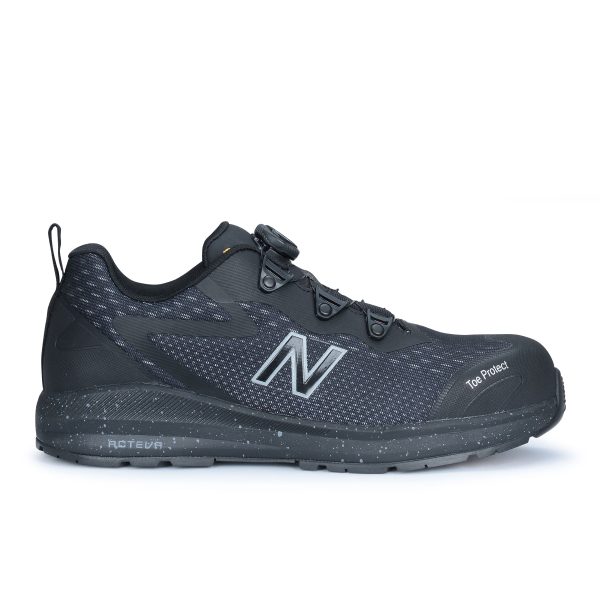
メナOnce you’ve clicked a BOA dial closed instead of tying laces, going back feels like a step backward. Twist to tighten, pop to release — done. On days I’m in and out of a client’s house a dozen times, this is the only closure system I want on my feet.
| Toe protection | Composite toe |
|---|---|
| Weight | approx. 13 oz (370g) per shoe |
| Safety standard | ASTM F2413-18, M/I/C, EH, puncture-resistant |
| Closure | BOA Fit System dial (quick-lace) |
| Midsole | ACTEVA performance foam |
| Outsole | AT TREAD slip-resistant pattern |
New Balance’s industrial line doesn’t get talked about nearly as much as it should. The Logic BOA takes the BOA Fit System — the same micro-adjustable dial you’ll find on high-end cycling and snowboard boots — and puts it on a genuine safety shoe. No more crouching down to retie laces with gloves on, no more laces coming undone mid-shift. Twist the dial, get a locked-in fit, and when you’re done for the day, pop it open in one motion.
Underneath the closure system it’s still a real work shoe: composite toe, electrical hazard rating, and a puncture-resistant plate in the midsole. ACTEVA foam cushioning is New Balance’s own running-shoe midsole tech, so the ride feels closer to a daily trainer than a boot. If you’re constantly removing and putting shoes back on — deliveries, service calls, warehouse picking — this is the model built for that exact rhythm.
KEEN Utility KS86 Utility Work Sneaker
 メナ
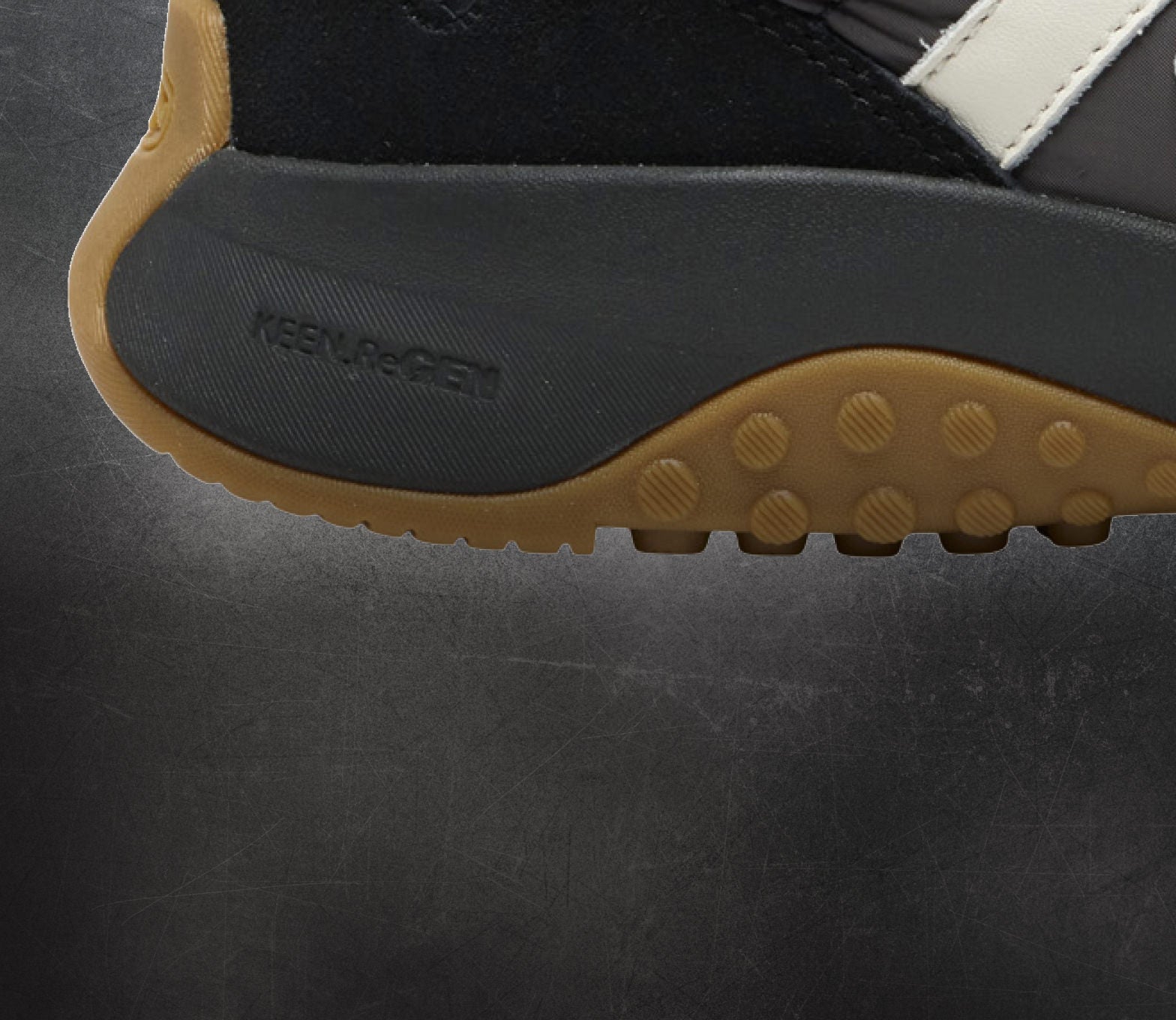
メナThe KS86 has a trail-runner build with real cushioning give — after the firm, ground-feel shoes on this list, stepping into the KEEN.ReGEN foam feels like a different category entirely.
| Toe protection | Carbon fiber safety toe |
|---|---|
| Weight | approx. 15.3 oz (434g) per shoe |
| Safety standard | ASTM F2413 rated |
| Cushioning | KEEN.ReGEN midsole (up to 50% energy return) |
| Outsole | Oil- and slip-resistant rubber |
KEEN built its outdoor and hiking reputation on trail-runner comfort, and the Utility line brings that DNA into the safety-shoe category with the KS86. The asymmetrical, left/right-specific carbon safety toe shaves about 15% of the weight off compared to a steel toe, without giving up impact protection.
The KEEN.ReGEN midsole is the standout feature here: it’s engineered to return up to 50% of the energy from each step, which shows up as noticeably less foot fatigue by the end of a long shift. Combined with an oil- and slip-resistant outsole, it’s built for people who are moving between surfaces all day rather than standing still on one spot.
Puma Safety Airtwist Low
 メナ
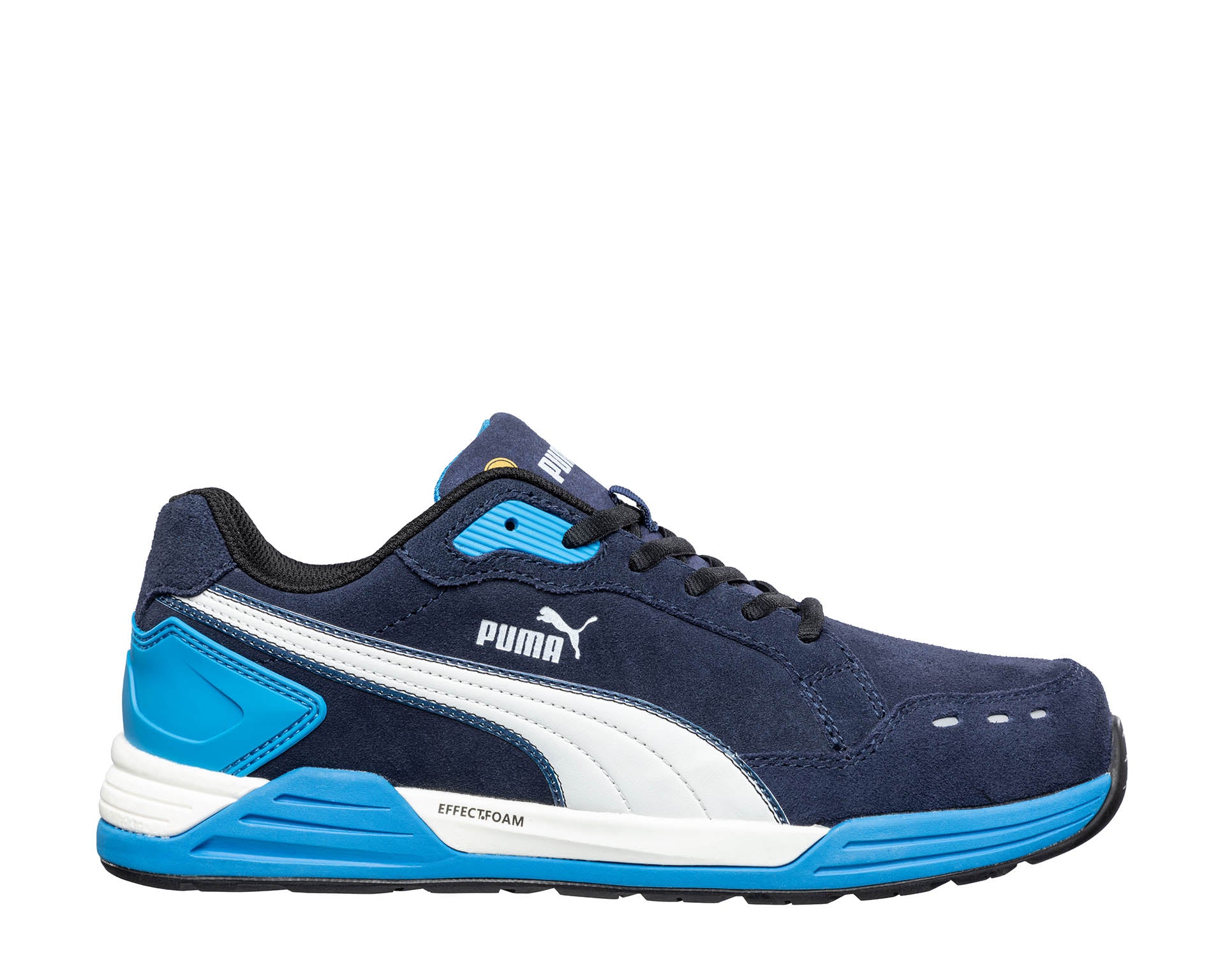
メナI had a coworker ask if I’d just bought new sneakers when I showed up in the Airtwist. When I told him it was a safety shoe he made me take it off to check for a toe cap. The suede finish really does that good a job of hiding what it actually is.
| Toe protection | Fiberglass composite toe |
|---|---|
| Weight | approx. 11 oz (310g) per shoe |
| Safety standard | ASTM F2413-18, I/75 C/75, EH rated |
| Upper | Hydrophobic suede |
| Midsole | Dual-layer EVA + EFFECT.FOAM |
| Outsole | Oil/slip-resistant, heat-resistant to 572°F |
If ASICS and Reebok are “athletic shoes that happen to be safety-rated,” Puma’s Airtwist Low goes a step further into pure sneaker territory. The hydrophobic suede upper looks and feels like a genuine lifestyle shoe — this isn’t mesh-and-plastic workwear styling, it’s an actual design language borrowed from Puma’s regular sneaker lineup, in muted colorways that work with jeans just as easily as work pants.
It’s not just a good-looking shell, either. The fiberglass composite toe is lightweight and doesn’t conduct heat or cold the way metal does, and the EH rating protects against electrical hazards — genuinely useful if you’re anywhere near live circuits or sensitive equipment. The dual-layer EVA and EFFECT.FOAM midsole keeps weight down while still cushioning a full day of walking. If you want a safety shoe that reads as “just a nice sneaker” and nothing else, this is the one that pulls it off.
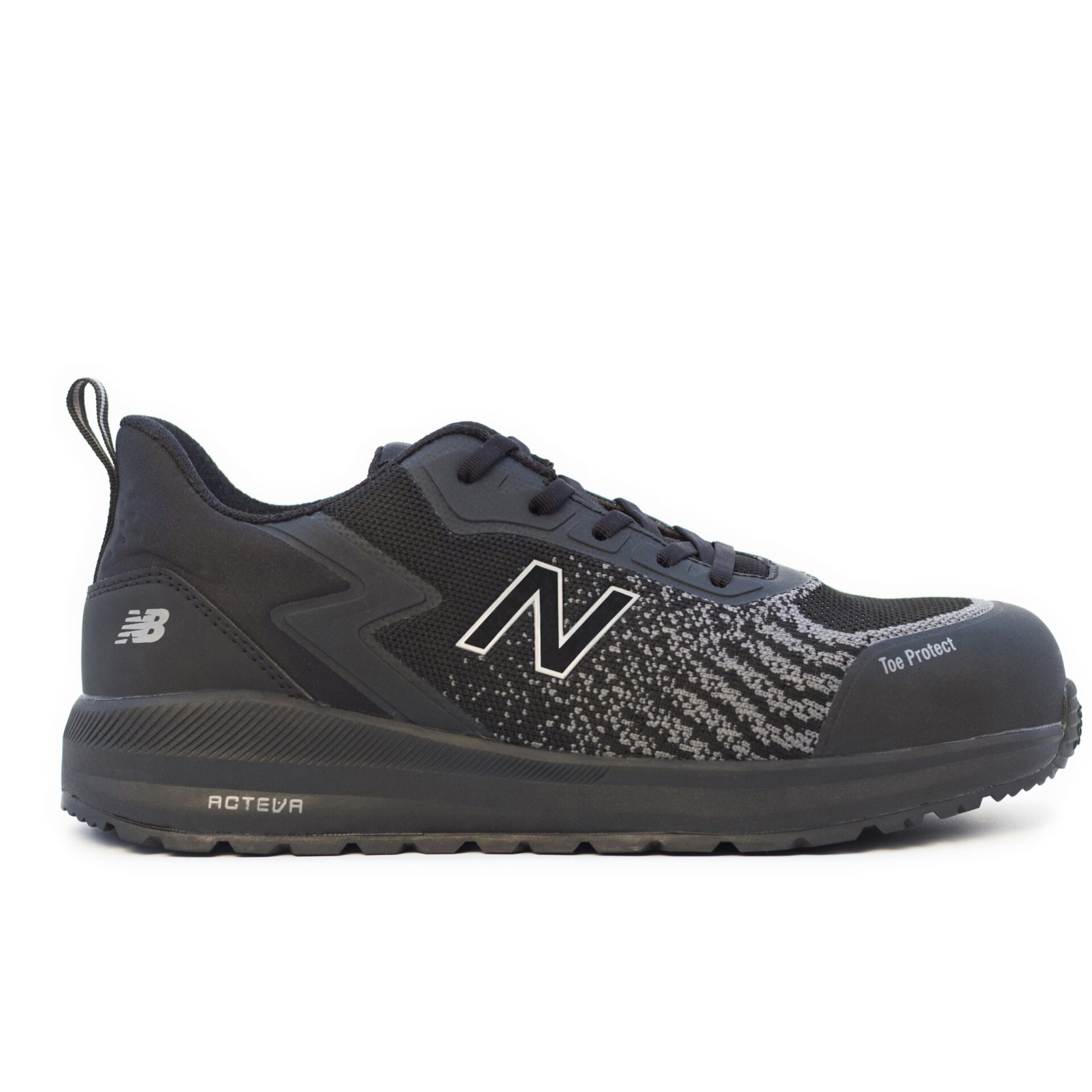
New Balance Industrial Speedware
 メナ
メナNew Balance making safety shoes still catches people off guard, but the fit is unmistakably NB the second you put it on — that same wrap-around, broken-in-from-day-one feel their running shoes are known for.
| Toe protection | Composite toe |
|---|---|
| Weight | approx. 14 oz (400g) per shoe |
| Safety standard | ASTM F2413-18, M/I/C, EH, puncture-resistant |
| Insole | New Balance Comfort Insert |
| Midsole | ACTEVA + PU dual-density |
| Reflective trim | Yes, low-light visibility strips |
Hearing that New Balance makes safety shoes surprises a lot of people, but they’ve clearly put real running-shoe engineering behind it. Speedware is built around the same ACTEVA cushioning platform used in New Balance’s performance line, paired with their own Comfort Insert for a sock-like fit through the midfoot — the brand’s signature “wrapped” feel translates almost one-to-one into the safety version.
Composite toe, EH protection, and a puncture-resistant plate cover the safety side, while reflective trim adds a bit of low-light visibility for early-morning or after-dark shifts. It leans closer to a lifestyle runner than a rugged work boot, which makes it an easy match for casual outfits on your day off. If comfort straight out of the box is your top priority, this is the model I’d hand you first.
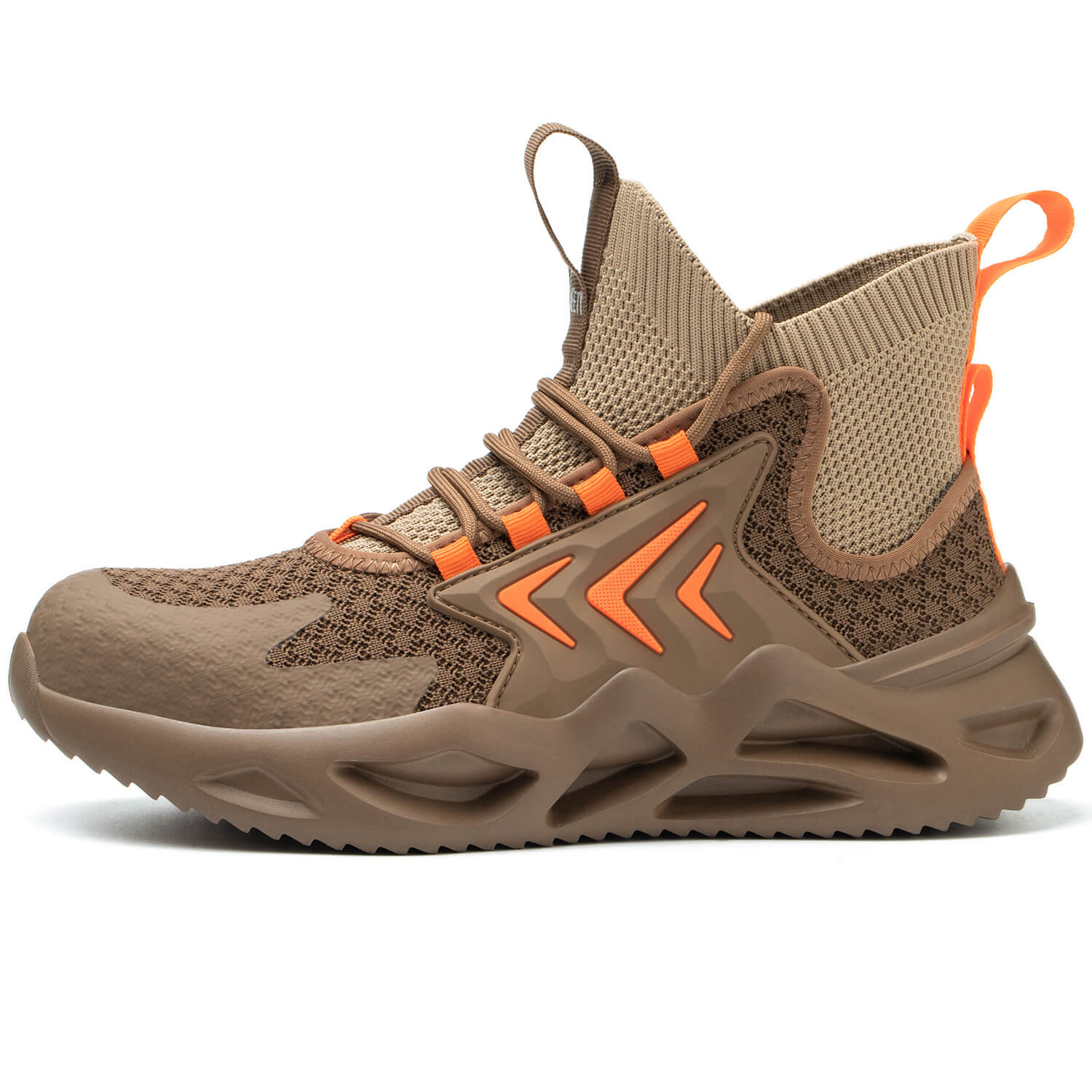
Maven High-Top Steel Toe Shoes
 メナ
メナA buddy of mine saw a pair of these and asked if I’d started wearing basketball shoes to work. High-top safety sneakers still catch people off guard — most people just don’t expect a hi-cut silhouette to have a steel toe hiding in it.
| Toe protection | Steel toe |
|---|---|
| Weight | approx. 15 oz (425g) per shoe |
| Safety standard | ASTM F2413 rated, 200J impact resistance |
| Cut | High-top, ankle support |
| Midsole | Kevlar puncture-resistant plate (select models) |
| Upper | Breathable mesh + synthetic overlay |
There’s a specific look that a low-top safety sneaker can’t quite pull off, and a canvas-and-rubber high-top nails it instantly. Maven builds their high-top line to feel exactly like the sneaker-store version of this silhouette — mesh paneling, a padded collar, a chunky rubber outsole — except there’s a steel toe cap doing real work underneath all of it.
The ankle support that comes with any hi-cut shoe is a genuine bonus on uneven ground or ladder work, and it protects your ankle bones from stray impacts the way a low-top simply can’t. Rated to the same ASTM F2413 impact standard as the rest of this list, it’s the pick for anyone who specifically wants that high-top look — riders who need ankle coverage for shifting gears, or anyone who just prefers a taller silhouette. Pair it with a low-top mesh model for hot summer days and you’ve got both bases covered.
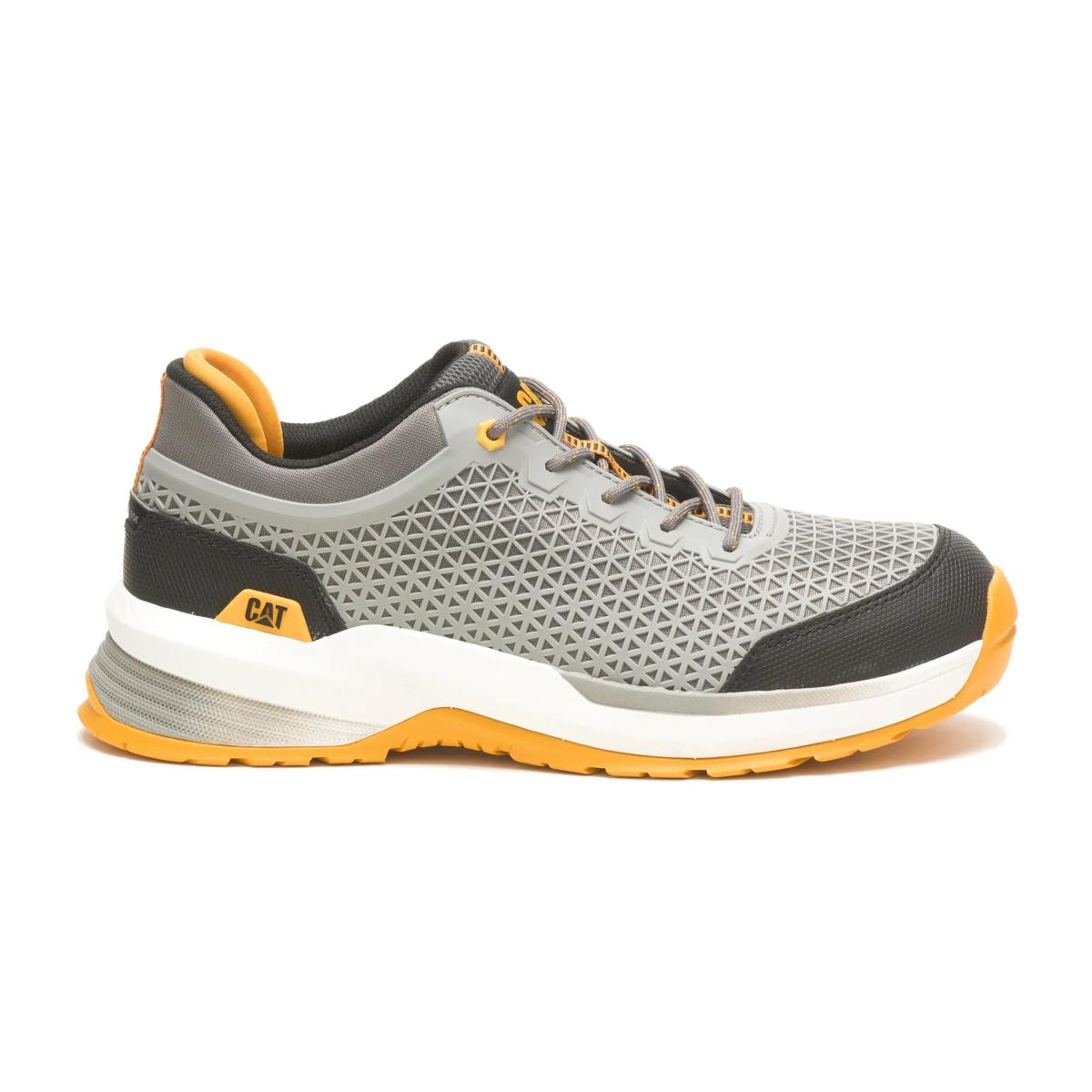
Cat Footwear Streamline 2.0 Composite Toe Work Shoe
 メナ
メナThis is the shoe I’d point a total beginner toward if they just want to try the casual-safety-shoe idea without betting on an unfamiliar brand. Cat’s been making work boots forever, and the Streamline is its answer to the athletic-sneaker trend.
| Toe protection | Composite toe |
|---|---|
| Weight | approx. 14 oz (397g) per shoe, mesh version |
| Safety standard | ASTM F2413-18, electrical hazard rated |
| Upper | Leather and nylon mesh |
| Outsole | Durable rubber, slip-resistant |
Caterpillar has been building work boots since the 1990s, and the Streamline 2.0 is its answer to the athletic-sneaker trend sweeping the safety-shoe category. It swaps the brand’s usual leather-boot bulk for a leather-and-mesh upper over a composite toe, landing at a genuinely wearable ~14 ounces per shoe in the mesh version.
It won’t out-cushion the pricier options on this list, but the composite toe protection and ASTM F2413-18 rating (including electrical hazard protection) cover real jobsite requirements, and Cat’s name recognition means you’re not betting on an unfamiliar brand for your first pair. If you like the concept enough to wear it daily, step up to something like the Reebok or Puma model once this pair wears out.
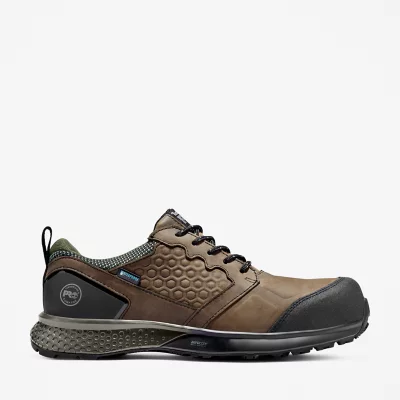
Timberland PRO Reaxion Waterproof
 メナ
メナThe rainy-day version of this list solves a real problem: showing up to a job with soaked socks. Waterproof doesn’t mean sweaty here either — my feet stay dry from both directions, rain outside and sweat inside.
| Toe protection | Composite toe (CarbonShield) |
|---|---|
| Weight | approx. 13 oz (370g) per shoe |
| Safety standard | ASTM F2413 rated |
| Waterproofing | Timberland PRO waterproof membrane |
| Construction | Full-grain leather + athletic hiker build |
| Outsole | Slip-resistant, oil-resistant rubber |
“My safety shoes get soaked through every time it rains” is a complaint every trades worker has made at some point. The Reaxion tackles it directly with Timberland PRO’s own waterproof membrane construction — it’s not the licensed GORE-TEX fabric, but it does the same core job of keeping water out from the outside while still letting the shoe breathe from the inside, so you don’t trade wet feet for sweaty ones.
CarbonShield composite toe technology keeps the safety rating intact while shaving weight compared to a traditional steel toe, and the athletic-hiker build gives it more traction and ankle stability than a plain low-top on wet or uneven ground. It’s priced toward the upper end of this list, but “my socks stay dry all day, every weather” is the kind of thing you stop noticing you have and immediately notice when you don’t. If you’re the one who dreads checking the forecast before a job, this is the pair to own.
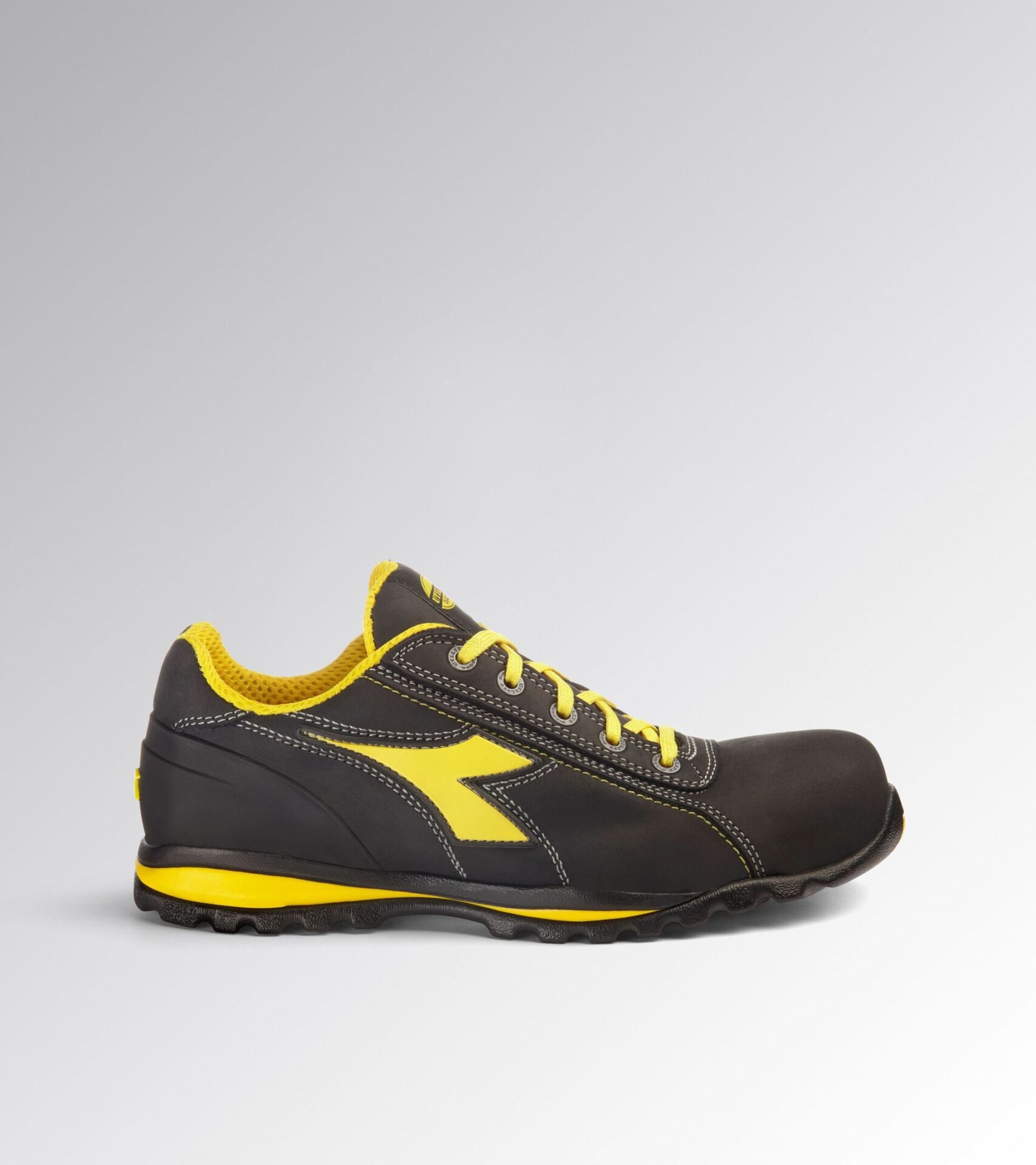
Diadora Utility Glove II Low S3 HRO
 メナ
メナYou can tell an Italian sports brand designed this the moment you see it — the silhouette has a completely different energy than the boxier American and Japanese options on this list. It’s the one people compliment before they realize it’s a work shoe.
| Toe protection | Composite toe |
|---|---|
| Weight | approx. 13 oz (370g) per shoe, lightweight for the category |
| Safety standard | S3 HRO (EU) — confirm ASTM F2413 labeling for US-sold units |
| Slip resistance | SRC-rated outsole |
| Upper | Synthetic leather, water-resistant, wipes clean |
| Origin | Italian sport-brand heritage (Diadora) |
Diadora built its name on soccer and tennis footwear, and the Utility safety line carries that same design sensibility straight into work boots. The Glove II Low has a low-profile, athletic silhouette with a distinctly European look — trimmer through the midfoot, a more angular toe box — that stands apart from the chunkier styling common in American and Japanese safety sneakers.
The synthetic leather upper is water-resistant and wipes clean easily, the SRC-rated outsole holds up on oily or wet floors, and the composite toe keeps weight reasonable for all-day wear. If you like the idea of a European sport aesthetic in your work shoe — and you’re comfortable double-checking the exact safety certification printed on the box before you buy — this is the most distinctive-looking pair on the list.
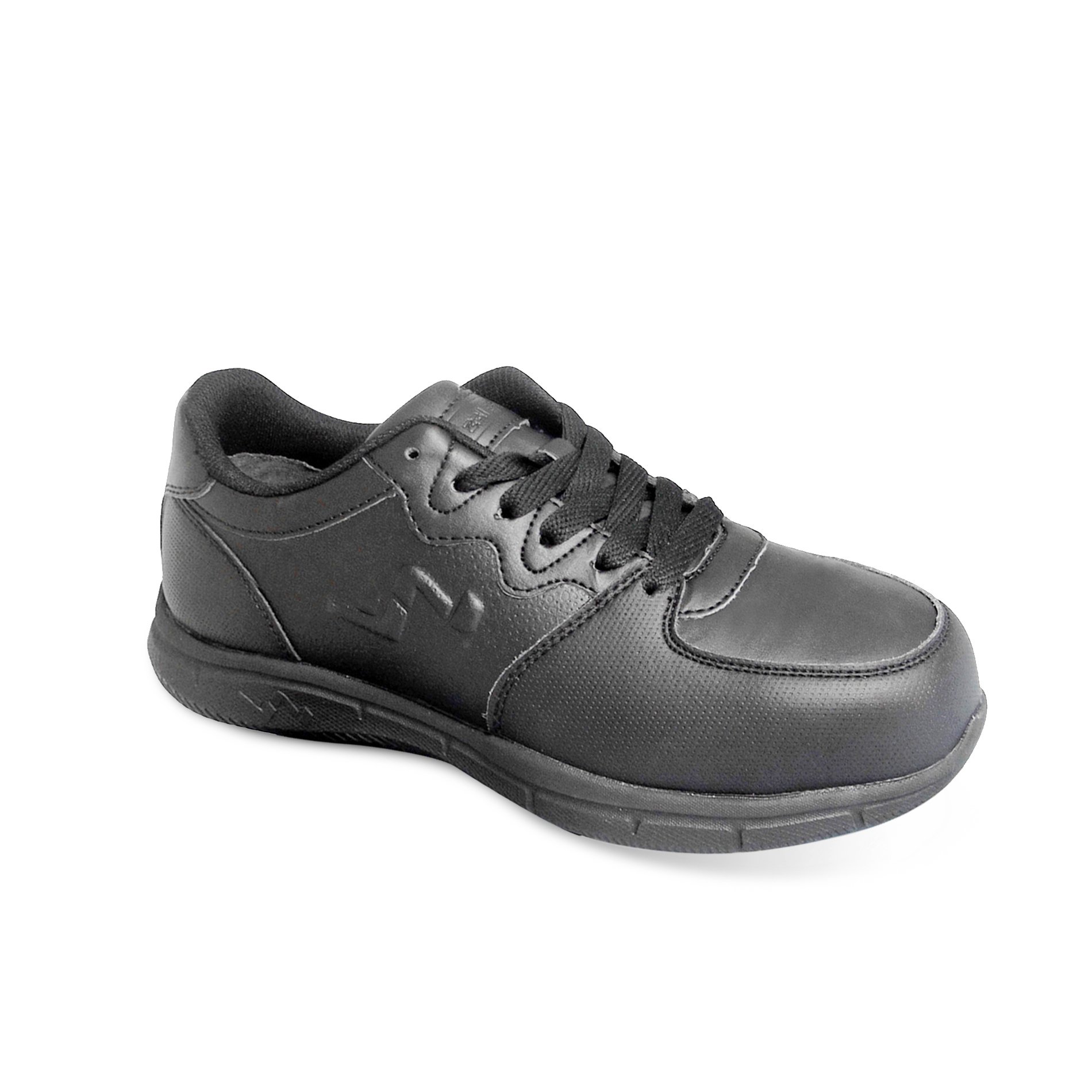
Genuine Grip 5020 Comp Toe Athletic Work Sneaker
 メナ
メナGenuine Grip has been making nothing but safety shoes since 1932, and it shows in the small stuff — the stitching, the way the sole doesn’t separate after a season of hard use. It’s the boring-but-reliable option, in the best way.
| Toe protection | Composite toe |
|---|---|
| Weight | approx. 12 oz (340g) per shoe |
| Safety standard | ASTM F2413 rated |
| Manufacturer focus | Safety footwear specialist since 1932 |
| Insole | Cushioned, odor-resistant |
| Outsole | Slip-resistant EVA/rubber combo |
Midori Anzen, the brand this shoe stands in for in Japan, built its reputation as a pure-play industrial safety footwear specialist rather than a general sneaker company that added a safety line. Genuine Grip fills that exact role in the US market — they’ve been manufacturing safety and slip-resistant footwear exclusively since 1932, with none of the crossover branding you get from sportswear companies dabbling in work shoes.
That specialist focus shows up in construction quality more than flashy tech: tighter stitching, a sole bond that holds up to daily wear, and a fit that’s built around all-day standing rather than short bursts of athletic movement. Composite toe, ASTM F2413 rated, and priced to compete directly with the SPIEZ budget pick — if you want the reliability of a company that has done nothing but safety shoes for close to a century, this is the one to trust.
3 Things to Check Before You Buy a Casual-Wear Safety Shoe
After going through more pairs of these than I’d like to admit, I’ve narrowed it down to three things that actually matter if you want a safety shoe you’ll genuinely wear off the clock. Get these three right and you won’t end up with a pair gathering dust in the closet.
1. Design: Low-Top Sneaker Silhouettes Win
This is the one that matters most. It doesn’t matter how good the specs are if the shoe still reads as “obviously a work boot” — you won’t want to wear it anywhere else. A low-top that actually looks like a sneaker pairs naturally with jeans or chinos and doesn’t look out of place walking into a convenience store or a diner. If you do want a high-top, lean into it on purpose — something with real sneaker or hi-top styling, like the Maven pick above, rather than a shoe that’s just a work boot with a taller shaft. A half-committed high-top still reads as “safety shoe” and you’ll end up wanting to change out of it anyway.
2. Weight and Comfort: Aim for 14 oz or Lighter Per Shoe
Old-school steel-toe boots genuinely felt like walking with a metal plate strapped to each foot. A full day in them and your feet would be swollen enough that you didn’t even want to stop for a coffee on the way home. Composite and fiberglass toe caps changed that math — a lot of today’s models land around 10-13 oz per shoe. As a rule of thumb for everyday wear, look for something 14 oz or under. Cross much past 16-17 oz and you’ll feel it by the end of a long day, even with a good toe cap.
3. Safety Rating: Look for the Right US Certification
Even if the shoe is mostly living your off-the-clock life, get one rated ASTM F2413 (I/75 C/75) — the toe cap needs to survive a 75 foot-pound impact and roughly 2,500 lbs of compression. If something heavy does fall, you want your foot actually protected, not just wearing something that looks the part. It also means you’re covered the moment you get called to a site unexpectedly, without needing to swap shoes first.
FAQ
Where can I buy casual-wear safety shoes?
Amazon.com carries most of the models above directly. Several brands — New Balance Industrial, Puma Safety, Timberland PRO, and Maven — also sell through their own official sites, and specialty safety-footwear retailers like Shoes For Crews, Lehigh Safety Shoes, and Zappos’ work-shoe section stock a wide range as well.
How should I size a safety shoe?
Start with your normal sneaker size — for most of these models that’s a safe baseline. That said, composite-toe models have a toe cap that doesn’t flex, so if your toes are already snug in your regular size, it can feel tight. If you’re between sizes, sizing up half a size is the safer call, especially for all-day wear.
What does the US safety rating actually mean, and how is it different from Japan’s JSAA?
ASTM F2413 is the US standard OSHA recognizes for protective footwear. A shoe rated I/75 C/75 has been tested to withstand a 75 foot-pound toe impact and roughly 2,500 lbs of compression, with a built-in (non-removable) safety toe cap. JSAA — the standard used on the original Japanese version of this list — is Japan’s separate national safety-shoe rating system and isn’t recognized or enforced in the US. If you’re buying in the US, ASTM F2413 (sometimes paired with an EH electrical-hazard rating) is the label to look for, not JSAA.
Will these hold up to being worn every day?
Mainstream brands like Reebok, New Balance, Skechers, Puma, and Timberland PRO build these to handle daily wear — a rough rule of thumb is 1-2 years under regular full-time use (8 hours a day, 5 days a week) before it’s time to replace them. Budget-focused picks like the SPIEZ model on this list tend to run closer to 6-12 months. Watch for worn-down outsole tread, a toe cap that’s started to feel loose, or a torn upper — any of those is your sign to retire the pair.
Bottom Line
The era of safety shoes being heavy, ugly, and exhausting to wear all day is genuinely over. Every pair on this list holds its own next to a regular sneaker in both looks and comfort, while still meeting real ASTM F2413 safety certification.
After trying a stack of these, here’s my honest breakdown. If you’re picking your first pair and don’t want to overthink it, start with the Reebok Work Fusion Flexweave — balanced comfort, looks, and price with no real weak point. If you’re in and out of shoes constantly, go BOA: the New Balance Logic BOA or a BOA-equipped model. If style is the priority, the Puma Airtwist Low or the Diadora Glove II Low. If you just want to try the concept cheap, the SPIEZ pick. Want a firmer, more ground-connected ride, go Skechers. Need to keep your feet dry on wet-weather jobs, the Timberland PRO Reaxion Waterproof has you covered.
Carrying two pairs of shoes everywhere — one for the job, one for everything after — is a habit worth breaking. Walk off-site straight into a store, a bar, dinner with your family, without changing shoes first. Not having to think about footwear at all removes more daily friction than you’d expect. One of these 10 pairs is very likely the one that fits you.