
Affiliate Disclosure: This article contains affiliate links. If you make a purchase through these links, we may earn a commission at no additional cost to you.
“What’s the difference between chargers? Which one should I choose?” — Battery chargers for power tools don’t get as much attention as the tools themselves, but they are critical equipment that directly affects jobsite efficiency. Differences in charging speed, supported voltage, and the number of simultaneous charging ports can significantly impact your daily working hours and charging costs.
In this article, we thoroughly compare 10 major charger models from Makita, HiKOKI, Bosch, DEWALT, and Panasonic. We explain the practical usage differences for each model — from rapid charging and multi-voltage support to simultaneous USB charging — from a professional jobsite perspective.
 Mena
MenaThe most painful charger selection mistake is when “the battery can’t be charged” or “charging is too slow.” Once you’ve chosen your tool, always confirm the compatible charger as a set.
Types of Chargers and How to Choose
Rapid Charging vs. Standard Charging
Chargers are broadly divided into rapid chargers and standard chargers.
· Rapid chargers: Charge in a short time with high charging current (8–16A). The standard for professional jobsites. Approximately 30–45 minutes for a BL1860 (6Ah).
· Standard chargers: Charge slowly with low charging current (2–4A). Gentler on battery life but takes longer (90 minutes+). Suitable for DIY and light work.
For professional jobsites, rapid chargers are the only choice. Charging downtime directly affects productivity.
How to Choose a Multi-Voltage Charger
If you have batteries in multiple voltage ranges, a multi-voltage charger can reduce the number of chargers you need.
· Makita DC18SH: Simultaneous 2-port charging for 14.4V/18V
· Panasonic EZ0L81: Supports 10.8V–28.8V (all Panasonic voltages)
· DEWALT DCB115: Supports 3 voltages: 10.8V/14.4V/18V
However, even with multi-voltage support, cross-brand compatibility does not exist. A Makita charger cannot charge HiKOKI batteries, so consolidating to a single tool brand is a prerequisite.
Compatibility Checklist
A compatibility checklist you must verify before purchasing a charger:
☑ Does the tool brand match? (Makita → Makita charger, HiKOKI → HiKOKI charger)
☑ Does the battery slide type match? (Slide-type / Plug-in type)
☑ Is the battery voltage range within the charger’s supported range?
☑ 40Vmax (Makita) / 36V MultiVolt (HiKOKI) require a separate dedicated charger
☑ Is the charger’s AC adapter voltage compatible with Japan’s 100V standard? (Watch out for imported models)
Charging Time Comparison Chart (Major Batteries)
Charging time comparison for a typical 18V/6.0Ah battery (manufacturer-stated values):
| Charger | Charging Current | 6.0Ah Charge Time | USB |
|---|---|---|---|
| Makita DC18RC | 8A | Approx. 40 min | No |
| Makita DC18RF | 12A | Approx. 40 min | 5V/2.1A |
| Makita DC18SH | 2.6A×2 | Approx. 130 min (2 batteries simultaneously) | No |
| HiKOKI UC18YML2 | — | Approx. 22 min | No |
| HiKOKI UC18YDL2 | — | Approx. 22 min | 5V/2.1A |
| Bosch GAL18V-160C | 16A | Approx. 26 min (80%) | No |
| DEWALT DCB115 | — | Approx. 60 min (4Ah) | No |
Top 10 Recommended Chargers
Makita DC18RC Rapid Charger 14.4V/18V
MenaThe DC18RC is still the jobsite standard. Fully charges a BL1860 in 40 minutes. With 2-battery rotation, everything is done by lunch break.
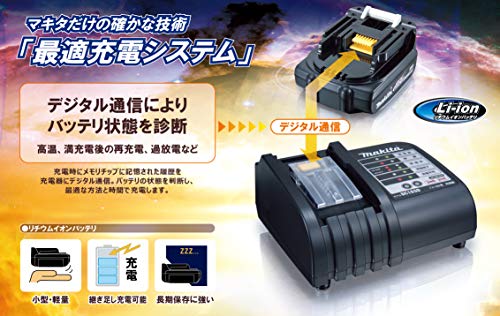
The DC18RC is the standard rapid charger for Makita’s 18V/14.4V series. It has the rapid charging capability to fully charge a BL1860 (6.0Ah) in 40 minutes, serving as the core of 2-battery rotation charging on professional jobsites. With 80W input capacity, the “BL (Battery Life) management system” communicates digitally between the battery and charger during charging, automatically adjusting the optimal charging current while monitoring battery status.
Equipped with a cooling fan, the charger body is less likely to overheat during continuous use, maintaining stable charging times even in summer outdoor conditions. The charge status can be confirmed with a 3-stage LED indicator with high visibility: “Charging (red) → 50% remaining (yellow) → Fully charged (green).” The compact 0.83kg design reduces stress when storing in a toolbox or transporting.
Compared to the HiKOKI UC18YML2, the DC18RC excels in “charging speed consistency.” While the UC18YML2 can simultaneously charge USB devices, the DC18RC is dedicated to battery charging, resulting in a design with higher charging current stability. The selection axis is clear: Makita DC18RC for those who prioritize pure charging reliability, HiKOKI for those who want versatility.
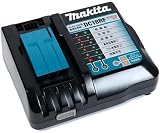
Makita DC18RF Rapid Charger 14.4V/18V with USB Port


 Mena
MenaYou can charge your smartphone at the same time with the USB port. Switched from DC18RC and the charging time is essentially the same. Usability improved.
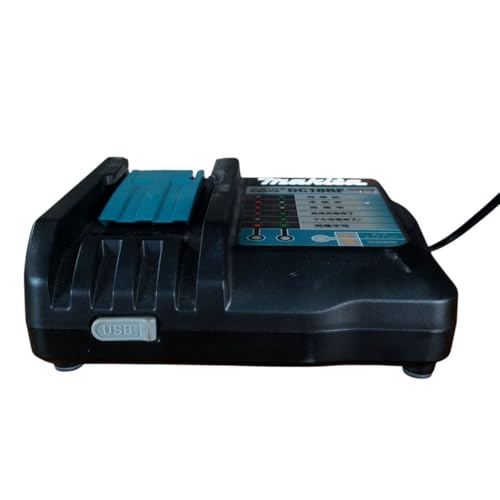
The DC18RF is an 18V/14.4V rapid charger positioned as the successor to the DC18RC, with an added USB Type-A port (5V/2.1A). Since you can simultaneously charge smartphones and tablets while charging the battery, there’s no longer a need to bring a separate charger for mobile devices on the jobsite. With a maximum input capacity of 330W, its ability to fully charge a BL1860 (6.0Ah) in approximately 40 minutes is equivalent to the DC18RC.
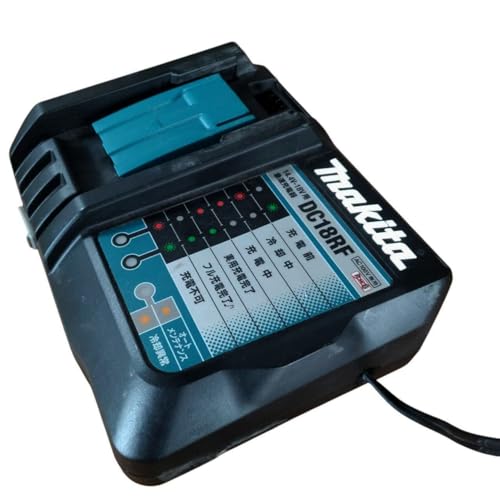
The charger’s internal “smart control” analyzes the battery’s temperature, remaining charge, and degradation status in real-time, charging with the optimal current to extend battery life. It has triple protection circuits against overcharging, over-discharge, and overheating, providing peace of mind for long-term use in jobsite environments. Wall-mount compatible design also contributes to effective use of workspace.
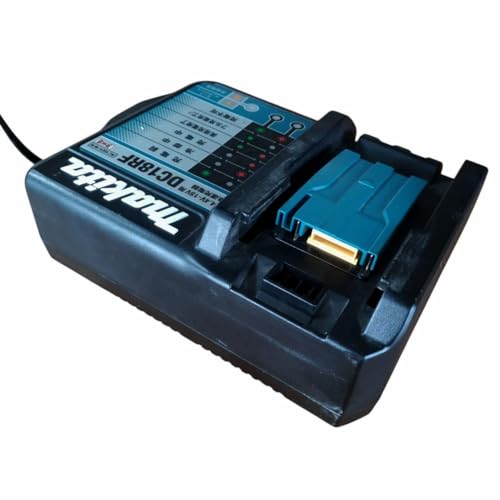
The choice between DC18RC and DC18RF comes down to “whether you need USB charging.” If you want to consolidate smartphone, tablet, and work light charging on the jobsite, go with DC18RF. If you prefer simple operation dedicated to battery charging only, the DC18RC is clear-cut. The price difference is only a few hundred yen, so for new purchases, the USB-equipped DC18RF offers better cost performance.
Makita DC40RA Rapid Charger 40Vmax
MenaIf you’re using 40Vmax, this is the only choice. Can charge a BL4025 in 19 minutes. The rotation cycle completes reliably during every break.
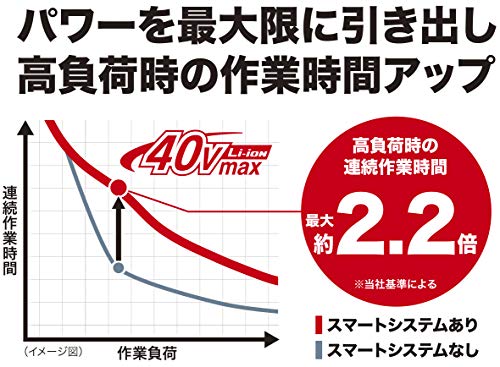
The DC40RA is a dedicated rapid charger for Makita’s 40Vmax series. With high-speed charging capability of approximately 19 minutes for a BL4025 (2.5Ah) and approximately 45 minutes for a BL4040 (4.0Ah), it maximizes operational efficiency on the jobsite. The smart system automatically adjusts the optimal charging current through digital communication between the tool, battery, and charger, achieving longer battery life.
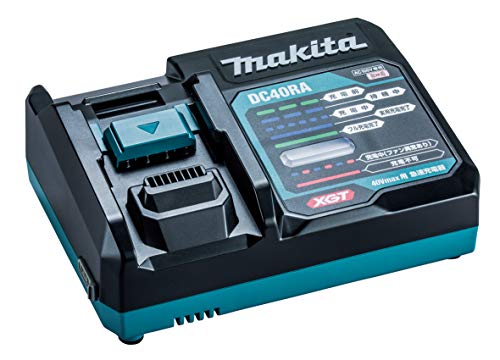
Equipped with a USB Type-A port (5V/2.4A), designed so that smartphone and tablet charging speed does not decrease even while charging the battery. The charger’s cooling fan simultaneously cools both the battery and charging circuit, delivering stable performance during continuous rapid charging in high-temperature environments. It also has the ability to charge 14.4V/18V batteries via a conversion adapter.
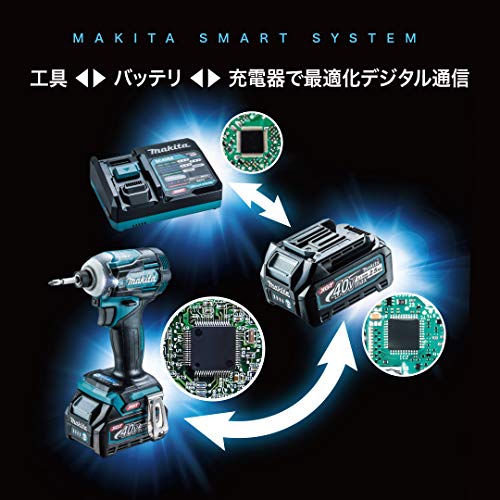
The biggest difference from the 18V charger DC18RC is “supported battery voltage.” Since 40Vmax batteries cannot be used with 18V tools, introducing 40Vmax tools makes the DC40RA a necessary additional investment. The initial cost is higher than 18V chargers, but it’s an essential unit for maximizing the use of the 40Vmax battery ecosystem.
Makita DC18SH Dual-Port Charger 14.4V/18V
MenaYou can charge 2 batteries simultaneously. For a team of 2 craftsmen, choose this without hesitation. No more waiting in line to charge.
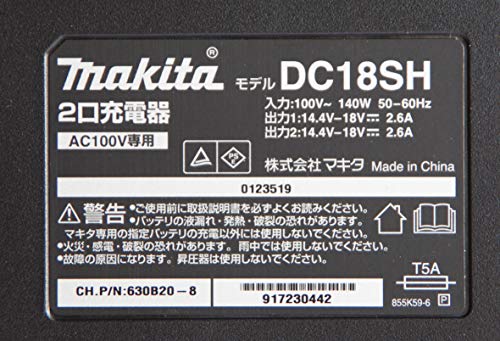
The DC18SH is a dual-port simultaneous charger for 18V/14.4V. It manages two slots with independent charging circuits, simultaneously charging each battery with the optimal current according to its individual condition. When simultaneously fully charging 6.0Ah × 2 batteries, it completes in approximately 130 minutes (for 2× BL1860). On professional jobsites where 2-battery rotation is standard, downtime from charging waits can be halved.
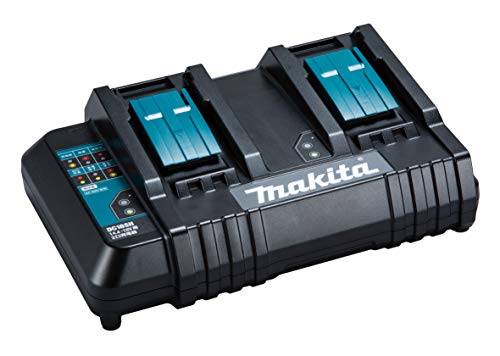
When charging only one battery, it automatically switches to single mode using only one slot, charging at the same speed as a single-port charger. Equipped with a cooling fan to maintain stable charging performance during continuous use. When charging is complete, it transitions to trickle charging mode by automatically reducing current, preventing battery degradation from overcharging.
Compared to the DC18RC (1-port), the DC18SH is particularly effective for “multi-person teams or long-duration work.” On jobsites with 2–3 craftsmen or in heavy machinery work that consumes many batteries in a day, placing one dual-port charger significantly simplifies charge management. Although the unit size is larger, the cost-effectiveness is high investment when considering the loss from charging wait time.
HiKOKI UC18YML2 Rapid Charger 14.4V/18V
MenaBeen using it since I consolidated to HiKOKI tools. Being able to charge from a car’s cigarette lighter is unexpectedly convenient.
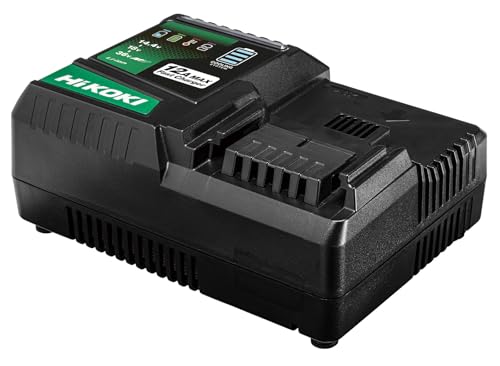
The UC18YML2 is a rapid charger for HiKOKI (formerly Hitachi Koki) slide-type 18V/14.4V batteries. In addition to charging from AC100V (household power), it features dual-input support that also allows charging from DC12V (car cigarette lighter socket), accommodating charging work at outdoor jobsites and in-car locations where power supply is difficult to secure. It has a built-in cooling fan to suppress overheating of the charger body during continuous charging.
The battery remaining charge indicator (4-stage LED) enables checking the battery level independently, allowing you to check the battery condition before starting to charge. Compatible with HiKOKI slide-type batteries (BSL1430/1460/1830/1860, etc.), managing 14.4V and 18V with a single unit. Charging time for BSL1830 (3.0Ah) when using AC100V is approximately 22 minutes, which is fast.
Compared to the Makita DC18RC, the UC18YML2’s differentiating point is “DC12V-compatible field charging capability.” In locations with unstable power environments such as construction sites, agriculture, and forestry, the flexibility to charge from a car’s cigarette lighter directly translates to peace of mind in actual work. Makita tool users choose DC18RC, HiKOKI tool users choose UC18YML2 — that’s the basic principle.
HiKOKI UC36YSL2 Rapid Charger MultiVolt/18V/14.4V

 Mena
MenaYou can charge both MultiVolt and slide 18V with the same charger. An essential unit for craftsmen with a growing battery collection.
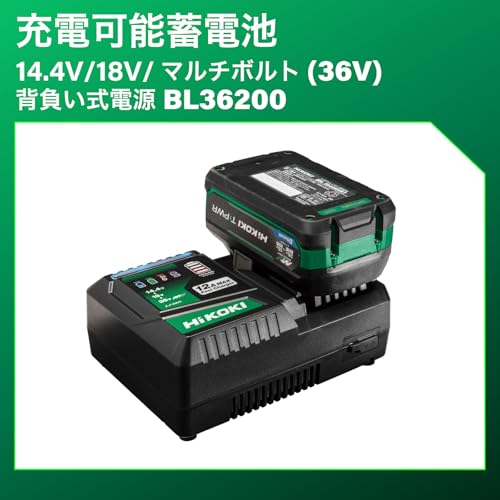
The UC36YSL2 is a rapid charger compatible with HiKOKI MultiVolt batteries (BSL36A18, etc.) and 18V/14.4V slide-type batteries. It achieves high-speed charging with a maximum MultiVolt charging current of 12A, fully charging a BSL36A18 (2.5Ah) in approximately 27 minutes. The charging status can be visually confirmed with 4-color LEDs (blue/red/green/purple) showing states such as charging, complete, and remaining charge.
A complete successor to the previous UC36YSL model, the ability to manage MultiVolt batteries and slide-type batteries with a single unit enhances on-site convenience. It has built-in cooling functions to suppress temperature rise in the charger body during 36V high-current charging. For craftsmen who use a wide range of HiKOKI tools, this is the “all-in-one” charger that minimizes battery management costs.
Compared to the UC18YML2 (18V dedicated), the decisive difference with UC36YSL2 is “MultiVolt compatibility.” For high-output tools in the 36V class such as hammer drills, circular saws, and slide miter saws, the UC36YSL2 becomes essential. For operations with 18V tools only, the less expensive UC18YML2 is sufficient. When your tool lineup grows, it’s worth considering a switch to UC36YSL2.
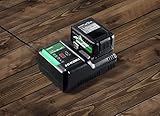
HiKOKI UC18YDL2 Super Rapid Charger 14.4V/18V with USB

 Mena
MenaTrue to its name “super rapid.” BSL1860B fully charged in 22 minutes. Guaranteed to complete one battery during every break.
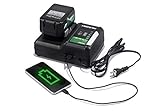
The UC18YDL2 is HiKOKI’s “super rapid charging” charger. It achieves top-class charging speed of fully charging a BSL1860B (18V/6.0Ah) in approximately 22 minutes, minimizing charging downtime at the jobsite. Equipped with a USB Type-A port (5V/2.1A), simultaneous charging of smartphones and tablets is also possible. The quiet design means you don’t need to worry about noise during early morning or late-night charging in offices or apartment buildings.
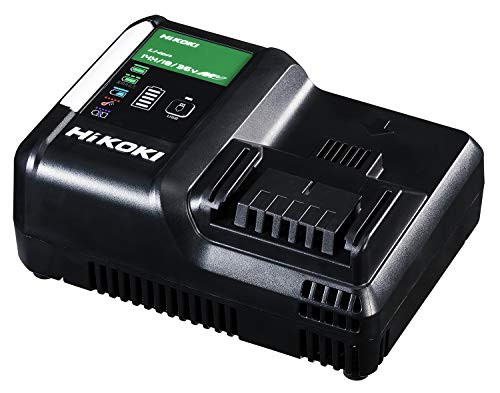
The battery remaining charge indicator displays in 4 stages, allowing battery condition confirmation before charging with the UC18YDL2 alone. After charging is complete, it automatically transitions to trickle charging, preventing battery degradation from overcharging. It has built-in multiple protection circuits against overcharging, over-discharge, overheating, and overcurrent, making it a high-safety design for long-duration continuous charging operations.
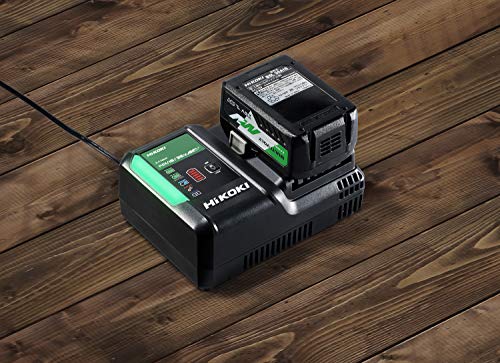
The biggest difference from UC18YML2 is “charging speed.” The super rapid charging of UC18YDL2 is approximately twice as fast as UC18YML2 for BSL1860B: approximately 22 min vs. approximately 40 min. Heavy users who want to maximize jobsite operational efficiency and rotate many batteries should choose UC18YDL2. For standard usage frequency, the UC18YML2 is the wise cost-performance choice.
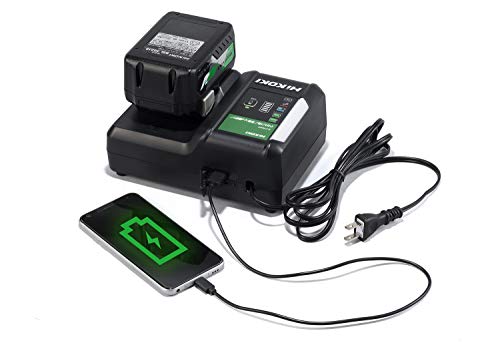
Bosch Professional GAL18V-160C Charger 18V
MenaThe 16A high-current charging is in a different league. For craftsmen with multiple Bosch tools, this charging speed is indispensable.
The GAL18V-160C is Bosch Professional’s 18V turbo charger, achieving charging more than 70% faster than standard 18V rapid chargers through 16A high-current charging. Its performance of charging a CORE18V 8.0Ah battery to 50% in approximately 15 minutes from start and to 80% in approximately 26 minutes directly improves productivity on professional jobsites that frequently use large-capacity batteries. It is Connected Ready compatible for integration with the Bosch smartphone app.
It employs active air cooling with two cooling fans actively cooling both the battery and charger, thoroughly managing heat during high-current charging. Power Boost™ mode rapidly charges to 50% remaining in the shortest time from charging start, accommodating urgent work resumption. Compatible with Bosch’s full 18V/CORE18V battery series, it’s a high-return investment for Bosch users who have a full system of tools.
Compared to the Makita DC18RC (80W), the GAL18V-160C has a distinctly different high-current charging (16A/Turbo). The charger unit price is higher for the GAL18V-160C, but for jobsites using CORE18V’s high-capacity batteries (8Ah or more), the effect of reducing charging downtime is significant, making it well worth it in terms of time cost. Non-Bosch tool users have no compatibility, so the first decision is whether to consolidate to the Bosch system or not.
DEWALT DCB115-JP Charger 10.8V/14.4V/18V
MenaYou can charge all DEWALT tool batteries with just this one unit. It’s convenient and helpful not having to worry about voltage when plugging in.
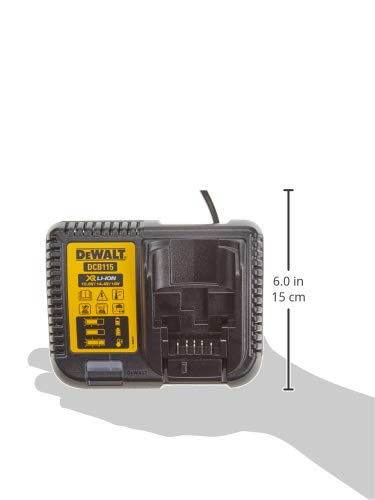
The DCB115-JP is DEWALT’s multi-charger for 10.8V, 14.4V, and 18V. The Japan-specific model (-JP) is compatible with Japan’s power standard (AC100V), allowing management of DEWALT batteries in 3 voltage ranges with a single unit. Charging times are approximately 40 minutes for 2.0Ah and approximately 60 minutes for 4.0Ah as a guide. The compact and lightweight design reduces the burden of carrying to the jobsite and storage.
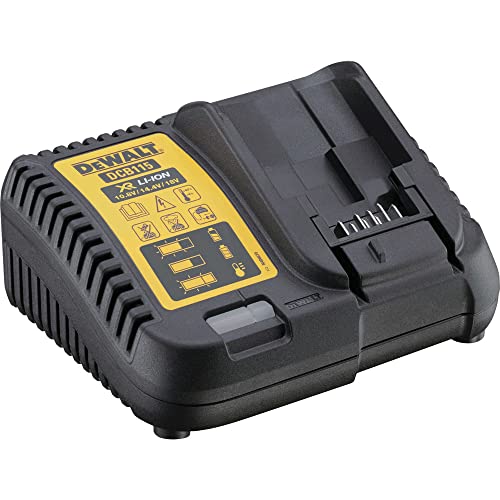
It has a built-in function to diagnose battery charge status, allowing condition checks in diagnostic mode when connecting batteries damaged by degradation or over-discharge. The LED indicator displays charging progress during charging. Compatible with DEWALT’s XR series and FLEXVOLT series batteries, it’s a highly convenient charger for craftsmen who extensively use DEWALT tools.
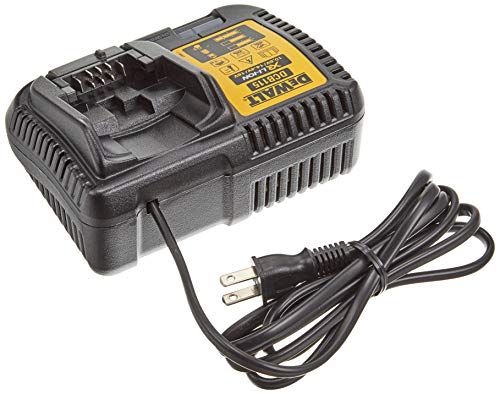
The difference from Makita/HiKOKI chargers is the “wide voltage support from 10.8V to 18V.” With other manufacturers’ chargers that only support 14.4V/18V, compact 10.8V tools (driver drills, pen sanders, etc.) would require a separate charger. But the DCB115 covers all voltage ranges with a single unit. For craftsmen systematized around DEWALT tools, it’s a practical option that reduces the number of chargers needed.
Panasonic EZ0L81 Rapid Charger 10.8V–28.8V


 Mena
MenaThis charger covers all Panasonic tools. There are many jobsites where it’s Panasonic-only for electrical and facility workers.
The EZ0L81 is a slide-type lithium-ion rapid charger for Panasonic power tools, supporting a wide voltage range of 10.8V, 14.4V, 18V, 21.6V, and 28.8V. As a charger covering a wide range of Panasonic’s construction and facility tool lineup, it is widely used in electrical work and facility construction jobsites. Simply inserting a battery automatically recognizes the voltage and automatically switches to the optimal charging current.
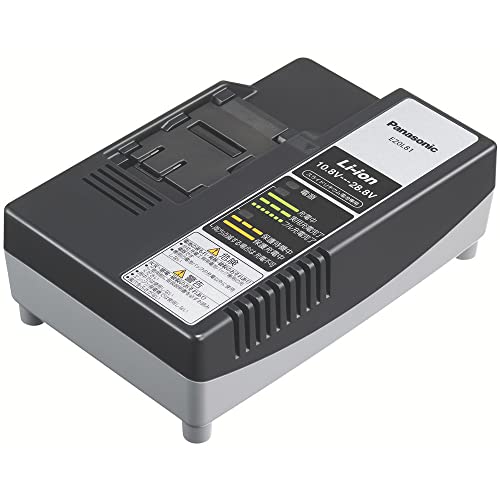
Charging status is displayed with a 4-stage LED indicator, allowing at-a-glance confirmation of charging, fully charged, and error states. Equipped with a cooling fan, it monitors battery temperature during high-load charging and maintains appropriate charging conditions. Panasonic adopts a dual series (14.4V/18V compatible) battery ECO system, where a single battery can be used with both 14.4V and 18V tools, simplifying charger count management.
Compared to other manufacturers, Panasonic’s strength is its “lineup specialized for electrical and facility work.” The company has a full system of tools essential for electricians, including impact drivers, driver drills, and chuck-type drills, and the EXENA series with IP56 rating handles use in harsh environments. Targeting a different customer segment from Makita and HiKOKI, the reason electricians and facility workers choose Panasonic lies in the consistency of their battery system.
Summary: The Right Answer for Charger Selection Is “Match Your Tool Brand”
The fundamental principle of charger selection is “unify your tool brand first, then choose the charger.” Makita tools → Makita charger, HiKOKI tools → HiKOKI charger — this is the most reliable and safe choice. Compatible chargers (third-party products) can reduce costs, but due to the risk of battery degradation from incompatibility with battery management systems, the use of genuine chargers is strongly recommended for professional jobsites.
Recommended Chargers by Situation
18V Makita tool users: DC18RF (with USB, for standard jobsites)
Makita 40Vmax tool users: DC40RA (40Vmax dedicated, essential)
Multiple craftsmen, large battery volumes: DC18SH (2-port simultaneous charging halves downtime)
HiKOKI 18V tool users: UC18YDL2 (super rapid charging for speed priority)
HiKOKI MultiVolt tool users: UC36YSL2 (full 36V/18V/14.4V support)
Bosch CORE18V tool users: GAL18V-160C (16A turbo charging for professional jobsite use)
DEWALT tool users: DCB115-JP (10.8–18V full voltage support, compact)
Electrical/facility work (Panasonic): EZ0L81 (10.8–28.8V support, complete Panasonic system)
MenaChargers are just as important as the tools themselves as jobsite equipment. Rather than “anything will do,” choosing “the optimal solution for your own tools” is the attitude that protects your jobsite productivity.
Related Articles
- Car Battery Charger Comparison
- Motorcycle Battery Charger Comparison
- [Review] The Mainstream of Makita Circular Saws: HS Series — All Models Compared from a Carpenter’s Perspective
- [Review] DEWALT “TOUGH CASE+” — The Supremely Versatile Small Parts Organizer, Fully Explained
- [Review] Drill Bits & Cutting Tool Accessories — 8 Types for Every Hole-Drilling Job
- [Review] DeWalt TOUGHSYSTEM 2.0 DXL — 4 Japan-Market Models Fully Explained | 30-Inch Drawer System
- [Review] Essential Gear for Welders: 11 Must-Have Field Tools Explained in Full
- Bosch Professional GDR Series Impact Driver: Complete Model Comparison [2026 Edition]
- HiKOKI MultiVolt (36V) Power Tools: Complete Series Comparison [2026 Edition] — The Complete Guide for Electricians and Professional Field Workers