
Affiliate Disclosure: This article contains affiliate links. If you make a purchase through these links, we may earn a commission at no additional cost to you.
Best 5 AEDs — Manufacturer Comparison for Workplaces & Facilities
Philips HeartStart HS1 AED
 メナ
メナJapan’s #1 installed AED. Analysis and charge complete in about 8 seconds. The dual-opening design for quick retrieval earns high marks even in environments without CPR training.
The Philips HeartStart HS1 is Japan’s most widely installed AED model. Voice guidance and visual prompts allow anyone — even without prior AED experience — to follow the steps calmly. From power-on to analysis and full charge takes approximately 8 seconds, minimizing the time from cardiac arrest to AED shock.
The unit weighs 3.5 lbs (1.6kg) and carries IP21 dust and water resistance. Electrode pads are adult-sized (HS1+); pediatric pads are sold separately. The battery supports 4 years of standby, making replacement cycle management relatively straightforward. A dual-opening carrying case is included as standard, allowing smooth retrieval in emergencies.
Pricing is approximately $1,400 (facility sales price). Available through Philips authorized dealers and certified online stores. With extensive deployment in domestic hospitals, schools, sports facilities, and public venues, after-sales support (periodic inspection, electrode pad and battery replacement services) is well established.
Nihon Kohden Cardiolife AED-3100


 メナ
メナIP66 high dust/water resistance and 16-language support are its strengths. A Japanese-made flagship model suited for harsh environments like outdoor sites, factories, and warehouses.
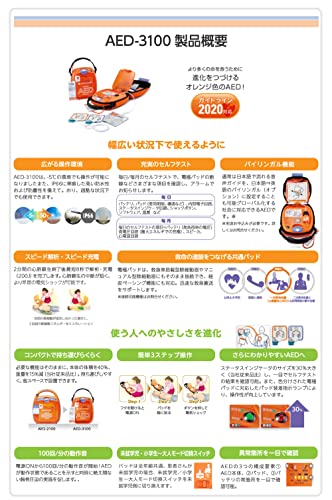
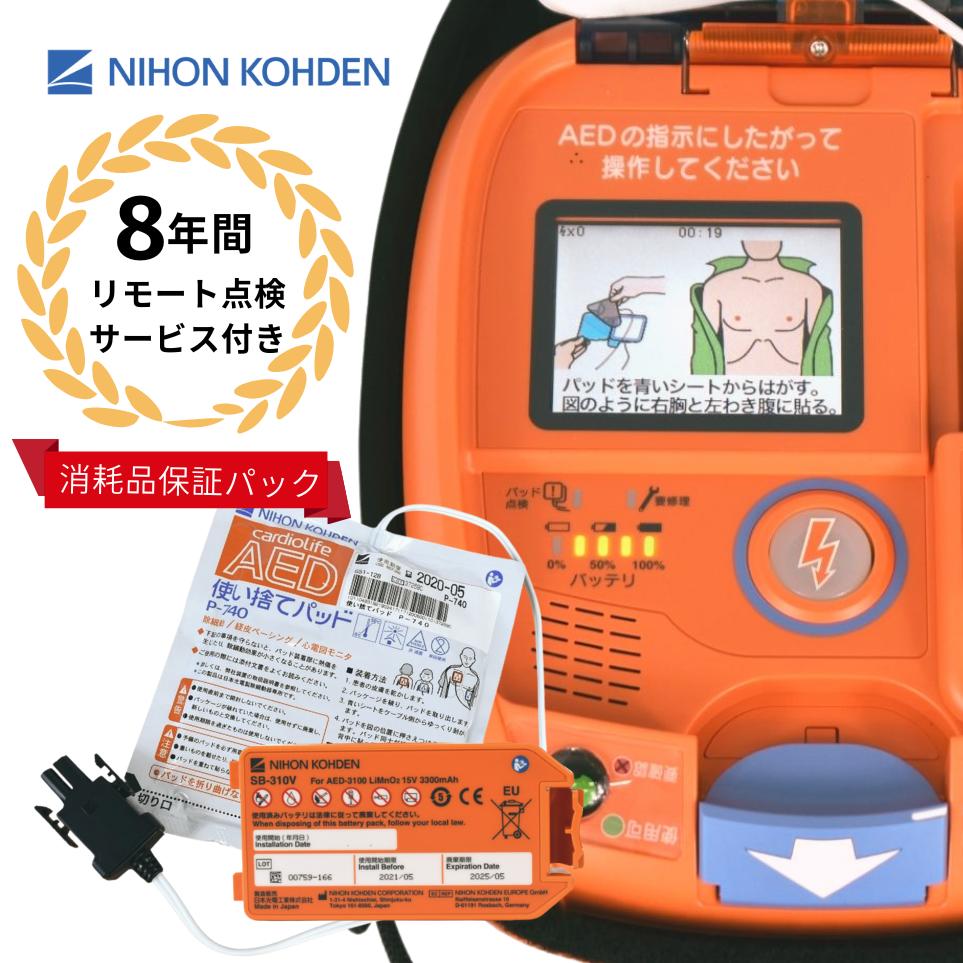
The Nihon Kohden Cardiolife AED-3100 is the flagship AED from Nihon Kohden Corporation, one of Japan’s largest medical device manufacturers. Its IP66 complete dust and strong water resistance enables installation in dusty factories and outdoor facilities exposed to rain. Analysis to charge complete in as little as 8 seconds, delivering an appropriate 200J of energy.
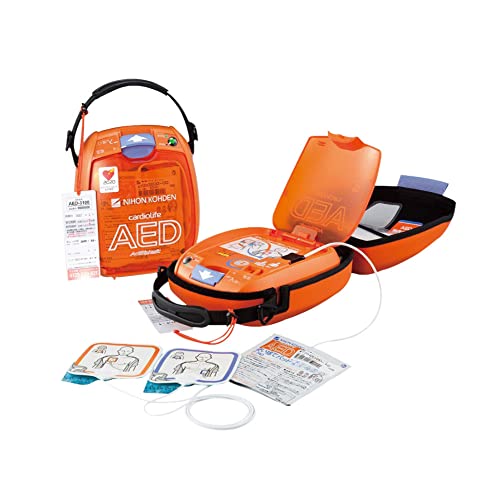
Weight is 5.1 lbs (2.3kg) — standard among major AEDs. Voice guidance in 16 languages enables operation without language barriers in workplaces or tourist facilities with many foreign visitors. Battery supports 5 years of standby; annual periodic inspection allows long-term operation.
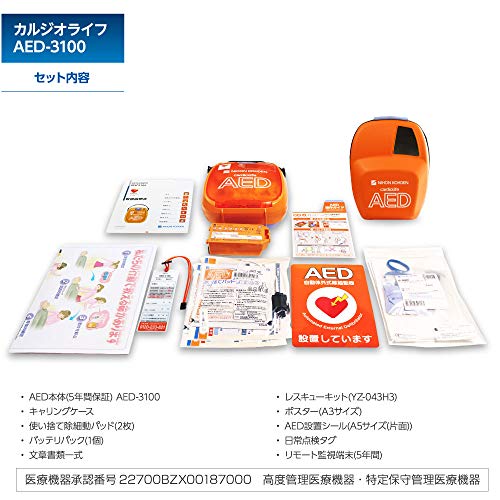
Pricing starts at approximately $1,750. Available through Nihon Kohden authorized dealers and medical device specialty stores. As Japan’s top-share medical device maker for domestic hospitals, its nationwide maintenance network for AED periodic inspection, electrode pads, and battery supply is a major strength. Widely adopted by municipalities, schools, and large facilities.
Nihon Kohden Cardiolife AED-3150
メナThe upgraded successor to the AED-3100. CPR feedback displays chest compression depth and rate in real time, helping improve rescue quality.
The Nihon Kohden Cardiolife AED-3150 is the successor and premium version of the AED-3100. Its standout feature is CPR feedback: it guides rescuers with real-time audio and on-screen display of chest compression depth (recommended 2–2.4 in / 5–6cm) and rate (recommended 100–120 compressions/min). Even untrained rescuers are supported to perform adequate CPR.
Unit weight is 4.6 lbs (2.1kg) with IP55 dust and water resistance. Electrode pads support both adult and pediatric use, regardless of age. Analysis to full charge is within 8 seconds — matching the AED-3100’s speed.
Pricing is approximately $2,300 — in the upper tier among major AEDs. Selected by medical institutions, training facilities, and university hospitals that prioritize CPR feedback capability. Available through Nihon Kohden authorized dealers with nationwide maintenance service coverage.
Omron RescueHeart HDF-3500


 メナ
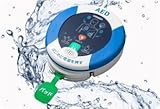
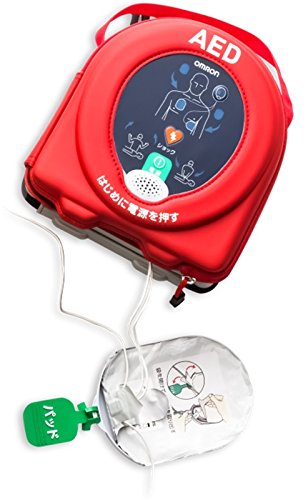
メナIndustry-leading light weight at just 2.4 lbs (1.1kg). IP56 waterproofing ideal for mobile deployment in sports facilities and workplaces. Omron reliability with domestic support network.
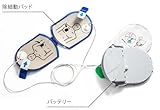
The Omron RescueHeart HDF-3500 is one of the lightest AEDs on the market at 2.4 lbs (1.1kg, unit only). Its lightweight design makes it easy to retrieve from the AED box and carry quickly — ideal for rapid transport across large facilities or bringing onto sports fields. IP56 dust and water resistance ensures confident installation in outdoor sports facilities and factories.
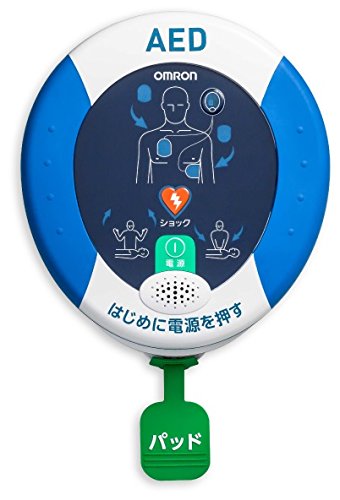
Voice guidance is optimized for clarity, designed to be easily understood even in a panicked situation. Fast operation from power-on to shock-ready minimizes CPR time loss. Battery supports 5 years of standby, keeping periodic replacement costs low.
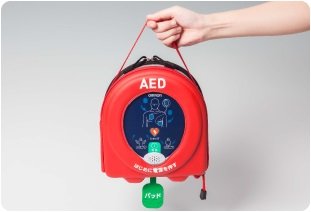
Pricing is approximately $2,000. Available through Omron’s medical device sales network at authorized dealers nationwide. Well-suited for workplaces, sports facilities, and schools where lightweight and compact form factor is the top priority.
ZOLL AED Plus
メナReal CPR Help technology provides real-time assessment of chest compression quality. Rich audio and visual feedback to the rescuer makes this an advanced-level AED.
The ZOLL AED Plus is developed by ZOLL Medical Corporation, a US-based medical device manufacturer. Its standout feature is “Real CPR Help” technology — sensors built into the electrode pads measure chest compression depth and rate, providing real-time audio and bar-graph feedback. Specific prompts like “push harder” and “push faster” help maintain rescue quality throughout the effort.
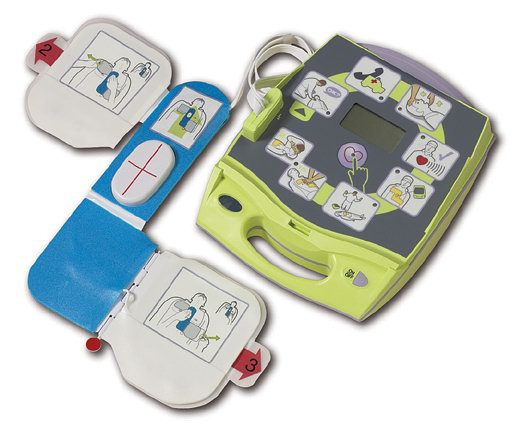
Unit weight is 7.3 lbs (3.3kg) — heavier than other AEDs — but the battery uses 10 standard CR123A lithium cells supporting 5 years of standby, eliminating the need for a proprietary battery pack. IP55 dust and water resistance. Adopted by Japan’s Self-Defense Forces, police departments, and fire stations.
Pricing is approximately $2,100. Available through ZOLL authorized dealers and medical device specialty stores. The best choice for facilities that prioritize CPR feedback quality and organizations focused on improving emergency medical response. The wide availability of CR123A batteries makes emergency battery procurement straightforward.
How to Choose an AED — Key Spec Comparison Points
Weight & Portability
AED weights range from 2.4 to 7.3 lbs (1.1–3.3kg). When there’s a long distance to carry the unit from the storage location to the scene — large facilities, sports venues, outdoor fields — lightweight models (Omron HDF-3500: 2.4 lbs, Philips HS1: 3.5 lbs) are advantageous. For fixed installation with minimal movement — office entrances, building lobbies — weight is less critical.
Dust & Water Resistance (IP Rating)
IP rating is important for selecting the right installation environment. For factories, warehouses, and outdoor locations, high resistance to dust and water — IP66 (Nihon Kohden AED-3100) — is the safe choice. For indoor installation in office buildings, schools, and commercial facilities, IP21–IP55 is sufficient. Generally, IP5X or higher (dust-resistant) combined with IPX5 or higher (water-resistant) covers most facility environments.
CPR Feedback Function
CPR feedback is an AED feature that measures the depth and rate of chest compressions in real time, guiding the rescuer via audio and on-screen prompts. Supported by the ZOLL AED Plus, Nihon Kohden AED-3150, and Omron HDF-3500. Particularly valuable for workplaces with low CPR training rates, or facilities focused on improving emergency rescue quality.
Battery Life & Maintenance Costs
Standard battery standby life is 4–5 years. The Philips HS1 supports 4 years; the Nihon Kohden AED-3100/3150, Omron HDF-3500, and ZOLL AED Plus all support 5 years. Electrode pads (adult) require replacement after 2–3 years (expiration date applies), so budget separately from the battery. The ZOLL AED Plus uses widely available CR123A batteries, offering flexibility in battery pack procurement.
Guideline Compliance & Multi-Language Support
All AEDs sold in Japan comply with AHA (American Heart Association) 2020 guideline shock energy settings. For workplaces or tourist facilities with many foreign employees or visitors, multi-language voice guidance is important — the Nihon Kohden AED-3100’s 16-language support is a clear advantage.
Recommended AED by Use Case
Small & Medium Businesses / Offices
From an occupational safety perspective, AED installation is recommended for workplaces with 50 or more employees. For office environments, the Philips HS1 (3.5 lbs, easy operation, Japan’s #1 installed model) is the ideal first unit. With a solid support structure in place, even companies deploying their first AED can operate it with confidence.
Sports Facilities & Gymnasiums
Sports facilities face higher risk of sudden cardiac arrest during activity, requiring rapid deployment to the field. The Omron HDF-3500 (2.4 lbs, IP56) combines light weight with water resistance for use outdoors on playing fields. If CPR feedback is a priority, the ZOLL AED Plus is also a strong contender.
Schools & Educational Institutions
Schools may need AEDs in multiple locations — gymnasiums, sports fields, multiple buildings. The Philips HS1 covers children and adults (pediatric pads sold separately), and its ease of use reduces staff training burden. Plan AED installation together with periodic drills and a schedule for managing electrode pad and battery expiration dates.
Factories, Warehouses & Outdoor Facilities
Harsh environments with dust, rain, and water spray require high IP ratings. The Nihon Kohden AED-3100 with IP66 (fully dust-proof, strong water resistance) is suited for factories, warehouses, and outdoor worksites. Its 16-language support also provides reassurance in factories employing many foreign technical trainees.
AED Accessories & Consumables(アクセサリー)
Electrode Pads (Adult & Pediatric)
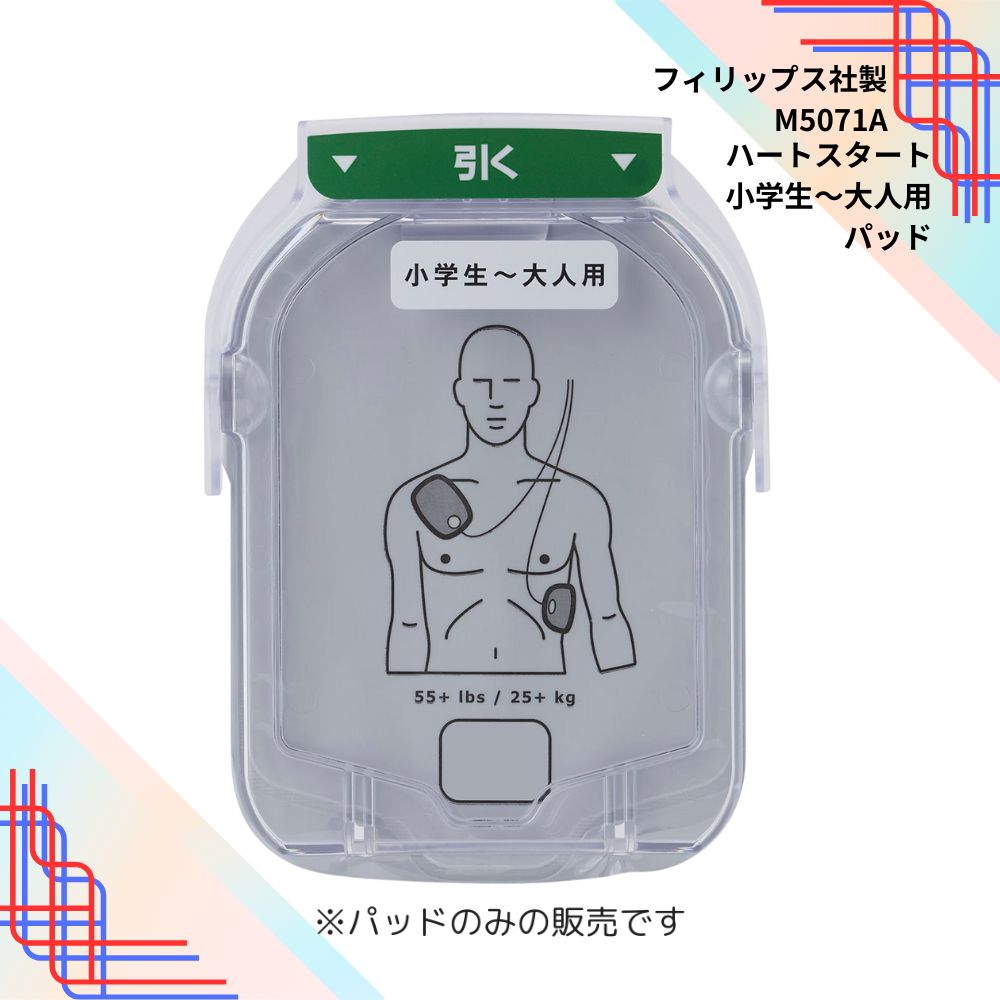
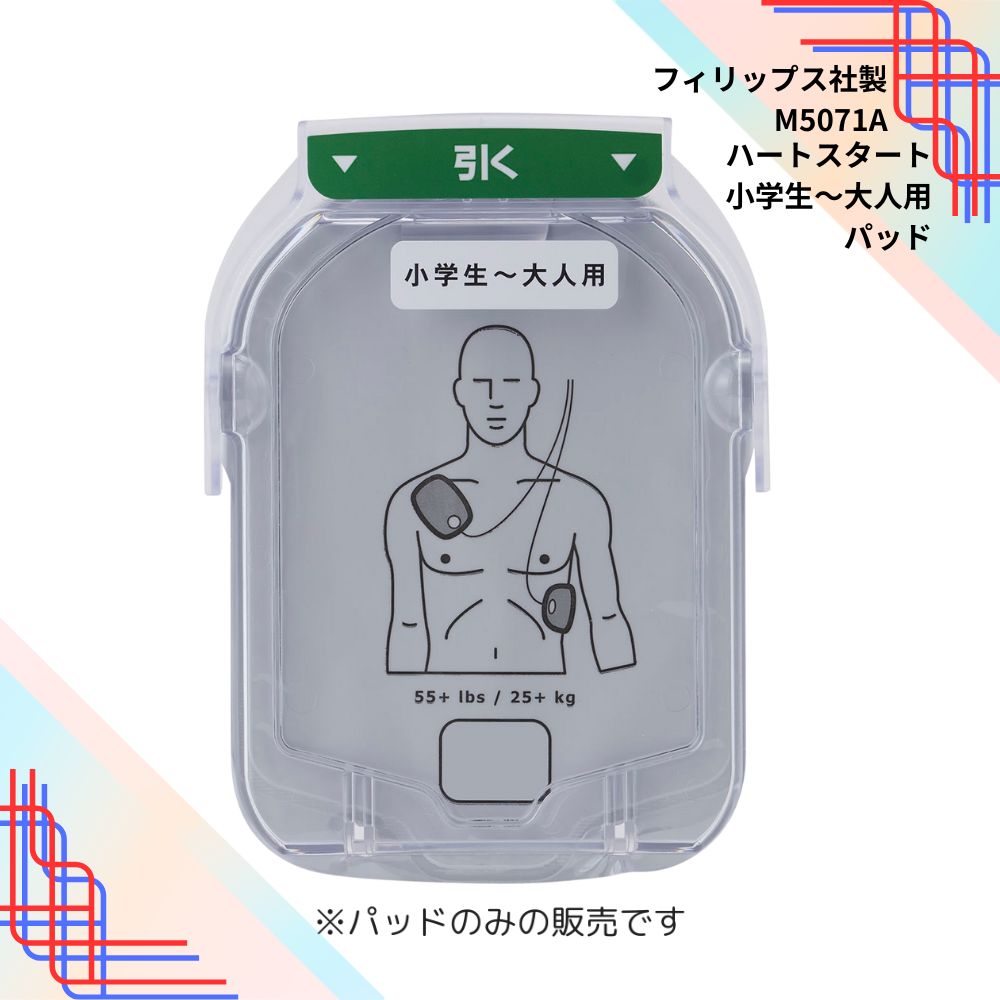
AED electrode pads are consumables that must be replaced after each use and when their expiration date (~2–3 years) passes. Compatible pads vary by AED brand and model — for example, HS1+ adult electrode pads for the Philips HS1, PAD-1 dedicated pads for the Nihon Kohden AED-3100. Pediatric pads are required for children under age 6 (under 55 lbs / 25kg), so schools and children’s facilities should always have them on hand.
Battery Packs & Replacement Batteries
AED batteries require replacement when standby life (4–5 years) is reached or after a certain number of uses. Battery models are unit-specific — the FR01 for Philips HS1, SB-2003J for Nihon Kohden AED-3100, HDF-BT for Omron HDF-3500. The ZOLL AED Plus uses standard CR123A lithium cells, allowing generic battery replenishment. Check the battery replacement deadline on the unit’s display or indicator and replace before expiration.
AED Storage Cases & Wall-Mount Cabinets
Installing AEDs in dedicated storage boxes or cabinets keeps them fixed in a clearly accessible location. Wall-mounted AED cabinets come in unlocked (immediate access in emergencies) and locked (security-focused) versions. For outdoor installation, cabinets with rain and insulation protection prevent unit deterioration from temperature changes and moisture. Posting AED stickers and signage helps visitors instantly identify AED locations.