
Affiliate Disclosure: This article does not contain any affiliate links.
 Mena
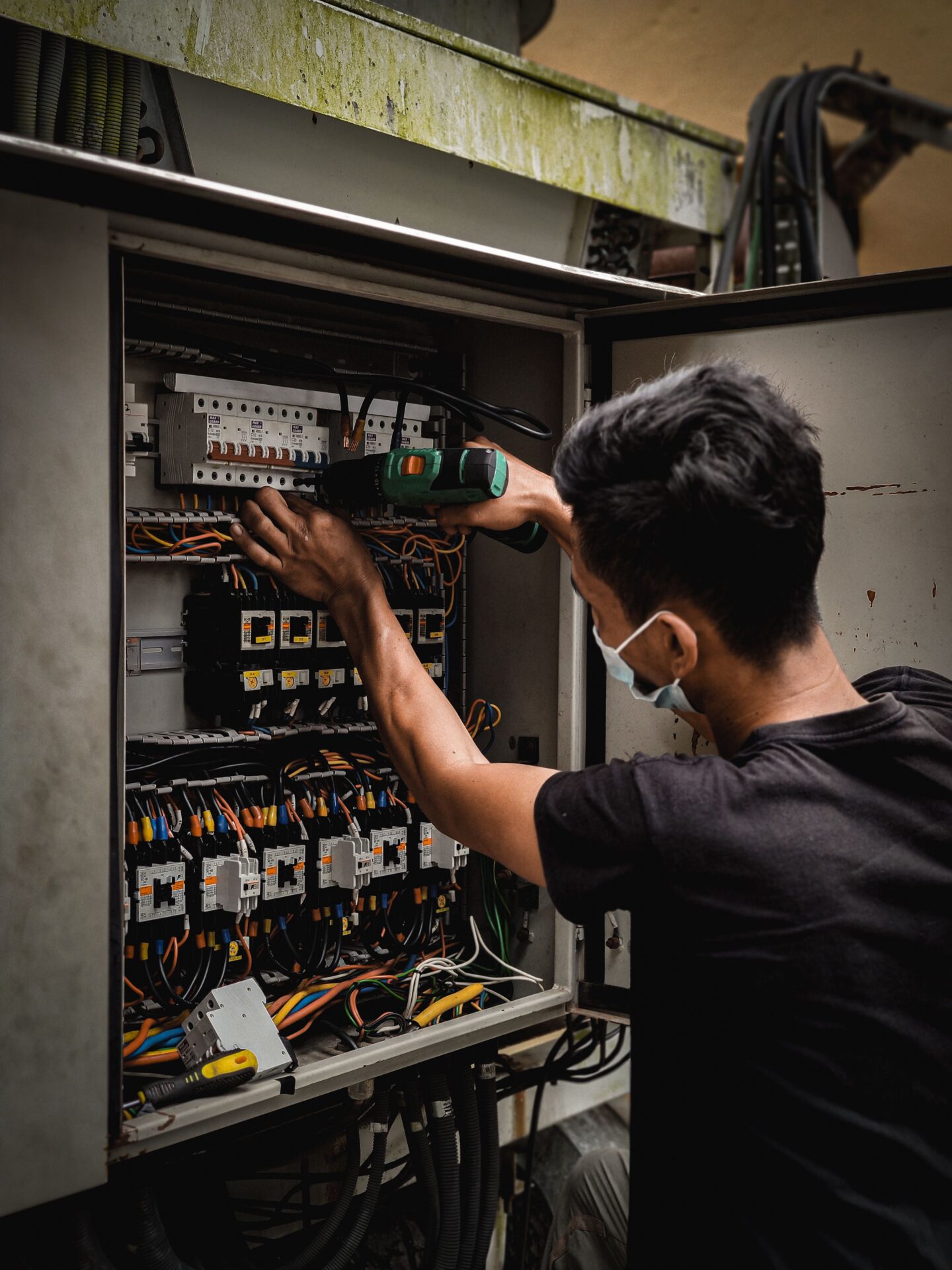
Hey there, this is Menachite (@menachite), a hybrid engineer working across both mechanical and electrical fields.
I also hold Japan’s Type 2 Electrician License myself.
This article explains the basics of Japan’s Type 2 Electrician License (第二種電気工事士), a national qualification for electrical work.

Holding this license lets you wire up to 600V, and it comes in handy for all kinds of things, like adding an extra outlet to your house or installing solar panels. It’s well worth looking into.
What is Japan’s Type 2 Electrician License?
Japan’s Electrician License is a national qualification used broadly in electrical work, building maintenance, residential construction, and other settings where electricity is supplied.
Passing the exam allows you to call yourself a licensed electrician in Japan.
The exam is administered by Japan’s Institute for Small Business Management and Technology (ECEE, the Electrical Construction Engineers Examination Center), and comes in two grades — Type 1 and Type 2 — with Type 1 covering a wider scope of work.
The official site (Japanese only) is linked below.
Type 2 Electrician License Exam | ECEE (Electrical Construction Engineers Examination Center)
In recent years, more people have also been getting licensed for home DIY projects.
It covers voltages up to 600V, and given that standard household voltage in Japan is 200V, this license lets you handle nearly any job outside of large-scale factories.
How it differs from similar qualifications: Low-Voltage Special Training and the Type 1 license
There’s a similar qualification called Low-Voltage Special Training, but that one is administered by employers for their own workers, and it has to be retaken at each new workplace when you change jobs.
Make sure you’ve completed it before doing any work that requires it.
The Type 1 Electrician License covers voltages above 600V, but it requires a safety training course on private electrical facilities every 5 years.
The Type 2 license, once obtained, is valid for life, which makes it much easier to maintain.
Career paths
Most jobs involve wiring 100V/200V power in factories and homes.
The license is also useful for building maintenance work, but since building maintenance typically requires additional qualifications too, if you want to work with just the Type 2 Electrician License alone, the best way to put it to use is as a residential wiring or factory power-system contractor.
As with any manufacturing-related field, earning a high income ultimately comes down to going independent or building up your own skill.
How to register for the exam
You can apply online through the site below (Japanese only, and the exam itself is only offered in Japan).
ECEE (Electrical Construction Engineers Examination Center)
After registering, you select the qualification you want to take from your account page and apply.
Your admission ticket and other exam info typically arrive just 1-2 weeks before the exam, so the timeline is fairly tight.
There’s a practical exam after the written exam, and since the results (including the pass notice) also come out on the later side, it’s a good idea to keep studying for the practical portion even after the written exam is done.
Study methods and exam content
The written exam tests your knowledge of electrical regulations, correct construction methods, and how to use the tools involved.
The practical exam has you actually wire up a small residential-style setup using real tools.
In my case, I studied for about two months. There’s a gap between the written and practical exams, and I didn’t study during that gap.
I did my studying on a tablet, so I’d recommend that approach if you’re a busy working adult short on time.
I’ve written up how I did it in the article below (Japanese only), so check it out if you’re interested.
Study materials
The study materials for this exam are Japanese-language textbooks aimed at the Japanese exam, since the exam itself is administered only in Japan and in Japanese. If you’re preparing for this specific exam, look for Japanese Type 2 Electrician License textbooks and past-exam workbooks — search sites like Amazon Japan for the current edition, since these titles get revised each year.
A written-exam textbook plus a practical-exam workbook with a companion instructional DVD will generally cover everything you need for both portions of the exam. Look for titles that walk through the material with plenty of diagrams — that style makes it approachable even if you’ve never touched electrical wiring before.
A compact, all-in-one text-and-workbook combo is also worth having — something you can carry around and review right up until the exam.
For the practical exam, YouTube is also a great resource. The channel run by HOZAN, a company that sells the tools used for the practical exam, is especially clear and worth watching.
Tools needed for the practical exam
The practical exam for the Type 2 Electrician License requires you to actually use tools to complete a wiring task.
A standard toolkit for the exam typically includes a basic Japanese electrician’s tool set (such as the ones sold by HOZAN specifically for this exam, including a crimping tool for ring sleeves and a VVF cable stripper), a Japanese-style electrician’s screwdriver, a tape measure, and pliers. These are Japan-market tools built specifically around this exam’s requirements — they’re only really useful if you’re actually sitting this exam in Japan, so search for them on Amazon Japan by the tool type (electrician’s screwdriver, VVF stripper, ring-sleeve crimping tool, etc.) if you need them.
I passed my own exam using four tools along these lines.
Since you only get 40 minutes for the practical exam, a VVF cable stripper is worth having if you want to work faster — it makes it easy to strip the wire cores.
Personally, I wouldn’t recommend a VA-cable-style stripper — the strip quality tends to be inconsistent, which makes for less stable work. Since the exam itself places a lot of weight on build quality, I’d recommend sticking with a VVF stripper that gives you reliable results.
If you need practice materials — outlets, wiring, switches, and other electrical parts — a Japanese home-improvement store is the place to find them if you’re in Japan. Pick up roughly 10m each of 3-core and 2-core cable, about 30 crimp terminals, and about 5 connectors each (connectors can be reused), and you can practice at low cost.
Wrap-up
Among Japan’s national qualifications, this one has a pass rate over 50%, making it relatively easy to obtain.
It gives you a solid grounding in basic electrical knowledge, and works as a kind of entry-level credential for anyone doing electrical work — a good way to prove you have at least a baseline of knowledge.
Thanks for reading all the way through.
I hope this article was useful to you.
